
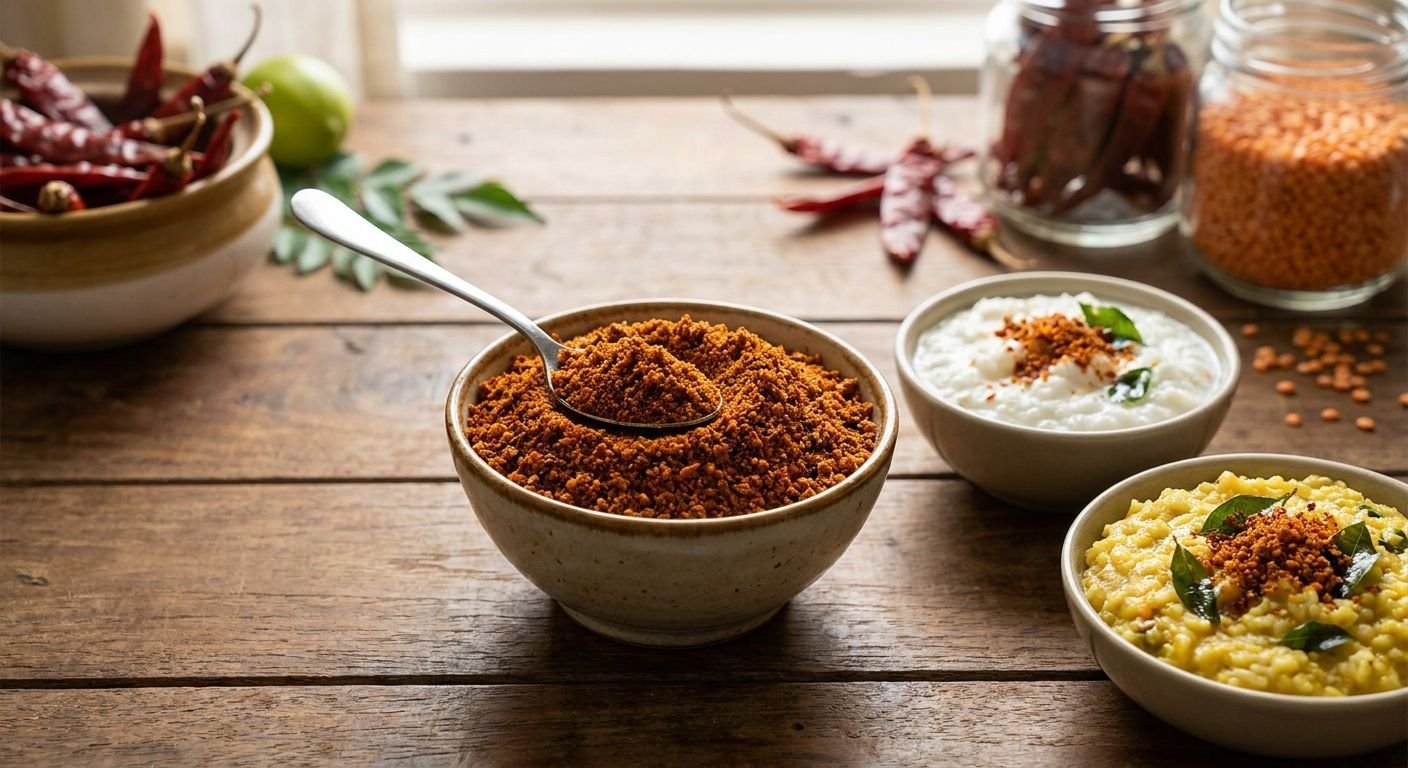
Karam podi for curd rice and khichdi is the dry spice powder Andhra households stir into a warm bowl to add heat, roasted-lentil crunch, and enough salt that you can skip a side dish. The right jar depends on how much protein, heat, and oil-free simplicity you want, and that choice shifts depending on whether you're eating curd rice or khichdi.
- Karam podi for curd rice and khichdi works best when matched to texture: Nalla Karam Podi brings heat, Palli Karam Podi brings a nutty finish.
- Bloom podi in warm ghee before folding into khichdi so the spice cooks instead of sitting raw on top.
- Curd rice needs a drier, less oily podi; khichdi can handle a coarser, richer one without turning mushy.
- Store karam podi in an airtight jar away from moisture and it holds flavor for weeks without refrigeration.
Why karam podi matters for curd rice and khichdi
Curd rice and khichdi are two of the most common fallback meals in Indian kitchens — one cold and probiotic, one warm and one-pot — and both are famously mild eaten plain. Karam podi is the Andhra fix for that blandness: a dry mix of roasted lentils, red chilies, and often sesame, peanut, or dry ginger, ground fine enough to dissolve on contact with warm rice or fat.
Unlike a wet pickle, karam podi carries no oil that thins into curd rice or turns khichdi greasy. That's exactly why households that already keep pickles paired with curd rice and khichdi still stock a separate podi jar — pickle brings tang and salt, podi brings dry heat without extra liquid. In 2026, that combination is still the default fix for a bland bowl in most Andhra and Telangana homes.
Match, bloom, and store: the karam podi routine
Match the podi type to what you're eating
Curd rice wants a drier, spicier podi since the curd already adds moisture. Khichdi can take a coarser, richer podi because the rice already carries ghee. Getting this wrong is the fastest way to end up with a bowl that's either watery-hot or flat.
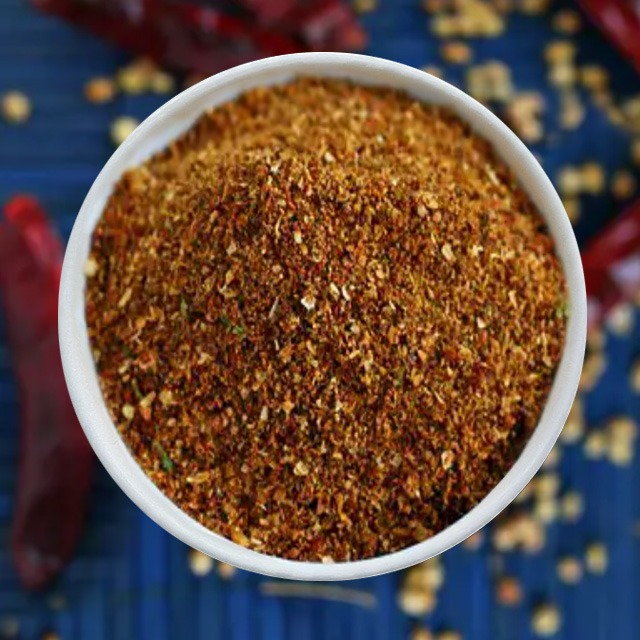
- Nalla Karam Podi — roasted red chili and lentil mix, straight heat, best stirred into curd rice.
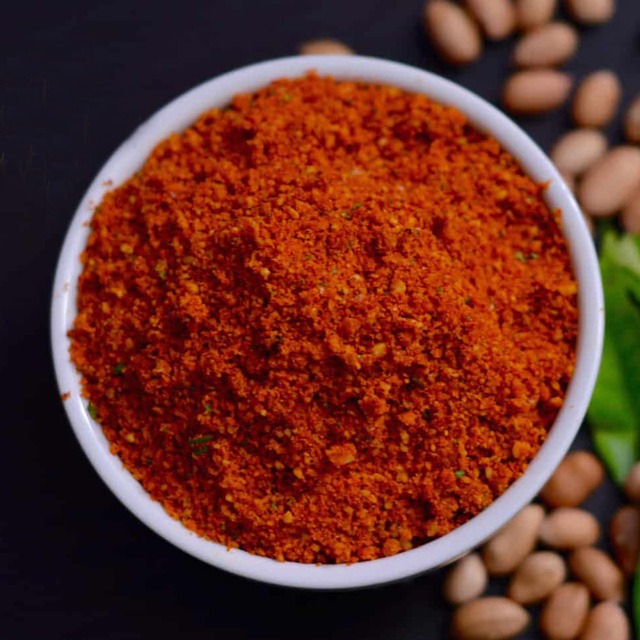
- Palli Karam Podi — peanut-based, mellow and nutty, folds well into khichdi without overpowering the dal.
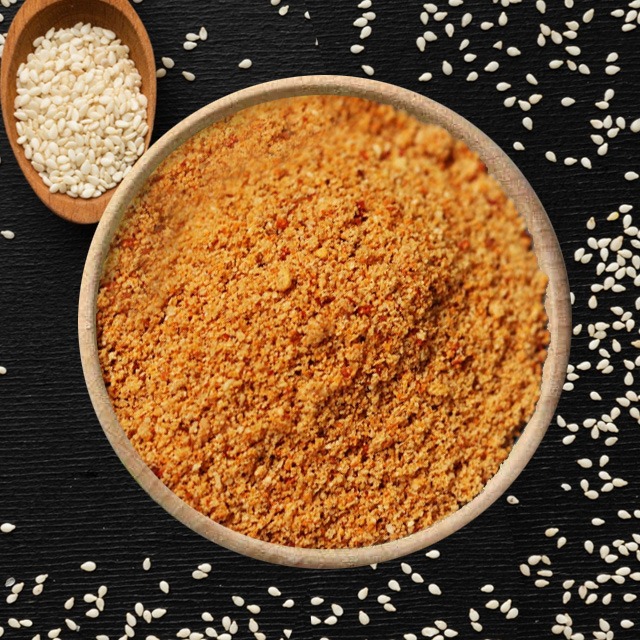
- Nuvvula Karam Podi — sesame-forward and earthy, good for curd rice on a day you're skipping pickle entirely.
- Putnala Karam Podi — roasted chana dal, the mildest of the group, safer for kids' khichdi bowls.
- Sonti Karam Podi — dry ginger based, warms up khichdi better than a heat-forward podi on a cold evening.
If you're unsure how much chili heat you can actually handle across a whole jar, the spice level guide breaks down what mild, medium, and hot actually mean on an Andhra scale before you commit to a full pack.
Toast the podi before it touches the rice
Dropping cold podi straight from the jar into hot khichdi wastes half its flavor. A quick bloom in fat wakes up the roasted lentils and chili oils the way it would in a fresh tempering.
- Warm a teaspoon of ghee or oil in a small pan on low heat.
- Add the podi off the flame and stir for 10-15 seconds so residual heat blooms the spices instead of burning them.
- Pour the ghee-podi mix directly into hot khichdi so the fat carries flavor through every spoonful.
- For curd rice, skip the pan step — mix chilled podi straight in if you want it dry and light, not oily.
Podi isn't only a curd rice and khichdi ingredient. The same jar works for using podi with idli, dosa, and rice, which is worth knowing before you buy a single-use jar for one meal.
Get the rice-to-curd ratio right before you add podi
Curd rice specifically punishes bad ratios — too much curd and the podi dilutes into nothing; too little and it clumps.
- Use warm, freshly cooked rice, not cold leftovers, so the curd doesn't sour too fast once mixed.
- Mash the rice lightly before adding curd so podi coats grains instead of sitting in pockets.
- Add podi in two rounds — half mixed in, half sprinkled on top — for texture contrast in every bite.
- Keep curd-to-rice close to a 1:1 ratio by volume; a runnier mix dilutes the podi's heat fast.
Adjust khichdi texture so the podi doesn't disappear
Khichdi's soft, mushy texture is great for digestion but terrible for showing off a roasted-lentil podi if you get the timing wrong.
- Cook khichdi slightly drier than usual if you plan to stir in podi at the end.
- Add podi after plating, not during cooking, so the crunch survives instead of turning soft.
- A teaspoon of ghee on top before the podi helps it stick instead of sinking to the bottom of the bowl.
- Serve with a crisp papad on the side for a texture contrast the podi alone can't give.
Pair podi with a pickle when curd rice needs more than heat
Some days a podi alone feels one-note. This is where a tangy pickle earns its place next to the podi jar, not mixed into it.
- A tangy pickle like lemon or gongura balances a peanut-based podi's richness in a khichdi bowl.
- Keep pickle oil separate from podi — mixing both directly turns curd rice greasy instead of balanced.
- For a festive thali, serve podi and pickle in separate small bowls so guests can control both independently.
- Reach for a milder podi on days you're already adding a spicy non-veg pickle to the same meal.
Store the podi so the heat doesn't fade before you finish the jar
Karam podi loses its punch faster than most people expect once the jar is opened and left in a humid kitchen.
- Keep it in an airtight glass or steel jar, not the pouch or box it shipped in.
- Store away from direct sunlight and stove heat — both flatten the chili's punch over a few weeks.
- Use a dry spoon every time; moisture is what turns podi into clumps instead of a fine powder.
- Karam podi holds its flavor for weeks without refrigeration; refrigeration is optional and mainly useful in very humid climates.
Karam podi options for curd rice and khichdi compared
| Podi | Best for | Key limitation | Verdict |
|---|---|---|---|
| Nalla Karam Podi | Curd rice, high heat seekers | Too spicy for kids' khichdi bowls | Buy for heat |
| Palli Karam Podi | Khichdi, nutty mellow flavor | Less punch for serious chili fans | Buy for khichdi |
| Nuvvula Karam Podi | Curd rice without a pickle on the side | Earthy sesame taste isn't for everyone | Buy for variety |
| Putnala Karam Podi | Kids' khichdi, mild days | Least heat of the group | Buy for kids |
| Sonti Karam Podi | Cold-weather khichdi | Ginger flavor dominates, skip for curd rice | Buy for winter |
Common mistakes with karam podi in curd rice and khichdi
- Adding podi to fridge-cold curd rice. The heat and oils never bloom, so it tastes chalky instead of spicy.
- Mixing pickle oil and podi in the same bowl. This turns curd rice greasy instead of dry and balanced.
- Stocking one podi for the whole household. Kids' khichdi and an adult's curd rice call for different heat levels, not the same jar.
- Storing podi in the pouch it arrived in. Moisture creeps in within days and turns fine powder into clumps.
- Skipping the ghee-bloom step for khichdi. Raw podi stirred into a lukewarm bowl tastes flat and underseasoned.
FAQ
What is karam podi?
Karam podi is a dry Andhra spice powder made from roasted lentils, red chilies, and often peanut, sesame, or dry ginger. It’s mixed with rice, curd rice, khichdi, or ghee instead of a wet pickle or curry.
Is karam podi the same as gunpowder podi?
Karam podi and gunpowder podi refer to the same category of roasted South Indian spice powder, though gunpowder is the more common name used outside Andhra and Telangana. Recipes and heat levels vary by household and brand.
How much karam podi should I add to curd rice?
Start with half a teaspoon per serving of curd rice and adjust up based on the podi’s heat level. Nalla Karam Podi runs hotter, so less goes further than a milder option like Putnala Karam Podi.
Can karam podi be used in khichdi?
Yes, karam podi works well in khichdi, especially blended into warm ghee first so the spices bloom instead of sitting raw. Nuttier podis like Palli Karam Podi tend to suit khichdi’s texture better than sharper, drier ones.
Does karam podi need refrigeration?
No, karam podi does not need refrigeration if stored in an airtight jar away from sunlight and moisture. It stays usable for weeks at room temperature; refrigeration is only helpful in very humid climates.
What’s the difference between Nalla Karam Podi and Palli Karam Podi?
Nalla Karam Podi is a roasted lentil and red chili mix built for heat, while Palli Karam Podi is peanut-based and milder with a nutty finish. Curd rice suits the former, khichdi suits the latter.
Can kids eat karam podi?
Kids can eat karam podi if you pick a milder variety like Putnala Karam Podi, which uses roasted chana dal instead of a heavier chili base. Heat-forward options like Nalla Karam Podi are better suited to adults.
How long does karam podi stay fresh after opening?
Karam podi stays flavorful for several weeks after opening if kept in an airtight jar away from heat and moisture. Using a dry spoon every time prevents clumping and keeps it usable longer.
One last thing
The single upgrade that changes karam podi more than switching brands is rice temperature. Podi dissolves and blooms against warm rice grains or warm ghee; dropped onto cold rice, it just sits gritty on top no matter how good the jar is. Warm the rice first, then decide which podi you're reaching for in 2026.
Related guides