
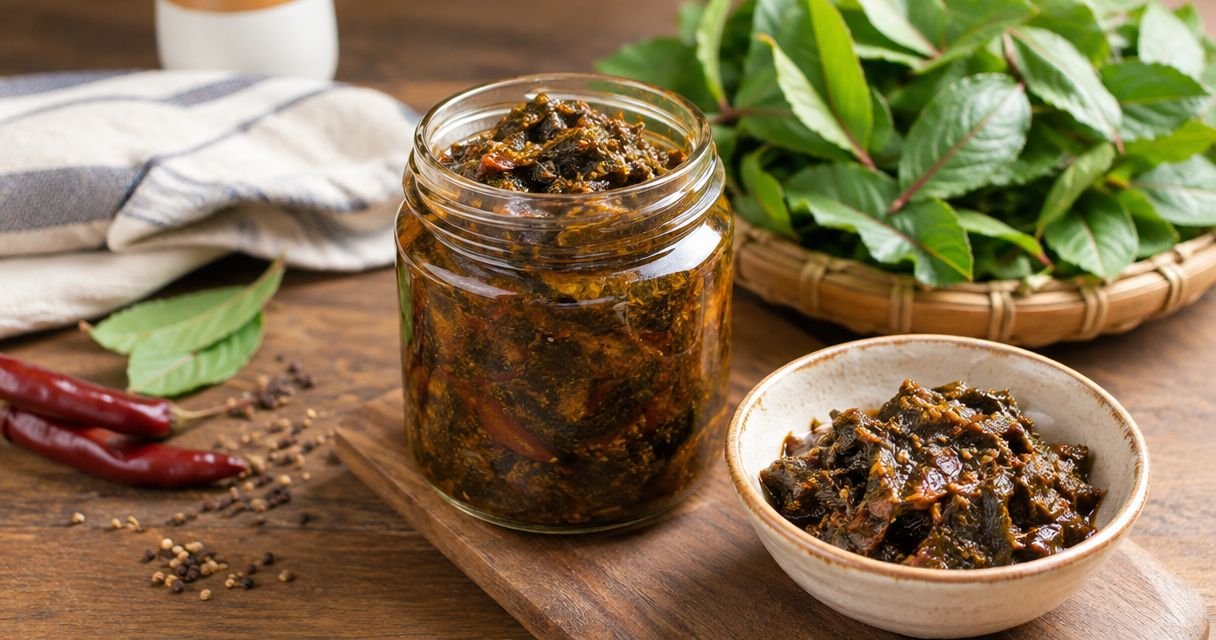
Gongura pickle stays fresh after opening for the period stated in its after-opening instructions—not for a universal number of weeks or months. Follow the jar’s storage directions and use-by instructions together; an unopened shelf-life claim does not automatically apply once you break the seal. For your 2026 kitchen routine, record the opening date, prevent contamination, and refrigerate when directed.
- Gongura pickle shelf life after opening depends on the product’s instructions, storage conditions, and handling.
- Tulasi Pickles sells Andhra-style pickles; follow each jar’s own storage directions rather than a category-wide estimate.
- Keep refrigerated food at 4°C or below; refrigeration does not rescue spoiled pickle.
- Discard mouldy pickle completely. Do not scrape off the surface or taste it to check safety.
How long does gongura pickle stay fresh after opening?
Use the manufacturer’s stated after-opening period, under the storage conditions specified on the label. If the jar gives an unopened shelf life but no instructions for opened storage, ask the seller before assigning it a deadline yourself. A general online estimate cannot establish the safety of a particular recipe or batch.
Start with these steps:
- Read the label. Find the storage instructions, date marking, and any wording about consumption after opening.
- Record the opening date. Write the actual day, month, and year, including 2026, on the jar or a separate label.
- Check the conditions. Confirm whether the instructions require refrigeration and whether you have followed them consistently.
- Use the applicable deadline. Do not treat an after-opening period as permission to ignore a use-by date.
- Discard suspect pickle. Visible spoilage or damaged packaging overrides the calendar.
For the wider storage routine, see how to store homemade pickles for long shelf life. The key distinction is between preserving quality and proving safety: a pickle that looks acceptable is not automatically safe.
Why this matters
Opening a jar changes its exposure to utensils, hands, moisture, and the kitchen environment. You no longer have the same conditions as an intact, sealed pack.
Gongura’s sour taste is not a safety test. Neither an oil layer nor a strong chilli flavour proves that a jar is protected from contamination. Your 2026 storage decision should follow the actual product instructions, not the assumption that all traditional pickles keep equally well.
You also need to separate freshness from safety. Aroma, texture, and flavour can deteriorate during storage, while some food-safety hazards produce no obvious warning. Never use a taste test to resolve uncertainty about a suspect jar.
Which storage approach should you use?
The label determines the permitted storage method. The comparison below explains the practical benefits and limits of different approaches; it does not assign an unsupported shelf life to any of them.
| Storage approach | Best for | Benefit | Limitation |
|---|---|---|---|
| Label-directed cupboard storage | Products explicitly labelled for room-temperature storage after opening | Keeps the jar accessible without using refrigerator space | A warm kitchen or unsuitable storage location can conflict with the required conditions |
| Refrigerated storage | Products requiring refrigeration after opening | Slows microbial growth and quality deterioration | Does not sterilise pickle or reset its deadline |
| Separate serving portion | Households serving pickle at shared meals | Keeps table utensils away from the main jar | Leftovers from the serving bowl should not go back into the jar |
| Freezing | Products whose maker confirms freezing is suitable | Provides another storage method when specifically supported | Texture can change, and freezing cannot make spoiled food safe |
Refrigeration is a storage control, not a shelf-life guarantee. If your product requires refrigeration, the US Food and Drug Administration’s general household guidance is to keep the refrigerator at 4°C or below, equivalent to approximately 40°F. Those temperatures are general food-storage guidance, not a tested gongura-pickle expiry period.
What if the label gives no opened-storage instructions?
Ask the manufacturer whether refrigeration is required, how long the product should be used after opening, and how that period relates to the printed date. Keep the original packaging so you can provide the batch details.
Do not substitute advice for fresh gongura pachadi, another brand’s pickle, or a family recipe. Those foods can differ in ingredients, processing, and intended storage conditions.
Why gongura pickle shelf life varies
There is no sound way to calculate an opened jar’s remaining life from its colour or tanginess. These factors explain why instructions differ:
- Recipe and processing: Acidity, salt, moisture, ingredients, and production methods affect preservation. A sour taste alone does not measure those controls.
- Storage temperature: Heat affects food quality and microbial growth. Follow the specified conditions rather than treating every cupboard as a cool place.
- Utensil hygiene: A spoon carrying food residue or saliva introduces contamination into the jar.
- Added moisture: Water from wet utensils or food changes the conditions in the pickle. Avoid introducing it into the storage container.
- Container condition: A damaged lid, compromised seal, or dirty rim affects how well the jar protects its contents.
- Handling history: Repeated serving, extended exposure, and uncertain storage make the history harder to assess. A newly written date cannot undo earlier mishandling.
These factors explain variation; they are not a formula for adding extra days. Good handling supports the stated storage period—it does not extend it without evidence.
How should you handle an opened jar each day?
Set up a routine that keeps the main jar separate from the meal. The aim is simple: take out what you need without bringing water, food scraps, or used utensils back in.
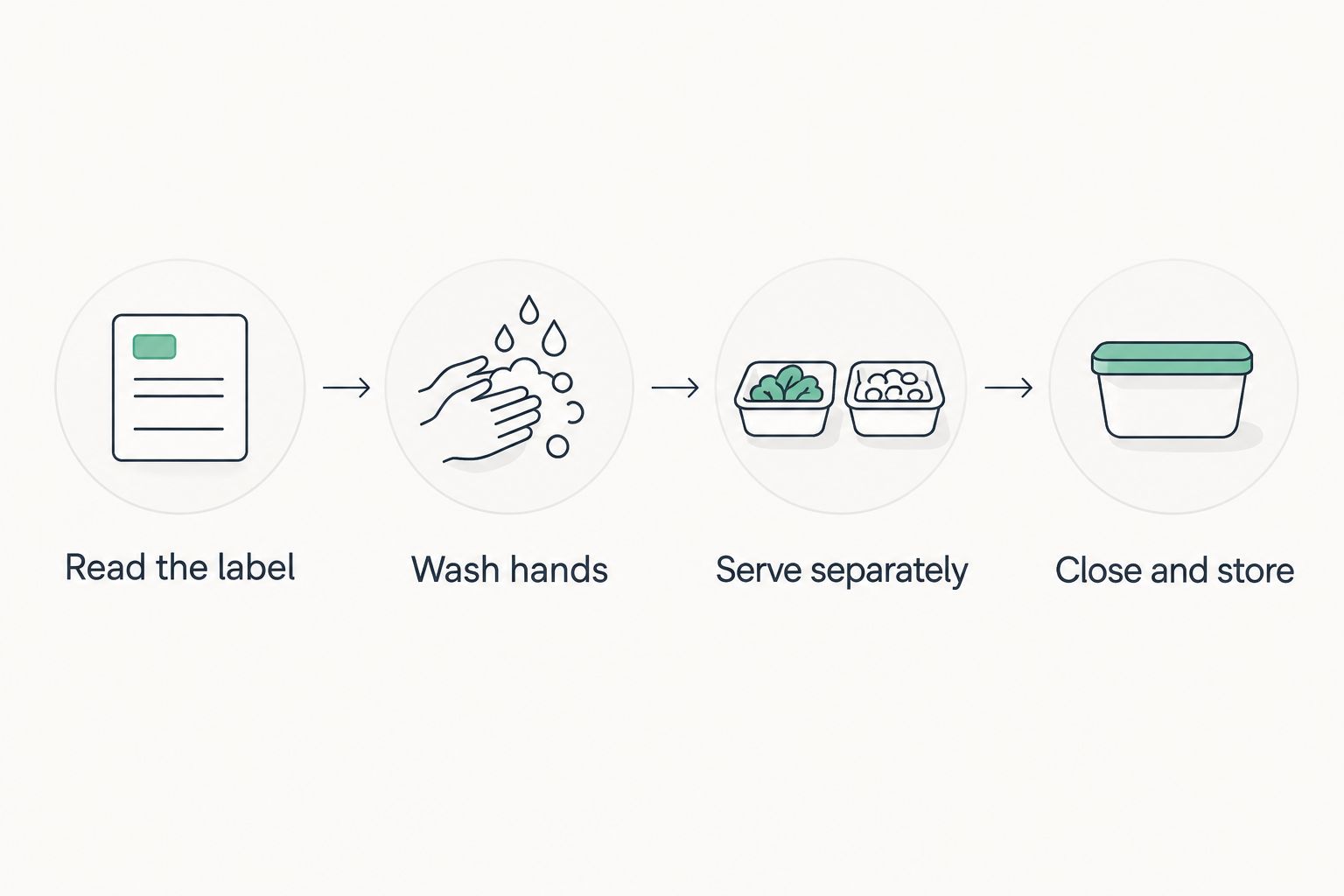
Read the label
Check the directions before the first serving, not after the jar has spent time on the table. Keep any outer packaging that contains instructions missing from the container itself.
If you transfer the pickle, copy the product identity, printed date, opening date, and storage directions. A clean container without that information makes later decisions harder.
Wash hands
Wash your hands with soap and water for at least 20 seconds before handling food. This follows US Centers for Disease Control and Prevention handwashing guidance and applies to food handling generally, not just pickles.
Use a clean, dry utensil for the jar. Do not use the same spoon to taste the pickle and then scoop another portion.
Serve separately
Put the portion you intend to eat into a clean serving bowl. Keep the main jar away from rice, dal, curd, and other foods being served alongside it.
Do not return leftovers from a shared bowl to the jar. Even if the remaining pickle looks untouched, you cannot confirm which utensils contacted it.
Close and store
Close the lid properly after serving and return the jar to its instructed storage location. Keep the rim clean so food residue does not interfere with closure.
For your 2026 routine, make the opening-date label readable without removing the lid. That small change makes it easier for everyone in the household to follow the same instructions.
How can you tell when gongura pickle should be discarded?
Discard gongura pickle with visible mould; do not remove the top layer and eat the rest. USDA guidance for mouldy soft, moist foods supports discarding the affected food because contamination can extend below the visible surface.
Other warning signs include unexpected gas production, a bulging container, spurting contents, or a distinctly abnormal smell. Do not taste pickle from a suspect container, and avoid opening a visibly swollen or damaged pack just to inspect it more closely.
Colour changes need context. Leaf-based foods can change colour during storage, so darker colour alone does not establish either spoilage or safety. Look at the packaging condition, handling history, instructions, and any other changes together.
If mould is visible, that decision is already made: discard the contents. If there are no obvious warning signs but the storage history is uncertain, absence of mould is not clearance to eat it.
Does oil on top mean the pickle is still fresh?
An oil layer is not proof of freshness or safety. Oil can separate in a pickle, but it cannot tell you whether the product has been handled correctly or remains within its instructed use period.
Do not add fresh oil to conceal a change in appearance or try to rescue a questionable jar. Adding oil does not remove contamination, reverse spoilage, or restart the storage clock.
Likewise, do not pour water into the main jar to loosen thick pickle. Take out a serving first if you want to change its consistency for a meal, and treat that prepared portion separately from the stored product.
Does putting an old jar in the fridge make it safe again?
Refrigerating an old or mishandled jar does not make it safe again. Cold storage slows many processes; it does not erase the jar’s earlier temperature exposure or remove hazards already present.
If the label required refrigeration and the jar was stored differently, ask the manufacturer for advice using the actual circumstances. Do not invent a new after-opening period from the day you finally refrigerate it.
The same applies after a power cut. Check the refrigerator’s temperature history and applicable food-safety guidance instead of assuming that a closed door guarantees suitable conditions.
What should you check before buying another jar?
Tulasi Pickles is best suited to buyers seeking homemade Andhra-style pickles. Its Gongura Pickle is described as a sorrel-leaf pickle, but that product description is not an after-opening storage guarantee.
Before buying, check whether the pack explains storage after opening and how its date marking should be interpreted. If you cannot find those instructions, ask before ordering rather than assigning a shelf life from another product’s listing.
Choose a quantity that fits your actual eating habits. A household that serves pickle occasionally has different needs from one that uses it regularly, but neither should extend a deadline simply to finish the jar.
The practical advantage of a smaller quantity is less remaining food to manage after opening. The limitation is that pack size itself does not improve preservation: handling and storage instructions still apply.
FAQ
How many months does gongura pickle last after opening?
Gongura pickle has no universal after-opening period measured in months. Use the product’s specific instructions and date marking, and ask the manufacturer if opened-storage guidance is unclear.
Should I refrigerate gongura pickle after opening?
Refrigerate gongura pickle when its label requires refrigeration. Keep refrigerated food at 4°C or below; that temperature is a general storage control, not a guaranteed pickle shelf life.
Can I eat gongura pickle if it smells normal?
A normal smell does not prove gongura pickle is safe. Check its instructions, applicable dates, packaging, and storage history, and never taste a suspect jar to test it.
Can I scrape mould off gongura pickle and eat the rest?
Do not scrape mould off gongura pickle and eat the remainder. Discard the contents because contamination can extend beyond what you can see.
Does adding more oil make opened gongura pickle last longer?
Adding oil does not establish a longer safe storage period for opened gongura pickle. It cannot reverse spoilage or replace the manufacturer’s directions.
Can I put leftover pickle from my plate back into the jar?
Do not return pickle from your plate or a shared serving bowl to the main jar. Used utensils and contact with other foods introduce contamination.
How long does Tulasi Pickles gongura pickle last once opened?
For Tulasi Pickles gongura pickle, follow the storage and after-opening instructions supplied with the specific pack. Ask the seller for clarification rather than applying a generic online duration.
One last thing
An opening date records history; it does not certify freshness. For every jar you open in 2026, record the date and keep the original storage directions together so you have both pieces of information when deciding whether to serve it.
If you remember only the date but not whether the jar was stored correctly, you have only half the picture. Never let a neat label overrule visible spoilage or uncertain handling.
Related guides
- Is oil separating on top of pickle normal or spoiled?
- How to tell if a pickle jar has gone bad
- How to choose the right pickle jar size for your family