
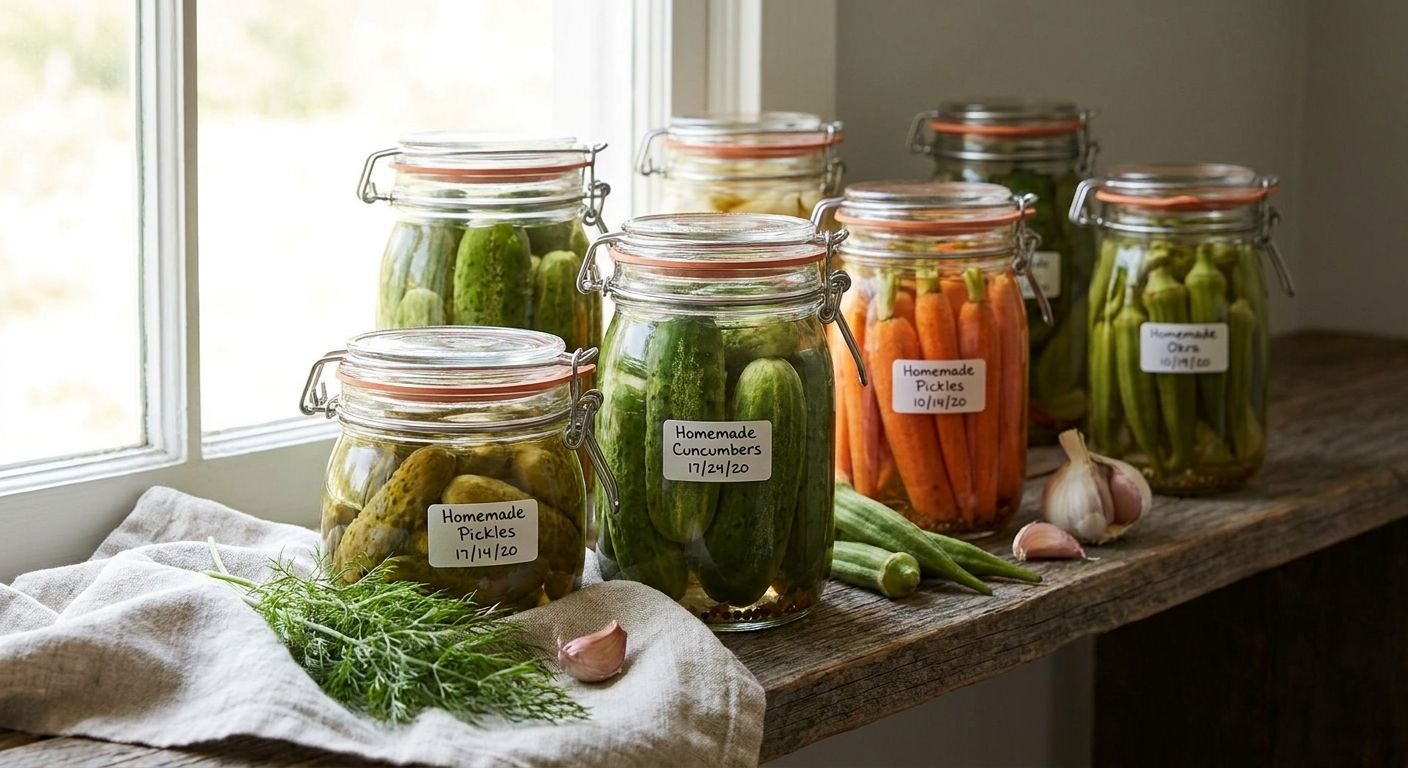
Homemade pickles don't fail because of bad ingredients — they fail because of a wet spoon, a loose lid, or a jar left in direct sunlight. Get storage right and a jar of Andhra-style pickle from Tulasi Pickles stays good for months; get it wrong and mold shows up on top within weeks.
- How to store pickles for long shelf life: use dry glass or ceramic jars, never plastic or metal.
- Keep oil-based pickles like Avakaya Mango Pickle fully covered in oil — an exposed surface invites mold fast.
- Refrigerate non-veg pickles and low-oil pickles after opening; they spoil faster than oil-heavy veg pickles at room temperature.
- A dry serving spoon, used every single time, does more for shelf life than any storage hack.
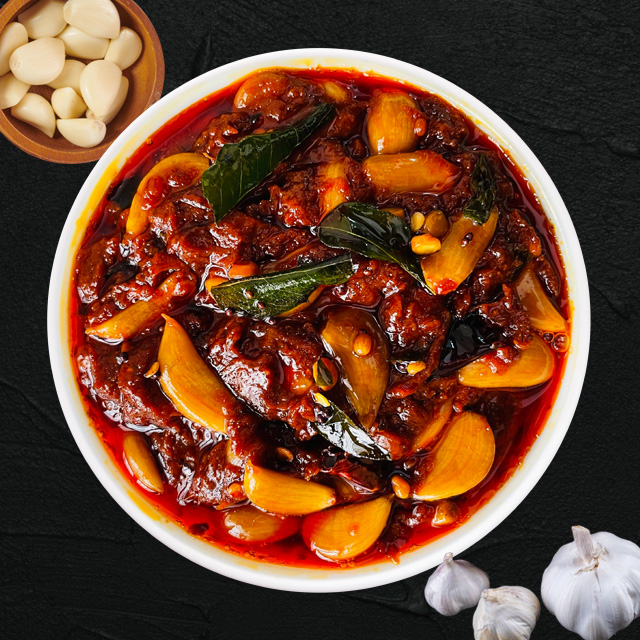
- Garlic Pickle and similar oil-based pickles from Tulasi Pickles hold up for months when sealed tight in a cool, dark spot.
Why this matters
Traditional Andhra pickles are preserved with oil, salt, and chili — not refrigeration or additives. That method has worked in Hyderabad kitchens for generations, but it only works if moisture and air stay out of the jar. Every drop of water that touches the pickle gives bacteria a foothold, and every gap in the oil layer gives mold a place to start.
In 2026, most storage complaints about homemade pickles trace back to the same three mistakes: a wet spoon, a jar that isn't airtight, or heat exposure near a stove or window. None of these need fixing with chemicals. They need a routine.
What you'll need
- A clean glass or ceramic jar with an airtight lid — avoid plastic and reactive metal containers
- A completely dry serving spoon, ideally one kept only for the pickle jar
- Extra cooking oil (groundnut or sesame, matching what the pickle was made with) to top up the surface
- A cool, dark cupboard shelf, away from the stove and direct sunlight
- Refrigerator space, specifically for non-veg pickles and any pickle low on oil
- The pickle itself — an oil-based veg pickle like Garlic Pickle behaves very differently in storage than a low-oil or non-veg one, so know which type you're dealing with before you set a routine
The steps
1. Pick a container that won't react with the pickle
Glass and ceramic jars don't absorb odor, don't react with the acid and salt in pickle brine, and let you see the oil level at a glance. Plastic containers hold on to spice oils and can leach flavor and plasticky smell into the pickle over a few weeks. Steel is workable short-term but not ideal for months of storage since the salt and acid slowly pit the surface.
Expected outcome: a jar you can reuse for years, with no cross-contamination between batches. Common mistake: reusing a jar that previously held something oily or pungent — the old smell transfers.
2. Dry the jar and every tool that touches it completely
Before filling or refilling a jar, wash it and then dry it in direct sun or with a clean cloth until there is zero moisture left, including in the lid grooves. Any residual water droplet is enough to start fermentation or mold in a jar that's otherwise sealed correctly.
Expected outcome: a bone-dry jar ready for months of storage. Common mistake: wiping a jar dry and filling it immediately — leave it to air-dry for at least an hour longer than feels necessary.
3. Keep the oil layer topped up at all times
Oil-based pickles like Avakaya, Magaya, or garlic pickle rely on a visible layer of oil sitting above the solid pieces. That layer blocks air contact, which is what stops mold from forming. Every time you take pickle out, check the surface — if pieces are peeking through, add a spoonful of the same oil used in the recipe.
Expected outcome: a shiny oil surface across the whole jar, every single time you open it. Common mistake: letting the oil level drop for a few days "because it's almost time to make more" — that's exactly when mold starts.
4. Store at room temperature, but out of heat and light
A cool, dark cupboard shelf works better than a kitchen counter near the stove or a windowsill. Heat speeds up oil oxidation, which turns the pickle rancid faster, and direct light degrades color and flavor over time. Andhra households have relied on dark wooden almirahs for this reason for decades — the principle hasn't changed by 2026.
Expected outcome: consistent flavor and color for the full shelf life of the batch. Common mistake: storing the jar above or next to the stove for convenience.
5. Refrigerate non-veg and low-oil pickles after opening
Chicken, mutton, prawns, and fish pickles carry animal protein, which spoils faster than a vegetable pickle even when oil-heavy. Once opened, these go in the refrigerator, not the cupboard. Low-oil pickles like mint or drumstick pickle behave the same way — less oil means less of a barrier against air and moisture.
Expected outcome: non-veg pickle that stays safe to eat for weeks under refrigeration instead of days at room temperature. Common mistake: leaving a non-veg pickle jar on the counter the way you'd store a mango pickle — the shelf life is not the same.
6. Use one dedicated, always-dry spoon
The single habit that does the most damage when skipped: using a wet spoon, a shared serving spoon, or fingers to scoop pickle out of the jar. Keep one spoon just for the pickle jar, dry it after every wash, and never let it touch water right before dipping into the jar.
Expected outcome: a jar that lasts its full intended shelf life without surprise mold. Common mistake: grabbing whatever spoon is closest, especially one just rinsed at the sink.
7. Check the jar weekly for the first month after opening
Once a jar is opened, quickly scan the surface each time you use it for the first four weeks: look for a dull sheen, a white film, or bubbling that wasn't there before. Catching an early sign lets you skim off a small spot before it spreads, instead of discovering a ruined jar later.
Expected outcome: early detection of any storage slip, before it costs you the whole jar. Common mistake: assuming a sealed jar is a set-and-forget jar — it isn't, especially in the first month after opening.


Troubleshooting
- White film or fuzzy spots on the surface — Scoop out the affected portion along with an inch of pickle underneath it, then top up fresh oil over the remaining pickle. If the smell has changed, discard the jar entirely.
- Oil smells sharp or rancid — The oil has started oxidizing, usually from heat or light exposure. Move the jar to a cooler, darker spot immediately and use up that batch sooner rather than storing it long-term.
- Pickle tastes unusually sour or fizzy — This signals fermentation has kicked in from moisture contact. It's often still edible if caught early, but refrigerate it right away and use it within days.
- Non-veg pickle has an off smell after a few days at room temperature — This is expected once opened; non-veg pickle belongs in the refrigerator immediately after the seal is broken, not on a cupboard shelf.
- Salt crystals forming on top — This is a sign of temperature swings, not spoilage. Stir gently to redistribute and keep the jar at a steadier temperature going forward.
- Oil separating into layers — Normal with cold weather or a fridge stint. Bring the jar to room temperature and give it a gentle stir before serving.
Tools and resources
- Airtight glass jars, sized to how fast you finish a batch — smaller jars mean less air exposure per opening
- A dedicated serving spoon, kept dry and stored separately from other kitchen spoons
- Extra groundnut or sesame oil on hand for topping up jars
- A read on how pickles hold up over long-distance shipping if you're sending jars abroad: Andhra pickles shipped overseas to the USA and UK covers what changes in transit versus home storage
What to do next
Once storage is dialed in at home, the next question is usually what to stock for family who live outside India, since shipping adds time before the jar even reaches a cupboard. Pickles from Hyderabad for NRIs walks through which varieties travel and store best over long distances.
FAQ
How long do homemade pickles last if stored properly?
Oil-based Andhra pickles like Avakaya or Garlic Pickle typically stay good for several months at room temperature when kept airtight, dry, and fully covered in oil. Non-veg and low-oil pickles have a shorter window and need refrigeration after opening.
Should I refrigerate homemade pickles?
Non-veg pickles need refrigeration once opened, but most oil-heavy veg pickles do fine in a cool, dark cupboard. Refrigeration isn’t wrong for veg pickles either — it just isn’t required if the oil layer and jar seal are intact.
Why does mold form on top of pickle even in a sealed jar?
Mold forms when the oil layer drops low enough to expose pickle pieces to air, or when moisture from a wet spoon gets into the jar. Topping up oil regularly and using only a dry spoon prevents this in most cases.
Is it safe to eat pickle with a thin white layer on top?
A thin white layer can be salt crystallization, which is harmless, or early mold, which isn’t. If it’s fuzzy or has an off smell, scoop it out along with the pickle underneath and check the rest of the jar before eating.
How to store pickles for long shelf life while traveling or shipping?
Keep the jar sealed and upright, avoid heat exposure during transit, and check the oil level as soon as it arrives. Jars shipped overseas hold up well when the seal stays intact for the whole journey.
Can I store pickle in a plastic container?
Plastic works for a few days but isn’t ideal for months of storage since it absorbs spice oils and can pass on flavor over time. Glass or ceramic is the better long-term choice.
What’s the biggest mistake people make storing homemade pickles?
Using a wet spoon is the single most common cause of spoiled pickle jars. Moisture from the spoon introduces bacteria that a dry jar and full oil layer would otherwise keep out.
Do non-veg pickles need different storage than veg pickles?
Yes. Non-veg pickles like chicken or prawn pickle spoil faster than oil-based veg pickles and need refrigeration after opening, while most veg pickles are fine on a cupboard shelf if sealed and topped with oil.
One last thing
The oil on top of a jar isn't just flavor — it's the entire preservation system for a pickle made without additives. Skim it thin and the pickle spoils fast no matter how airtight the jar is; keep it generous and even a basic steel-clip lid will hold a batch for months. Check the oil line before you check the lid.
Related guides
- Authentic homemade Andhra pickles
- Garlic pickle for immunity-conscious pickle lovers
- Best homemade pickles in Hyderabad with price breakdown