
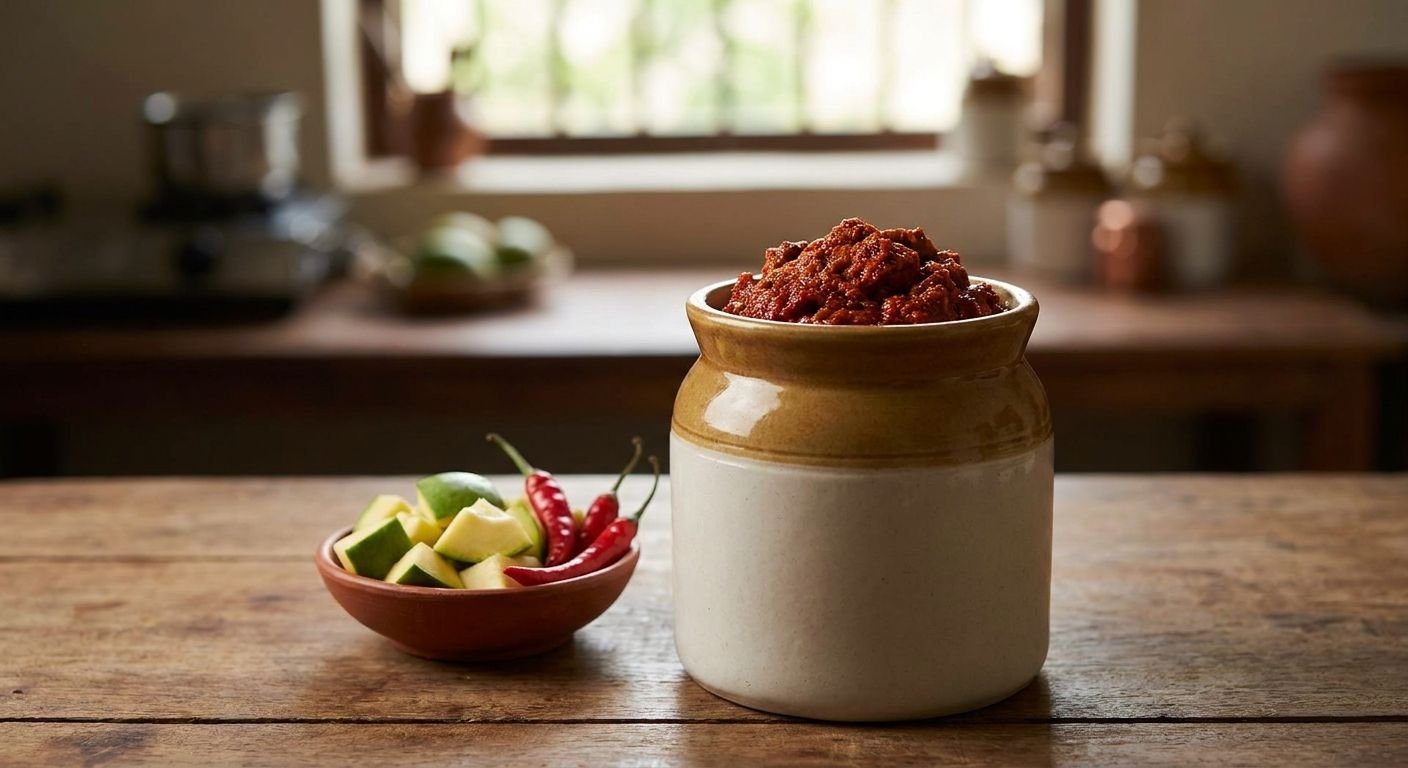
Authentic Andhra avakaya pickle has firm, hand-cut raw mango pieces suspended in reddish-orange oil that has visibly separated to the top, a coarse (not powdery) mustard-seed coating, and a sour-spicy smell with no vinegar sting. If the oil looks pale, thin, or fully absorbed into the mango and the smell reads more "tangy vinegar" than "raw mango and mustard," you're looking at a mass-produced or short-cut batch, not a traditional one. The hidden cost most buyers miss: authentic avakaya needs weeks of oil-curing to develop that reddish hue and sharp aroma, so a jar that looks "finished" within days of being made is almost always cutting corners on oil quantity or resting time.
- Authentic avakaya has firm mango chunks, floating reddish oil, and coarse mustard powder — not a smooth, pale paste.
- Cold-pressed groundnut or sesame oil separating on top is the single clearest sign of a traditional Andhra batch in 2026.
- Avakaya Without Garlic (Rs 200) and Avakaya with Ginger & Garlic (Rs 220) from Tulasi Pickles both use raw mango and coarse mustard, not paste.
- Vinegar smell, uniform smooth texture, or oil fully soaked into the mango signals a shortcut recipe, not authentic avakaya.
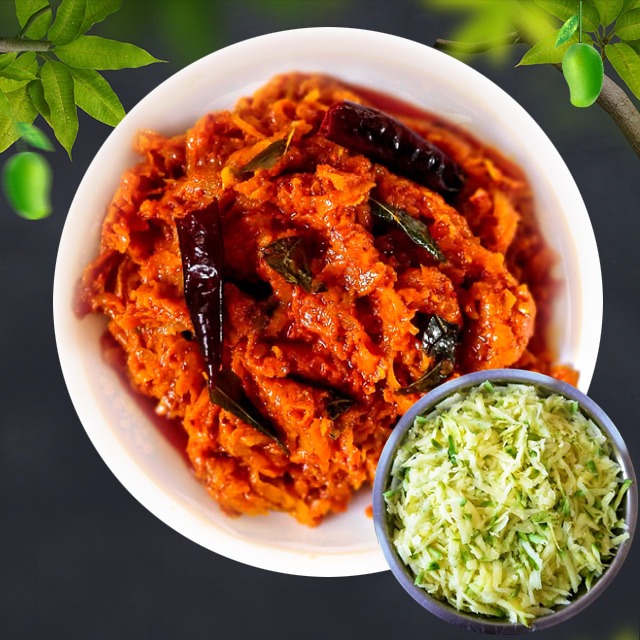
- Magaya (dried mango) and Mango Thurumu (grated mango) are different pickles entirely — don’t mistake either for avakaya.
Why this matters
Avakaya is the most copied pickle in Andhra cuisine, which means it's also the most faked. Brands cut corners on oil (refined oil instead of cold-pressed), swap fresh-ground mustard for stale pre-mixed masala, or grate the mango instead of dicing it because grated pickle ferments and "looks ready" faster. None of that is avakaya in the traditional sense — it's a shortcut wearing the name. Knowing the five or six physical tells below means you stop paying full price for a jar that tastes like it, without being it.
How to identify authentic Andhra avakaya pickle
Line the jar up against these checkpoints before you buy or reorder. Authentic avakaya passes on texture, oil behavior, and smell — a fake usually fails at least two of the three.
| Signal | Authentic Avakaya | Shortcut / Fake Version |
|---|---|---|
| Mango cut | Firm, hand-cut cubes, visible skin edges | Grated, mushy, or pre-diced uniform cubes |
| Oil | Reddish, floats and separates on top | Pale, thin, fully soaked in |
| Mustard | Coarse, visible flecks (avalu) | Fine powder blended smooth into paste |
| Smell | Sharp raw mango, mustard, garlic if used | Vinegar-forward, flat, or overly sweet |
| Color | Deep red-orange from chili and oil | Dull yellow-brown or artificially bright red |
| Shelf behavior | Oil rises again after stirring for months | Oil stays mixed in or separates as watery liquid |
Run a simple test at home: scoop a spoon of pickle and let it sit for two minutes. Real avakaya oil rises back to the surface and coats the spoon; a fake settles into a thin, watery layer or doesn't separate at all. That single check catches most imitation batches sold under the avakaya name in 2026.
For a broader read on what separates handmade Andhra pickles from factory-line jars across categories, not just avakaya, the homemade taste checklist walks through the same oil-and-spice logic for other varieties.
Avakaya with Ginger and Garlic (Rs 220): what the aroma should tell you
Garlic-forward avakaya carries an extra layer of pungency on top of the mustard-and-chili base, and that garlic should smell raw and sharp, not roasted or muted. If the garlic scent is faint or missing entirely despite garlic being listed on the label, the batch was likely made with pre-fried or old garlic added late, which skips the raw pungency that defines this variant. Tulasi Pickles' Avakaya Mango Pickle with Ginger & Garlic uses diced raw mango with cold-pressed oil, so the garlic pieces stay visible rather than dissolving into the base. Verdict: buy this version if you want the sharper, more layered avakaya profile — skip it if you're sensitive to raw garlic aftertaste.
Avakaya Without Garlic (Rs 200): the purest test of technique
This is the version that exposes shortcuts fastest, because there's no garlic pungency to mask a weak spice base. Without garlic, the mustard-powder-to-chili ratio and oil quality carry the entire flavor, so any imbalance shows up immediately as either too sour or too flat. Verdict: this is the variant to taste-test a new seller on — if the garlic-free avakaya tastes balanced, their full range is probably reliable.
Magaya vs Avakaya: don't confuse dried mango with fresh-cut
Magaya uses dried mango slices instead of fresh raw mango, which gives it a chewier texture and a different sourness than avakaya's fresh-cut bite. Both use similar oil and spice bases, so sellers sometimes blur the line in marketing, but the mango prep is the real differentiator. Magaya Pickle (Sliced Mango) is a distinct product line, not a variant of avakaya, and asking a seller which one you're buying before you order avoids the mix-up. Verdict: if the listing doesn't specify fresh-cut raw mango, assume it's not true avakaya until confirmed.


Why authentic avakaya varies from jar to jar
Even genuine avakaya isn't identical batch to batch, and these are the factors that legitimately shift color, heat, and texture:
- Mango sourness: raw mangoes vary by season and region, so tartness swings even when the recipe is identical.
- Oil type: cold-pressed groundnut oil gives a nuttier finish than sesame oil, both traditional but different.
- Chili batch: Guntur-style chili powder varies in heat depending on the crop year, so 2026 batches may run hotter or milder than last year's.
- Garlic freshness: fresh garlic cloves cure differently than pre-peeled or stored garlic, changing pungency.
- Resting time: pickles cured for several weeks develop deeper color and flavor than ones bottled and sold within days.
- Salt as preservative: recipes that rely on salt and oil for shelf life (no added preservatives) age and darken naturally over months, while chemically preserved versions stay visually static.
If the oil doesn't rise back to the top after you stir the jar, it isn't authentic avakaya — it's a shortcut wearing the name.
Is avakaya pickle supposed to be very oily?
Yes, avakaya is supposed to carry a generous layer of oil because the oil acts as the natural preservative in place of vinegar or refrigeration. A jar with very little visible oil either used less oil than the traditional ratio or has already had oil skimmed off, both of which shorten shelf life and dull the flavor.
How long does authentic homemade avakaya last without refrigeration?
Authentic avakaya, made with enough oil and salt as the preservative base, holds well at room temperature for months when stored in a dry, airtight container away from moisture. The pickle storage guide covers the exact conditions — dry spoon use, jar sealing, and heat exposure — that extend or shorten that window.
Can avakaya be made without oil floating on top?
No — if there's no oil layer at all, either too little oil was used or the pickle has already started drawing moisture, both of which shorten its shelf life significantly. A visible oil cap is the resting point authentic avakaya settles into, not an optional finishing touch.
FAQ
What is avakaya pickle made of?
Avakaya is made from raw, diced mango mixed with coarse mustard powder, red chili powder, salt, and oil, with garlic added in some versions. The mango is never cooked, and cold-pressed groundnut or sesame oil is the traditional base rather than refined oil.
How do I know if pickle oil is real cold-pressed oil?
Real cold-pressed oil separates and rises to the top after the jar sits or is stirred, and it carries a slightly nutty smell rather than a neutral, flat one. Refined oil tends to stay mixed into the pickle and leaves a thinner, greasier residue on the spoon.
Is avakaya pickle very spicy?
Avakaya is typically spicy by design because Guntur-style red chili powder is a core ingredient, not an optional add-on. Heat level varies by batch since chili crop intensity changes year to year, so 2026 batches can run hotter or milder than a previous year’s jar.
What’s the difference between avakaya and magaya pickle?
Avakaya uses fresh raw mango cut into firm cubes, while magaya uses dried mango slices, giving it a chewier bite and different sourness. Both share a similar oil and spice base, but the mango preparation is what separates the two.
Does authentic avakaya need refrigeration?
No, authentic avakaya made with enough oil and salt as preservatives holds at room temperature for months if kept dry and airtight. Refrigeration is optional and mainly extends shelf life further rather than being required for safety.
Can avakaya be made without garlic?
Yes, garlic-free avakaya is a standard traditional variant and relies on mustard, chili, and salt alone for its flavor base. It’s a useful way to judge a seller’s core technique since there’s no garlic pungency to mask an unbalanced spice mix.
Why does my avakaya taste more like vinegar than mustard?
A vinegar-forward taste usually means the pickle was made with a shortcut souring agent instead of relying on raw mango and salt-oil curing. Authentic avakaya gets its tang from the raw mango itself, not from added vinegar.
One last thing
The fastest authenticity check nobody mentions: smell the jar before you open the mango pieces apart. If the aroma hits you the moment the lid comes off, the mustard and chili are fresh and well-cured; if you have to dig in and stir to smell anything, the spice was likely added late or in reduced quantity to cut costs. That single sniff test, done before you even taste, catches more shortcut batches than checking color or texture alone.
Related guides
- Best Andhra pickles for authentic homemade taste
- How to store homemade pickles for long shelf life
- Best homemade pickles in Hyderabad with price breakdown
- Andhra pickles for overseas shipping to USA and UK