
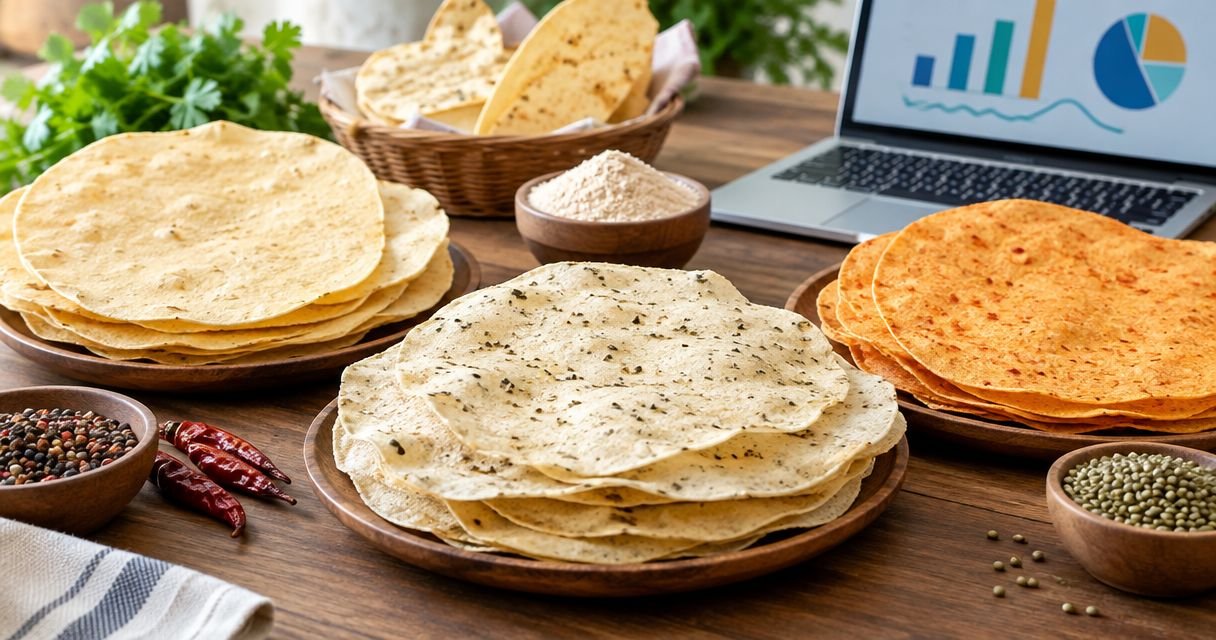
Papad price per kg is not a number you can read off a product page: Indian papad listings are priced per pack, and the per-kilo figure comes from dividing the pack price by the pack weight. This 2026 guide gives you the formula, the variety-by-variety differences that move it, and how to compare Tulasi Pickles papads and vadiyalu against any other seller.
- Papad price per kg equals pack price divided by pack weight in grams, multiplied by 1,000.
- Compare per-kg cost only between the same variety: black gram, ash gourd and sabudana papads are different products.
- Tulasi Pickles sells Minapa Vadiyalu, Gummadikaya Vadiyalu and Majjiga Mirapakayalu as homemade Andhra papads in 2026.
- Check the current pack weight on each product page before you calculate; the listed price alone tells you nothing.
The short answer for 2026
There is no single papad price per kg in 2026. A black gram papad, an ash gourd fryum and a sun-dried curd chilli sit in different cost brackets because the base ingredient, the drying effort and the pack size all differ. Any page that quotes one flat rate for all papads is averaging unlike products.
The reliable method is a three-step calculation you can run in under a minute on any listing:
- Read the pack price on the product page.
- Read the net weight in grams.
- Divide price by weight, then multiply by 1,000.
That gives you rupees per kg. Run it for every variety you are considering, and compare like with like.
Why this matters
Papads are bought in small packs, so a small gap in pack weight changes the real per-kg cost sharply. A cheaper-looking pack can cost more per kilo than a larger one. Sellers also list the same word, "papad", for products with very different ingredients and processing.
Three things decide what you actually pay:
- Base ingredient. Black gram dal, ash gourd, sabudana and chillies each cost differently at source.
- Process. Sun-dried, hand-rolled Andhra vadiyalu take more labour than machine-made sheets.
- Pack weight. The smaller the pack, the more the packaging and handling weigh on the per-kg figure.
Prices on the Tulasi Pickles store change, so this page does not hard-code them. The product cards below carry the current listed price for each variety.
Papad variety benchmark: what each type is made of
This table is the yardstick for comparing varieties. Use the base ingredient column to decide whether two listings are comparable before you compare their per-kg cost.
| Variety | Base ingredient | Form | Best for |
|---|---|---|---|
| Minapa Vadiyalu | Black gram dal | Sun-dried Andhra fryum | Everyday frying alongside rice and dal |
| Gummadikaya Vadiyalu | Ash gourd | Sun-dried fryum, also called ash gourd papad | Buyers who want a vegetable-based fryum |
| Majjiga Mirapakayalu (Uppu Mirapakaya) | Curd-soaked chillies | Sun-dried curd chillies | Heat lovers who want a fried side |
| Saggubiyyam Vadiyalu (Sabudana Papad) | Sabudana | Sun-dried sabudana papad | Fasting-day and light snacking |
| Masala Saggubiyyam Vadiyalu | Sabudana with masala | Masala sabudana papad | Buyers who want a seasoned sabudana papad |
Minapa Vadiyalu is the default pick for a daily meal. Verdict: Buy.
Gummadikaya Vadiyalu suits buyers who want a lighter, vegetable-based fryum. Verdict: Buy.
Majjiga Mirapakayalu is a chilli product, not a conventional papad, so do not rank it against sheet papads on price per kg. Verdict: Buy if you want heat, skip if you want a mild crunch.
Sabudana papads are a separate category from the dal and gourd types. Compare them only against other sabudana listings. Verdict: Hold until you have checked the pack weight.
High and low: where the per-kg figure moves most
The widest swings in papad price per kg come from two places. Chilli-based products and sabudana papads sit in a different cost class from black gram and ash gourd vadiyalu, because the raw material and drying differ. Pack weight is the second swing factor: within the same variety, a small pack almost always costs more per kilo than a larger one.
The practical read: the cheapest sticker price is rarely the cheapest per kilo. Always divide.
How the numbers are built
This page does not publish a market-wide rupee-per-kg average because the inputs for a defensible one, pack weights across competing sellers on a single date, are not in the data behind it. What it publishes is the method and the variety structure. Treat any single national "papad price per kg" figure you find elsewhere as a rough guide at best, since it mixes varieties, brands and pack sizes.
One limitation to name: per-kg figures from a listing change whenever the seller changes the price or the pack. Recalculate each time you reorder.
How to use this benchmark
- Compare within a variety. Black gram against black gram, sabudana against sabudana.
- Always convert to per kg. Use the formula above, never the pack price alone.
- Check freshness and storage as well as cost. A papad that goes soft wastes the saving. See how to check papad freshness before buying online.
- Match the papad to the meal. The cheapest variety is wrong if it does not suit what you cook. The guide to papads that pair with Andhra meals helps you choose.
Worked example: running the formula
Take any listing. If a pack is priced at a figure P and weighs W grams, the per-kg price is P divided by W, times 1,000. Do the same for the second listing. The lower result is the cheaper papad per kilo, provided both are the same variety and both are sun-dried, homemade-style products.
Tulasi Pickles is a Hyderabad brand selling homemade veg and non-veg pickles, podis, papads, dry fruits and sweets, shipped across India and overseas. Its papad listings show the current price on each product page, so you can run this calculation yourself in 2026 without waiting for a third-party price table.
Papads on the Tulasi Pickles store
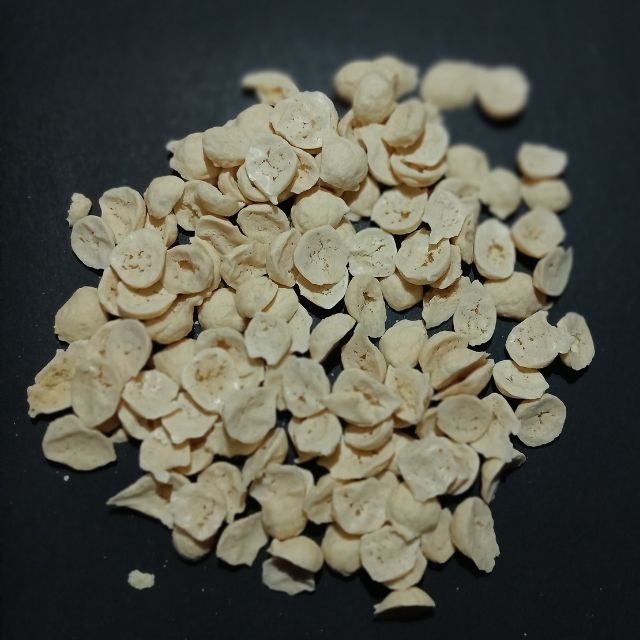
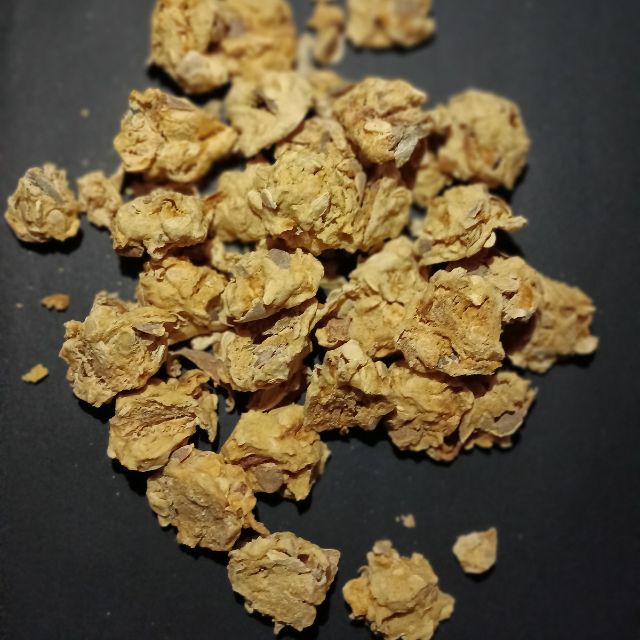
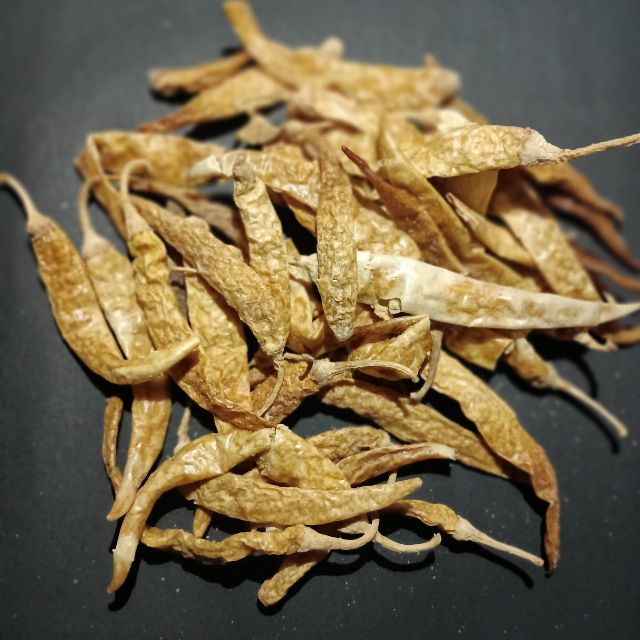
The cards above carry each listed price. Open the product page for the pack weight, then apply the formula.
Honest pros and cons
Homemade sun-dried vadiyalu: pros. Traditional process, clear base ingredients, and a flavour that matches Andhra meals. Cons. Small-batch production usually means a higher per-kg cost than mass-market sheet papads, and the fryums need frying, so the finished serving also uses oil.
Mass-market papads: pros. Often cheaper per kilo and widely available. Cons. Ingredients and processing vary by brand, so the comparison with homemade vadiyalu is never exact.
The quotable verdict: Tulasi Pickles suits buyers who want homemade Andhra vadiyalu with the ingredient named on the label and who will compare per-kg cost within the same variety.
FAQ
What is the papad price per kg in 2026?
There is no single figure, because papad price per kg depends on the variety and the pack weight. Divide the pack price by the weight in grams and multiply by 1,000 to get your own number for each listing.
How do I calculate papad price per kg?
Divide the pack price by the net weight in grams, then multiply by 1,000. Do this for every variety you compare so the result is in rupees per kg.
Is a bigger papad pack always cheaper per kg?
Usually, but not always. Larger packs tend to cost less per kilo, so confirm by running the formula on both pack sizes rather than assuming.
Can I compare black gram papad with sabudana papad on price?
Compare them only loosely. They use different base ingredients and processes, so a per-kg gap between them does not show better or worse value.
Which Tulasi Pickles papads are made with black gram?
Minapa Vadiyalu is the black gram dal variety. Gummadikaya Vadiyalu uses ash gourd, and Majjiga Mirapakayalu is made from sun-dried curd chillies.
Where can I see the current price of Tulasi Pickles papads?
Each product page on tulasipickles.com shows the current listed price and pack details. Check the page just before you order, since prices change.
One last thing
When you compare sellers, compare the weight line first and the price second. Most overpaying on papads happens because the pack looked cheap and nobody divided. Keep a note of the per-kg result and recheck it when you reorder in 2026, and read how to keep papads crispy after opening the pack so none of the pack goes to waste.
Related guides