
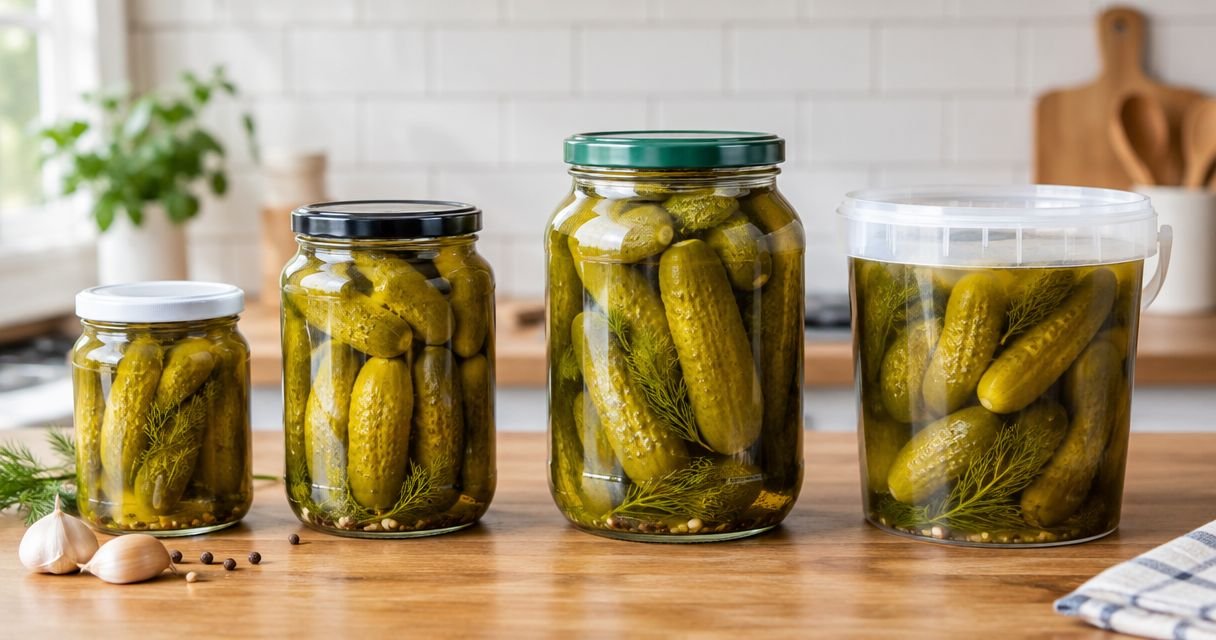
Best overall for a proven favourite: 500g. Best for a first purchase: 250g. Best for variety: two separate 250g packs. Best for planned bulk use: two separate 500g packs. This 2026 pickle pack size guide ranks those buying approaches by how well they match your eating habits, not by an assumed bulk discount.
- Choose a 500g pickle pack size for a favourite you already eat regularly.
- Choose 250g when trying an unfamiliar flavour; a smaller commitment matters more than extra quantity.
- Tulasi Pickles lists Garlic Pickle at 250g and selected non-veg pickles at 500g.
- Compare the same recipe by net weight and checkout total; a larger pack does not prove better value.
Why this matters
A bigger pickle pack is only useful if you want everything inside it. Buying more of an unfamiliar flavour creates a different decision from restocking something you already enjoy.
Tulasi Pickles sells homemade Andhra-style veg and non-veg pickles. Its product descriptions identify a 250g Garlic Pickle pack and 500g packs for Chicken Boneless Pickle Online, Mutton Boneless Pickle and Prawns Pickle. These are examples of pack weights, not a like-for-like comparison of recipes.
Tulasi Pickles is best for shoppers seeking homemade Andhra-style pickles; choose the pack weight around a flavour you already enjoy. For your 2026 order, separate two questions: how much pickle you need, and whether the specific pack represents good value at checkout.
What makes the best pickle pack size?
Use these criteria before choosing a pack. They keep a large headline weight from deciding the purchase for you.
- Flavour confidence: Buy more of a known favourite, not an untested recipe.
- Actual use: Match the quantity to meals where you genuinely serve pickle.
- Comparable weight: Compare net food weight, not container size or product photographs.
- Like-for-like recipe: Compare the same pickle, including bone-in or boneless format where relevant.
- Storage fit: Follow the product's storage directions and check the space you have.
- Total order fit: Judge the completed basket rather than assuming a larger pack reduces your overall spend.
Pickle pack sizes at a glance
This is a ranking of buying approaches for 2026, not a claim that every recipe comes in every size. Separate packs mean individual purchases, not a named combo or bundle.
| Rank and option | Best for | Standout feature | Key limitation |
|---|---|---|---|
| 1. One 500g pack | Restocking a proven favourite | Keeps the order focused on one regularly eaten pickle | Too much commitment for an uncertain flavour |
| 2. One 250g pack | Trying a new recipe | Smaller quantity to commit to | Contains half as much as a 500g pack |
| 3. Two separate 250g packs | Exploring different flavours | Splits 500g across two choices | Requires checking each product's pack weight separately |
| 4. Two separate 500g packs | Planned shared or bulk use | Gives 1kg total across separate packs | Requires a clear use and storage plan |
1. One 500g pack: best pickle pack size for repeat buyers
A 500g pack is the default recommendation when you already know you like the recipe and regularly serve it. It gives you twice the quantity of a 250g pack without requiring a 1kg purchase.
That makes it a practical restocking choice, not a guaranteed financial winner. Compare the same product and its current checkout total before treating the larger quantity as better value.
For a concrete example, Tulasi Pickles describes Chicken Boneless Pickle Online as a 500g pack. Mutton Boneless Pickle and Prawns Pickle also have 500g descriptions, but the shared weight does not make those different ingredients interchangeable value comparisons.
500g pack pros:
- Suits a flavour you already choose repeatedly.
- Keeps your purchase concentrated on one recipe.
- Gives more quantity than a 250g pack without doubling to 1kg.
500g pack cons:
- Commits you to more of a single flavour.
- Does not establish a lower cost per gram by itself.
Best for: You have finished this recipe before and want to restock it.
Verdict: Buy for repeat use; skip as the automatic first-order choice.
2. One 250g pack: best pickle pack size for first-time buyers
A 250g pack makes the most sense when your main question is whether you enjoy the pickle. You commit to half the quantity of a 500g pack, which keeps the flavour trial separate from bulk buying.
Garlic Pickle is explicitly described as a 250g pack in the Tulasi Pickles catalogue. That makes it a concrete smaller-pack example; it does not establish that every other pickle has the same weight option.
Choose the smaller pack because the quantity fits your uncertainty. Do not describe it as the cheapest option without comparing the actual basket, and do not assume a smaller pack is milder or easier to store.
250g pack pros:
- Limits the quantity committed to an unfamiliar recipe.
- Suits occasional use better than buying extra without a plan.
- Gives you a clear starting point before deciding whether to reorder.
250g pack cons:
- Contains less pickle than a 500g pack.
- Does not prove better value per gram.
Best for: You are trying a new flavour or rarely serve that particular pickle.
Verdict: Buy for a first taste; reassess the quantity after you finish it.
3. Two separate 250g packs: best for flavour exploration
Two 250g packs give you 500g in total while dividing the purchase between two recipes. This approach is for someone who wants choice rather than a larger quantity of one favourite.
The distinction matters: 500g spread across two flavours serves a different purpose from one 500g pack. You are choosing variety, not demonstrating a discount or buying a ready-made sampler.
Check the listed weight of each recipe before building this basket. The confirmed 250g Garlic Pickle example does not establish the weight of another product, even if its photograph shows a similar-looking container.
Two separate 250g packs pros:
- Divides your total quantity between different flavours.
- Lets you compare what you actually enjoy eating.
- Avoids committing the full 500g to one unfamiliar recipe.
Two separate 250g packs cons:
- Requires suitable individual pack weights for both choices.
- Leaves you managing two opened products if you open both together.
- Is not automatically better value than one larger pack.
Best for: You want to explore different recipes rather than restock a single favourite.
Verdict: Buy for deliberate variety; skip if you only want one flavour.
4. Two separate 500g packs: best for planned bulk use
Two 500g packs add up to 1kg. Choose this approach only when you can explain who will eat the pickle and which meals it belongs with.
Separate packs also let you decide whether to repeat one favourite or divide the order between different recipes. Follow each pack's label rather than assuming unopened and opened products have identical storage requirements.
A large household alone is not enough reason to buy more. Count the people who actually eat that particular pickle, especially when vegetarian preferences, seafood preferences or spice tolerance differ.
Two separate 500g packs pros:
- Provides 1kg total for a defined use.
- Lets you allocate separate packs to different eaters or meals.
- Supports either repeat-flavour stocking or a split between recipes.
Two separate 500g packs cons:
- Commits you to more food than the other ranked approaches.
- Needs suitable storage for each product.
- Does not prove a bulk saving or a longer usable life.
Best for: You have established demand for the pickle, not just an intention to eat more.
Verdict: Buy against a clear meal plan; skip speculative bulk stocking.
How to compare value without being misled by pack size
For a 2026 purchase, start with the same recipe in the weights you are considering. Comparing garlic pickle with boneless chicken pickle answers a flavour-and-ingredient question, not whether a larger pack of the same product is better value.
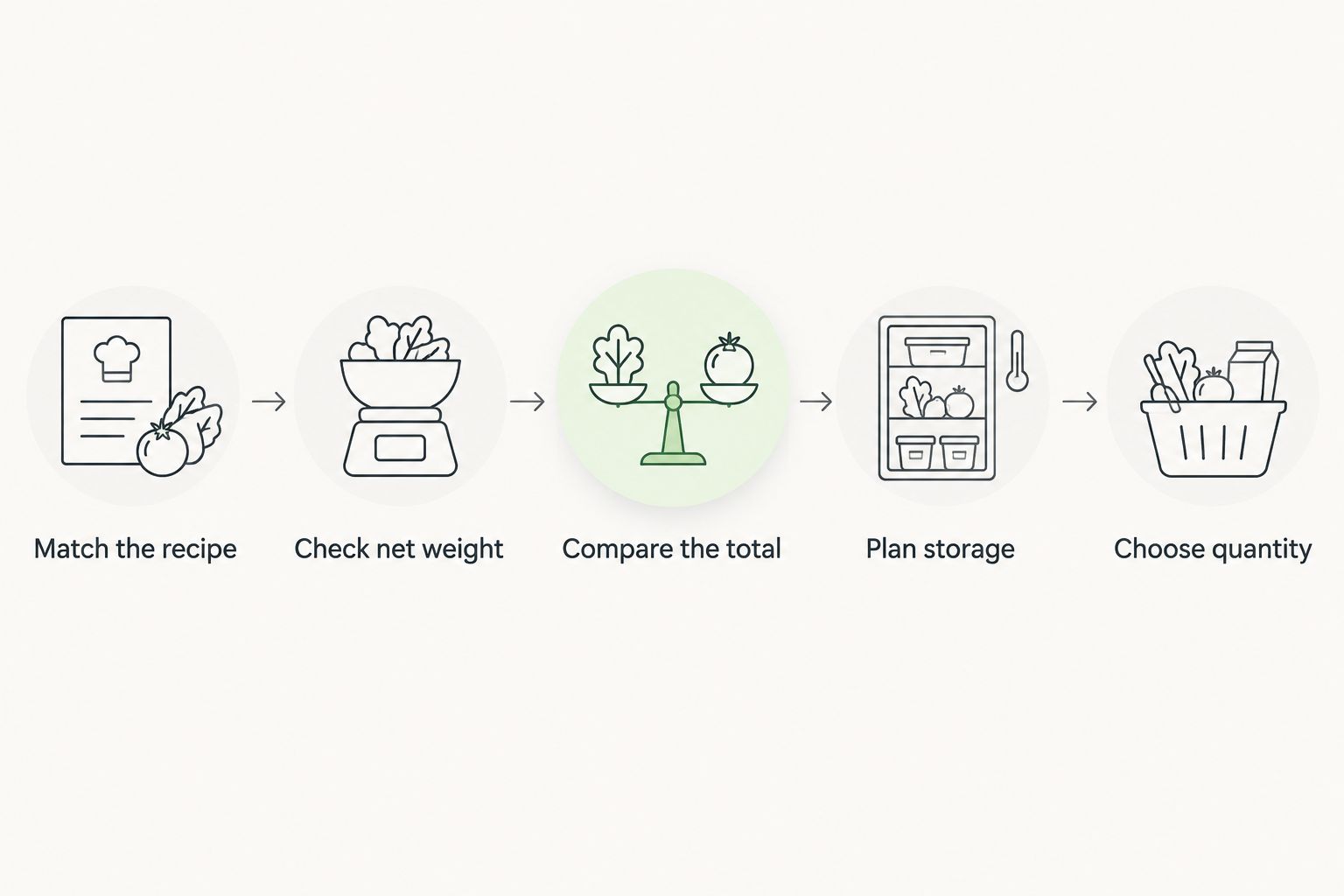
Use this sequence:
- Match the recipe. Keep the ingredient and preparation format consistent.
- Check net weight. Read the product information rather than judging the container.
- Compare the total. Review the completed order before choosing.
- Plan storage. Follow the pack's directions and account for other opened pickles.
- Choose quantity. Buy the amount that fits your actual use.
A 500g pack contains twice as much as a 250g pack. That arithmetic says nothing about the recipe, the proportion of different ingredients or how much you will enjoy eating it. Keep those decisions separate.
For a weight-normalised comparison, divide each comparable product's current amount payable by its net weight in grams. Keep the calculation private to your basket; the recommendation here does not depend on a fixed selling figure.
Real pack examples to check before ordering
Tulasi Pickles provides a useful contrast between Garlic Pickle at 250g and Chicken Boneless Pickle Online at 500g. Use these examples to recognise pack weights, then choose according to your flavour preference; neither product wins a like-for-like size comparison against the other.
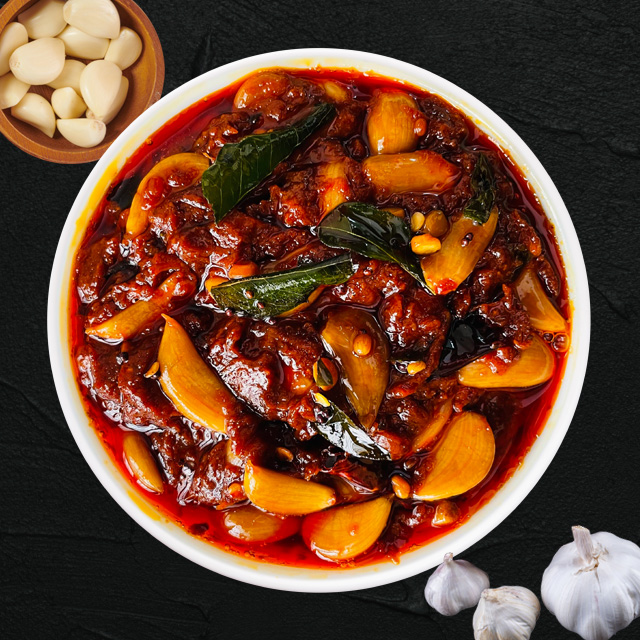

Read the selected product's full information before completing your order. A weight mentioned for one recipe is not a promise about the rest of the range.
Storage changes which pack makes sense
Choose quantity around the product's own storage instructions. A larger pack does not extend its printed date, and transferring pickle into another container does not reset that date.
Use clean, dry utensils and follow any refrigeration directions on the label. For a practical handling checklist, read how to store homemade pickles for long shelf life.
If you already have several opened pickles, count them before ordering another large pack. The useful question is not how much your household eats across all pickles, but how much of this specific recipe it eats.
Do not compensate for an oversized purchase by making portions larger. Adjust the next order to your habits instead.
How the pack sizes were ranked
The 2026 ranking prioritises flavour confidence, useful quantity, recipe comparability, storage fit and the completed basket. It does not award points for an unverified bulk discount or assume every product has multiple weight choices.
The 500g option ranks first for repeat buyers because it fits the stated task: restocking a known favourite. The 250g option takes priority when flavour uncertainty is the bigger concern. Separate-pack approaches serve variety and planned bulk use, respectively.
Which pickle pack size should you choose?
Choose 500g for a favourite you already eat regularly; choose 250g when you are still deciding whether you like the recipe. That is the clearest starting decision for 2026.
Pick two smaller packs when variety is the purpose of the order. Move to two 500g packs only when the quantity has a defined use. No size earns a value-for-money verdict from weight alone.
FAQ
What’s the best pickle pack size for value for money?
Choose 500g for a proven favourite and 250g for an unfamiliar recipe. Confirm value by comparing the same product’s net weight and completed checkout total; a larger pack alone does not establish a saving.
Is a 500g pickle pack better than a 250g pack?
A 500g pack is better suited to repeat use, while a 250g pack suits a flavour trial. The larger pack contains twice as much, but that does not guarantee better value for your household.
Which pickle pack size should I buy for the first time?
Choose 250g when the recipe has that pack option. A smaller quantity limits your commitment while you decide whether the flavour suits you.
Does Tulasi Pickles sell 250g and 500g pickle packs?
Tulasi Pickles describes Garlic Pickle as 250g and Chicken Boneless Pickle Online, Mutton Boneless Pickle and Prawns Pickle as 500g. Check the selected product’s information rather than applying one pack weight to every recipe.
Are two 250g pickle packs the same as one 500g pack?
They have the same combined weight of 500g, but they are separate purchases. Choosing different flavours gives variety, not proof of a saving or a ready-made combo.
Should I buy 1kg of pickle for my family?
Buy 1kg only when the people eating that recipe have a clear use for the quantity. Two separate 500g packs total 1kg, but household size alone does not establish how much pickle you need.
How long will a 500g pickle pack last after opening?
Pack weight alone cannot determine how long a pickle remains suitable after opening. Follow the specific product’s printed date, storage directions and handling instructions.
One last thing
Before increasing the pack size, check what happened to your previous pack. If you finished it comfortably and wanted more of that exact recipe, a larger repeat order has a purpose. If it lingered while you ate other flavours, keep the quantity smaller.
Related guides
- How to choose the right pickle jar size for your family
- How to compare chicken pickle prices before buying online
- How to choose the right spice level in pickles