
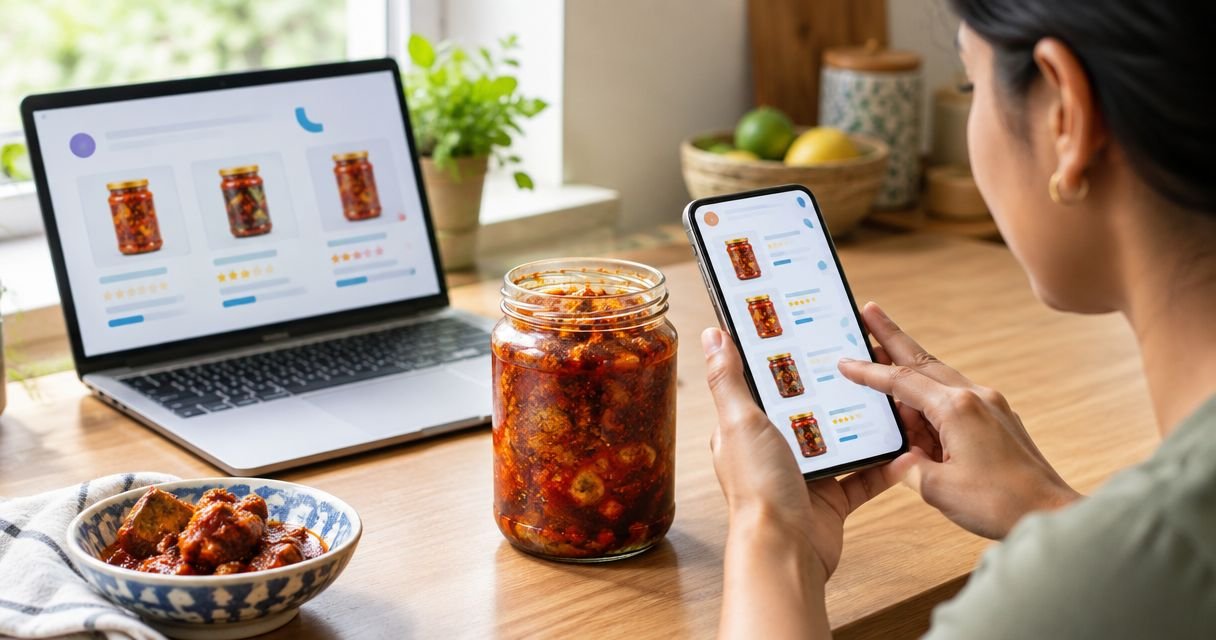
Comparing chicken pickle prices online in 2026 comes down to three checks: cost per 100 grams (not per jar), meat content — bone-in versus boneless — and whether shipping or cold-chain packaging is already bundled into the total. Skip any one of these and two jars priced identically can hand you very different amounts of actual chicken.
- Chicken pickle price only compares fairly when you normalize by weight per 100g, not by jar.
- Bone-in chicken pickle usually costs more per jar but less per gram of usable meat than boneless.
- Shipping and cold-chain packaging for non-veg pickles often sit outside the listed price.
- Preservative-free chicken pickle costs more relative to its shorter shelf life and refrigeration needs.
- Tulasi Pickles lists bone-in and boneless chicken pickle with clear weight labeling for 2026 orders.
Why this matters
Most shoppers compare chicken pickle price the way they'd compare a bag of chips — by looking at the number on the listing, not the weight behind it. That works for standardized packaged snacks. It fails for homemade Andhra-style pickles, where jar sizes, meat cuts, and oil ratios vary by brand and even by batch.
A jar that looks cheaper on the surface can carry less actual chicken once you pick the right chicken pickle for your budget using weight and meat-content labels instead of the sticker price alone. That single habit change catches most of the overpaying that happens in this category.
How to compare chicken pickle prices before buying online
Run every listing through the same five checks before you decide. This table is the fastest way to see where price differences actually come from.
| What to check | Why it changes the price | What to do |
|---|---|---|
| Weight vs. jar size | Jars commonly run 250g to 1kg across Andhra pickle brands, and price rarely scales in a straight line | Divide total price by weight in grams, then multiply by 100 for a per-100g figure |
| Bone-in vs. boneless | Bone-in jars carry bone weight that isn't edible meat; boneless costs more per gram of usable chicken | Check the listing states the cut clearly before comparing across brands |
| Oil quantity | A higher oil-to-meat ratio lowers the actual chicken content per spoon | Read the description, not the jar photo, since oil settles and hides meat volume |
| Shipping / cold-chain | Frozen or insulated shipping for non-veg pickles adds handling cost that some listings bundle and others don't | Confirm whether delivery is included in the displayed total or added at checkout |
| Shelf life / preservatives | Preservative-free stock needs faster turnover and refrigerated storage, which raises cost relative to shelf life | Check the best-before window before comparing two jars side by side |
The verdict: any chicken pickle price comparison that skips the per-100g conversion isn't a real comparison — it's guessing based on jar size.
Bone-in chicken pickle: what drives the cost
Bone-in chicken pickle keeps the bone in during cooking, which is how most traditional Andhra households make it. The bone contributes flavor during the pickling process but doesn't count as usable meat once you're eating it, so a 500g bone-in jar delivers less actual chicken by weight than the number on the label suggests.
Best for: buyers chasing traditional flavor over convenience, and anyone comparing against the homemade pickles in Hyderabad price breakdown to see how bone-in preparation shows up in real listings.
Boneless chicken pickle: what drives the cost
Boneless chicken pickle costs more to prepare because deboning is extra labor before the meat ever hits the jar. What you're paying for is convenience and a higher usable-meat percentage per 100g, even when the sticker price looks higher than a bone-in jar of the same size.
Best for: quick snacking, kids, travel packs, and lunchboxes where picking around bone isn't practical.
Why chicken pickle prices vary
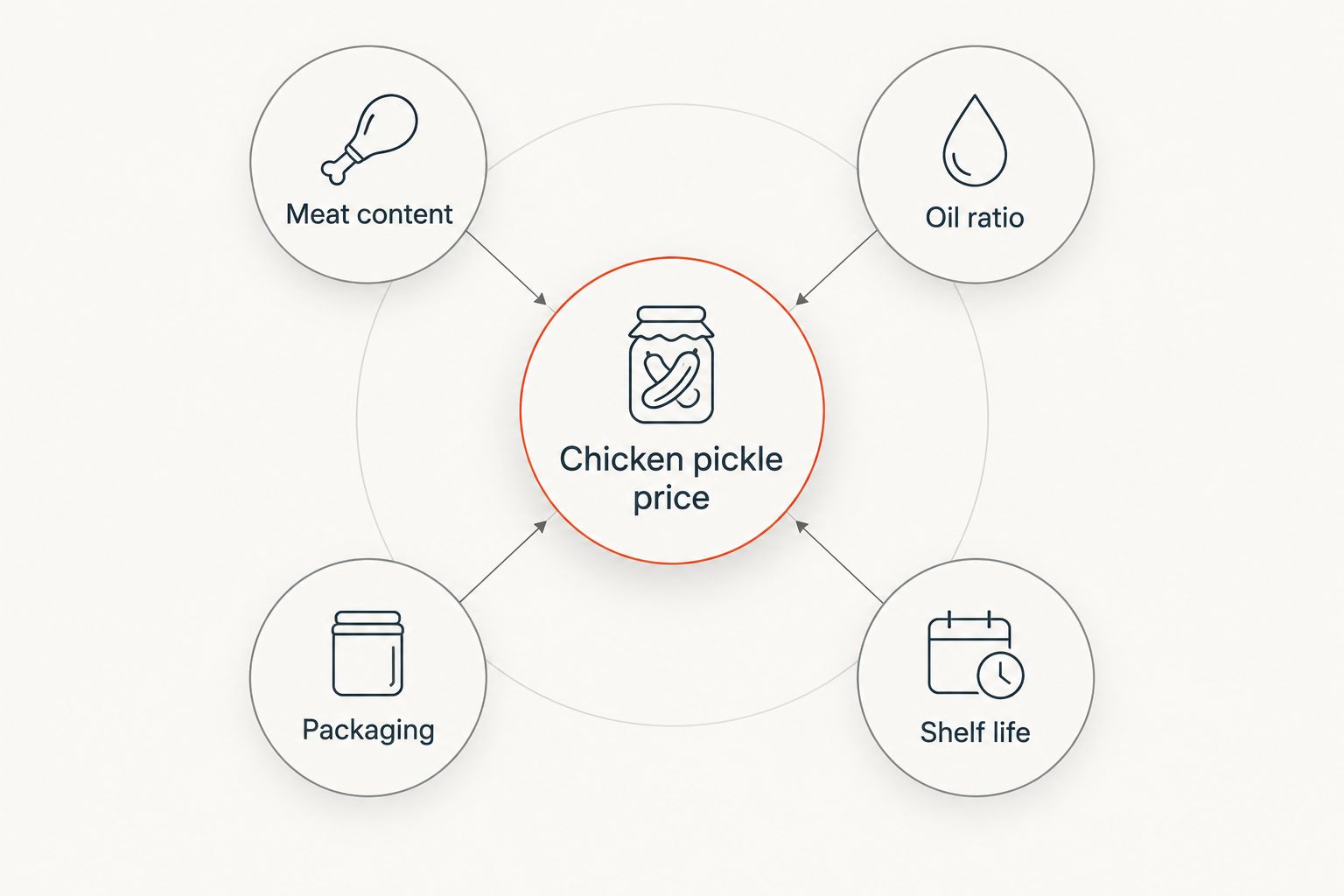
- Meat cut and preparation labor — deboning for boneless variants adds time and cost that bone-in skips.
- Oil-to-meat ratio — pickles packed with more oil relative to meat cost less to produce but deliver less protein per spoon.
- Spice mix and marination time — longer marination and premium spice blends (Guntur chilli, specific masala ratios) push cost up.
- Packaging and cold-chain handling — insulated boxes and frozen shipping for non-veg orders add real handling cost.
- Shelf life and preservative use — preservative-free jars need refrigeration and move faster through inventory, which affects unit cost.
- Order format — combo packs and multi-jar bundles usually work out cheaper per 100g than single small jars.
If a listing only states jar weight and not meat weight, you're not comparing apples to apples — treat that as a red flag, not a shortcut.
Compare chicken pickle options directly
See bone-in and boneless chicken pickle with clear weight labeling before you order.
Is bone-in chicken pickle cheaper than boneless chicken pickle?
Bone-in chicken pickle is usually cheaper per jar because bone weight fills part of the 250g-to-500g jar without adding usable meat, which lowers the production cost per jar. Boneless costs more per jar for the same weight because deboning is extra labor, but it delivers more edible chicken per 100g.
Does shipping increase chicken pickle price for overseas orders?
Shipping adds real cost to overseas chicken pickle orders in 2026 because non-veg pickles typically need frozen or insulated packaging to survive transit safely. Compare whether the delivery charge is shown separately at checkout or already folded into the displayed price before you assume one seller is cheaper than another.
How can I tell if a chicken pickle is overpriced in 2026?
Convert every listing to a per-100g figure first — that single step exposes overpriced jars faster than any other check. If a 250g jar and a 500g jar from the same brand don't scale close to proportionally in price, ask why before you buy.
Tulasi Pickles lists bone-in and boneless chicken pickle with clear weight labeling on every product page, which makes the per-100g conversion a five-second calculation instead of a guessing game. That's the same standard you should hold every seller to, regardless of where you're ordering from in 2026.
FAQ
What’s the best way to compare chicken pickle prices online?
Convert every listing to a price per 100g before comparing, since jar sizes for chicken pickle commonly range from 250g to 1kg. Comparing raw jar prices without normalizing for weight is the single biggest mistake shoppers make.
Is bone-in or boneless chicken pickle better value?
Boneless chicken pickle delivers more usable meat per 100g, while bone-in is typically cheaper per jar but includes non-edible bone weight. Value depends on whether you’re optimizing for meat content or traditional flavor.
Does chicken pickle price include shipping in 2026?
Not always — many sellers list product price separately from cold-chain or frozen shipping charges for non-veg pickles. Check the checkout page before comparing two listings as if shipping were already included.
Why is boneless chicken pickle sometimes more expensive than bone-in?
Boneless chicken pickle costs more to prepare because deboning is extra labor before pickling, even though the final jar has more usable meat per gram. Bone-in skips that labor step, which lowers production cost.
How long does chicken pickle last once opened?
Homemade Andhra-style chicken pickle without added preservatives typically lasts 6 to 12 months when stored properly with the oil layer covering the meat. Preservative-free batches need refrigeration once opened to hold that shelf life.
Should I buy a combo pack or a single jar of chicken pickle?
Combo packs usually work out cheaper per 100g than single small jars because packaging and shipping costs get spread across more product. Single jars make sense only if you’re testing a flavor for the first time.
Can I compare chicken pickle prices across different brands fairly?
Yes, as long as you normalize every listing to a per-100g figure and confirm whether each jar is bone-in or boneless before comparing. Comparing raw sticker prices across brands without those two adjustments gives a misleading picture.
One last thing
Most shoppers compare jar photos, not weight labels — flip that one habit and you'll catch inflated bone-in listings in seconds, because the photo never shows you what a spoonful actually contains. The per-100g math takes ten seconds and saves you from paying premium prices for a jar that's mostly oil and bone.
Related guides
- Chicken pickle with bone for authentic Andhra flavor
- Best boneless chicken pickle online for effortless snacking
- Hyderabad non-veg pickle delivery guide