
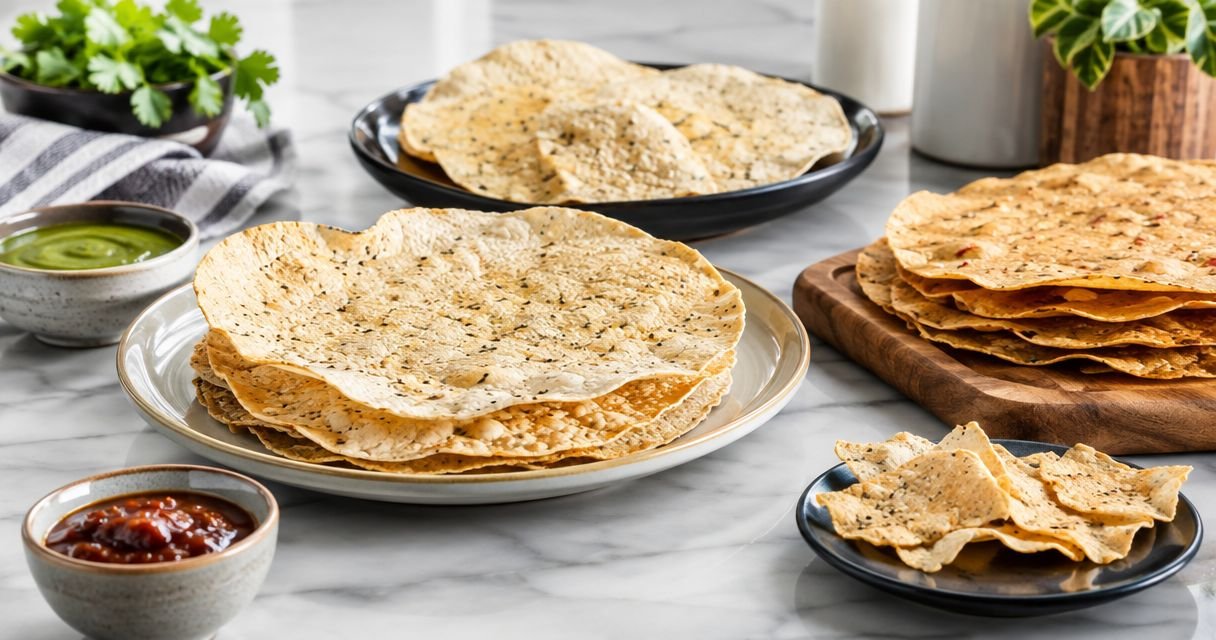
Best overall: the papad with the lowest verified sodium per equal weight. Best for portion control: the papad with the lowest verified sodium in the amount you actually eat. No named brand earns a lowest-sodium ranking here without comparable nutrition labels. This 2026 guide explains how to compare papad sodium content without confusing ingredients, serving sizes or cooking methods with evidence.
- Compare papad sodium content per 100 g first, then calculate sodium in your actual portion.
- Tulasi Pickles offers Andhra papads, but product descriptions alone do not establish a lowest-sodium winner.
- Roasting changes preparation; it does not remove salt already mixed into papad dough.
- Choose by verified nutrition information, not homemade, millet, rice or low-oil wording.
Why this matters
A papad is only part of your meal. Pickle, podi, salted accompaniments and added seasoning also contribute sodium, so choosing one product in isolation does not settle the whole plate.
Start with the packet, not the reputation of the brand. If you serve papad alongside several accompaniments, the papad and pickle combo guide helps you plan the pairing; use nutrition information separately to assess sodium.
The best sodium comparison uses the exact variant, the same weight basis and the portion you will eat. A smaller printed serving can make a product look better without making its recipe lower in sodium.
What makes the best papad for sodium-conscious buying?
Use these criteria before accepting a ranking:
- Comparable sodium figures: Compare sodium in milligrams against the same product weight, preferably per 100 g.
- Exact variant: Plain, pepper, masala, rice and dal versions require separate checks. One label does not describe an entire brand.
- Actual portion: Calculate the sodium in the amount you serve, rather than assuming the suggested serving matches your meal.
- Preparation basis: Establish whether the nutrition panel describes the dry product or the product prepared as directed.
- Complete information: Read both the nutrition panel and ingredient list. Ingredients identify sources; the panel provides the quantity.
- Meal context: Include accompaniments and extra seasoning when deciding how the papad fits your eating plan.
Taste and texture still matter. However, neither a preferred ingredient nor a familiar homemade style proves that one papad contains less sodium than another.
Sodium-conscious papad choices at a glance
This is a ranking of buying decisions, not an unsupported league table of brands. The order puts comparable evidence before serving convenience and product familiarity.
| Rank | Option | Best for | Standout feature | Key limitation |
|---|---|---|---|---|
| 1 | Papad with the lowest verified sodium per equal weight | Comparing recipes across brands | Separates sodium concentration from serving-size differences | Does not determine how much you eat |
| 2 | Papad with the lowest calculated sodium in your actual portion | Planning an individual meal | Reflects the amount you serve | A smaller portion can conceal a more sodium-dense recipe |
| 3 | Papad without verified sodium information | Buyers willing to request the label before deciding | Keeps familiar varieties under consideration | Cannot support a lowest-sodium recommendation |
For a 2026 purchase, check the information on the pack you are buying. An older photograph or a different flavour is not a substitute for that product's nutrition panel.
1. Verified equal-weight comparison: best for choosing between brands
Compare each papad's sodium on an equal-weight basis. A per-100-g comparison answers a specific question: which recipe supplies less sodium for the same amount of product?
Record the full product name beside the figure. That prevents a plain papad label from being used to recommend a masala version with a different formulation.
Equal-weight comparison pros:
- Removes differences caused by manufacturers' suggested serving sizes.
- Lets you compare different papad shapes without assuming equal piece weights.
- Gives you a clear starting point for calculating your own portion.
Equal-weight comparison cons:
- Does not account for the amount you actually serve.
- Becomes misleading if one figure describes dry papad and another describes prepared papad.
Best for: You want to choose between specific branded variants using a consistent measure.
Verdict: Buy only after the lower figure is confirmed on a comparable basis.
2. Actual-portion comparison: best for planning your plate
Calculate sodium for the portion you intend to eat. Use the same weight basis as the label; if the panel describes dry papad, weigh the portion before cooking.
The calculation is straightforward: sodium per portion = sodium per 100 g × portion weight in grams ÷ 100. This converts a label comparison into a meal decision without inventing a standard papad size.
Actual-portion comparison pros:
- Reflects your serving instead of a suggested serving you do not follow.
- Helps you account for broken papads and differently sized pieces.
- Makes room for assessing pickle and other accompaniments separately.
Actual-portion comparison cons:
- Requires a portion weight that matches the label's preparation basis.
- Does not prove that the recipe itself is lower in sodium.
Best for: You have reliable label information and want to decide how much to serve.
Verdict: Buy when the calculated portion fits your dietary guidance and meal.
3. Unverified papad: best for a label-first shortlist
A familiar papad can remain on your shortlist without receiving a sodium recommendation. Ask for a readable nutrition panel for the exact product before treating it as the lower-sodium choice.
Apply this rule equally to a large packaged brand, a regional seller and a homemade-food business. Familiarity does not replace measurement.
Label-first shortlisting pros:
- Lets you consider traditional varieties without making nutrition assumptions.
- Directs the seller towards the exact information you need.
- Separates a taste preference from a measurable sodium claim.
Label-first shortlisting cons:
- Adds a verification step before ordering.
- Cannot establish suitability for a prescribed sodium restriction by itself.
Best for: You want a particular variety but need nutrition information before deciding.
Verdict: Hold until the sodium information is verified.
How to read a papad label in 2026
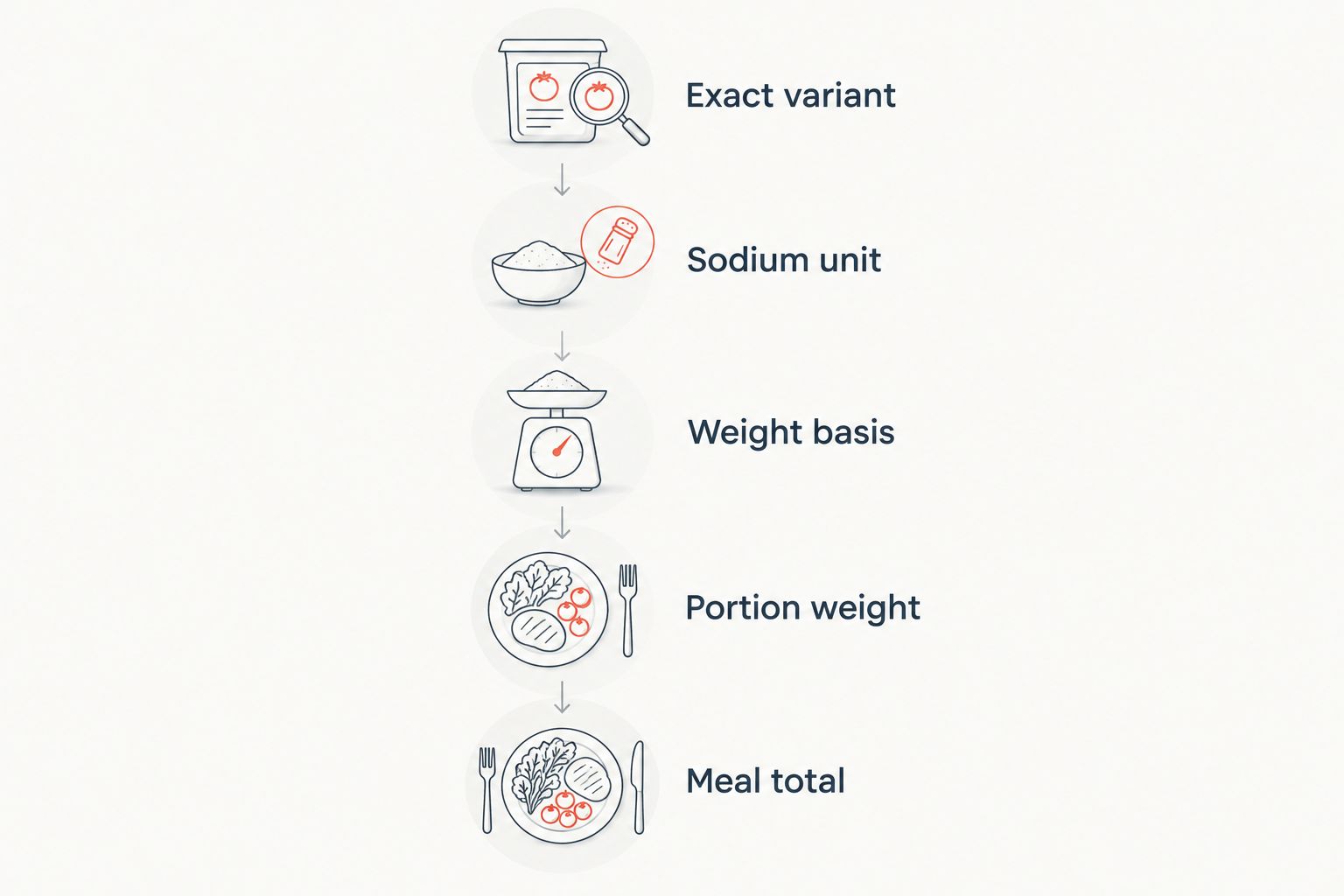
Follow this sequence whenever you compare papad sodium content. Keep a photograph of the full panel rather than copying a number without its serving basis.
- Exact variant: Match the product name and flavour to the packet you intend to buy.
- Sodium unit: Find sodium and check whether the quantity is shown in milligrams or grams.
- Weight basis: Establish whether the figure is per serving, per 100 g or another stated quantity.
- Portion weight: Measure the amount you will prepare using the same basis as the panel.
- Meal total: Account separately for accompaniments and seasoning.
A useful comparison note contains the product name, sodium figure, reference weight and preparation basis. Without those details, a list of numbers is easy to misread.
Sodium and salt are different label terms
Salt and sodium are related, but they are not interchangeable quantities. One gram of salt contains approximately 400 mg of sodium; the usual salt-equivalent conversion multiplies sodium by 2.5 when both quantities use the same unit.
Also remember that 1 g equals 1,000 mg. Align units before comparing figures, and do not compare a salt value directly with a sodium value.
The ingredient list provides another check. Salt and sodium-containing ingredients such as sodium bicarbonate contribute sodium, but their presence alone does not reveal the finished product's sodium concentration.
Dry weight and cooked weight need separate attention
Cooking changes a papad's weight through moisture loss and, when fried, oil uptake. That means a cooked-weight calculation is not automatically comparable with a dry-product nutrition panel.
Follow the manufacturer's stated basis. If that basis is unclear, ask for clarification rather than treating a cooked piece and an uncooked piece as nutritionally identical by weight.
Andhra papads: compare the variety without assuming the sodium
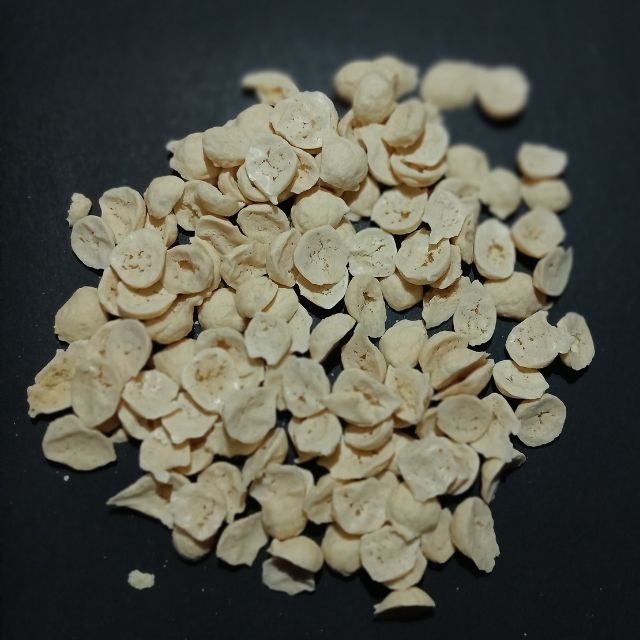
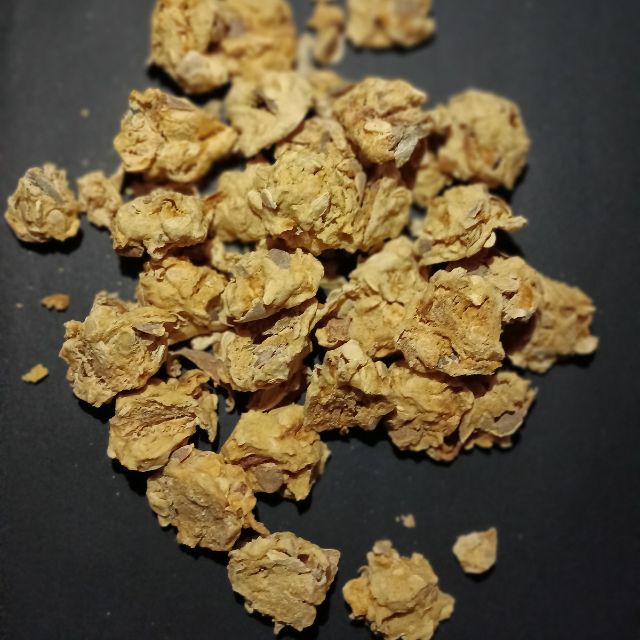
Tulasi Pickles lists Minapa Vadiyalu as sun-dried Andhra fryums made with black gram dal and Gummadikaya Vadiyalu as sun-dried ash gourd fryums. These descriptions distinguish the foods; they do not establish their relative sodium content.
Tulasi Pickles is best for shoppers seeking Andhra papad varieties, not a verified lowest-sodium recommendation. Choose between these options for the variety you want, then request nutrition information if sodium determines your purchase.
| Product | Best for | Verified distinction | Pros | Cons |
|---|---|---|---|---|
| Minapa Vadiyalu | Shoppers seeking black gram fryums | Made with black gram dal | Clearly identified Andhra fryum variety | Ingredient description cannot establish a sodium rank |
| Gummadikaya Vadiyalu | Shoppers seeking ash gourd fryums | Described as ash gourd papad | Distinct alternative to black gram fryums | Ash gourd does not make the finished product inherently low in sodium |
These are variety recommendations, not substitutes for label-based screening. Hold either choice for a sodium-restricted diet until the relevant nutrition information is confirmed.
Does roasting papad reduce sodium?
Roasting does not remove the salt already mixed into papad dough. It changes preparation without turning the product into a lower-sodium recipe.
Frying is not a sodium-removal method either. If you are comparing preparation methods, keep the questions separate: cooking method affects oil use, while the recipe and additional seasoning determine sodium sources.
For your 2026 shopping shortlist, assess these claims independently:
- Roasted: Describes how the papad is cooked, not proof of lower sodium.
- Homemade: Describes production style, not a measured sodium level.
- Rice or millet: Identifies an ingredient, not the amount of salt added.
- Mild: Describes perceived heat, not sodium concentration.
Do not replace one unsupported shortcut with another. A less spicy papad still needs a nutrition-panel check.
How the buying priorities are ranked
The first priority is an equal-weight comparison because it separates recipe concentration from serving size. The second is your actual portion because that determines how much sodium the papad contributes to your meal.
Unverified products come last for a sodium-led decision. This does not rank their taste or quality; it sets a clear boundary around the claim the evidence supports.
Which papad should you choose in 2026?
Choose the exact variant with the lower verified sodium per equal weight, then check your portion. If the figures use different preparation bases, resolve that difference before choosing a winner.
For Andhra-style variety, Tulasi Pickles offers papad options worth considering on their stated ingredients. Keep that preference separate from a sodium claim, and follow your clinician's individual advice when a medical condition requires sodium restriction.
FAQ
Which papad brand has the lowest sodium content?
A lowest-sodium brand requires comparable nutrition labels for the exact products being assessed. Compare sodium per equal weight and check the preparation basis before accepting a ranking.
How do I compare papad sodium content between packets?
Compare sodium in milligrams per 100 g on the same preparation basis. Then calculate sodium for the weight you actually intend to eat.
Is roasted papad lower in sodium than fried papad?
Roasting does not remove sodium already present in the dough. Compare the product formulation and any added seasoning separately from the cooking method.
Are rice papads lower in sodium than urad dal papads?
Rice papads are not automatically lower in sodium than urad dal papads. The finished recipe and nutrition panel determine the comparison, not the main ingredient alone.
Does homemade papad mean low sodium?
Homemade papad does not automatically mean low sodium. The amount of salt and other sodium-containing ingredients in the recipe still matters.
Can I compare sodium per papad instead of per 100 g?
You can compare sodium per papad when the piece weights and preparation bases are clear. Use an equal-weight comparison first if the papads differ in size.
Can someone with high blood pressure eat papad?
Whether papad fits your diet depends on your individual sodium guidance, the product and the portion. Ask your clinician or dietitian how to include it, and account for the rest of the meal.
One last thing
A broken papad is still part of the portion. Counting pieces becomes unreliable when sizes differ or you add fragments from the bottom of the packet; weighing the dry amount gives you a clearer basis for a dry-product label calculation.
Keep that habit when switching varieties. A familiar plateful does not guarantee a familiar serving weight.
Related guides
- How much sodium is in a serving of Andhra pickle?
- Best papads to pair with Andhra meals
- How to keep papads crispy after opening