
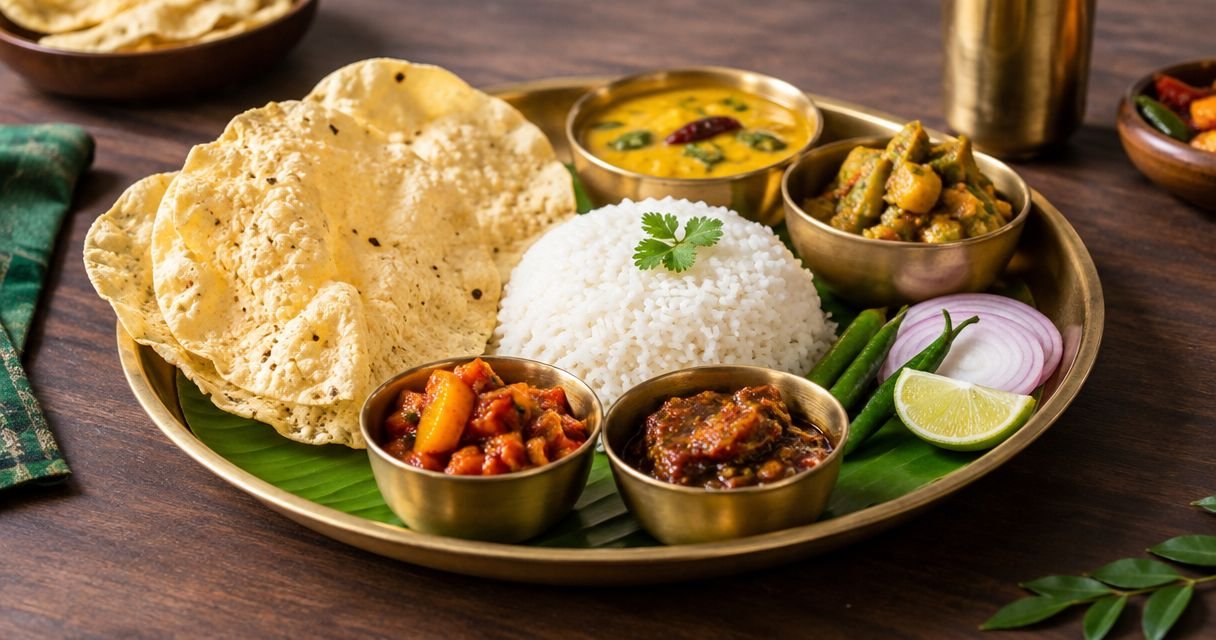
Six papad and pickle combos for a 2026 Andhra thali, ranked by how well the crunch and the heat actually work together on one plate, not just how popular each item is on its own.
- Best papad and pickle combo for thali overall in 2026: Avakaya Pickle with Rice Papad.
- Best tangy, lower-oil option: Gongura Pickle paired with Jowar Papad.
- Best non-veg addition: Chicken Pickle served alongside Rice Papad.
- Best mild pick for kids and elderly diners: a low-spice pickle with plain papad.
- Match papad texture to pickle wetness first — a wet pickle needs a sturdier papad.
Why this matters
A thali lives or dies on balance. Too much oil from the pickle and the papad turns soggy before you finish the plate; too little contrast and the meal tastes one-note by the third bite. Most people default to whatever jar is open in the kitchen and whatever papad packet is nearby, which is how a fiery Guntur mirchi pickle ends up next to a karam-dusted papad that doubles the heat instead of balancing it.
Tulasi Pickles' full pickle and papad range covers enough combinations that the pairing question actually has answers, not just preferences. This guide ranks six combos by use case — traditional thali, tangy and millet-forward, non-veg, high-heat, weekday, and mixed-generation tables — so you pick the right jar and papad together instead of guessing.
Best overall: Avakaya Pickle with Rice Papad. Best for tangy, low-oil eaters: Gongura Pickle with Jowar Papad. Best for a non-veg thali: Chicken Pickle with Rice Papad. Best for a fast weeknight plate: Tomato Pickle with Rice Papad.
What makes the best papad and pickle combo for a thali
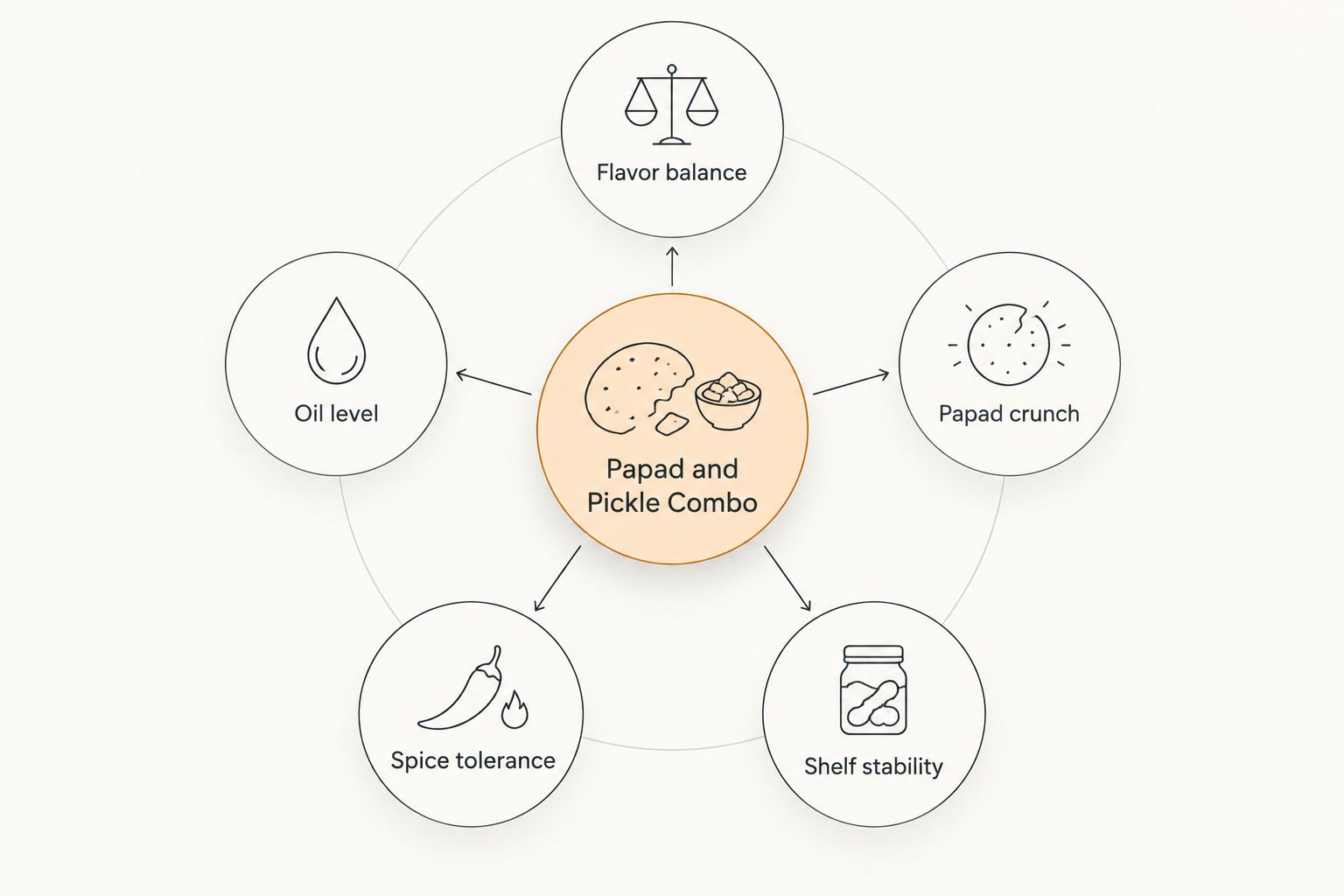
- Flavor balance — the pickle's tang, salt, or heat should sit against the papad's crunch, not compete with it
- Oil level match — an oil-heavy pickle needs a papad that can absorb contact without going limp too fast
- Papad crunch type — rice papad is neutral and sturdy; jowar papad is nuttier and more brittle; each suits different pickles
- Spice tolerance — the combo has to work for everyone eating off the same thali, not just the spice-first eater
- Shelf stability — mustard-oil pickles like avakaya keep longer at room temperature than tomato or gongura once opened
- Dietary fit — veg, non-veg, and low-spice needs at the same table change which combo actually gets eaten
At a glance
| Combo | Best for | Standout feature | Key limitation |
|---|---|---|---|
| Avakaya Pickle + Rice Papad | Classic Andhra thali | Balances tang and heat without extra sugar | High oil content, not for oil-conscious eaters |
| Gongura Pickle + Jowar Papad | Tangy, millet-forward thali | Lower oil, sour punch cuts through rich curries | Jowar papad breaks more easily when frying |
| Chicken Pickle + Rice Papad | Non-vegetarian thali | Adds protein without a separate curry | Not suitable when vegetarians share the table |
| Guntur Mirchi Pickle + Rice Papad | Spice-first eaters | Delivers real heat without a curry base | Too hot for kids or spice-sensitive eaters |
| Tomato Pickle + Rice Papad | Quick weekday thali | Milder profile, cooks and serves fast | Less distinctive than gongura or avakaya |
| Low-Spice Pickle + Plain Papad | Mixed-generation tables | Lets kids and elderly share the same plate | Noticeably milder than a standard Andhra pickle |
1. Avakaya Pickle + Rice Papad: best for a classic Andhra thali
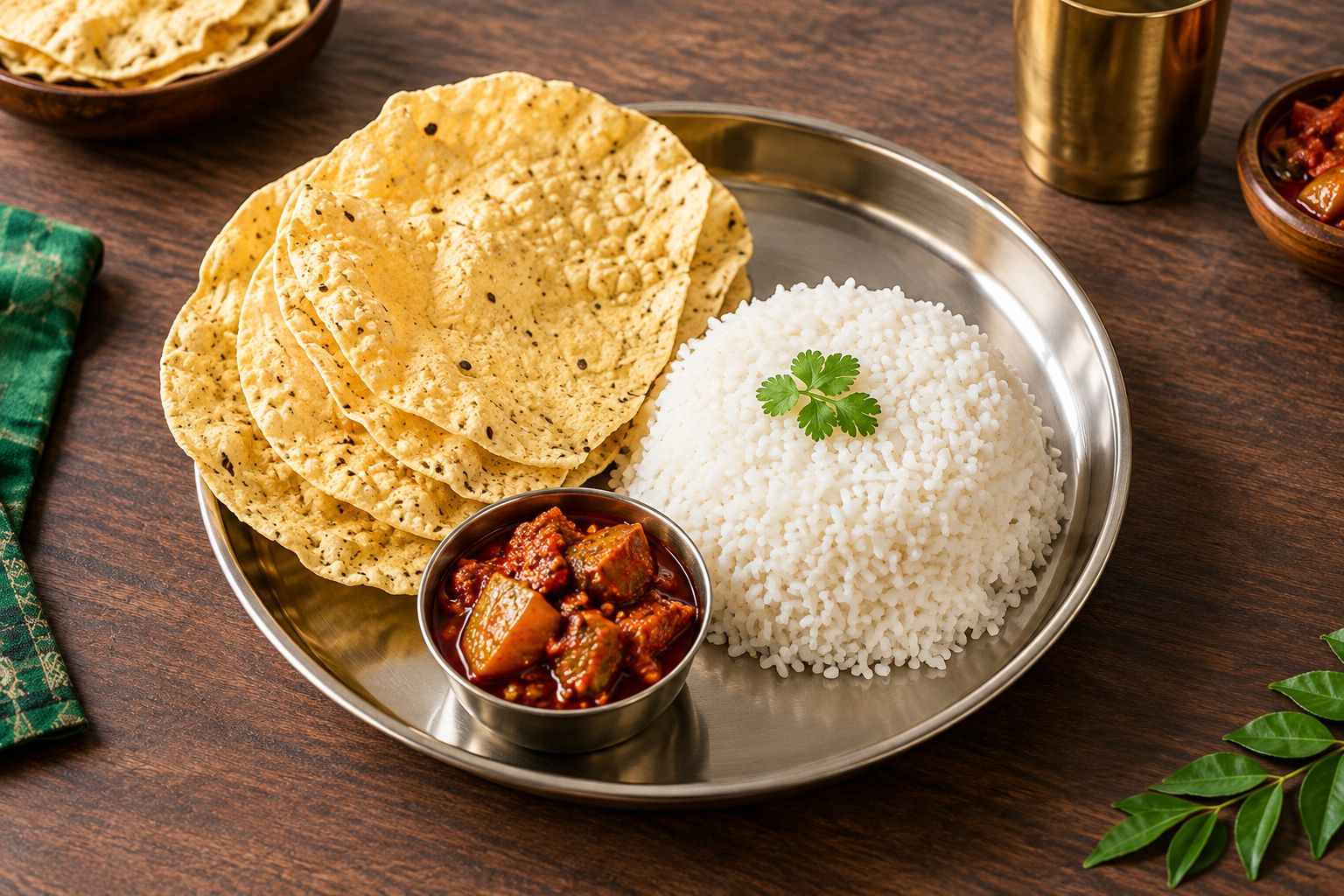
Avakaya, the raw-mango pickle cured in mustard oil and red chilli, is the anchor most Andhra households build a thali around. Rice papad's neutral, sturdy crunch soaks contact with the oil without going soft in the first minute, and it doesn't fight the mustard tang the way a spiced papad would.
Avakaya Pickle pros:
- Balances heat and tang without any added sugar
- Rice papad holds its crunch against avakaya's oil content better than thinner papads
- The most recognizable combo for guests new to Andhra food
- Works equally well with plain rice, ghee rice, and curd rice
Avakaya Pickle cons:
- High oil content isn't ideal for anyone watching fat intake
- Rice papad softens fast once avakaya oil touches it directly, so plate the papad dry on the side
Check the authentic avakaya pickle guide before buying if you haven't tasted a genuinely mustard-forward avakaya before — a lot of jars sold as avakaya skip the mustard oil entirely.
Best for: home cooks setting up a traditional festival or Sunday thali. Verdict: Buy.
2. Gongura Pickle + Jowar Papad: best for a tangy, millet-forward thali
Gongura (sorrel leaf) pickle brings a sharp sour note without the heavy oil load of a mango pickle, and jowar papad's coarser, nuttier bite complements that tang instead of disappearing under it. It's the pairing to reach for when you're swapping rice papad for a millet option on purpose, not by accident.
Gongura Pickle pros:
- Noticeably lower oil than mustard-oil-based pickles
- Millet papad adds fiber and a nuttier texture to the plate
- The sourness cuts through richer sides like ghee rice or a heavy dal
Gongura Pickle cons:
- The sourness is strong for anyone eating Andhra pickles for the first time
- Jowar papad is more brittle than rice papad and breaks easily during frying
Best for: diners building a tangy, millet-forward thali in 2026 without loading up on oil. Verdict: Buy.
3. Chicken Pickle + Rice Papad: best for a non-vegetarian thali
Chicken pickle, whether bone-in or boneless, adds a protein-forward option to a lineup that's usually all vegetable and mango pickles. Rice papad's crunch offsets the tender meat texture instead of getting lost against it, and it doesn't need a separate curry to make the plate feel complete.
Chicken Pickle pros:
- Adds real protein to the thali without cooking a separate curry
- Boneless versions are easier to portion at a shared meal
- Keeps well refrigerated once opened, following standard pickle storage practice
Chicken Pickle cons:
- Heavier and richer than any veg pickle on this list, not an everyday choice
- Doesn't work at a table where vegetarian and non-vegetarian diners share the same serving bowls
The boneless chicken pickle option is the easier version to serve family-style, since there's no bone to navigate mid-meal.
Best for: mixed-diet households wanting a non-veg accent without cooking a separate dish. Verdict: Buy.
4. Guntur Mirchi Pickle + Rice Papad: best for spice lovers
Guntur mirchi, grown in one of India's hottest chilli-growing belts, makes a pickle with real heat that a plain rice papad can carry without adding to it. Skip any karam-dusted or masala papad here — doubling the spice source turns the plate punishing instead of enjoyable.
Guntur Mirchi Pickle pros:
- Delivers genuine heat without needing a spicy curry alongside it
- Plain rice papad stays out of the way instead of competing for attention
- A small serving goes a long way for eaters who ration heat on purpose
Guntur Mirchi Pickle cons:
- Too hot for kids or anyone with lower spice tolerance
- Needs extra curd or rice on the plate to keep the meal balanced
If the papad still tastes like pickle after you've alternated bites, the pairing missed — that's the simplest test for whether a combo is actually working.
Best for: spice-first eaters who want the papad to stay quiet on the plate. Verdict: Buy for spice lovers, Skip for mixed-tolerance tables.
5. Tomato Pickle + Rice Papad: best for a quick weekday thali
Tomato pickle cooks faster than a mango or gongura pickle and carries a milder tang, which makes it the easy weekday pairing with rice papad when there's no time for an elaborate spread. It's a rotation pickle, not a festival centerpiece.
Tomato Pickle pros:
- Milder profile suits daily meals rather than only festive ones
- Works with both rice-based and roti-based thalis
- Fewer shelf-stability concerns than raw-mango pickles once refrigerated
Tomato Pickle cons:
- Less distinctive flavor than gongura or avakaya
- Doesn't hold up as the only pickle at a bigger, festive spread
Best for: weeknight thalis where the pickle needs to work fast, not headline the plate. Verdict: Hold — good for daily rotation, not the flagship jar.
6. Low-Spice Pickle + Plain Papad: best for kids and elderly family members
A low-spice pickle, cut back on chilli and oil, paired with a plain papad instead of a karam version keeps the plate approachable for anyone managing spice tolerance or a restricted diet. It's the combo that lets a whole family, across three generations, eat off the same thali.
Low-Spice Pickle pros:
- Lets kids and elderly parents share the same thali as everyone else
- Lower oil and chilli load overall
- Easier on digestion for anyone avoiding heavy spice
Low-Spice Pickle cons:
- Flavor is noticeably milder than a standard Andhra pickle
- Not a substitute for the classic combos at a festive table
Best for: households cooking one thali for multiple age groups and spice tolerances. Verdict: Buy for mixed-generation tables.
How we ranked these combos
Each combo is scored against the six criteria above — flavor balance, oil level, papad crunch, spice tolerance, shelf stability, and dietary fit — rather than by which pickle is most popular in isolation. A pickle that's excellent on its own can still be a poor pairing if the papad fights it instead of supporting it, which is why Avakaya Pickle with Rice Papad ranks above combos that are arguably more distinctive on flavor alone.
Try more combos before you commit
Sample multiple pickles side by side before building your 2026 thali routine.
Which papad and pickle combo should you choose for your thali?
For a traditional Andhra thali in 2026, Avakaya Pickle with Rice Papad is the default that works for the widest range of eaters and occasions. If oil is a concern or the table skews tangy over spicy, move to Gongura Pickle with Jowar Papad. If the table has kids, elderly parents, or first-time Andhra food eaters, the low-spice pickle with a plain papad is the safer plate, and it's the one combo on this list built specifically so nobody at the table has to sit out.
FAQ
What is the best papad and pickle combo for a traditional Andhra thali?
Avakaya Pickle with Rice Papad is the best papad and pickle combo for a traditional Andhra thali in 2026. The mustard-oil pickle’s tang and heat sit well against rice papad’s neutral crunch.
Can chicken pickle go on the same thali as vegetarian pickles?
Chicken pickle works on a mixed-diet thali as long as it’s served in a separate bowl from the vegetarian pickles. It pairs best with rice papad rather than a spiced papad.
Which papad works best with a wet, oily pickle like avakaya?
Rice papad handles avakaya’s oil content better than thinner papads because it stays crisp longer on contact. Plate it dry next to the rice rather than under it.
Is gongura pickle less oily than avakaya?
Yes, gongura pickle generally uses less oil than a mustard-oil avakaya pickle, which is why it pairs well with a lower-oil papad like jowar.
What pickle pairs best with jowar papad?
Gongura pickle’s tangy profile complements jowar papad’s nuttier, coarser crunch better than a heavier mango pickle does.
How do I choose a pickle for kids eating at the same thali as adults?
Pick a low-spice pickle with a plain, non-karam papad. It keeps the oil and chilli load down while still letting kids eat the same meal as the rest of the family.
Does the type of papad change by region in Andhra cooking?
Rice papad is the most common choice across Andhra thalis, while jowar papad shows up more often in millet-forward or health-focused meal plans in 2026.
How do I keep papad crisp for a second serving during the same meal?
Keep unopened papad away from any pickle oil or steam until you’re ready to fry or roast it. Papad already on the plate should sit dry, not soaking under rice.
One last thing
The single biggest mistake on an Andhra thali isn't picking the wrong pickle — it's plating the papad under the rice where pickle oil reaches it in minutes. Keep the papad dry and separate on the plate, add it fresh with each bite, and even a heavy pickle like avakaya won't turn the papad soggy before the meal's done.
Related guides