
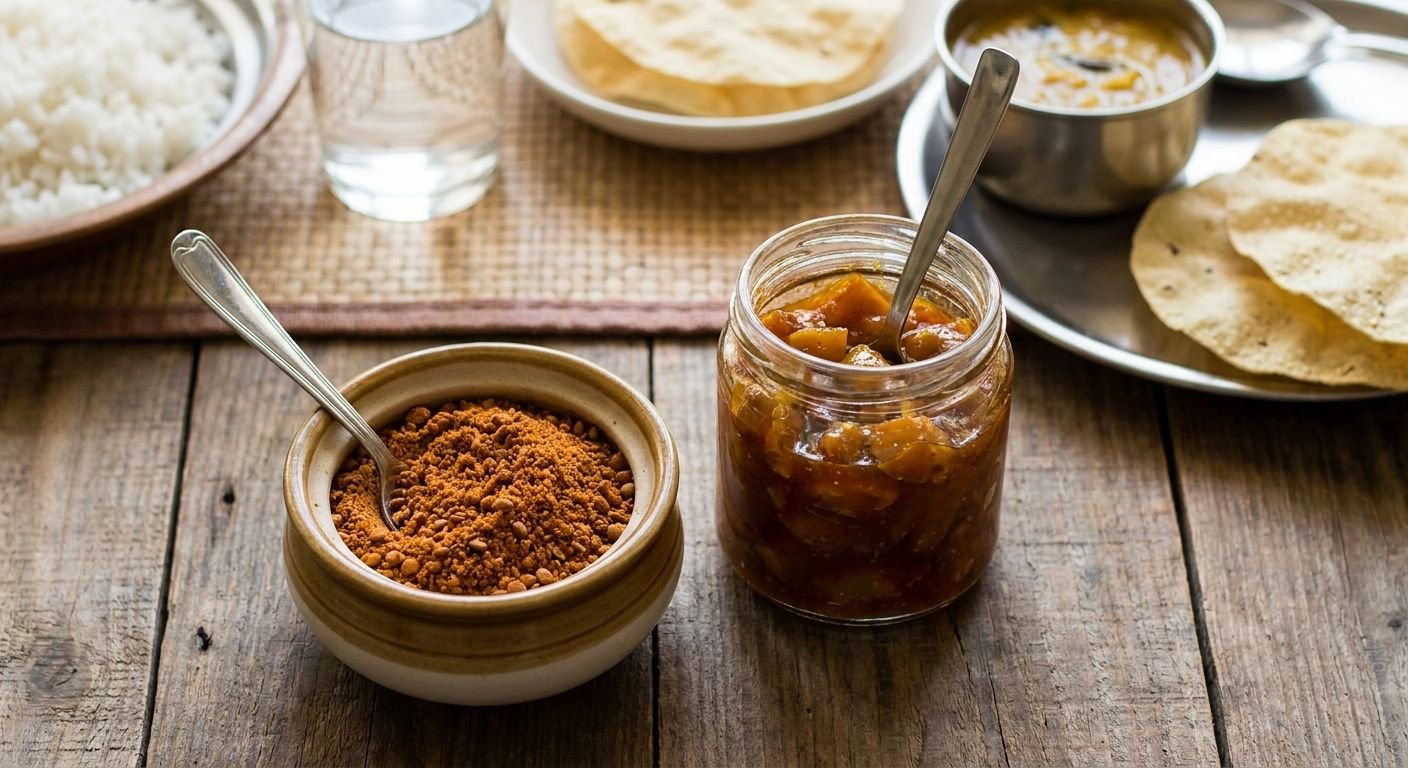
Daily South Indian meal eaters build a podi pickle combo around one dry spice powder and one wet pickle, mixed into hot rice with ghee or sesame oil, to turn a bare plate of rice and dal into a full meal in under two minutes. Unlike festival or gifting pickle purchases, this segment buys smaller jars on repeat, rotates flavors to avoid palate fatigue, and cares more about shelf life and portion control than about variety for a single occasion. The right podi pickle combo for 2026 daily eating is a dry, long-shelf-life podi paired with a smaller pickle jar sized for weekly, not festival, consumption.
- Podi pickle combo for daily South Indian meals: Sambar Podi (₹90) plus a smaller pickle jar beats one large jar of either.
- Rotate sesame, peanut and moringa podis weekly so daily rice doesn’t get boring by month two.
- One teaspoon of podi and half a teaspoon of pickle per plate is enough for daily eating.
- Garlic Pickle (₹200) suits strong daily flavor; skip it for kids’ plates and mild-palate households.
Why podi pickle combo matters for daily South Indian meals
A household eating rice twice a day in 2026 goes through a pickle jar and a podi tin far faster than a family that only opens them during festivals or when guests visit. That daily-use pattern changes what "good" looks like: a jar that tastes amazing once but runs out in five days, or a podi so oily it clumps by week two, fails the daily test even if it wins at a wedding spread.
The combo also solves a real weekday problem — vegetables run low, dal takes 30 minutes, but rice cooks in 15. A spoon of podi mixed with idli, dosa and rice plus a small serving of pickle closes that gap without another trip to the market. Andhra households have run on this exact fallback for generations; the only thing that changed by 2026 is how many of them now order the podi and pickle online instead of grinding it fresh each week.
Pick a podi that matches your daily protein and vegetable gaps
Start with what your weekday meals are usually missing, not with what tastes exciting on day one.
- Sesame-based podi (nuvvula podi) for extra fat and iron when meals run vegetable-light
- Peanut or roasted gram podi for protein on days without dal or curry
- Moringa leaf podi (munagaku podi) for a green-vegetable substitute when fresh greens aren't on hand
- Sambar Podi when the plan is to cook a quick sambar instead of eating podi dry with rice
- Guntur Karam only for households that already eat high-heat food daily — it is not a starter podi
Pair the podi with a complementary pickle for balance
A podi-only or pickle-only plate gets monotonous by the second week; pairing solves that.
- Tangy mango pickles (Avakaya, Magaya) balance a nutty, dry podi like sesame or peanut
- Garlic Pickle adds pungency that plain sambar podi lacks on its own
- Mint (Pudhina) pickle works as a lighter daily option next to a heavier peanut podi
- Non-veg pickles (chicken, prawns) pair better with plain steamed rice than with a second podi on the same plate — the flavors compete otherwise
- Keep at least one mild pairing in rotation for days when spice tolerance is low
Portion doses for daily eating, not festival eating
The most common daily mistake is treating an everyday plate like a wedding thali portion.
- One level teaspoon of podi per plate is enough when mixed with ghee and hot rice
- Half a teaspoon of pickle oil-and-pulp per plate keeps sodium and oil intake in check across a week
- Kids' portions should be a quarter of the adult dose, especially with Guntur Karam or non-veg pickles
- If a jar disappears in under four days for one person, the portion is too large, not the jar too small
- Reserve full-size servings for weekends when the meal itself is lighter (curd rice, plain khichdi)
For households unsure where their heat tolerance sits, working through choosing the right spice level in pickles before buying in bulk avoids a jar going half-eaten in the fridge.
Build a weekly rotation so the combo doesn't get boring
Eating the same podi-pickle pairing seven days a week is the fastest way to stop eating it altogether by 2026's second month of any resolution.
- Assign two podis and two pickles per week, alternating pairs by day
- Keep one non-veg pickle day (chicken, mutton or fish) for households that eat meat, spaced two to three days apart
- Use Sambar Podi on cooking days, dry podis on days with no time to cook a wet dish
- Swap in a coconut-based podi (kobbari podi) once a week for textural variety against oil-based pickles
- Track which combos get finished fastest — that's the real preference signal, not what sounds good on paper
Store the podi and pickle right so they don't spoil mid-week
Daily-use jars get opened and closed far more often than occasional ones, which speeds up spoilage if storage is careless.
- Use a dry spoon every time — moisture is the single biggest cause of early spoilage in oil-based pickles
- Keep podi tins sealed tight; humidity turns dry spice powder lumpy within days in monsoon months
- Refrigerate pickles without a heavy oil seal once opened, especially garlic and mango-based ones in warmer states
- Store podi at room temperature in an airtight jar; refrigeration isn't needed for most dry podis
- Label opening dates on jars used daily — it's easy to lose track of a jar you touch every morning
Order a combo instead of assembling two separate purchases
Once the pairing and portioning are sorted, buying podi and pickle as separate one-off purchases each time is slower than it needs to be. Tulasi Pickles ships podi and pickle together, so the daily-meal combo doesn't depend on two different delivery windows lining up. This is the point where ordering ahead beats grinding fresh podi or waiting on a single jar to run out before reordering — not a replacement for steps 1 through 5, just the faster way to execute them once the pairing is decided.

Comparison: podi and pickle options for daily meals
| Option | Best for | Starting price | Key limitation |
|---|---|---|---|
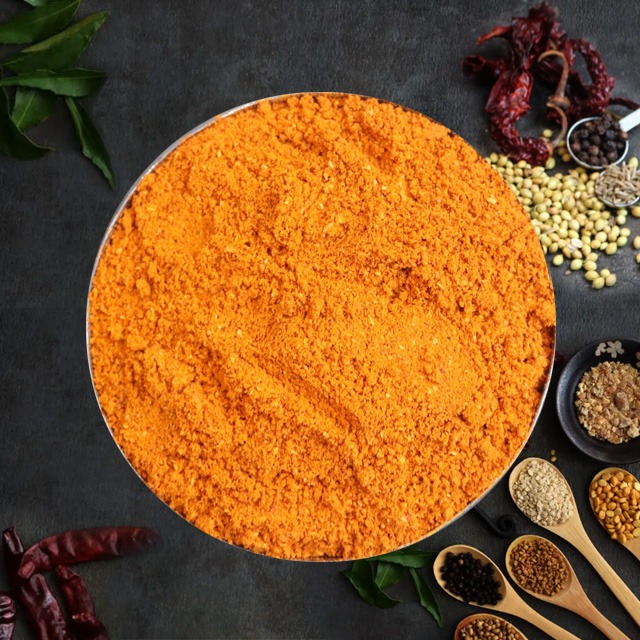
| Sambar Podi | Cooking days, quick tempering for sambar or rasam | ₹90.00 | Needs dal and vegetables to become a full dish, not a standalone rice mixer |
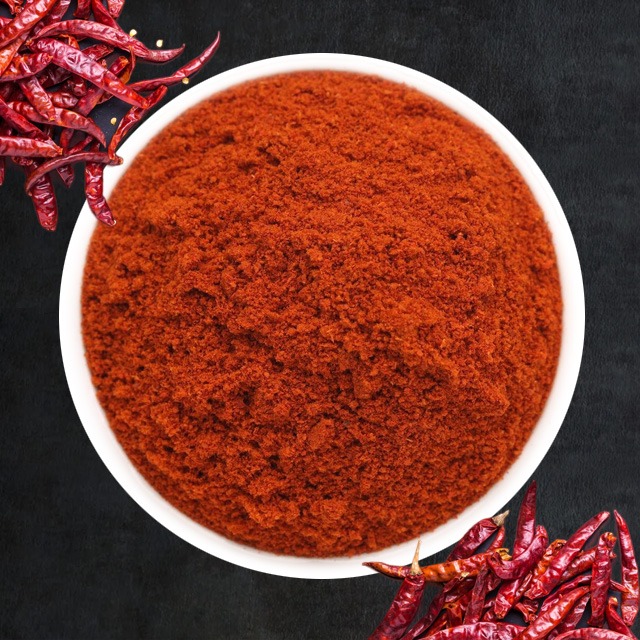
| Guntur Karam (without salt) | High-heat households that control salt separately | ₹150.00 | Too spicy for mild-palate or child-heavy households |
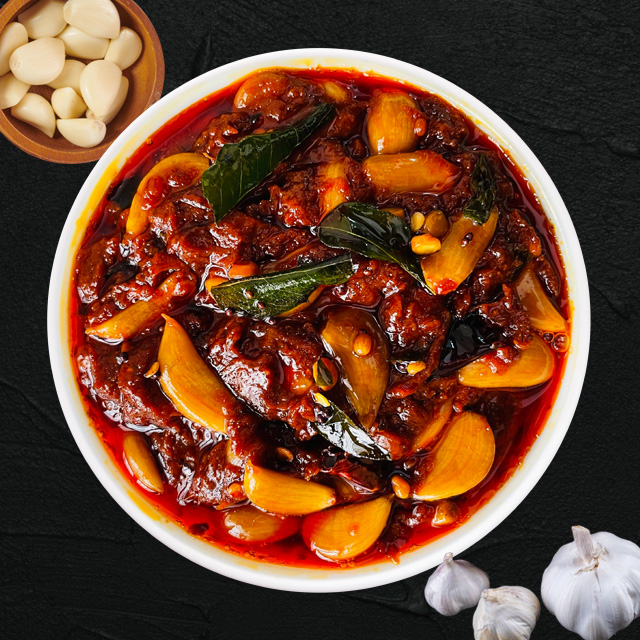
| Garlic Pickle | Daily eaters who want strong pungency with every meal | ₹200.00 | Garlic intensity isn't for everyone; not ideal for kids' plates |
| Avakaya Pickle without Garlic | Traditional mango-pickle lovers who skip garlic | ₹200.00 | Oil-based pickle needs refrigeration once opened in hot months |
Common mistakes daily South Indian meal eaters make
- Buying only pickle, never podi — a plate leans on oil and salt with nothing dry to balance it, and the pickle jar empties twice as fast
- Over-portioning pickle for daily use — treating a weekday plate like a festival thali pushes sodium and oil intake up over a full week, not just one meal
- Never rotating podi types — sticking to one flavor for months is the top reason people quietly stop eating podi altogether by mid-2026
- Buying festival-size jars for solo daily use — a large jar opened daily by one person spoils before it's finished, wasting more than a smaller jar would have cost
- Storing pickle with a wet spoon — the single most common cause of mold in a jar that's supposed to last weeks under daily use
“One teaspoon of podi and half a teaspoon of pickle per plate is enough for daily eating; more just raises the sodium and oil count.”
FAQ
What is the best podi pickle combo for daily meals?
A dry podi like Sambar Podi paired with a smaller pickle jar sized for weekly use is the best daily combo for 2026 — it balances protein and tang without the oil load of eating two wet dishes. Rotate the pairing weekly so it doesn’t get boring.
How much podi and pickle should I eat per day?
One level teaspoon of podi and half a teaspoon of pickle per plate is enough for daily eating. Larger daily portions push sodium and oil intake higher over a week without adding much flavor benefit.
Is podi or pickle healthier for daily use?
Dry podi generally carries less oil per serving than an oil-based pickle, making it the lighter daily default. Pickle still adds tang and variety, so most daily eaters use both in smaller portions rather than choosing one over the other.
How long does homemade podi last compared to pickle?
Dry podi stored airtight at room temperature typically outlasts an opened oil-based pickle, which needs a dry spoon and often refrigeration once opened. Humidity is the main risk for podi; moisture contamination is the main risk for pickle.
Can I eat non-veg pickle with podi on the same plate?
It works, but pairing a non-veg pickle like chicken or prawns with plain steamed rice usually tastes better than adding a second strong flavor from podi on the same plate. Save podi for the meals in between non-veg pickle days.
What podi works best for kids’ daily meals?
A mild sesame or roasted gram podi in a quarter-sized portion works better for kids than high-heat options like Guntur Karam. Skip garlic-heavy pickles on kids’ plates as a general rule.
How do I stop my daily podi pickle combo from getting boring?
Assign two podis and two pickles per week and alternate them by day instead of repeating one pairing daily. Households that rotate flavors weekly report finishing jars faster than those that stick to one combo.
Should I buy a large or small pickle jar for daily use?
Buy a smaller jar sized for one to two weeks of daily use rather than a festival-size jar. A large jar opened every day spoils before a solo eater or small household can finish it.
One last thing
The dry format is the underrated part of a daily podi pickle combo: a sealed podi tin travels and stores without the oil-seal fuss that pickles need, which is why it's the easier half of the combo to keep stocked through 2026 without worrying about spoilage between orders.
Related guides
- Choose an Andhra pickle
- Best Andhra podi for rice and idli
- Best veg pickles online for daily meals
- Best podi varieties for mixing with rice at home