
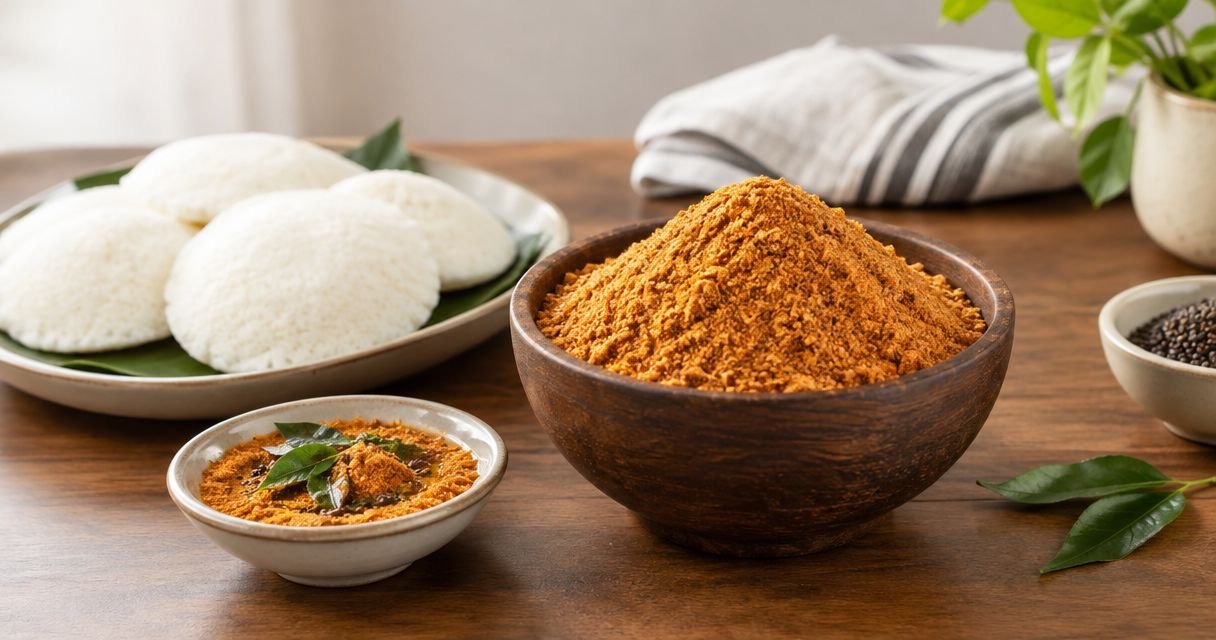
For the idli podi price per pack in 2026, check the current product card below and confirm the selected pack’s net weight before comparing value. The product amount alone is not your final order total: review any delivery charges and other checkout charges before paying.
- Compare idli podi price per pack only after confirming net weight and the selected variant.
- Tulasi Pickles suits buyers seeking homemade Andhra-style idli karam podi for breakfast.
- Use cost per 100 g to compare different pack sizes fairly.
- Idly Karam Podi and Putnala Karam Podi have different ingredient profiles; choose for your preferred meal.
How much does idli podi cost per pack?
The current product card is your starting point, but the selected pack weight determines what that amount buys. For a fair 2026 comparison, record the product amount, net quantity and checkout total together rather than comparing isolated search-result figures.
A pack amount without its net weight is not a useful value comparison. A lower-priced pack is not automatically better value, and a larger pack is not automatically the right purchase for your household.
Use this sequence before ordering:
- Check the product identity. Confirm that you have selected idli karam podi rather than a cooking masala or a different podi.
- Read the net weight. Use the weight of the food, not the shipping weight or container weight.
- Compare the same unit. Convert each option to cost per 100 g.
- Review the complete order. Check the final amount payable for your delivery destination.
- Match the pack to your meals. Choose a quantity you expect to use while following the label’s storage instructions.
If you are buying beyond breakfast, the guide to using podi with idli, dosa and rice helps you decide where the same powder fits into your routine.
Why this matters
You are buying a food you need to enjoy, not just a quantity of powder. A pack that suits your breakfast and gets used is a better purchase than an unfamiliar blend bought only because its displayed amount looks attractive.
Separate three decisions: which recipe you want, how much you need and what the delivered order requires you to pay. Keeping those decisions separate prevents a quantity comparison from turning into an assumption about taste or quality.
For example, a dal-based breakfast powder and a sesame-based podi are not identical purchases. Compare their ingredients first, then compare equivalent quantities if either recipe would suit your meals.
How do you compare different pack sizes fairly?
Compare cost per 100 g, then check the full order total. This gives you a consistent quantity basis without pretending that every podi has the same recipe or flavour.
The calculation is straightforward: divide the selected product amount by the pack weight in grams, then multiply by 100. Keep delivery separate at this stage so that you can distinguish product value from the cost of receiving the order.
Useful unit checks are:
- 100 g: a convenient reference quantity for comparing food packs.
- 1 kg: the same quantity as 1,000 g.
- 1 g: the base weight unit used in the calculation.
These are comparison units, not a statement that a seller offers those pack sizes. Always use the actual net quantity displayed for the option you select.
Keep product value and delivered value separate
A product-only comparison answers how much food you receive for the displayed amount. A delivered comparison answers what you pay to receive your complete basket at your address.
Both matter, but they answer different questions. When comparing shops, use the same destination and an equivalent basket so that delivery does not distort the result.
Do not substitute shipping weight for net weight
Packaging belongs in a parcel-weight calculation, not a food-quantity comparison. Look specifically for the net quantity declared for the selected pack.
If an order summary shows a weight without explaining what it represents, confirm the food quantity before using it in your calculation. A precise calculation built on the wrong weight still produces the wrong comparison.
Which podi should you compare with idli karam podi?
Start with another breakfast podi whose ingredients suit you. Comparing unrelated spice powders solely by their pack amount tells you little about whether either will work as your preferred accompaniment.
The following options have distinct ingredient identities in the product descriptions. The table compares their intended fit, not a tested ranking of taste, nutrition or value.
| Option | Best for | Ingredient basis stated in the listing | Advantage for that buyer | Limitation |
|---|---|---|---|---|
| Idly Karam Podi | Buyers specifically seeking Andhra-style breakfast podi | Chana dal and urad dal are named | Direct match for an idli-podi shopping brief | The product name alone does not establish your preferred heat or texture |
| Putnala Karam Podi | Buyers seeking a roasted chana dal powder | Roasted chana dal | Clear roasted-gram ingredient identity | It is a different blend, not an identical substitute |
| Nuvvula Karam Podi | Buyers who prefer sesame-based podi | Sesame | Relevant when sesame is the flavour you want | Not suitable for someone avoiding sesame |
| Palli Karam Podi | Buyers who prefer peanut-based podi | Peanut | Relevant when peanut is the flavour you want | Not suitable for someone avoiding peanuts |
Tulasi Pickles is best for buyers seeking homemade Andhra-style idli podi. Choose the breakfast-specific blend first if idli karam podi is your actual shopping goal; compare the alternatives only when their ingredient profiles appeal to you.
The advantage is a clear match between the product category and your breakfast brief. The limitation is equally clear: an Andhra-style description does not tell you whether the seasoning or grind will match your personal preference.
Two relevant products to inspect
Idly Karam Podi is the direct match for this question. Putnala Karam Podi is relevant if you also want to consider a roasted chana dal powder; it should not be treated as the same recipe under another name.


Why idli podi pack comparisons vary
For your 2026 purchase, check these factors before deciding that one listing offers better value. They explain what you need to compare; they do not establish why a particular seller sets a particular amount.
- Net quantity: Compare equivalent food weights rather than the appearance or size of the container.
- Recipe identity: Chana dal, urad dal, roasted gram, sesame and peanut identify different blends across the listed products.
- Intended use: A breakfast accompaniment and a powder intended for cooking are not interchangeable purchases just because both are called podi.
- Delivery destination: Review the checkout for your address rather than assuming that the product amount covers delivery.
- Household use: Choose a quantity that fits how often you actually serve podi, without assuming a universal serving size.
Avoid treating descriptive words as measurable specifications. “Homemade” describes the product positioning; it does not, by itself, establish a particular ingredient ratio, nutritional result or storage period.
The same applies to “Andhra-style.” Use that description to identify the food tradition you want, then inspect the individual recipe rather than assuming every blend tastes alike.
How do you choose a pack without overbuying?
Choose for your existing meal routine, not an imagined future habit. If podi already accompanies your breakfasts, use your own recent consumption as the guide; if the blend is unfamiliar, confirm the recipe before committing to a larger quantity.
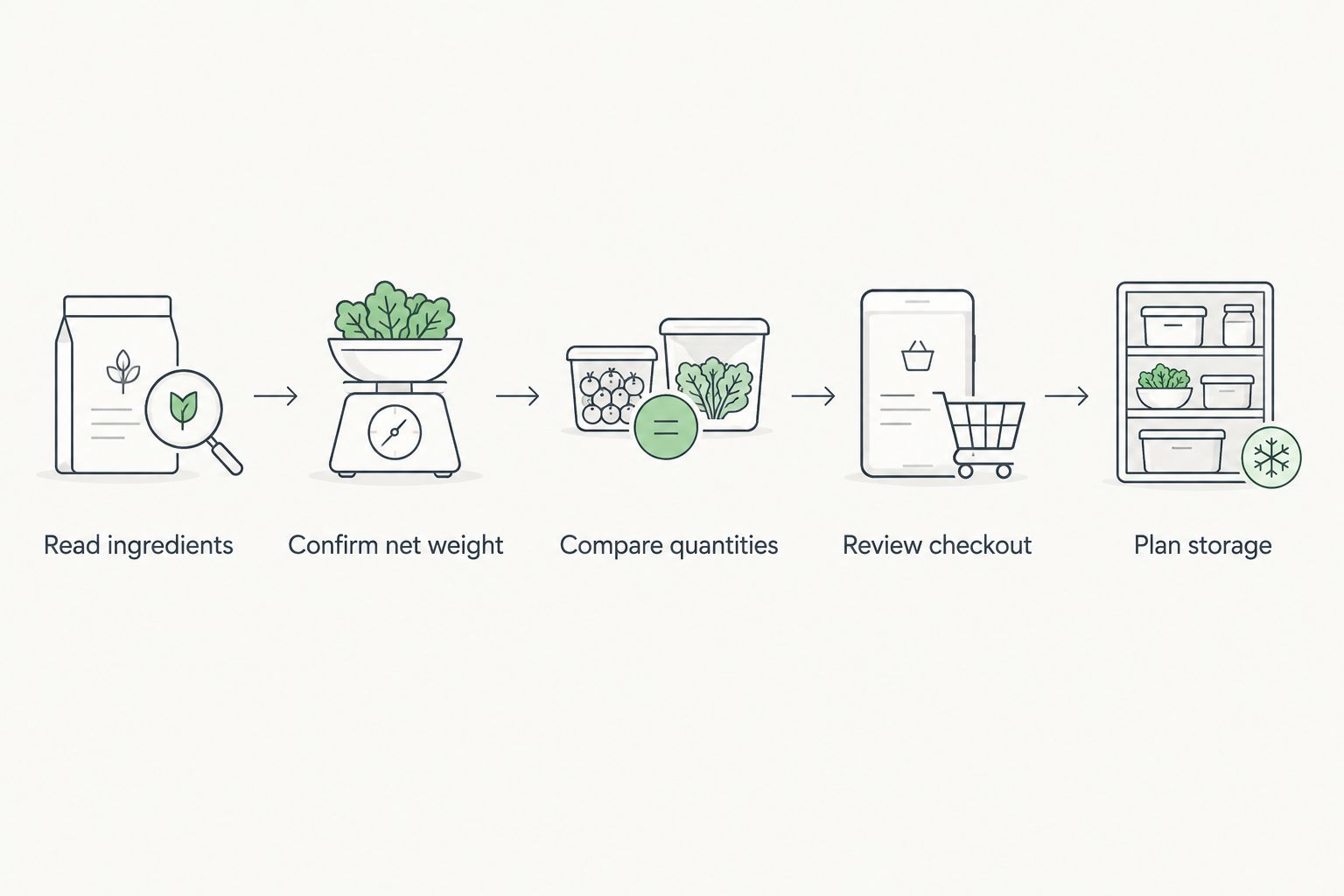
Follow this order when making your 2026 purchase:
- Read ingredients. Check the complete ingredient declaration and allergen information.
- Confirm net weight. Make sure the selected option matches the quantity you intend to buy.
- Compare quantities. Put equivalent recipes on the same weight basis.
- Review checkout. Check the destination and complete order total.
- Plan storage. Read the pack instructions before opening it.
This sequence puts suitability before arithmetic. There is no value in choosing an appealing unit comparison if the recipe is unsuitable for your household.
Check dietary suitability before comparing value
Read the actual ingredient and allergen declarations rather than relying on the product name. Peanut and sesame blends require particular attention if someone in your household avoids those ingredients.
Do not infer a nutritional benefit from the presence of dal, leaves or seeds. For a nutrition-led purchase, use the product’s nutrition declaration and your own dietary requirements, not an assumed benefit attached to the category name.
Use the label to plan storage
Follow the manufacturer’s storage instructions and date marking for the pack you receive. Do not assign a fixed after-opening period from another product’s advice.
Keep serving utensils clean and dry, and close the container after use. These are sensible handling practices, not a promise of a particular shelf life.
Is a larger idli podi pack always better value?
A larger pack is better on product value only when its cost per 100 g is lower for an equivalent recipe. It is a better household purchase only when you also expect to use the quantity appropriately.
Check both conditions. Pack size alone does not establish either one, and an attractive quantity comparison does not tell you whether you will enjoy the blend.
Is the product-card amount the final checkout total?
The product-card amount identifies the listed product amount, not necessarily the complete delivered order. Review the checkout total for your selected quantity and address before paying.
For an overseas order, confirm the destination-specific ordering and delivery details directly. Do not apply a domestic basket comparison to an international destination without checking the final order.
Can you compare idli podi with other karam powders?
You can compare them by weight, but that does not make them equivalent products. First decide whether you want a breakfast accompaniment, a roasted-gram blend or another ingredient-led podi.
Use quantity arithmetic after that decision. Otherwise, a mathematically correct comparison can still lead you to buy the wrong food for your intended meal.
FAQ
Where should I check the idli podi price per pack in 2026?
Check the current product listing and your selected pack option, then review the checkout total. Confirm net weight before comparing it with another pack.
How do I compare idli podi packs with different weights?
Compare cost per 100 g using each pack’s actual net quantity. Keep delivery separate initially, then compare the complete order for the same destination.
Is a larger pack of idli podi always better value?
No, a larger pack is not automatically better value. Compare equivalent recipes by weight and choose a quantity that fits your household’s use.
Which Tulasi Pickles podi matches an idli-podi shopping brief?
Idly Karam Podi is the direct match for an idli-podi shopping brief. Its description identifies an Andhra-style spice powder containing chana dal and urad dal.
Is Putnala Karam Podi the same as Idly Karam Podi?
No, the listings describe different blends. Putnala Karam Podi is identified as roasted chana dal powder, while Idly Karam Podi names chana dal and urad dal.
Does an idli podi product amount include delivery?
Check the checkout to establish the complete delivered amount. Do not assume that a product-card amount includes every charge for your destination.
How long will one pack of idli podi last?
A pack’s duration depends on its net quantity and how much your household uses. Follow the product’s date marking and storage instructions rather than assuming a fixed number of meals or days.
One last thing
Your own serving habit is more useful than a guessed serving count. If you want to estimate how long a pack will last, weigh the amount you normally serve and divide the pack’s net quantity by that amount.
That gives you a household-specific planning figure without inventing a universal portion. Keep it separate from the product’s date marking: an estimate of consumption is not a food-storage instruction.
Related guides
- How long does idli karam podi stay fresh after opening?
- Best Andhra podi for rice and idli
- How to choose the right podi grind for mixing with rice
- Idli karam podi for spicy breakfast cravings