
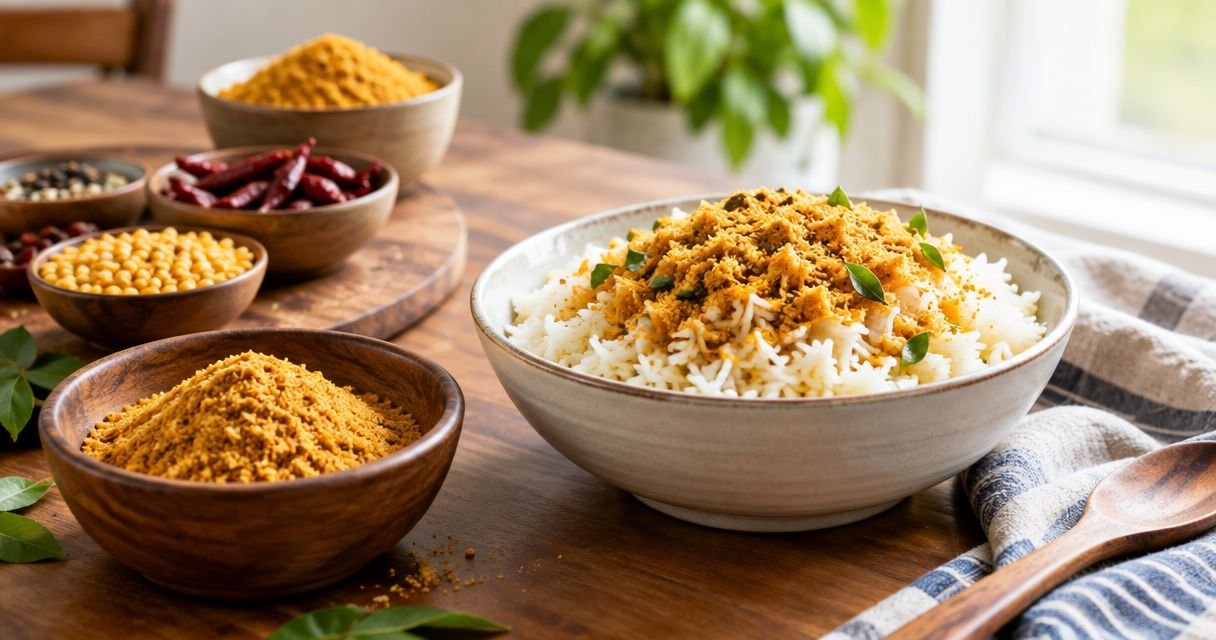
The right podi grind for mixing with rice is a coarse, semi-textured grind — fine enough to coat each grain in ghee but coarse enough to hold its crunch and release oil slowly as you chew. A powder milled too fine turns pasty the moment it meets warm ghee, while one left too coarse sits in gritty pockets that never blend into the rice.
- Coarse-to-medium grind wins for podi grind for rice mixing; fine powder is built for idli and dosa, not rice.
- Kandi podi (lentil-based) needs a coarser mill than sesame or peanut podi to avoid turning pasty.
- The ghee-mix test tells you fast: if the podi clumps within seconds, it’s ground too fine for rice.
- Airtight storage away from humidity protects the coarse texture that rice mixing depends on.
- Tulasi Pickles mills each podi variety differently rather than using one grind for everything.
Why grind size matters more than flavor
Most buyers pick podi by flavor name — kandi podi, karam podi, kobbari podi — and never check how fine it's milled. That's backwards for anyone mixing it into hot rice, because grind size decides oil absorption, mouthfeel and how evenly the powder distributes through each spoonful. A quick look at Tulasi Pickles' Andhra podi range built for rice and idli shows the same base ingredient milled two different ways depending on the intended use, and that difference is the whole story.
In 2026, a lot of online podi sellers still ship one uniform grind across every flavor, which is exactly why home cooks end up with rice that clumps or podi that never releases its aroma. Grind size, not spice level, is the first thing to check before you buy podi meant for rice.
What's the best podi grind for mixing with rice?
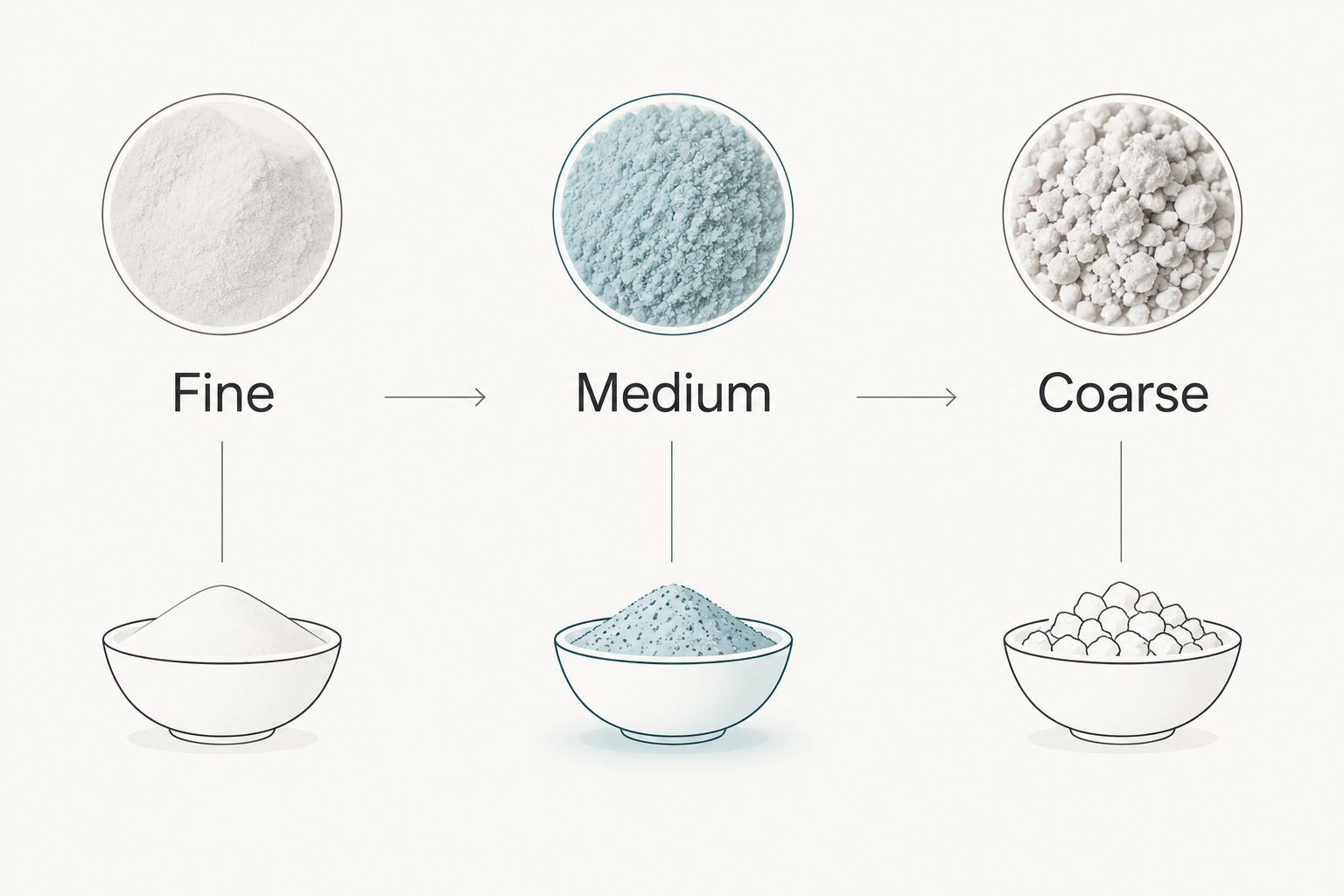
The grind level determines whether podi coats rice or fights it. Here's how the three common mill levels behave against hot rice and ghee:
| Grind level | Texture | Best for | Good for rice mixing? |
|---|---|---|---|
| Fine (powder) | Talcum-fine, no grain visible | Idli batter, dosa dusting | No — turns pasty in ghee |
| Medium | Slightly grainy, holds shape | Curd rice, khichdi, everyday rice mixing | Yes — best all-round choice |
| Coarse | Visible lentil or nut bits | Hot ghee rice, thicker rice bowls | Yes — best for texture lovers |
Medium grind is the safe default for daily rice mixing in 2026 households because it dissolves partway into the ghee while still leaving texture on the tongue. Coarse grind suits people who want the podi to stay distinct — bits of roasted dal or peanut you can actually bite into rather than a uniform coating.
Kandi podi: why it needs a coarser grind than most
Kandi podi is built on roasted toor dal, and dal turns pasty faster than sesame or peanut when milled too fine because it has less natural oil to keep particles separate. A coarser mill keeps the lentil grit intact against hot rice instead of collapsing into a paste the second ghee hits it. If you're buying specifically for daily rice mixing, kandi podi made for protein-rich rice mixing is milled with that coarser texture in mind rather than the finer grind used for tiffin dips. Verdict: buy kandi podi at medium-coarse grind for rice, not the fine version meant for dosa.
Sesame and peanut podi: why fine-medium works differently
Sesame (nuvvula) and peanut (verusenaga) podis carry enough natural oil that a finer grind doesn't turn pasty the way dal-based podi does — the oil actually helps the powder bind smoothly into rice. A fine-medium grind on these two releases nuttiness faster because there's more surface area exposed to heat. Coarse-milled sesame or peanut podi, on the other hand, tends to sit unevenly and needs more ghee to move through the rice at all.
Roasted gram podi: coarse holds up best against ghee rice
Roasted gram (senagapappu) podi behaves closer to kandi podi than to sesame — it's dry and starchy rather than oily, so a coarse grind stops it from clumping the second it touches warm ghee. This is the grind most people reach for when they're making a full bowl of hot ghee rice rather than a light curd-rice mix, and it's worth checking the step-by-step method for mixing podi into hot ghee rice if this is the texture you're chasing.
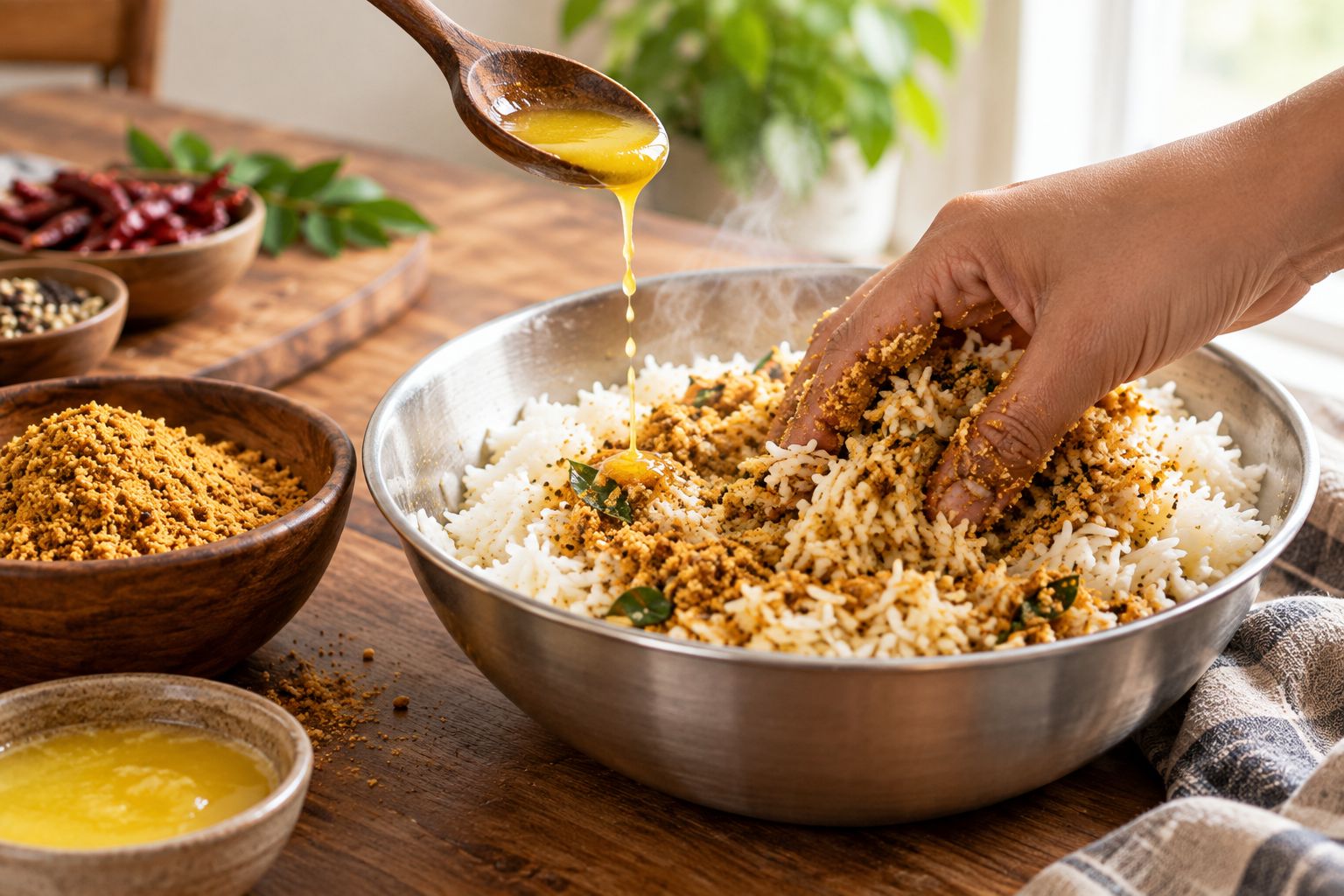
“If your rice mix clumps within seconds of touching ghee, the podi’s ground too fine for rice.”
Why podi grind varies from brand to brand
Grind consistency isn't accidental — a handful of factors decide how coarse or fine a batch ends up, and only some of them are under a buyer's control:
- Ingredient base — dal and gram grind coarser by nature; sesame and peanut can go finer because of their oil content.
- Roasting level — over-roasted lentils crumble finer even on the same mill setting.
- Oil content of the raw ingredient — higher-oil ingredients resist turning to fine dust.
- Batch size at the mill — small home-style batches, still common in Hyderabad kitchens in 2026, grind less uniformly than large commercial runs.
- Storage humidity — moisture picked up after opening softens coarse grains toward a pastier texture over time.
- Regional milling style — coastal Andhra kitchens often prefer a coarser cut than Telangana-style tiffin podis.
Is store-bought podi ground fine enough for rice?
Most store-bought podi is milled fine by default because fine grind suits the widest range of uses, including idli and dosa. That default fine grind is usually too smooth for serious rice mixing, so check the product description or ask before buying if rice is the main use.
Can I use idli podi for rice mixing?
You can use idli podi for rice mixing, but expect a pastier result since idli podi is milled fine on purpose. It still tastes fine — it just won't give you the textured bite that medium or coarse grind delivers, and the guide to using podi with idli, dosa and rice breaks down which grind suits which dish.
How much ghee or oil should go with podi for rice?
The right amount depends on grind level: coarser podi needs more ghee to move through rice evenly, while fine podi needs less because it disperses on its own. Start light, mix, and add more only if the rice still looks dry — there's no fixed ratio that works across every podi type.
Find the podi grind that fits your rice
Browse Tulasi Pickles’ full range of Andhra podis and pickles online.
FAQ
What’s the best podi grind for mixing with rice?
Medium-to-coarse grind is the best podi grind for mixing with rice because it coats grains without turning pasty. Fine grind is better reserved for idli and dosa.
Is kandi podi coarse or fine?
Kandi podi meant for rice mixing is usually medium-coarse, since dal-based podi pastes quickly if milled too fine. Kandi podi sold for tiffin dips can be finer.
Does grind size affect podi shelf life?
Coarser grind podi generally resists moisture pickup better than fine powder, holding its texture longer once opened. Airtight storage matters more than grind size for overall shelf life.
Can I mix podi with cold rice?
Podi mixes best with warm or hot rice because heat helps release ghee and aroma evenly. Cold rice leaves the podi sitting on top rather than blending through.
Is fine podi bad for rice mixing?
Fine podi isn’t bad, but it tends to clump and turn pasty against warm ghee. It works better for idli batter or dosa dusting than for rice bowls.
Which podi has the coarsest grind?
Roasted gram and kandi podi are typically milled coarser than sesame or peanut podi because their lower oil content resists a fine mill. Coarser grind suits heavier ghee rice preparations.
How do I test if a podi’s grind suits rice?
Mix a spoon of the podi into warm ghee and watch what happens in the first few seconds. If it clumps into a paste almost immediately, the grind is too fine for rice mixing.
One last thing
The grind level rarely appears on the packaging, so the fastest way to check before buying online in 2026 is to look at product photos closely — visible grain texture in the image usually signals coarse or medium milling, while a smooth powder photo signals fine grind meant for tiffin use. When in doubt, ask the seller directly which grind the podi was milled at before it ships.
Related guides