
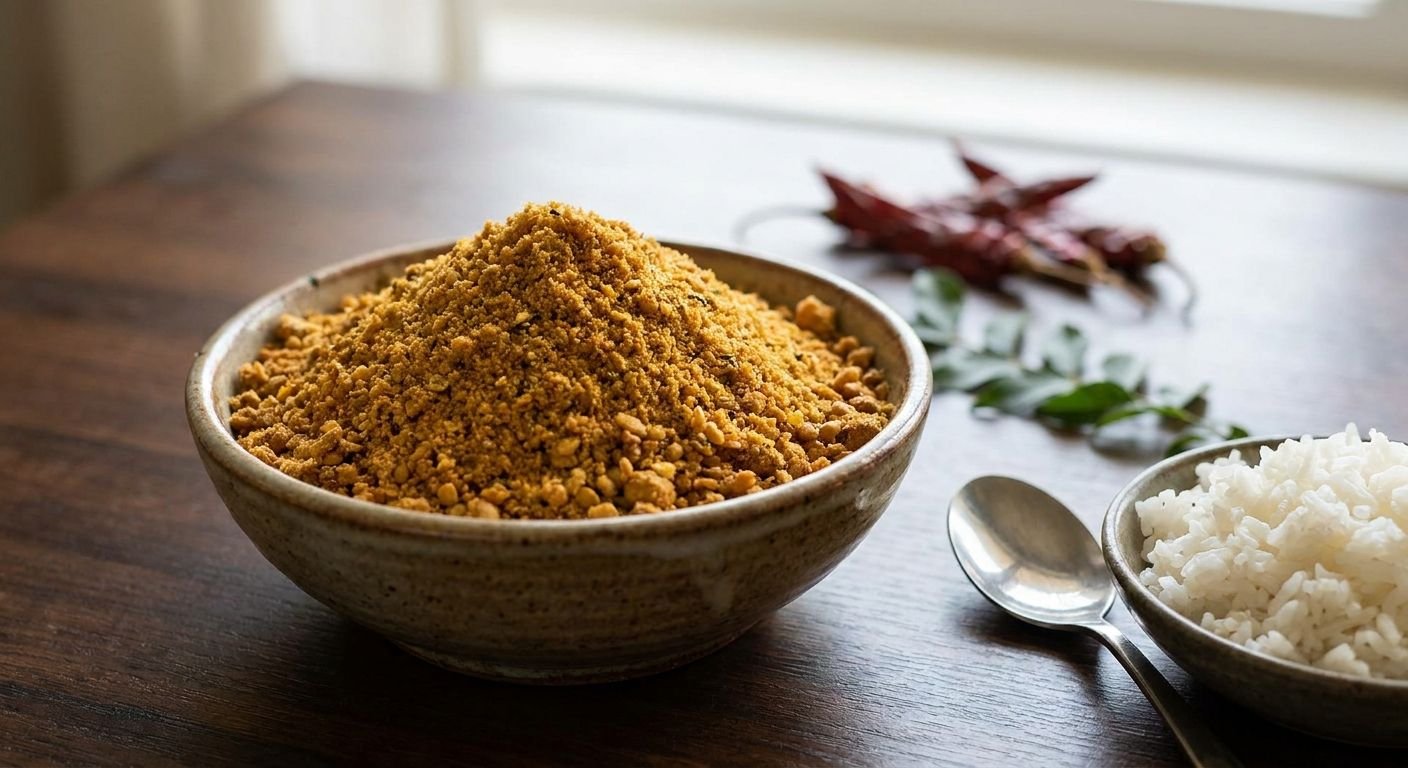
Protein-focused eaters use kandi podi to turn a plate of plain rice into a higher-protein meal in under five minutes, with no dal to cook, no protein powder to measure, and no separate side dish required. This segment isn't chasing flavor alone — they're tracking grams of protein per meal, and kandi podi solves the gap between plain rice and a meal that actually holds them through a workout or a long workday.
- Kandi podi (toor dal spice powder) adds plant protein to rice in under 5 minutes with no separate dal cooking in 2026.
- Mix 1-2 tablespoons of kandi podi with hot rice and a spoon of ghee for a quick protein-boosted meal.
- Toor dal carries close to 22g of protein per 100g raw, higher than most other podi bases used for rice mixing.
- Putnala Podi and Nuvvula Podi add variety, but Kandi Podi from Tulasi Pickles leads on protein density among Andhra podis.
- Kobbari Podi tastes rich but contributes far less protein per serving than a toor dal based podi.
Why kandi podi matters for protein-focused eaters
Rice alone is a weak protein source — raw white rice carries roughly 7g of protein per 100g, and most of that drops further after cooking and dilution with water. Toor dal, the base of kandi podi, carries close to 22g of protein per 100g raw, nearly three times what rice offers on its own.
For someone eating rice as a daily staple — a student in a hostel, a gym-goer prepping lunch, a home cook who doesn't want to soak and pressure-cook dal every single day — that difference matters. Kandi podi closes the gap without adding a cooking step, and it does it at every meal, not just the ones where dal happens to be on the stove.
The segment's real constraint isn't taste, it's time and consistency. A protein-focused eater needs the same protein boost on a Tuesday lunch break as they do on a slow Sunday, and podi delivers that without a recipe.
How-to: building a protein-rich rice meal with kandi podi
Measure your rice-to-podi ratio
Getting the ratio wrong is the single most common reason people give up on podi rice — too little and it tastes like plain rice with dust on it, too much and the salt overwhelms the dish.
- Start with 1 tablespoon of kandi podi per cup of cooked rice for a mild mix
- Go up to 2 tablespoons for a stronger, more protein-dense mix
- Adjust downward if you're also adding a salted side like pickle or curd
- Mix into hot rice, not cold — the warmth releases the aroma and softens the texture
Add fat before you mix
Toor dal powder is dry on its own, and skipping fat is why some people find podi rice chalky instead of comforting.
- A spoon of ghee is the traditional choice and carries the flavor best
- Sesame oil works if you want a nuttier, more South Indian profile
- Coconut oil suits a lighter, everyday meal
- Skip butter — it melts differently and doesn't bind the podi into the rice the same way
Pair kandi podi with a protein side
Kandi podi raises the protein count, but it isn't meant to be the only protein source in the meal — this is where Tulasi Pickles' Kandi Podi works as the fast layer on top of a real protein side.
- Curd or plain yogurt adds dairy protein and cools down the spice
- A boiled egg on the side works for non-vegetarians who want a quick add
- A small serving of moong or toor dal adds more plant protein without much extra cooking
- Paneer cubes work for a vegetarian option that still hits a protein target
Time your meals around training
Protein-focused eaters often ask when to eat podi rice, not just how much.
- Post-workout, pair podi rice with curd for a combination of carbs and protein within the recovery window
- Pre-workout, keep the portion smaller since a heavy oil-and-rice meal sits slow
- For a mid-day office lunch, the full ratio (2 tablespoons per cup) works well since there's no immediate activity after
- For dinner, cut the ghee slightly if the meal is close to bedtime
Store kandi podi correctly for daily use
A podi that's been sitting out in humid weather loses both shelf life and the toasted flavor that makes it work with rice.
- Keep it in an airtight glass or steel jar, not the original packaging alone
- Store away from direct sunlight and stove heat
- Use a dry spoon every time — moisture is what triggers spoilage in dal-based powders
- Refrigerate in humid coastal cities or during monsoon months for longer freshness
Track your daily protein math
Someone eating podi rice twice a day should have a rough sense of what they're adding, not just a vague feeling of "it's healthier."
- 2 tablespoons of toor-dal-based podi contributes meaningfully more protein than the same volume of a coconut or sesame-based podi
- Add the protein from your side (egg, curd, dal) to get a real per-meal total
- Don't count podi as a full protein source — it's a booster, not a replacement for dal or meat
Rotate podi varieties without losing protein
Eating the same podi every day gets boring fast, and rotation keeps the habit going.
- Alternate between kandi podi and other podi varieties through the week to avoid flavor fatigue
- Keep at least 2-3 days a week on a toor-dal-based podi to hold your protein average up
- Use lighter podis like coconut or sesame on days when a protein side (egg, dal) is already covering the gap
Comparison: podi options for protein-focused rice mixing
| Podi | Best for | Protein base | Key limitation |
|---|---|---|---|
| Kandi Podi | Daily protein boost with rice | Toor dal (~22g protein/100g raw) | Needs ghee or oil to avoid a dry, chalky mix |
| Putnala Podi | Lighter texture, crunchier bite | Roasted chana dal | Lower fat content, drier mouthfeel without added oil |
| Nuvvula Podi | Adding iron and calcium alongside protein | Sesame seeds | Strong flavor can dominate the rice if overused |
| Kobbari Podi | Flavor variety, milder taste for kids | Coconut | Contributes far less protein than dal-based podis |
Verdict: Kandi Podi is the strongest single choice for protein-focused rice mixing in 2026 because toor dal outpaces coconut, sesame, and roasted gram on protein density per serving.
Common mistakes protein-focused eaters make with kandi podi
- Skipping the ghee step entirely — a dry mix tastes gritty and people quit the habit within a week
- Treating podi as the only protein source — 1-2 tablespoons doesn't replace a full dal or egg serving
- Over-salting the plate — kandi podi already carries salt, and adding pickle or extra salt on top pushes the meal too far
- Storing it loosely in the original pouch — moisture exposure shortens shelf life fast, especially in humid months
- Assuming every podi has equal protein — coconut and sesame-based podis are flavorful but nowhere near toor dal on protein content
“Podi rice only works as a protein meal if the podi is paired with a real protein side — it’s a booster, not a substitute.”
FAQ
Is kandi podi actually high in protein?
Yes, kandi podi is made from toor dal, which carries close to 22g of protein per 100g raw, making it one of the higher-protein podi options for rice mixing in 2026.
How much kandi podi should I mix with rice?
Start with 1 tablespoon of kandi podi per cup of cooked rice, and go up to 2 tablespoons if you want a stronger protein-dense mix with less need for a separate dal side.
Can kandi podi replace dal in a meal?
No, kandi podi boosts the protein in rice but shouldn’t replace a full dal or protein side entirely, since the quantity used per meal is much smaller than a typical dal serving.
Is kandi podi better than nuvvula podi for protein?
Kandi podi generally carries more protein per serving than nuvvula podi (sesame-based), though nuvvula podi adds more iron and calcium alongside its protein content.
Does kandi podi need oil or ghee to work?
Yes, adding a spoon of ghee or sesame oil before mixing prevents the dry, chalky texture that makes plain podi-and-rice unappealing on its own.
How long does kandi podi stay fresh once opened?
Kandi podi stays fresh longest in an airtight glass or steel container, away from sunlight and stove heat, with refrigeration recommended during humid or monsoon months.
Is kandi podi good for a daily protein routine?
Kandi podi works well as a daily add-on for protein-focused eaters because it needs no cooking step, though the total daily protein target should still come from a proper dal, egg, or curd side as well.
Which podi has the least protein?
Kobbari podi (coconut-based) contributes the least protein among common Andhra podis, since coconut is a fat source rather than a protein source.
One last thing
The number that surprises most people: raw toor dal carries roughly 22g of protein per 100g, close to three times what raw rice offers at around 7g per 100g — which means a spoon of kandi podi does more protein work than most people assume from a "spice powder." Pair it with curd or an egg once a day in 2026, and the rice bowl stops being an empty-carb meal.
Related guides