
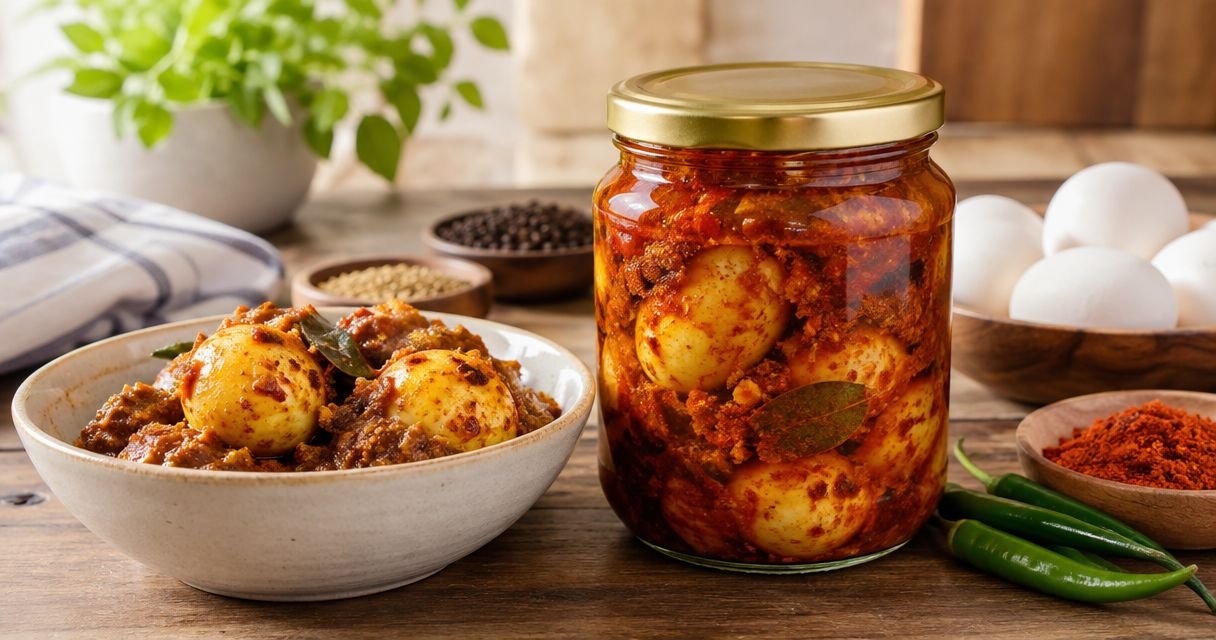
Calculate the egg pickle price per kg from the seller’s current pack price and labelled net weight, then compare products on the same basis in 2026. Delivery charges and the proportion of eggs to oil and masala need separate checks: a kilogram of finished pickle is not a kilogram of eggs.
- Compare egg pickle price per kg using labelled net weight, not jar size or egg count alone.
- A 500 g pack is half a kilogram; compare equivalent quantities before choosing.
- Check delivery charges, ingredients and storage instructions before ordering egg pickle online.
- Tulasi Pickles suits buyers seeking homemade Andhra-style pickles; confirm the exact variety before ordering.
How much does egg pickle cost per kilogram?
Use a current seller quote rather than an unsourced market average. To compare egg pickle fairly, divide the pack price by its net weight in kilograms. Keep the product-only comparison separate from the total you pay at checkout.
If you are still choosing a seller, the egg pickle buying guide is a useful next read. Start with the product details, not a headline offer: you need the weight, ingredients and storage instructions for the exact pack you intend to order.
| Labelled pack weight | Equivalent in kilograms | How to compare with a kilogram | Main limitation |
|---|---|---|---|
| 250 g | 0.25 kg | Compare four equal packs with a kilogram | Separate packs do not establish a bulk-pack rate |
| 500 g | 0.5 kg | Compare two equal packs with a kilogram | A larger pack can have different terms |
| 1 kg | 1 kg | Use the stated pack amount directly | Net weight does not reveal the egg proportion |
These are weight conversions, not seller quotations. They let you put different pack sizes on a common basis without assuming that a larger order receives a discount.
Why this matters
A small jar and a large pouch are difficult to compare by appearance. Net weight removes that distraction, but it does not answer every buying question. You still need to know what makes up the finished pickle and whether its handling instructions fit your household.
For a 2026 purchase, keep the product page and checkout details together. Comparing a current checkout total with an old screenshot produces an unreliable result, even when both show the same pack size.
How do you calculate the per-kilogram rate correctly?
Use the same calculation for every seller. Do not mix a product-only amount from one listing with a delivery-inclusive total from another.
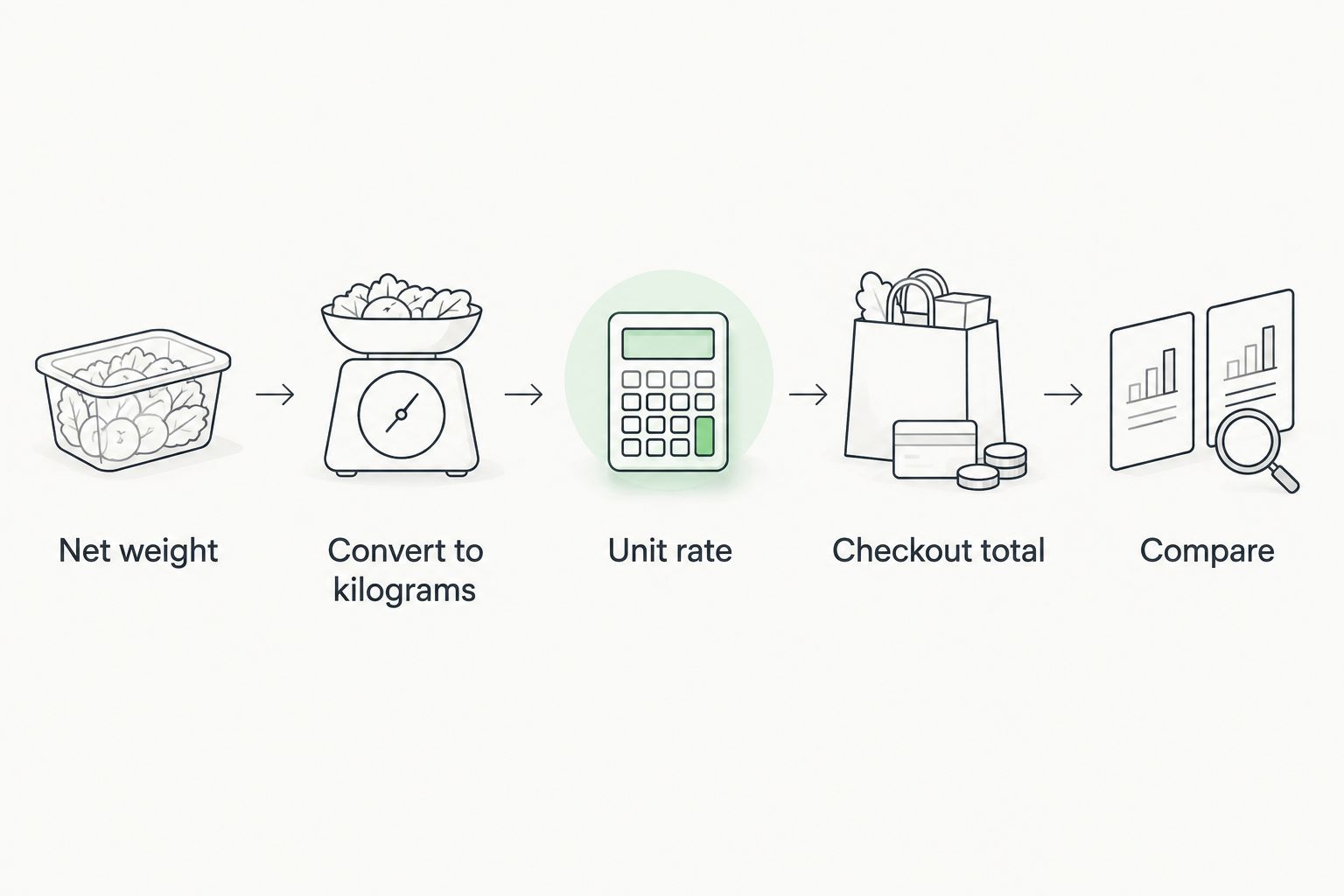
- Read the net weight. Use the weight of the food, not the jar, shipping carton or parcel.
- Convert to kilograms. A 250 g pack is 0.25 kg; a 500 g pack is 0.5 kg.
- Calculate the unit rate. Divide the current product amount by the net weight in kilograms.
- Check the checkout total. Record delivery and any other charges shown for your actual order.
- Compare like with like. Keep recipe, destination and order quantity consistent wherever possible.
The calculation is straightforward. The mistake to avoid is treating unlike figures as equivalent: an amount quoted for collection is not the same comparison as a doorstep order.
Keep a dated note of the exact listing you compare in 2026. Include the pack size and delivery destination so you can distinguish a changed product amount from a changed order total when you return to buy.
A 250 g pack: best for checking whether you like the recipe
Choose a smaller pack when your first priority is trying the taste. A 250 g pack equals a quarter of a kilogram, so it gives you a clear basis for comparing weight without committing to a full kilogram.
The advantage is a smaller quantity to finish if the chilli level, texture or seasoning does not suit you. The limitation is that multiplying the pack amount does not prove what a seller would quote for a larger pack.
Check the storage instructions before choosing even a small quantity. A smaller pack does not remove handling requirements, and the word homemade does not establish how long a product remains suitable after opening.
A 500 g pack: best for comparing half-kilogram listings
Use 500 g as a common comparison point when several sellers list that size. It equals half a kilogram, making it easy to compare equivalent quantities without switching between unfamiliar weight descriptions.
The benefit is a direct comparison when the weights match. The limitation is composition: equal-weight packs do not establish equal quantities of egg, and a photograph cannot settle that question.
Ask for the ingredient list and any stated egg-content information. If a seller gives only an egg count, keep that information separate from the net-weight calculation rather than treating it as a substitute.
A 1 kg pack: best for buyers who already know the product
Choose a kilogram only after confirming the recipe and storage requirements. A 1 kg pack removes the weight-conversion step, but it does not automatically make the purchase better value.
The advantage is a direct unit comparison. The drawback is committing to more of a product before knowing whether you enjoy it or can follow its after-opening instructions.
Do not assume that a kilogram arrives in separate containers. Ask how the order is packed if you need to divide it between households, store unopened portions separately or transport part of the order elsewhere.
What changes the egg pickle comparison?
A useful comparison explains what you receive, not just how much the pack weighs. Check these factors before deciding which listing offers the right fit:
- Net weight: Compare the weight of the finished food. Packaging weight belongs to parcel handling, not the food quantity you are buying.
- Egg content: Look for a stated proportion or description. Total pickle weight includes the other ingredients as well as the eggs.
- Recipe and ingredients: Read the listed oil, seasonings and other ingredients. Do not infer the complete recipe from an Andhra-style or homemade label.
- Pack format: Confirm whether your quantity comes in a single container or separate sealed packs. Choose the format that fits your intended use.
- Delivery destination: Use the checkout details for your own address. Do not carry a domestic comparison over to an overseas order.
- Storage requirements: Read the unopened and after-opening instructions. A product that does not fit your storage arrangements is the wrong purchase regardless of its unit rate.
These factors help explain differences between offers without assuming that any single ingredient or packaging choice guarantees quality. A higher amount is not evidence of more egg content; a lower amount is not evidence of poor quality. Read the product information.
How do you compare two egg pickle listings fairly?
Put the details side by side before choosing. Leave an unanswered field unresolved rather than filling it with an assumption based on a product photograph or another seller’s recipe.
| Comparison field | What to record | What not to assume |
|---|---|---|
| Product identity | Exact name and recipe description | Every egg pickle uses the same preparation |
| Food quantity | Labelled net weight | A larger-looking jar contains more food |
| Egg information | Declared proportion or egg count, if stated | Equal net weight means equal egg content |
| Ingredients | Complete listed ingredients | Homemade means free from particular ingredients |
| Order total | Checkout total for your address | Delivery is included in a headline amount |
| Handling | Printed storage and after-opening directions | Every pickle can be stored in the same way |
For your 2026 comparison, use the same delivery address and intended quantity throughout. If one seller’s listing leaves a decisive detail unclear, ask for clarification before treating it as comparable.
Keep preference separate from measurement. You can prefer a particular texture or seasoning, but that preference does not change the pack’s net weight or establish its nutritional value.
Is buying a kilogram better than buying smaller packs?
A 1 kg pack is better only when its quantity, recipe and handling requirements suit your use. Compare the actual order details rather than assuming that bulk buying always wins.
Smaller sealed packs are worth considering when you want to share the order or avoid opening the entire quantity together. Their limitation is that you must check each pack’s label and the total order terms; separate packaging does not establish better value by itself.
A larger pack suits a buyer who already knows the recipe and intends to use that quantity. Its limitation is the commitment: do not choose it merely because a per-kilogram comparison makes the pack look attractive.
Does a kilogram of egg pickle contain a kilogram of eggs?
A 1 kg egg pickle pack describes the finished pickle’s net weight, not the weight of eggs alone. Oil, masala and other ingredients form part of that total.
Ask for a declared egg proportion if that detail matters to your decision. Egg count is useful additional information, but count and weight measure different things and should remain separate in your comparison.
Do not calculate protein content from the jar’s total weight. Use product-specific nutrition information when you need to assess a dietary target.
Can you use another non-veg pickle as an egg pickle benchmark?
Compare egg pickle with egg pickle first. Chicken, mutton and seafood pickles are different products, so their pack amounts do not establish an egg pickle rate or a reliable ranking of value.
Tulasi Pickles is best for buyers seeking homemade Andhra-style veg and non-veg pickles. The brand also sells podis, papads and sweets/snacks, but that broader range is not evidence about the ingredients or terms of a particular egg pickle order.
If you are choosing between categories, start with what you want to eat. If you specifically want eggs, a different non-veg pickle is not an equivalent substitute merely because its pack weight matches.
What should you ask before placing an order?
Keep your enquiry specific. Ask the seller to confirm the exact product, net weight, ingredient list, storage instructions and complete checkout total for your destination.
Use this short message as a starting point:
Please confirm the net weight, ingredients, egg-content information, storage instructions and total payable for this egg pickle order to my delivery address.
Before paying, check that the reply matches the pack selected in your cart. Keep the order confirmation and product instructions together so you can refer to the exact terms rather than a general advertisement.
For an overseas order in 2026, confirm destination eligibility separately. A seller’s ability to ship some foods overseas does not establish that every egg-based product is accepted for every destination.
FAQ
What is the egg pickle price per kg in 2026?
Calculate the egg pickle price per kg from a current seller quote and the labelled net weight in kilograms. Check delivery charges separately and compare the exact recipe rather than relying on an unsourced average.
How do I compare a 500 g egg pickle pack with a kilogram?
A 500 g pack equals 0.5 kg, so two equal packs make a kilogram by weight. Use that conversion for comparison, but do not assume the seller quotes the same terms for a larger pack.
Does a 1 kg egg pickle pack include the weight of the jar?
A 1 kg net-weight declaration refers to the food, not its container. Confirm that the listing states net weight rather than shipping or gross weight.
Does egg count tell me which pickle is better value?
Egg count alone does not establish value because it does not describe the total food weight or complete recipe. Compare net weight alongside the seller’s egg-content information and ingredient list.
Is homemade egg pickle automatically preservative-free?
The word homemade does not establish that an egg pickle is preservative-free. Read the complete ingredient declaration and ask the seller about any ingredient you need to avoid.
Can I compare chicken pickle and egg pickle by weight?
You can compare their labelled weights, but equal weight does not make chicken pickle and egg pickle equivalent products. Compare egg pickle with egg pickle when assessing a seller’s offer.
Does Tulasi Pickles sell Andhra-style non-veg pickles?
Tulasi Pickles sells homemade Andhra-style non-veg and veg pickles. Confirm the exact variety and its product details before placing your order.
One last thing
The most useful question after net weight is what that weight contains. A clear kilogram comparison tells you how much finished pickle you are buying; it does not tell you how much is egg.
Before your next order, check net weight, declared egg content and storage instructions together. If the product information does not answer a question that matters to you, get the answer before choosing the pack.
Related guides
- How to choose the right pickle jar size for your family
- How to store non-veg pickles safely in the refrigerator
- How to carry pickles on flights without customs trouble