
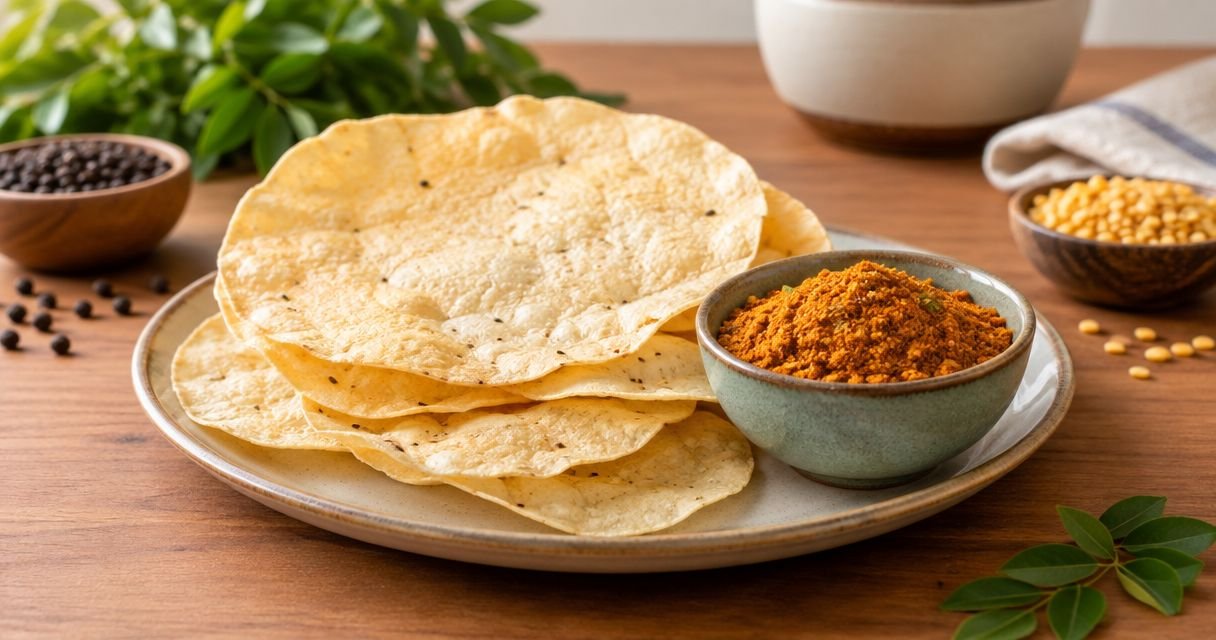
Low oil papad and podi combo picks for 2026 rank six pairings from Tulasi Pickles' Andhra spice-powder and papad range, scored on oil content, protein density, sodium and how well they hold up in a daily rice or curd-rice meal. Best overall: Kandi Podi + Rice Papad. Best for weight-conscious snackers: Avise Podi (flaxseed) + Jowar Papad. Best budget option: Verusenaga Podi (peanut) + Rice Papad.
- Kandi Podi + Rice Papad wins overall for a low oil papad and podi combo eaten with plain or curd rice.
- Avise Podi (flaxseed) with Jowar Papad suits weight-conscious snackers who want fiber without an oil-tempered podi.
- Nuvvula Podi (sesame) with Rice Papad gives a dry-roasted calcium and iron boost, not an oil-fried one.
- Verusenaga Podi (peanut) with Rice Papad is the budget-friendly low oil papad and podi combo for daily tiffin.
- Karivepaku Podi (curry leaf) pairs well for digestion-focused snackers who still want crunch from papad.
Why this matters
Most "healthy" podi on the market is tempered in oil before it ever reaches the jar, and most papad is deep-fried rather than roasted. That combination quietly adds fat back into a meal that looks light on the plate.
A genuinely low oil papad and podi combo needs a dry-roasted or minimally-tempered podi paired with a roasted (not fried) papad. Tulasi Pickles ships both formats, and the difference shows up fastest with oil-free pickles for health-conscious buyers as the reference point for what "low oil" should actually mean on a label in 2026.
Sodium is the second lever. Podi made with roasted lentils and minimal salt behaves very differently on a blood-pressure-friendly plate than a chili-heavy variant loaded for shelf life. The right combo swaps oil for roasting time and dials salt down without losing flavor.
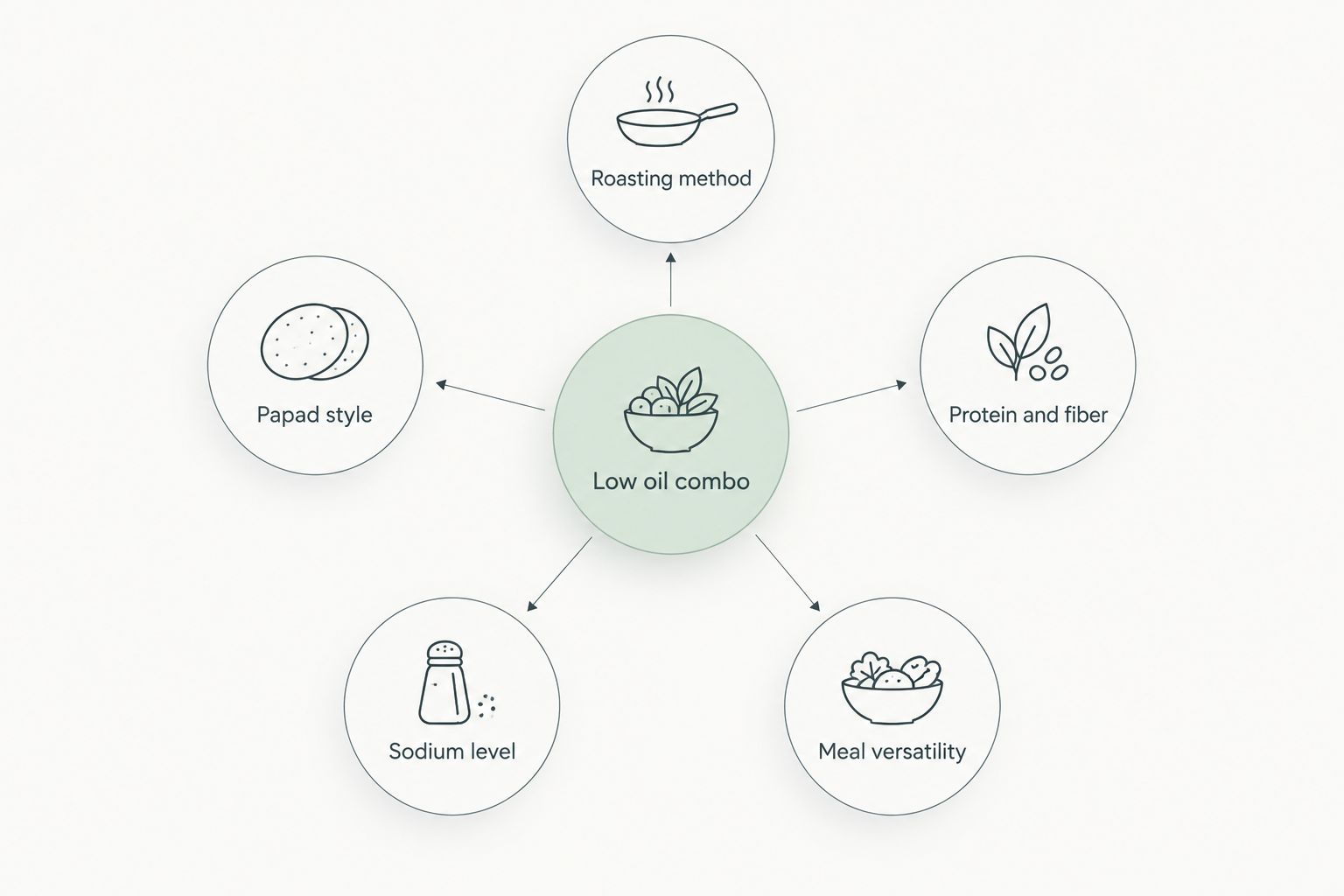
What makes the best low oil papad and podi combo
- Podi processing method — dry-roasted lentils and spices beat oil-tempered batches for daily use
- Papad cooking style — roasted or dry-puffed papad has a fraction of the fat a deep-fried papad picks up
- Protein and fiber per serving — lentil-based podi (kandi, putnala) adds protein; flax and sesame add fiber
- Sodium level — lower-salt podi suits daily eating better than festival-grade spice mixes
- Shelf stability without extra oil — the combo should stay crisp and fresh without needing an oil top-up
- Versatility across meals — rice, idli, dosa and curd rice all need slightly different podi textures
Low oil papad and podi combo — at a glance
| Combo | Best for | Standout feature | Key limitation |
|---|---|---|---|
| Kandi Podi + Rice Papad | Daily meals | Lentil protein, dry-roasted podi | Milder heat won't satisfy spice-first eaters |
| Avise Podi + Jowar Papad | Weight-conscious snackers | Flaxseed fiber, millet papad | Slightly nutty taste takes getting used to |
| Nuvvula Podi + Rice Papad | Calcium and iron boost | Dry-roasted sesame, no oil tempering | Sesame flavor is strong, not for every palate |
| Karivepaku Podi + Jowar Papad | Digestion and immunity | Curry leaf base, light on the stomach | Less filling than lentil-based podi |
| Putnala Podi + Rice Papad | Kids' lunchboxes | Roasted gram, mild and mellow | Needs a spicier pickle alongside for adults |
| Verusenaga Podi + Rice Papad | Budget-friendly daily combo | Peanut base, high satiety per spoon | Not ideal for peanut-sensitive households |
1. Kandi Podi + Rice Papad: best low oil papad and podi combo for daily meals
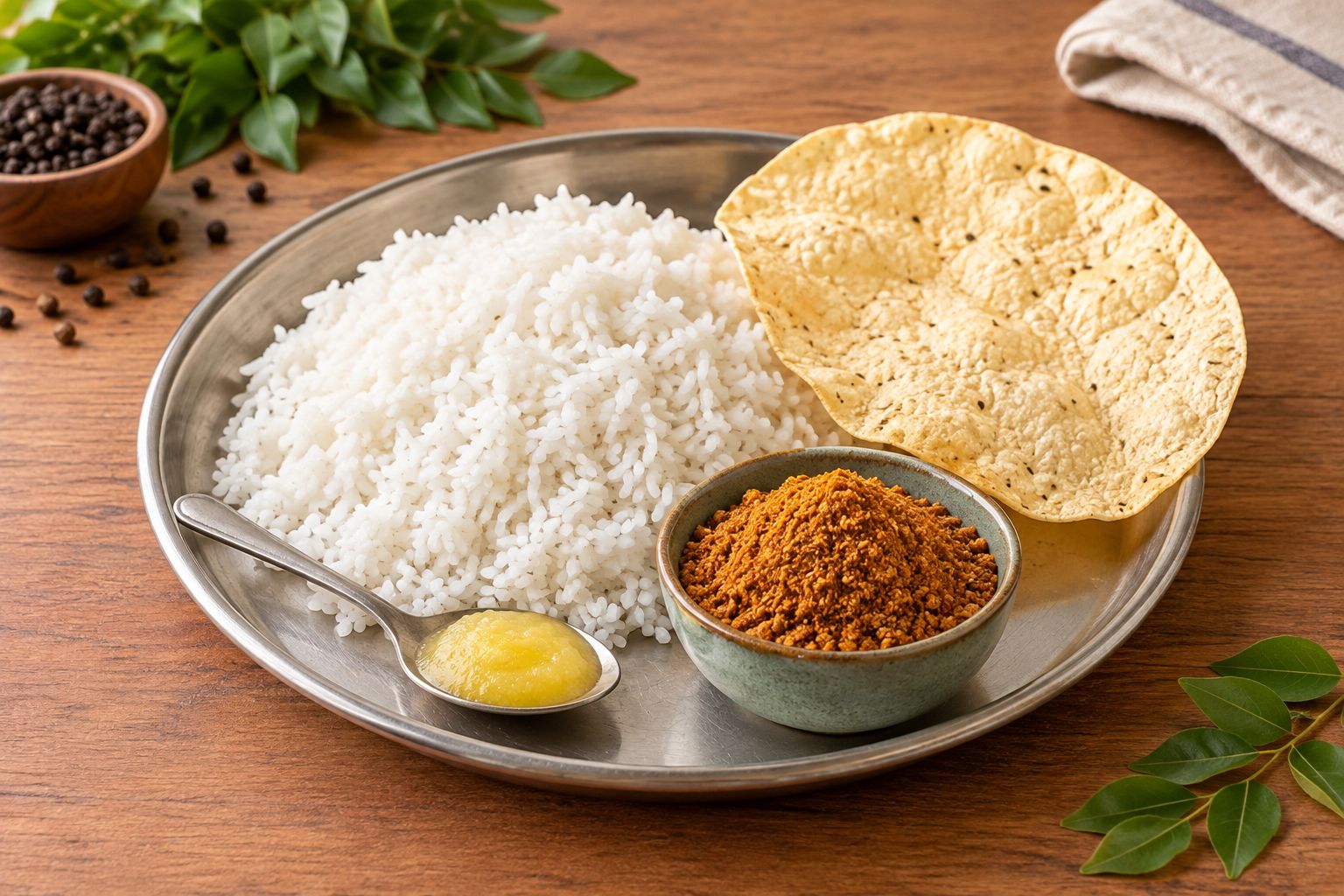
Kandi Podi is a lentil-based Andhra spice powder, roasted dry rather than tempered heavy in oil, mixed with rice papad that's roasted rather than fried. It's the closest thing to an everyday default: mix it into hot rice with a spoon of ghee, and skip the loose oil that store-bought podi often carries.
For readers who want the mechanics of mixing it correctly, kandi podi for protein-rich rice mixing walks through ratios and pairing.
Kandi Podi pros:
- Lentil base adds real protein to a rice-and-podi meal
- Dry-roasted format keeps the oil footprint low
- Works with plain rice, curd rice, or idli
Kandi Podi cons:
- Milder spice level than chili-forward podi varieties
- Needs a fresh papad batch to taste its best — stale papad flattens the whole combo
Best for: everyday low oil eating without giving up protein. Verdict: Buy.
2. Avise Podi (Flaxseed) + Jowar Papad: best for weight-conscious snackers
Avise Podi is built around flaxseed, a fiber-dense spice powder that pairs naturally with jowar (millet) papad instead of rice papad. Millet papad already carries a lower glycemic load than rice papad, and flaxseed podi skips the oil-tempering step most podi recipes use.
More on the flaxseed angle is covered in avise podi for flaxseed health benefits.
Avise Podi pros:
- Flaxseed brings fiber without added oil
- Millet papad lowers the overall glycemic load of the plate
- Distinct nutty flavor that works well with curd rice
Avise Podi cons:
- The flavor is an acquired taste next to more familiar chili podi
- Millet papad has a firmer bite than rice papad, which some eaters find less snackable
Best for: weight-conscious snackers replacing a fried snack with a fiber-forward one. Verdict: Buy.
3. Nuvvula Podi (Sesame) + Rice Papad: best for a calcium and iron boost
Nuvvula Podi is dry-roasted sesame ground with minimal chili and salt. Sesame is a naturally calcium and iron-dense seed, and roasting it dry rather than in oil keeps that nutritional value intact without adding fat.
Nuvvula Podi pros:
- Dry-roasted format, no oil tempering step
- Sesame base adds calcium and iron to a rice or idli meal
- Strong, distinct flavor that goes far with a small quantity
Nuvvula Podi cons:
- The sesame flavor dominates and isn't for households used to lentil-based podi
- Best paired with rice papad specifically; jowar papad muddies the sesame taste
Best for: eaters who want a micronutrient boost from a spice powder rather than a supplement. Verdict: Buy.
4. Karivepaku Podi (Curry Leaf) + Jowar Papad: best for digestion and immunity
Karivepaku Podi is made from curry leaves, roasted and ground into a spice powder traditionally used for its digestive properties in Andhra households. Paired with jowar papad, it makes a lighter combo than the lentil-based options on this list.
Karivepaku Podi pros:
- Curry leaf base is traditionally used for digestion-friendly eating
- Jowar papad keeps the combo light on the stomach
- Low oil footprint on both sides of the pairing
Karivepaku Podi cons:
- Less filling than lentil-based podi, so it works better as a side than a main flavor
- Curry leaf flavor is subtle and can get lost next to a strongly spiced pickle
Best for: snackers prioritizing digestion over protein density. Verdict: Hold if you need a heavier, more filling combo; otherwise buy.
5. Putnala Podi (Roasted Gram) + Rice Papad: best for kids' lunchboxes
Putnala Podi is made from roasted gram (putnalu), giving it a mellow, mildly sweet-savory profile that works well for kids transitioning into spicier Andhra flavors. Rice papad's plain crunch doesn't fight the mild podi the way a stronger jowar papad might.
Putnala Podi pros:
- Mild flavor is approachable for kids new to podi
- Roasted gram adds protein without heat
- Low oil pairing that still feels indulgent for a lunchbox
Putnala Podi cons:
- Too mild for adults who want a spice-forward combo
- Needs a side pickle for households eating together at one meal
Best for: parents building a low oil papad and podi combo that kids will actually eat. Verdict: Buy for lunchboxes, Skip if the whole household wants heat.
6. Verusenaga Podi (Peanut) + Rice Papad: best budget-friendly combo
Verusenaga Podi is a peanut-based spice powder, dry-roasted and ground with chili and salt. Peanut's natural fat content means this one runs slightly richer than sesame or curry leaf podi, but it's still far lower in added oil than any oil-tempered store variety.
Verusenaga Podi pros:
- Peanut base is filling and satisfies hunger between meals
- Dry-roasted preparation avoids extra tempering oil
- Pairs easily with both rice and idli
Verusenaga Podi cons:
- Peanut's natural oil content makes it the richest option on this list
- Not suitable for peanut-sensitive households
Best for: daily snacking on a budget without switching to a fried alternative. Verdict: Buy, unless peanut allergies rule it out.
How this list was ranked
Each combo above was scored against the six criteria: roasting method, papad style, protein or fiber content, sodium level, shelf stability and meal versatility. Kandi Podi + Rice Papad ranks first because it clears every criterion without a real weakness, while the other five each win one specific use case — weight management, micronutrients, digestion, kids, or budget.
“If the podi turns the rice greasy, it’s not a low oil combo — it’s regular podi with a health label.”
Which low oil papad and podi combo should you choose?
For most households eating rice or curd rice daily in 2026, Kandi Podi + Rice Papad is the default pick — protein-dense, dry-roasted, and versatile enough for breakfast through dinner. If the goal is weight management specifically, move to Avise Podi with Jowar Papad. If budget is the deciding factor, Verusenaga Podi with Rice Papad delivers the most filling combo per rupee without going back to a fried snack.
Don't overthink the podi flavor before fixing the papad — a fried papad undoes a genuinely low oil podi in one bite.
Build your low oil combo today
Browse Tulasi Pickles’ podi and papad range shipped fresh from Hyderabad.
FAQ
What is the best low oil papad and podi combo for daily meals in 2026?
Kandi Podi paired with rice papad is the best low oil papad and podi combo for daily meals in 2026 — the lentil-based podi is dry-roasted, and rice papad roasted (not fried) keeps the fat content low.
Is dry-roasted podi actually lower in oil than regular podi?
Yes. Regular podi is often tempered in oil before packing, while dry-roasted podi like Kandi Podi or Nuvvula Podi skips that step entirely, cutting the added fat.
Which papad is lowest in oil, rice or jowar?
Both can be low oil if roasted rather than fried. Jowar (millet) papad also carries a lower glycemic load, making it the better pick for weight-conscious snackers.
Can podi and papad combos work for weight loss diets?
A fiber-dense podi like Avise Podi (flaxseed) paired with jowar papad supports a weight-conscious diet better than an oil-tempered chili podi with fried papad.
Is peanut podi a good low oil option?
Verusenaga Podi (peanut) is dry-roasted and lower in added oil than tempered varieties, though peanut’s natural fat makes it richer than sesame or curry leaf podi.
How do I keep papad crispy for a low oil combo after opening the pack?
Store papad in an airtight container away from humidity. A soggy papad forces people to fry it to restore crunch, which defeats the point of a low oil combo.
Which podi is best for kids starting out on Andhra flavors?
Putnala Podi, made from roasted gram, has a mild profile that works well for kids’ lunchboxes without the heat of chili-forward podi varieties.
One last thing
The biggest oil source in a "low oil" papad and podi meal isn't the podi at all — it's the ghee or oil spooned on top of the rice. Cut that spoon in half before switching podi brands and the fat savings show up faster than any ingredient swap.
Related guides