
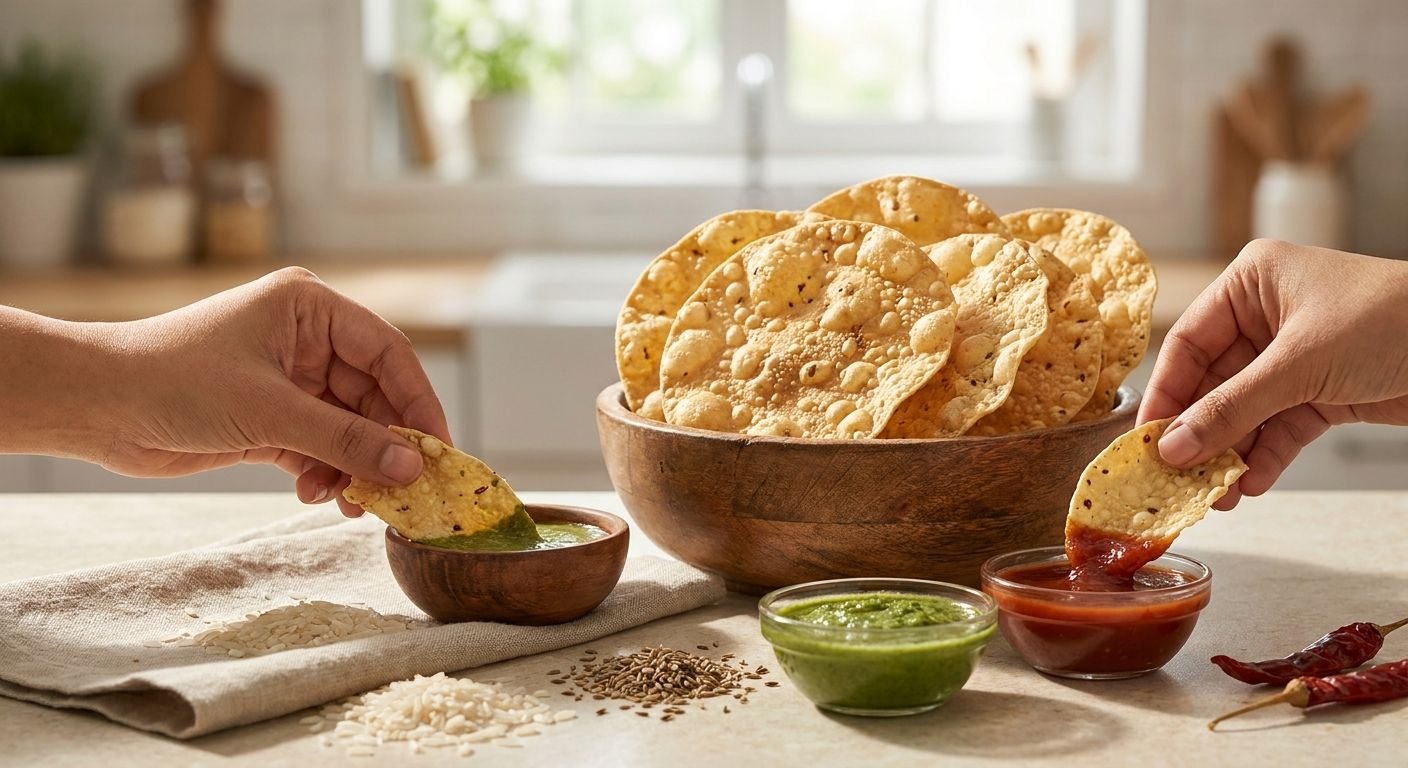
Rice papad is a thin, roasted or fried disc made from rice flour, salt and spice blends, and it's one of the few papad types you can eat on a gluten-free diet in 2026 without decoding an ingredient panel first. Most North Indian papad brands still lean on wheat starch or maida as a binder, and that's exactly what gluten-sensitive snackers need to watch for.
- Rice papad is naturally gluten-free when the label lists only rice flour, salt and spices — no wheat or maida fillers.
- Roasting over an open flame or in a microwave for 30-40 seconds keeps rice papad crunchy without added oil.
- Check the ingredient panel every time — some cheaper papad blends mix rice flour with wheat starch for bulk.
- Tulasi Pickles sells rice papad alongside its Andhra pickle range for buyers who want celiac-friendly crunch shipped across India.
- Pair rice papad with curd rice, dal or a tangy Andhra pickle for a complete gluten-free meal in 2026.
Why rice papad matters for gluten-free snackers
Gluten-free snackers face a narrower problem than most shoppers: almost every crunchy Indian snack aisle is built around wheat, semolina or besan blended with wheat starch. Papad specifically has two lineages — urad dal papad (lentil-based, usually gluten-free) and wheat-based sada papad, which is not. Rice papad sidesteps the ambiguity entirely because rice flour has no gluten protein structure to begin with, so as long as the recipe stays rice-plus-spice, the snack is safe by default.
That matters more in 2026 than it did a few years ago, because more regional brands are blending rice flour with wheat starch to cut cost — a shortcut that quietly reintroduces gluten into what buyers assume is a clean snack. If you're managing celiac disease or a wheat intolerance, Tulasi Pickles treats rice papad as a straightforward category: rice flour, salt, and traditional Andhra spice, nothing hidden.
Check the label before you buy
Don't take "papad" on the packet as proof of anything. Read the ingredient list every single time, because papad manufacturing varies brand to brand and batch to batch.
- Look for "rice flour" or "chawal ka atta" as the first listed ingredient
- Reject any papad listing "wheat starch," "maida" or "suji" anywhere in the ingredients
- Watch for "papad khar" (a natural alkaline agent) — it's fine, not a gluten source
- Confirm the manufacturing line isn't shared with wheat-based products if you have celiac disease, not just gluten sensitivity
- Ask the seller directly when a product page doesn't list full ingredients
“If a papad ingredient list has wheat or maida on it, it isn’t gluten-free, no matter what the front of the packet claims.”
Roast rice papad the right way for maximum crunch
How you cook rice papad decides whether you get a clean, oil-free crunch or a greasy, floppy disc. Deep-frying works but adds unnecessary oil and can scorch the edges before the center cooks through.
- Roast directly over an open gas flame for 8-10 seconds per side, flipping until it puffs evenly
- Use a microwave for 30-40 seconds on a flat plate for a fully oil-free version
- Try an air fryer at a low setting for 60-90 seconds if you're cooking multiple pieces at once
- Avoid a closed tawa on low heat — it steams the papad instead of crisping it
- Let it cool for 10-15 seconds off the heat before breaking it; it firms up as it cools
Pick a flavor and spice level that fits your palate
Rice papad isn't one flat product — spice blends, thickness and roast level all change the eating experience. Tulasi Pickles' rice papad sits in the same catalog as its Andhra pickle range, which gives buyers a reference point for how spicy or plain to go.
- Go plain-salted if you're pairing rice papad with an already-spicy pickle or curry
- Choose a chili-flecked version if you're eating it standalone as a snack
- Pick a thinner papad for faster, crispier roasting; thicker ones need longer flame time
- Buy a small trial pack before committing to a bulk order, especially for a first-time gluten-free switch
- Check whether the batch is fresh-made or long-stored — older papad roasts less evenly
Order rice papad from Tulasi Pickles
Shop the papad and pickle catalog shipped from Hyderabad across India.
Pair rice papad with your meal for balanced gluten-free snacking
A papad on its own is a snack; paired correctly, it becomes part of a full gluten-free meal. Andhra households treat papad as a side, not a standalone item, and that habit works in your favor if you're managing gluten intake.
- Crumble it over curd rice for texture without adding another gluten-risk ingredient
- Serve it alongside dal and rice as the crunch element of a thali
- Pair it with a tangy pickle to balance the papad's mild, salty flavor
- Use it as a scoop for chutney powder instead of a wheat-based cracker
- Break it into a mixed vegetable pickle bowl for added texture at the table
Store rice papad correctly to lock in crunch
Rice papad loses its snap fast once the pack is open, and humidity is the main culprit — not staleness from age. Hyderabad's humid stretches in 2026 make this step non-negotiable if you're buying in bulk.
- Transfer opened packs into an airtight container immediately, never leave them in the original wrapper
- Add a food-safe silica packet if you live in a high-humidity region
- Keep the container away from the stove and any steam source
- Re-crisp softened papad with a 15-20 second flame or microwave pass before eating
- Buy smaller pack sizes if you go through papad slowly, rather than one large bulk order
For a deeper walkthrough on keeping papad crisp after the pack is opened, see how to keep papads crispy after opening the pack.
Rice papad vs. other gluten-free crunchy snacks
| Snack | Best for | Gluten-free status | Key limitation |
|---|---|---|---|
| Rice papad | Everyday crunchy snacking with meals | Yes, when made purely from rice flour | Softens fast in humid weather once opened |
| Roasted makhana (fox nuts) | Light, low-oil snacking between meals | Yes, naturally gluten-free | Milder flavor, needs seasoning to satisfy a spice craving |
| Roasted chana | High-protein snacking | Yes, naturally gluten-free | Harder texture, not a papad substitute in a meal |
| Multigrain papad | Buyers not managing gluten intake | No, usually contains wheat blends | Unsafe for celiac or gluten-sensitive diets |
| Rice-based murukku | Crunchy tea-time snacking | Yes, when rice flour is the base | Higher oil content from deep-frying |
Verdict: rice papad wins for gluten-free snackers who want a light, meal-paired crunch rather than a standalone fried snack. Roasted makhana and chana work as between-meal options, but neither replaces papad's role alongside curd rice, dal or pickle.
Common mistakes gluten-free snackers make with rice papad
- Trusting the front-of-pack label instead of the ingredient list — "papad" alone tells you nothing about the flour used
- Deep-frying in shared oil used for wheat-based snacks, which risks cross-contact even when the papad itself is gluten-free
- Storing opened packs in the original plastic wrap, which lets in humidity and kills the crunch within days
- Assuming all Andhra-style papad is rice-based — some regional recipes blend in wheat starch for a firmer bite
- Buying one large bulk pack on a first try instead of testing spice level and thickness with a smaller quantity first
FAQ
Is rice papad gluten-free?
Yes, rice papad is gluten-free when it’s made only from rice flour, salt and spices with no wheat starch or maida added. Always check the ingredient panel, since some brands blend in wheat for cost.
What is rice papad made of?
Rice papad is made from rice flour, salt, and a spice or lentil blend, then rolled thin and sun-dried before roasting or frying. It contains no wheat unless a manufacturer adds it as filler.
Should I roast or fry rice papad?
Roasting over an open flame or in a microwave for 30-40 seconds gives a clean, oil-free crunch. Deep-frying works too but adds oil and risks cross-contact if the same oil is used for wheat-based snacks.
Is rice papad safe for celiac disease?
Rice papad is safe for celiac disease when the ingredient list is limited to rice flour and spices and the manufacturing line avoids wheat products. Ask the seller directly if the product page doesn’t confirm this.
How long does rice papad stay crispy after opening?
Rice papad stays crispy for a few days in an airtight container but softens faster in humid conditions. Re-crisping it with a quick flame or microwave pass restores the crunch before eating.
What’s the difference between rice papad and regular papad?
Regular papad is often made from urad dal or wheat, while rice papad uses rice flour as the base. Rice papad and urad dal papad are typically gluten-free; wheat-based sada papad is not.
Can I eat rice papad on a low-oil diet?
Yes, roasting rice papad over a flame or in a microwave requires no added oil at all. This makes it easier to fit into a low-oil, gluten-free diet than a deep-fried snack.
Where can I buy authentic rice papad online in India?
Tulasi Pickles ships rice papad from Hyderabad across India alongside its Andhra pickle and podi range. Check the current catalog on the site for available pack sizes.
One last thing
The humidity, not the calendar, decides how long rice papad stays crunchy. A pack roasted fresh in 2026 and sealed in an airtight container will outlast one left half-open on a kitchen shelf by days, regardless of the manufacture date printed on the wrapper.
Related guides
- Best papads to pair with Andhra meals
- Papads for quick Andhra-style snacking
- Best oil-free pickles for health-conscious buyers