
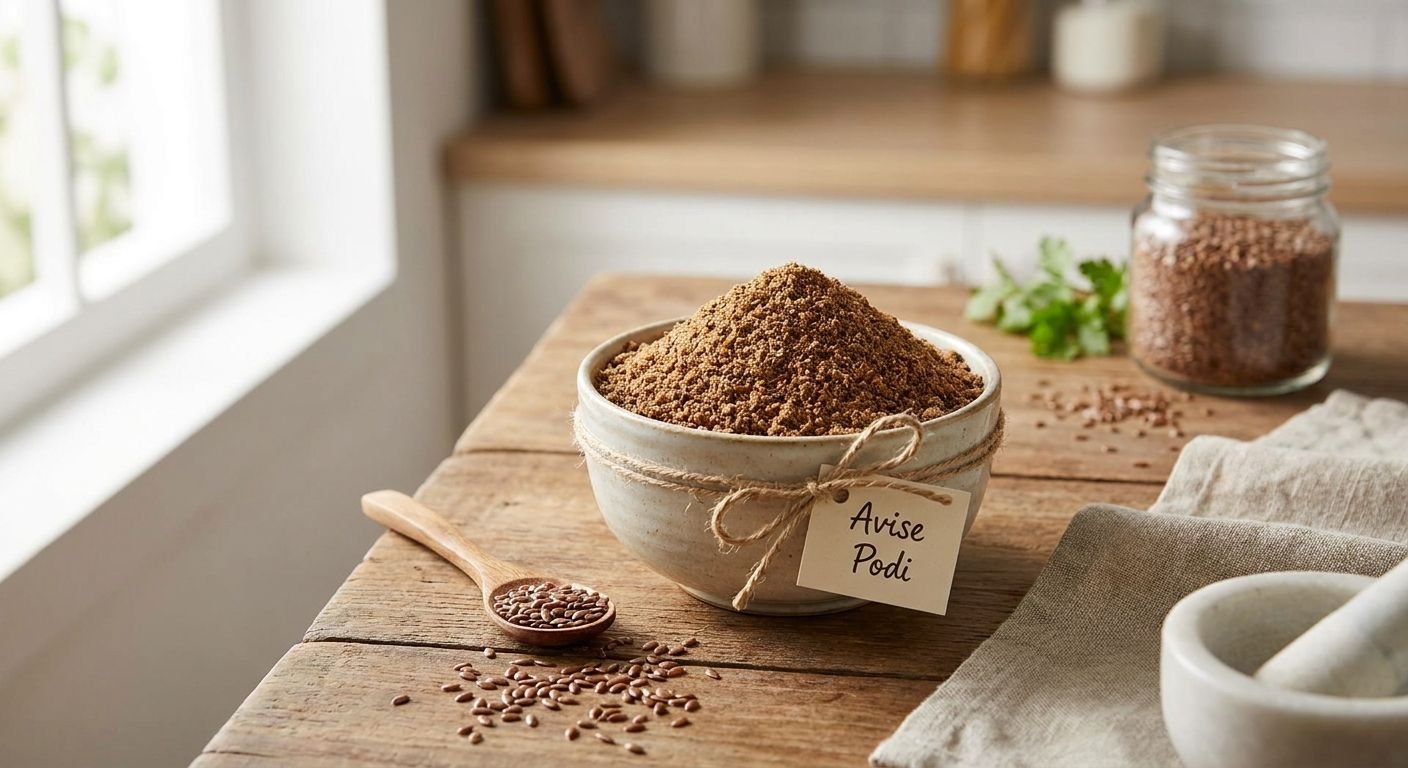
Health-conscious South Indian eaters use avise podi, a roasted flaxseed spice powder, to add plant-based omega-3s and fiber to rice, idli and dosa without overhauling their daily meals. Unlike a supplement capsule, avise podi has to taste like home-style Andhra food or it won't survive daily use in a real kitchen — that's the actual filter this segment applies before buying a jar in 2026.
- Avise podi is the flaxseed spice powder to buy in 2026 for daily omega-3 and fiber without changing your meal routine.
- One tablespoon of roasted flaxseed carries roughly 1.6g of plant-based ALA omega-3, per USDA nutrient data.
- Mix avise podi into rice or idli daily — sprinkling it once a week won’t move the needle on fiber or omega-3 intake.
- Store-bought avise podi with visible oil separation on top is already turning; buy small batches and keep it airtight.
- Tulasi Pickles sells avise podi alongside other functional podis for households who want variety without separate orders.
Why avise podi matters for health-conscious eaters
Most vegetarian Andhra households don't eat fish, which cuts off the most common dietary source of omega-3 fatty acids. Avise podi fills that specific gap — flaxseed (avise or agase in Telugu) is one of the richer plant sources of ALA omega-3, and roasting plus grinding it into a podi makes it something people will actually eat every day rather than choke down as a supplement.
The segment buying avise podi in 2026 isn't chasing a fad ingredient. They're usually replacing or supplementing a chutney powder they already use daily, so the bar is taste and habit-fit, not novelty. That's a different buying decision than someone picking a random health powder off a shelf once.
Start breakfast with avise podi on idli or dosa
The easiest entry point is breakfast, since idli and dosa already expect a podi or chutney on the side.
- Mix one teaspoon of avise podi with a few drops of ghee before pairing with idli
- Sprinkle it directly on dosa with a little sesame oil for a nutty crust
- Stir a spoon into curd rice for a cooling, tangy contrast
- Combine with podi mixed into idli, dosa or rice routines you already follow, rather than adding a separate ritual
Add avise podi to your everyday rice bowl
Rice is where daily fiber intake actually adds up, so this is the highest-leverage habit for the segment.
- One spoon of avise podi mixed with ghee and hot rice as a base meal
- Combine with rasam on days you skip a side pickle
- Pack a small portion into lunch boxes as a rice topping instead of a separate dish
- Rotate it in three or four times a week rather than daily if you're new to flaxseed's fiber load
Check roast level and grind texture before buying
Not all avise podi tastes or performs the same, and roast quality is the single biggest variable.
- Darker roast usually means a nuttier flavor and better mixing into hot rice
- Over-roasted batches turn bitter and mask the flaxseed flavor entirely
- Fine grind blends evenly into rice; coarser grind holds up better on idli
- Avoid podi with visible whole seed fragments — that usually means an incomplete grind, which reduces how much omega-3 your body can access
Store avise podi to protect the omega-3s
Ground flaxseed oxidizes faster than whole seed, and oxidized oil is both less nutritious and worse-tasting.
- Keep it in an airtight glass jar, not the original pouch, once opened
- Store away from direct sunlight and stove heat
- Refrigerate during humid months to slow oxidation
- Buy quantities you'll finish in four to six weeks rather than stocking a large jar for the year
Pair avise podi with other functional podis for variety
Eating the same powder every single day gets monotonous fast, and rotation actually broadens the nutrition profile.
- Alternate with nuvvula podi on days you want sesame's calcium and iron instead of omega-3
- Keep two or three podi jars open at once so no single flavor gets tiresome
- Mix small amounts of two podis together for a combined flavor profile
- Reserve avise podi specifically for the days you're not getting omega-3 elsewhere in the meal
Watch your daily portion size
More isn't automatically better with a fiber-heavy powder.
- One to two teaspoons a day is a reasonable amount for most adults
- More than a tablespoon in one sitting commonly causes bloating, especially in the first two weeks of a new habit
- Increase water intake alongside any fiber increase
- Check with a doctor before daily use if you're on blood-thinning medication, since flaxseed's lignans have mild anticoagulant activity
Decide between homemade and store-bought avise podi
Homemade avise podi gives you full control over roast level, but it takes real time — 20 minutes or more of roasting and grinding per batch, done regularly enough to keep it fresh.
- Homemade: full control over roast and chili level, but time cost repeats every few weeks
- Store-bought, like the avise podi from Tulasi Pickles, standardizes roast and grind batch to batch and removes the prep step entirely
- Check the ingredient list either way — flaxseed, dry red chili and salt should be close to the full list
- If you're restocking pantry basics anyway, ordering avise podi alongside pickles and papads in one shipment from Tulasi Pickles cuts down on separate delivery trips
Add avise podi to your next order
Order flaxseed podi alongside pickles and papads in one shipment.
Avise podi vs other health podis for this segment
| Podi | Best for | Key limitation |
|---|---|---|
| Avise Podi (flaxseed) | Daily omega-3 and fiber in a vegetarian diet | Earthy taste takes a week or two to get used to |
| Nuvvula Podi (sesame) | Calcium and iron | Higher oil content, lower fiber than flaxseed |
| Kandi Podi (toor dal) | Protein alongside rice | Carries no omega-3 content |
| Putnala Podi (roasted gram) | Mild flavor, good for kids | Lower fiber than avise podi |
| Kobbari Podi (coconut) | Rich, festive flavor | Higher saturated fat, less suited to daily cholesterol management |
Verdict: avise podi is the pick for this segment specifically because it's the only one on this list built around omega-3 fatty acids rather than protein, calcium or flavor alone.
Common mistakes health-conscious buyers make with avise podi
Treating it as a one-time health fad instead of a daily habit. The fiber and ALA omega-3 benefits build with consistent small daily intake, not an occasional big spoonful once a month.
Buying a large jar and letting it sit past two months. Ground flaxseed's oil turns rancid faster than a pickle or a papad does, and rancid podi loses flavor and most of its nutritional value at the same time.
Overloading a single meal instead of spreading portions across the week. Dumping three tablespoons into one rice bowl to "catch up" on fiber usually causes the exact digestive discomfort that undoes the health intent.
Forgetting how avise podi fits into a broader diet plan. People tracking macros often overlook that avise podi is naturally gluten-free, which matters for anyone also managing a gluten-free diet elsewhere — the same reasoning applies across cuisines built around naturally gluten-free staples, such as gluten-free Ethiopian dishes built on teff and lentils rather than wheat.
Assuming every podi serves the same health goal. Pairing avise podi with a heavily oiled side pickle can cancel out the low-fat intent behind choosing it; check oil-free pickles for health-conscious buyers if cholesterol management is the actual goal on your plate, not just adding one healthy powder to an otherwise heavy meal.
FAQ
What is avise podi made of?
Avise podi is a roasted, ground spice powder made mainly from flaxseed (avise or agase in Telugu), combined with dry red chilies, garlic and salt. Andhra households mix it with rice or ghee, or sprinkle it on idli and dosa.
What are the health benefits of avise podi?
Avise podi’s main benefit comes from flaxseed’s ALA omega-3 fatty acids and soluble fiber, both linked to cholesterol and digestion support in established nutrition data. It gives vegetarian households a plant-based omega-3 source without fish or supplements.
How much avise podi should you eat per day?
One to two teaspoons a day is reasonable for most adults. More than a tablespoon in one sitting commonly causes bloating, especially during the first two weeks of a new habit.
Is avise podi gluten-free?
Yes, avise podi is naturally gluten-free since it is built on flaxseed, chili and salt with no wheat-based fillers, which makes it suitable for anyone managing a gluten-free diet.
Is avise podi better than nuvvula podi for health?
Avise podi wins on omega-3 and fiber, nuvvula podi wins on calcium and iron. The best approach for most households is rotating both rather than committing to just one.
Can avise podi replace fish oil supplements?
Avise podi adds plant-based ALA omega-3 to a vegetarian diet, but the body converts ALA to EPA and DHA at a limited rate, so it is not a full substitute for someone specifically targeting fish-oil-level EPA/DHA.
How long does avise podi stay fresh after opening?
Ground flaxseed podi is best used within four to six weeks of opening when stored airtight and away from sunlight. Refrigeration extends this window during humid months.
Can kids eat avise podi daily?
Yes, in smaller portions of about half a teaspoon mixed with ghee and rice. The chili content in most Andhra-style avise podi means very young kids may need a milder batch.
One last thing
Whole flaxseed largely passes through digestion intact — the omega-3 only becomes accessible once it's ground. That's the real reason avise podi beats sprinkling whole flaxseed on food: the roasting and grinding step is doing the nutritional work, not just adding flavor. If you're buying flaxseed for health reasons in 2026, buy it already roasted and ground into a proper podi rather than a jar of whole seed you'll grind sporadically and inconsistently.
Related guides