
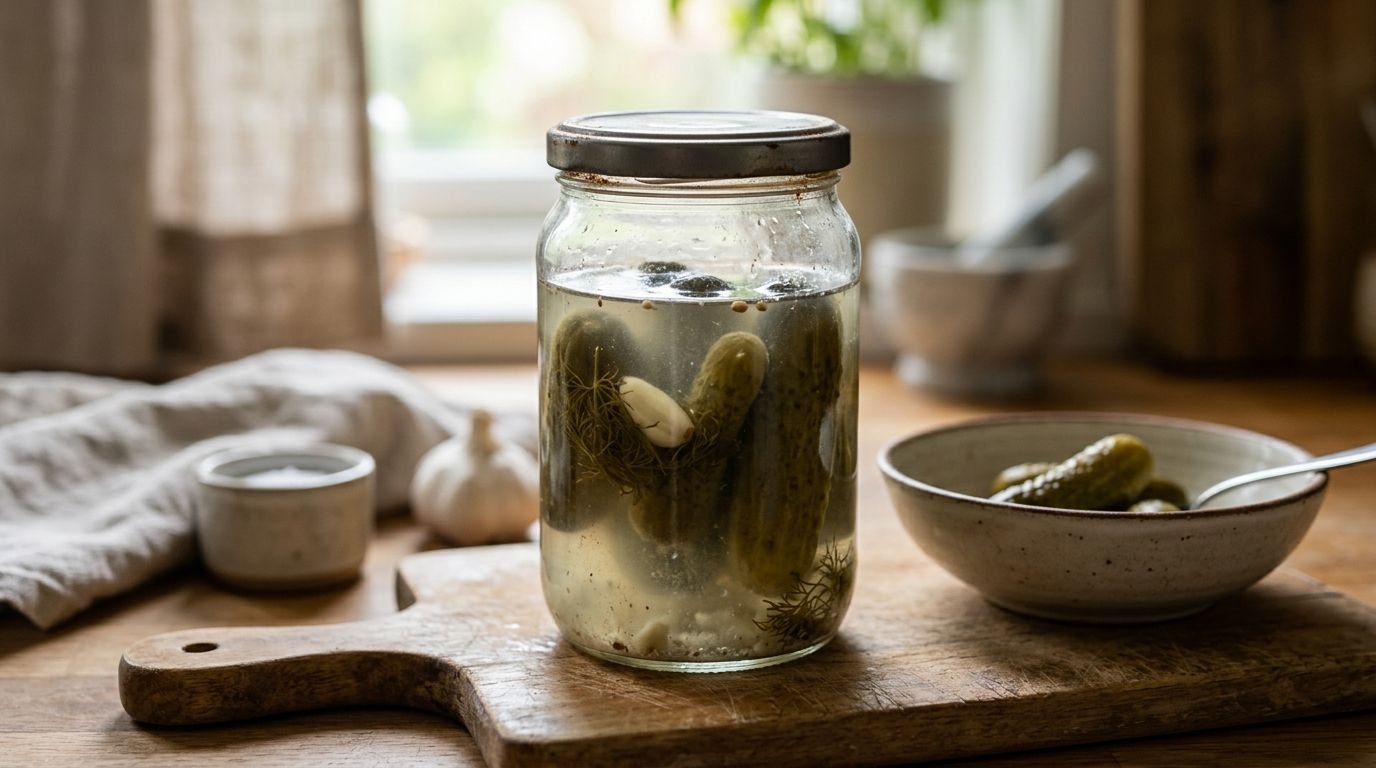
A pickle jar has gone bad when you spot mold on the surface, notice cloudy or rancid oil, smell a sour or yeasty odor instead of the usual spicy-tangy aroma, or find the lid bulging from gas pressure — any single sign means the jar goes in the bin, even if the pickle underneath still looks fine. Homemade Andhra-style pickles rely on oil and salt as natural preservatives, so in 2026 spoilage almost always shows up as a smell or texture change well before it becomes dangerous, which is exactly why checking a jar takes ten seconds and skipping the check does not.
- Mold, cloudy oil, or a sour smell means the pickle jar has gone bad — discard it, do not scrape and serve.
- A bulging or leaking lid signals unwanted gas from fermentation, a warning sign in oil-based Andhra pickles.
- Oil-based pickles like avakaya and gongura last longer than vinegar or brine pickles because oil blocks air and bacteria.
- Non-veg pickles such as chicken, mutton, and prawns spoil faster than veg pickles because of their protein content.
- A wet spoon introduces moisture that spoils a jar long before its expected shelf life runs out.
Why this matters
A jar of homemade pickle sits in an Indian kitchen for months, longer than almost any other packed food in the pantry. It can look completely normal from outside while carrying mold spores growing quietly under the oil layer, invisible until you dig in with a spoon.
Eating a spoiled avakaya or a spoiled non-veg pickle risks more than a bad taste — it risks stomach upset, and with meat-based pickles, worse. Storing pickles correctly in the first place prevents most of this; the storage guide for homemade pickles covers oil coverage, jar hygiene, and shelf placement in detail. But even a perfectly stored jar needs a quick check before every use, because humidity, heat, and handling change month to month.
How to tell if a pickle jar has gone bad
Run through this checklist before you serve any pickle, homemade or store-bought:
- Mold — fuzzy white, green, grey, or black spots on the surface or clinging to the jar walls under the oil.
- Off smell — sour, yeasty, or rotten notes replacing the sharp spicy-tangy smell the pickle should have.
- Cloudy or separated oil — oil that turns milky, thin, or shows floating particles instead of staying clear and settled.
- Bulging or leaking lid — pressure building up inside the jar from gas, almost always a sign of unwanted fermentation.
- Discoloration — pickle pieces turning unusually dark, dull, or grey compared to when the jar was fresh.
- Fizzing or bubbling — visible bubbles rising the moment you open the jar, a clear signal that bacteria or wild yeast have taken over.
If you see even one of these, the safest move is to discard the whole jar rather than scoop around the affected area. Mold roots run deeper into oil and pickle pieces than the visible spot suggests.
| Pickle Type | First Sign of Spoilage | Storage Note | Verdict |
|---|---|---|---|
| Oil-based (avakaya, gongura, chicken pickle) | Cloudy or rancid oil, mold ring where oil meets air | Keep pickle pieces fully submerged under the oil layer | Best for long shelf stability — check monthly |
| Vinegar or brine-based | Cloudy liquid, fizzing, sharp sour smell | Refrigerate after opening, use within weeks | Shorter shelf life — check weekly once opened |
Oil-based pickles: the oil layer tells you first
Traditional Andhra pickles like avakaya, gongura, and chicken pickle depend on a thick oil layer sitting above the pickle pieces to block oxygen and stop bacterial growth. The first sign of trouble is almost always in the oil itself — it turns cloudy, develops a rancid smell, or forms a thin mold ring right where it meets the air.
If you're unsure whether a jar of avakaya was made the traditional way or cut with fillers, the guide on identifying authentic Andhra avakaya pickle explains what real oil coverage and mustard-chili ratios should look like. Authentic, oil-heavy avakaya holds up far longer in 2026 kitchen storage than a thin, watery version.
Vinegar and brine pickles: cloudiness is the red flag
Pickles made with vinegar or a salt brine instead of a heavy oil base behave differently. Because there's no oil barrier, cloudiness in the liquid, active fizzing when you open the lid, or a sharp sour smell all point to unwanted fermentation taking over. These pickles have a shorter safe window once opened and need refrigeration, unlike oil-based Andhra pickles that can sit at room temperature for longer stretches.
Why pickles spoil faster or slower
- Oil coverage — pickle pieces poking above the oil line dry out and grow mold first; submerged pieces last longer.
- Wet spoon contamination — a damp or unwashed spoon introduces moisture and bacteria that spoil a jar days ahead of schedule.
- Storage temperature — a hot, humid kitchen in 2026's peak summer months speeds up spoilage compared to a cool, dark shelf.
- Salt and oil ratio — lower-salt, lower-oil pickles made for kids or elderly diets spoil faster than high-salt, high-oil traditional recipes.
- Jar hygiene — a jar that wasn't fully dried before packing introduces mold spores before the pickle is even sealed.
- Protein content — non-veg pickles like chicken, mutton, and prawns carry higher spoilage risk than vegetarian pickles and deserve a closer check every time.
“By the time mold is visible on a pickle jar, the smell has usually been warning you for a day or two already.”
How long do homemade pickles last unopened?
Homemade Andhra pickles stored unopened in a cool, dry place with the oil layer intact typically last several months to close to a year, depending on how much oil and salt the recipe uses. Once opened, always dip in with a clean, dry spoon — that single habit extends usable life more than any other storage step.
Is white film on pickle oil safe to eat?
No — a white film floating on pickle oil is usually mold or yeast growth, not a harmless coating, and it means the jar should be discarded even if the pickle pieces underneath look untouched. Scraping the film off the surface does not remove the spores that have already spread through the oil.
Can you get food poisoning from a bad pickle?
Yes, a spoiled pickle can cause food poisoning, and non-veg pickles like chicken or mutton pickle carry higher risk once the oil barrier breaks down and bacteria take hold. Symptoms typically include stomach cramps, nausea, or diarrhea within hours of eating a jar that had already turned.
Homemade pickles shipped across long distances face the same spoilage risks with an added factor: transit time and temperature swings. Brands shipping pickles overseas without spoilage have to account for weeks in transit, not just months on a shelf, which is a bigger challenge for vinegar-based pickles than oil-based ones.
Tulasi Pickles, based in Hyderabad, ships homemade veg and non-veg Andhra pickles across India and overseas, and every jar depends on the same oil-and-salt preservation principles covered here — check any pickle jar, from any brand, using the same six signs before you serve it.
Order fresh homemade Andhra pickles
Oil-based avakaya, gongura, and non-veg pickles made in Hyderabad, shipped across India and overseas.
FAQ
How can you tell if a pickle jar has gone bad?
Look for mold on the surface, cloudy or rancid oil, a sour or off smell, a bulging lid, or fizzing when you open the jar. Any one of these signs means the pickle should be discarded, not eaten around.
What does a bad pickle smell like?
A spoiled pickle smells sour, yeasty, or faintly rotten instead of the sharp spicy-tangy smell it should have. The smell usually changes before any visible mold appears.
Is it safe to eat pickle if the oil looks cloudy?
No, cloudy or separated oil is one of the earliest signs a pickle has started to spoil. Discard the jar rather than trying to strain or reuse the oil.
Do non-veg pickles go bad faster than veg pickles?
Yes, non-veg pickles like chicken, mutton, and prawns pickle spoil faster than vegetarian pickles because of their protein content. Check non-veg jars more frequently, especially in warm weather.
Can you scrape mold off a pickle jar and still eat it?
No, scraping visible mold off the surface does not remove the spores that have already spread through the oil and pickle pieces below. Discard the entire jar once mold appears.
How long can an opened pickle jar sit before it spoils?
An opened oil-based pickle can last weeks to months if handled with a dry spoon and kept under the oil layer, while vinegar or brine pickles spoil faster and need refrigeration after opening. Exact timelines depend on the oil-to-pickle ratio and storage temperature.
Why does my pickle jar bulge at the lid?
A bulging lid means gas has built up inside from fermentation, usually caused by moisture contamination or bacterial growth. Open the jar carefully away from your face and check for smell and mold before deciding whether to discard it.
Does refrigerating a pickle jar stop spoilage?
Refrigeration slows spoilage but does not stop it once mold or bacteria have already started growing. Cold storage works best as prevention, not as a fix for a jar that already shows warning signs.
One last thing
The nose test beats the eye test almost every time. Mold takes a day or two to become visible, but a pickle jar usually starts smelling slightly off before any spot appears — trust a change in smell over a jar that still looks fine, especially with non-veg pickles where the margin for error is smaller in 2026's warmer city kitchens.
Related guides
- How to ship pickles overseas without spoilage
- Best homemade pickles in Hyderabad with price breakdown