
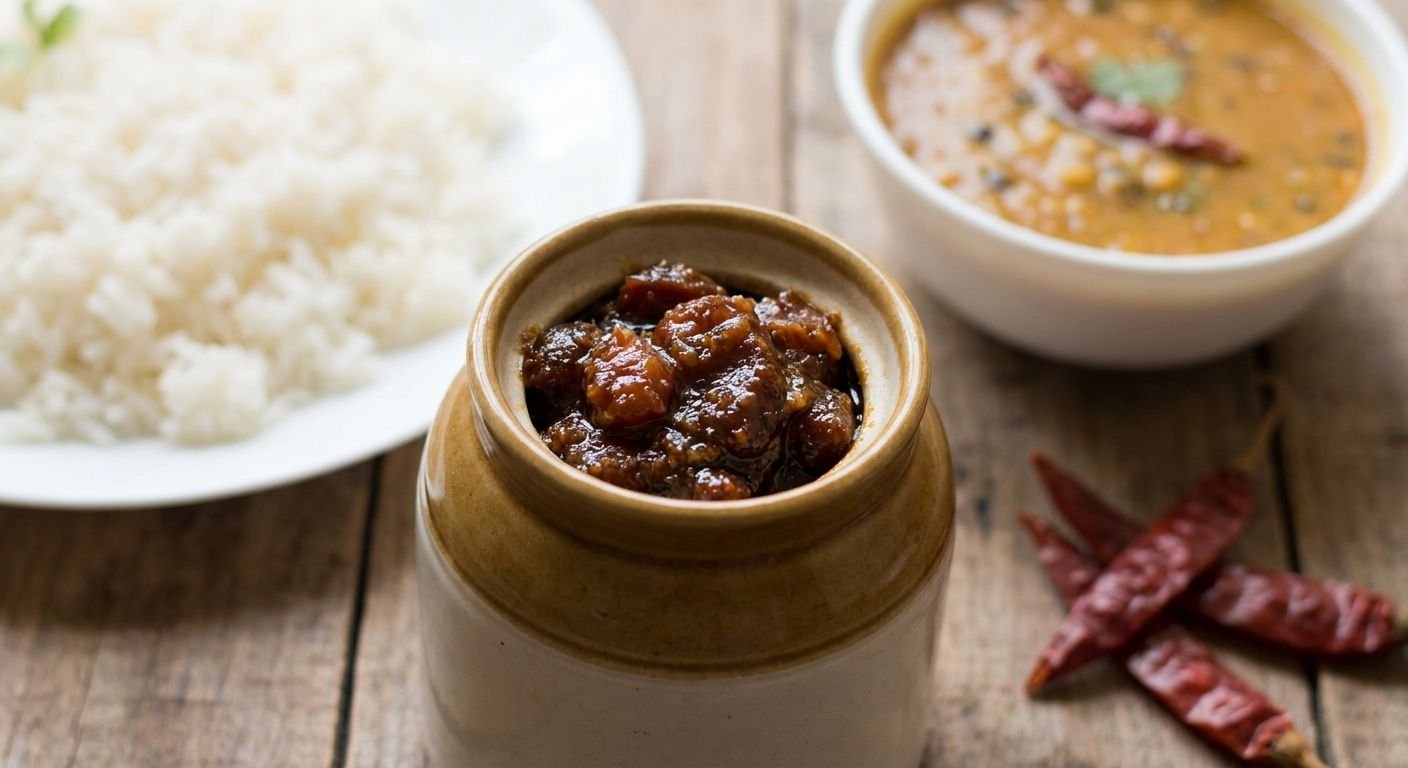
Tamarind pickle earns its spot on an Andhra thali by doing what mild condiments can't: cutting through ghee, dal, and rice with a sharp, sour-spicy punch that resets your palate mid-meal. This guide covers how to pair it correctly, which rice bases work best, and how to pick a jar that holds its tang past the first week of use in 2026.
- Tamarind pickle cuts through ghee and dal in Andhra thalis better than mild chutneys do.
- Pair tamarind pickle with curd rice, khichdi, or plain steamed rice for a tangy counterbalance.
- Tulasi Pickles makes tamarind pickle at an oil-based consistency built for shipping across India and overseas.
- Match spice level to your rice base before committing to a full jar in 2026.
- Use a dry spoon every time to keep tamarind pickle from spoiling early.
Why tamarind pickle matters for Andhra meal pairing
Andhra meals build flavor in layers: dal, rasam, curd, and rice, none of which carry the tartness needed to cut fat and reset your palate between bites. Tamarind pickle does that job with concentrated tamarind pulp, red chili, mustard, and tempered oil, without softening the plate into blandness.
For anyone assembling a full Andhra thali at home in 2026, tamarind pickle isn't a garnish sitting at the edge of the plate. It's the balancing agent that makes ghee-heavy rice and slow-cooked dal taste finished instead of flat. Tulasi Pickles makes its tamarind pickle with this exact role in mind — thick enough to coat a spoon of rice, sour enough to cut through a ladle of ghee.
How to build a tangy Andhra meal around tamarind pickle
Match the tang to your rice base first
Tamarind pickle reacts differently depending on what it's sitting next to. Steamed white rice with ghee needs a stronger hit of sourness than curd rice, which already carries its own tang from the yogurt.
- Taste a small spoon of tamarind pickle before mixing it into a full plate
- Use less pickle with curd rice since the yogurt adds its own acidity
- Add a slightly larger spoon to plain ghee rice, which has no built-in tang to compete with
- Skip mixing tamarind pickle into already-spiced biryani, where flavors compete instead of complementing
Balance ghee and pickle oil correctly
Andhra pickles carry their own oil, and stacking that on top of a ghee-heavy dish overwhelms the plate fast. The fix isn't skipping ghee, it's adjusting proportions.
- Reduce the ghee spoon size when tamarind pickle is already on the plate
- Mix pickle oil into rice first, then add ghee separately, rather than pouring both together
- Use tamarind pickle sparingly with fried sides that already carry oil, like vadiyalu or fried papad
Build a full thali around tamarind pickle
Once the rice base and oil balance are sorted, tamarind pickle works as an anchor flavor across a full Andhra thali — dal, a vegetable curry, rasam, curd, and rice.
- Add tamarind pickle as the tangy element next to a mild vegetable curry like dondakaya or beerakaya
- Pair it with rasam-based meals, where the pickle's sourness echoes the rasam's tamarind base instead of clashing
- For a shortcut on busy weeknights, order tamarind pickle ready-made instead of making a fresh batch at home — Tulasi Pickles ships tamarind pickle across India and overseas, so the ingredient step disappears entirely
- Serve a small side of curd alongside tamarind pickle to cool down the chili heat between bites
Pick a jar based on your spice tolerance
Andhra-style tamarind pickle skews spicier than most regional variants, but heat level still varies by batch and brand. Buying blind on spice level is the single most common regret buyers report.
- Ask about chili content before ordering a full-size jar if you're new to Andhra-style heat
- Start with a smaller quantity if you're pairing tamarind pickle with already-spiced dishes like gongura or avakaya
- Reserve the spicier batches for plain rice and dal, where nothing else is competing for heat
- Keep a milder tamarind pickle on hand for guests or kids at a family meal
Store tamarind pickle to protect the tang
Oil-based Andhra pickles hold their flavor far longer than fresh chutneys, but only with consistent handling. Moisture is the enemy — one wet spoon in the jar can shift the flavor and texture within days.
- Always use a dry spoon, every single time, no exceptions
- Keep the jar lid tightly sealed between servings to limit air exposure
- Store the jar away from direct sunlight or stove heat
- Move opened tamarind pickle to the refrigerator during humid months to slow oxidation
- Never scoop pickle directly with a wet cooking spoon
Serve tamarind pickle for festive and family meals
Beyond daily meals, tamarind pickle holds up well on a festive spread next to sweeter dishes, where its sourness balances out heavier, richer items on the same plate. It also travels well for family functions since it doesn't need refrigeration in transit, unlike fresh chutneys made the same morning.
Tamarind pickle vs other tangy Andhra pickles
Tamarind pickle isn't the only sour option in an Andhra kitchen. Here's how it stacks up against the other tangy staples for meal pairing in 2026.
| Pickle Type | Best For | Key Limitation | Verdict |
|---|---|---|---|
| Tamarind pickle | Ghee-heavy dal and rice thalis | Sharp sourness overwhelms lighter dishes | Buy for daily thali pairing |
| Gongura pickle | Tangy-leaf lovers wanting less oil in the mix | Tartness varies noticeably by batch | Buy for variety in the pickle rotation |
| Lemon pickle | Quick khichdi and lighter weekday lunches | Milder tang, doesn't cut through heavy ghee meals | Hold for lighter meals only |
| Avakaya pickle | Traditional festive Andhra thali spreads | High oil and spice content, not everyday food | Buy for festive occasions |
Tamarind pickle wins on daily rice and dal pairing; gongura and avakaya earn their place on the plate for variety and festive spreads, not as a daily substitute.
Order tamarind pickle for your next meal
Homemade Andhra-style batches shipped across India and overseas.
Common mistakes people make pairing tamarind pickle with Andhra meals
- Skipping the taste test: adding a full spoon of tamarind pickle straight into a new dish without checking sourness first often over-salts and over-sours the whole plate.
- Doubling oil sources: pouring ghee and tamarind pickle oil into the same bowl without adjusting quantities leaves the meal greasy instead of balanced.
- Buying on spice level assumptions: expecting every jar to carry the same heat as a home-made batch, then finding it either too mild or far too spicy.
- Using a wet serving spoon: the fastest way to spoil an otherwise long-lasting jar of tamarind pickle within days instead of weeks.
- Treating it as a garnish instead of an ingredient: a small dab on the side does nothing; tamarind pickle needs to be mixed into the rice or dal to do its job.
FAQ
What is tamarind pickle made of?
Tamarind pickle is made from tamarind pulp, red chili powder, mustard seeds, fenugreek, salt, and oil, tempered together into a thick, sour-spicy condiment. Andhra-style versions lean heavier on chili than versions from other regions.
How is tamarind pickle different from lemon pickle?
Tamarind pickle uses concentrated pulp for a thicker, deeper sourness, while lemon pickle uses citrus peel and juice for a lighter, sharper tang. Tamarind pickle holds up better against ghee-heavy dishes; lemon pickle suits lighter meals like khichdi.
What foods pair best with tamarind pickle?
Tamarind pickle pairs best with curd rice, khichdi, plain steamed rice with ghee, and dosa. It works less well mixed into already-spiced dishes like biryani, where the flavors compete instead of complementing.
Is tamarind pickle spicy?
Andhra-style tamarind pickle tends toward high chili content, but heat level varies by batch and brand. Check the chili content before ordering a full jar if you’re new to Andhra-style spice.
How long does tamarind pickle last after opening?
Oil-based tamarind pickle stays edible for weeks past opening as long as you always use a dry spoon and keep the jar sealed between servings. Moisture is what shortens shelf life, not time alone.
Does Tulasi Pickles ship tamarind pickle overseas?
Yes, Tulasi Pickles ships its homemade tamarind pickle and other Andhra-style pickles across India and overseas for customers craving authentic flavor outside the region.
Is tamarind pickle vegetarian?
Yes, tamarind pickle is a fully vegetarian condiment made from tamarind pulp and spices, unlike Andhra’s meat-based pickle varieties such as chicken or mutton pickle.
How do I reduce the tang if tamarind pickle is too sour?
Mix a spoon of ghee or a dollop of curd into the rice before adding tamarind pickle. Both mellow the sourness without diluting the overall flavor of the dish.
One last thing
Tamarind pickle actually pairs better with khichdi than with plain steamed rice, because khichdi's built-in ghee and lentil richness need a sharper counter-punch than plain rice ever will. If your khichdi tastes flat in 2026, the fix probably isn't more salt — it's a spoon of tamarind pickle stirred straight into the bowl.
Related guides
- Best Andhra pickles online for 2026
- Storing homemade pickles for long shelf life
- Pairing pickles with curd rice and khichdi