
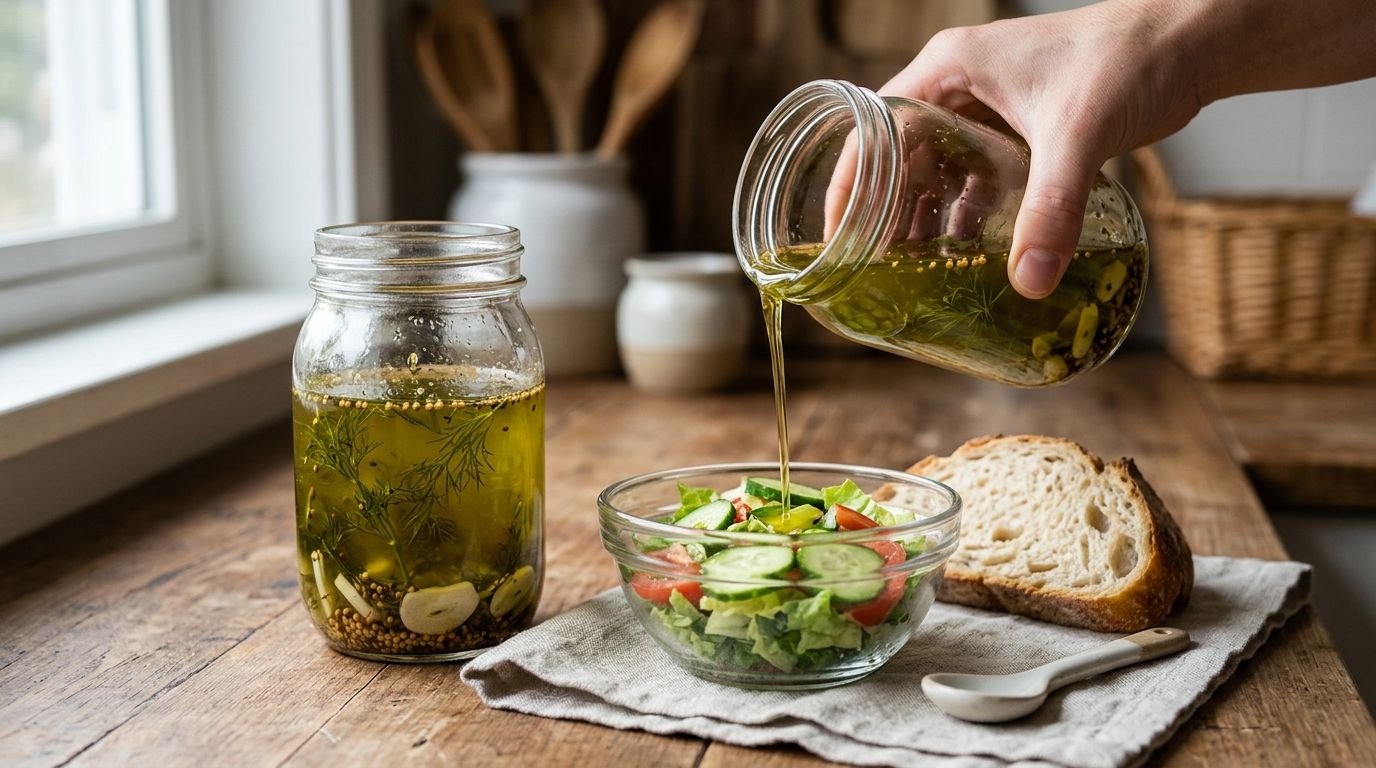
Leftover pickle oil is not waste — it's a concentrated flavor base you can spoon straight into tempering, pulihora, marinades and even podi mixes for weeks after the jar goes empty. The one thing most cooks miss: oil from non-veg pickles (chicken, mutton, prawns) carries meat fat and should be used within a shorter window than oil from veg pickles like avakaya or gongura.
- Leftover pickle oil works best in tempering, pulihora and marinades, not as an everyday cooking oil substitute.
- Veg pickle oil (avakaya, gongura, lemon) keeps its flavor for weeks refrigerated; non-veg pickle oil should be used faster.
- 1-2 teaspoons of pickle oil replaces the tadka oil in most dal or curry recipes in 2026 home kitchens.
- Strain the oil before reuse if any pickle solids or moisture remain in the jar.
Why this matters
Andhra households have reused pickle oil for generations because the oil absorbs mustard, fenugreek, red chilli and garlic from weeks of steeping — it's seasoned oil, not plain cooking oil. Throwing it out means throwing away flavour you already paid for when you bought the jar. In 2026, with pickle prices reflecting the cost of hand-pressed sesame and groundnut oil, reusing every drop makes practical sense for home cooks and for anyone ordering homemade Andhra pickles in bulk.
The catch is knowing which reuse method suits which pickle. Oil from a mango avakaya behaves differently from oil from a boneless chicken pickle, and using the wrong amount in the wrong dish either overpowers the food or wastes the spice concentration.
How to reuse leftover pickle oil in everyday cooking
The fastest way to reuse pickle oil is to swap it in for the oil you would normally use in tempering, then scale up once you know how strongly the flavour carries. Follow this order:
- Strain the oil through a fine sieve if any pickle pieces or moisture remain — this prevents spoilage and stops the oil turning bitter.
- Store it in a clean, dry glass jar at room temperature if it is veg pickle oil, or refrigerate it if it came from a non-veg pickle.
- Start small — 1 teaspoon in a dal or curry tempering — before committing a full tablespoon to a dish.
- Match the oil to a similar cuisine. Gongura or tamarind pickle oil suits South Indian rice dishes; garlic or red chilli pickle oil suits stir-fries and fried snacks.
- Use it inside the freshness window — veg pickle oil holds up for several weeks refrigerated in 2026 storage conditions; non-veg pickle oil is best used within days.
| Reuse method | Oil used | Best for | Verdict |
|---|---|---|---|
| Tempering (tadka) | 1-2 tsp | Dals, curries, stir-fries | Best for daily cooking |
| Pulihora (tamarind rice) | 2-3 tbsp | Festive rice dishes | Best for batch cooking |
| Marination | 1 tbsp per 500g | Meat, paneer, vegetables | Best for weekend meals |
| Podi mixing | A few drops | Rice, idli, dosa | Best for light flavour boosts |
| Sauteing vegetables | 1 tsp | Everyday stir-fried veggies | Best for quick weeknight meals |
Tempering (tadka): 1-2 teaspoons per dish
Pour 1-2 teaspoons of leftover pickle oil into a hot pan the way you would mustard oil or ghee, then add your usual tempering ingredients — mustard seeds, urad dal, curry leaves. The oil already carries mustard and chilli flavour from the pickle, so you can skip the extra red chilli powder. This is the single easiest way to reuse pickle oil and the method Andhra kitchens have used for decades.
Pulihora and tamarind rice: 2-3 tablespoons per batch
Tamarind pickle oil and lemon pickle oil work directly into pulihora — mix 2-3 tablespoons into cooked rice along with tamarind pulp, peanuts and curry leaves. If you want the traditional route rather than reusing leftover oil, the avakaya pulihora recipe builds the dish from scratch with fresh mango pickle.
Marinating meat or vegetables: 1 tablespoon per 500g
Non-veg pickle oil — from chicken, mutton or prawns pickle — makes a strong marinade base for grilled or pan-fried meat. Use about 1 tablespoon per 500g and marinate for 20-30 minutes before cooking; the oil's built-in garlic, red chilli and mustard does most of the seasoning work. Skip this method for delicate white fish — the pickle spice flattens mild flavours.
Mixing into podi: a few drops per serving
A few drops of pickle oil stirred into podi before mixing with rice or curd rice adds moisture and more depth than dry podi alone. The pairing works especially well when you are already reaching for a podi for curd rice and khichdi on a weeknight.
Why the right reuse method depends on the pickle
- Veg vs non-veg oil: non-veg pickle oil carries meat fat and needs refrigeration plus faster use; veg pickle oil (avakaya, gongura, lemon, garlic) is more stable.
- Spice intensity: Guntur chilli-based pickles produce far stronger oil than milder varieties such as drumstick or bitter gourd pickle.
- Oil type: sesame-oil-based pickles behave differently under high heat from groundnut-oil-based ones.
- Moisture content: any water or pickle solids left in strained oil shortens its usable window.
- Storage conditions: room temperature works for veg pickle oil for weeks, and refrigeration extends it further — a point covered in the guide on storing homemade pickles for long shelf life.
- How the jar was handled: a dry spoon every time keeps the oil clean enough to reuse; a wet spoon does not.
Browse the Tulasi Pickles range
Andhra-style veg and non-veg pickles made and shipped from Hyderabad.
Is it safe to reuse pickle oil after the jar is empty?
Yes, pickle oil is safe to reuse after the jar is empty as long as it is strained of solids and stored correctly — refrigerated for non-veg pickle oil, room temperature or refrigerated for veg pickle oil. Discard it if it smells sour, shows mould, or has sat unrefrigerated far past the window above.
How long does leftover pickle oil last after the jar is finished?
Leftover veg pickle oil lasts several weeks refrigerated in 2026 kitchen conditions, while non-veg pickle oil should be used within days because of the meat fat content. Check smell and clarity before using oil stored longer than expected.
Can you reuse chicken or mutton pickle oil the same way as veg pickle oil?
Chicken or mutton pickle oil can be reused the same way in tempering and marinades, but it needs refrigeration and a shorter usage window than veg pickle oil. It performs best as a marinade base for grilled meat or as a flavour boost in a non-veg curry.
If you are building a pantry habit around this, one jar does two jobs: the pickle for the table and the oil for the pan. Tulasi Pickles' homemade veg and non-veg pickles from Hyderabad ship across India and overseas, so the reuse routine works the same whether the jar lands in Chanda Nagar or New Jersey.
FAQ
How do you reuse leftover pickle oil in everyday cooking?
Strain the oil, then use 1-2 teaspoons in tempering for dals and curries, 2-3 tablespoons in pulihora, or 1 tablespoon per 500g of meat as a marinade base. Match spicier oils such as Guntur chilli pickle oil to bold dishes and milder oils to lighter ones.
Is it safe to reuse pickle oil after the jar is empty?
Yes, as long as the oil is strained of solids and stored correctly. Refrigerate non-veg pickle oil and use it within days; veg pickle oil holds for several weeks refrigerated.
Can pickle oil replace regular cooking oil?
Pickle oil should not fully replace regular cooking oil because of its spice concentration. Use it as a flavour addition in tempering or marinades rather than the base oil for everyday frying.
What is the best use for leftover avakaya mango pickle oil?
Leftover avakaya oil works best in pulihora or tamarind rice, where 2-3 tablespoons mixed into cooked rice delivers the mango, chilli and mustard flavour without the pickle pieces.
Does non-veg pickle oil need refrigeration?
Yes, non-veg pickle oil needs refrigeration because it carries meat fat from chicken, mutton or prawns pickle. Use it within days rather than weeks.
Can you reuse pickle oil for deep frying?
Pickle oil is not suited to deep frying because its spices burn and turn bitter under sustained high heat. Keep it for tempering, sauteing or marination.
How much pickle oil should you add to podi?
A few drops stirred into podi before mixing with rice or curd rice adds moisture and depth without overpowering the podi’s own flavour.
Why does leftover pickle oil sometimes taste bitter?
Bitterness usually comes from pickle solids or fenugreek sediment left in the oil and then heated. Strain the oil before reuse and the bitterness disappears.
One last thing
The strongest reuse trick Andhra households pass down is not a recipe — it is timing. Pour the leftover oil out and use it in the first week after the jar empties, while the mustard and fenugreek are still sharp; oil left sitting well past that loses the edge that made it worth saving. Treat it as a bonus ingredient with its own shelf life, not a byproduct of the jar.
Related guides
- How to make Andhra-style pulihora using tamarind pickle
- How to reduce oil in store-bought pickles before serving
- How to pair pickles with curd rice and khichdi