
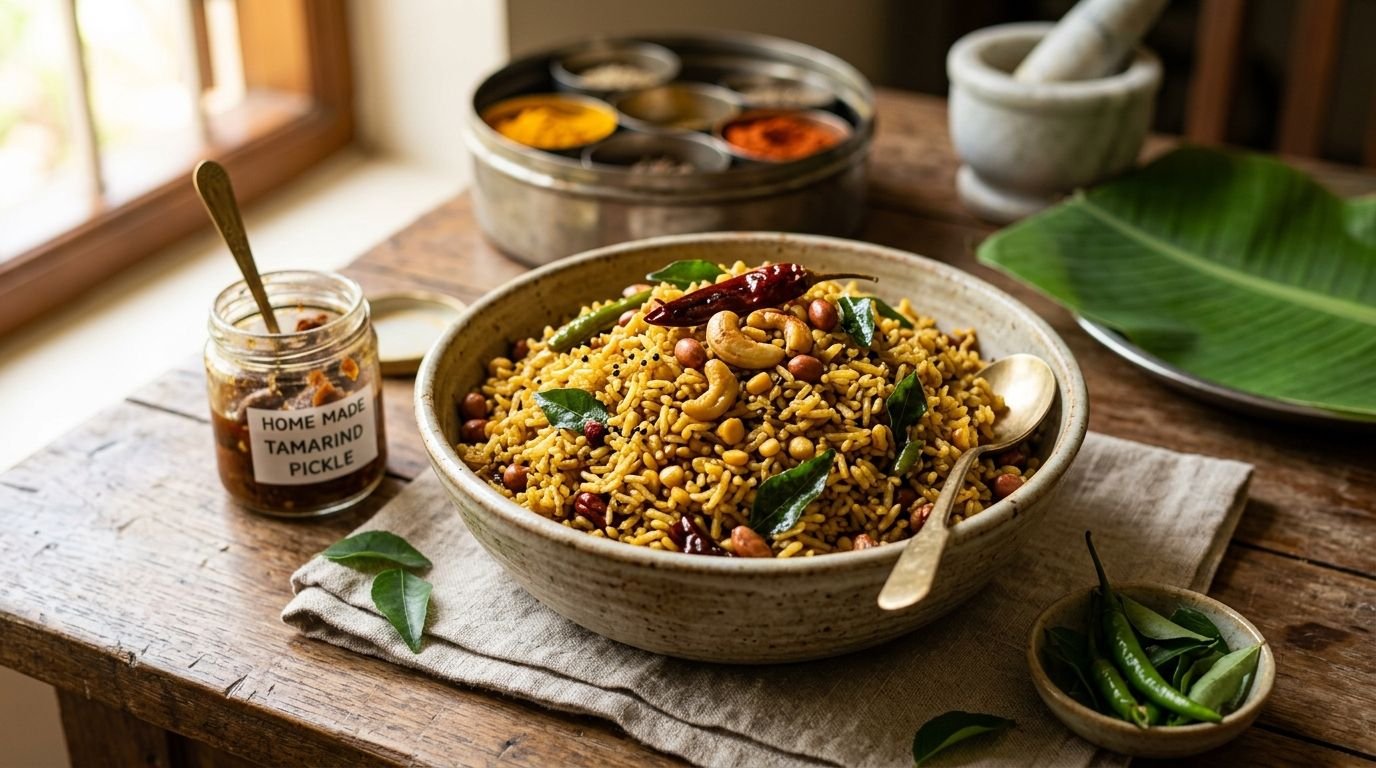
Andhra-style tamarind pulihora skips the hour of soaking and squeezing raw tamarind because a spoonful of ready-made tamarind pickle already carries the tang, chilli, and tempering oil the dish needs, so rice comes together tangy and glossy in 15 to 20 minutes flat.
- Tamarind pulihora recipe made with Tulasi Pickles tamarind pickle takes 15-20 minutes with zero tamarind extraction.
- Traditional pulihora built from raw tamarind pulp runs 30-40 minutes including soaking and straining time.
- One heaped tablespoon of tamarind pickle replaces about 2 tablespoons of tamarind pulp plus separate tempering spices.
- Best for weekday lunchboxes, temple-style prasadam rice, and any day you don’t want to boil tamarind on the stove.
Why this matters
Most pulihora recipes assume you're starting from a block of raw tamarind, which means soaking it in hot water, mashing it by hand, straining out the fibre, then building a separate tempering with mustard seeds, curry leaves, and dried red chilli.
That's three steps before the rice even gets involved. A jar of tamarind pickle collapses all three into one, because the pickle is already tamarind, oil, chilli, and salt cooked down together. In 2026, that shortcut matters more than ever for anyone cooking on a weeknight or shipping a taste of home to family living overseas.
How to make Andhra style pulihora using tamarind pickle
The method below assumes cooked, cooled rice and a jar of tamarind pickle on hand. Cooled rice matters because warm rice turns mushy the moment oil and pickle hit it.
- Cook and spread the rice. Cook 2 cups of raw rice, then spread it on a plate to cool for 10-15 minutes so the grains stay separate.
- Heat the oil. Warm 2-3 tablespoons of sesame or groundnut oil in a wide pan on medium heat.
- Temper. Add 1 teaspoon mustard seeds, 1 teaspoon urad dal, a pinch of hing, 8-10 curry leaves, and 2 dried red chillies. Fry until the dal turns golden, about 60-90 seconds.
- Add peanuts or chana dal. Toss in 2 tablespoons of roasted peanuts for crunch and let them warm through for 30 seconds.
- Stir in the tamarind pickle. Add 3-4 tablespoons of tamarind pickle directly into the tempering and stir for a minute until it loosens into a thick sauce.
- Fold in turmeric and salt. A pinch of turmeric brightens the colour; taste before adding salt since the pickle already carries some.
- Combine with rice. Turn off the heat, add the cooled rice, and fold gently with a flat spoon until every grain is coated evenly.
- Rest for 10 minutes. Pulihora tastes better after the flavours settle; this is the step most people skip and regret.
| Method | Time | Tamarind form | Verdict |
|---|---|---|---|
| Tamarind pickle shortcut | 15-20 min | Ready-made pickle | Buy for weekday cooking |
| Traditional from-scratch | 30-40 min | Raw tamarind pulp | Hold for weekend cooking |
| Tamarind paste (store-bought concentrate) | 20-25 min | Bottled concentrate, no tempering built in | Skip if pickle is available |
Quick Pulihora: 15 Minutes
This version leans entirely on the pickle for both sourness and tempering base, adding only fresh curry leaves and a fistful of peanuts on top. It works for lunchboxes and days when rice needs to be ready before an office call, and it's the version most home cooks in Hyderabad have shifted to in 2026 as ready-made Andhra pickles have become easier to order online.
Verdict: Buy this method for any weekday where you have 20 minutes, not an hour.
Traditional Pulihora: 30-40 Minutes
The from-scratch version still has its place for festival cooking, where families want the ritual of soaking tamarind and building the tempering fresh for prasadam. It gives you more control over exact sourness, since you adjust the tamarind-to-water ratio yourself rather than relying on a jar's fixed balance.
Verdict: Hold this method for Ugadi, Sankranti, or temple-style cooking where the extra 15-20 minutes is part of the occasion.
Why tamarind pulihora taste varies
A few variables decide whether your pulihora turns out balanced or one-note sour:
- Pickle brand and recipe. Some tamarind pickles skew sweeter with jaggery, others stay purely tangy and hot; check the ingredient list before buying if you want a specific balance.
- Rice texture. Freshly cooked, warm rice absorbs oil unevenly and turns clumpy; rice rested for 10-15 minutes holds its shape.
- Oil quantity. Sesame oil (nuvvula noone) is traditional in coastal Andhra kitchens and carries more of the tempering's aroma than a neutral oil.
- Peanut or chana dal ratio. More peanuts add crunch but dilute the tang per bite, so adjust based on how sour the pickle already is.
- Resting time. Pulihora eaten immediately tastes flatter than pulihora rested 10 minutes, because the rice keeps absorbing the tempering oil.
- Salt in the pickle. Pickle-based pulihora usually needs less added salt than the traditional version, since the pickle is already salted during its own making.
Getting the tempering step efficient also comes down to basic kitchen setup — mincing curry leaves and slicing dried chillies quickly on a compact chopping board keeps the pan from overheating while you prep, the same reason grainboundary.com.au's notes on choosing a compact chopping board point to smaller, dedicated boards for fast one-pan cooking in tight kitchens.
Can you make pulihora without tamarind pickle at all?
Yes, traditional pulihora is made without any pickle, using only raw tamarind pulp extracted by soaking a lemon-sized ball of tamarind in hot water for 15-20 minutes and straining it. This version takes longer and needs a separately built tempering, but it's the base most Andhra households used before ready-made tamarind pickle became widely available.
Does tamarind pulihora taste different with pickle versus fresh tamarind?
Tamarind pulihora made with pickle carries a rounder, oil-forward flavour because the pickle has already been cooked down with chilli and oil, while fresh tamarind pulihora tastes sharper and more purely sour. Neither is wrong — pickle-based pulihora suits quick weekday meals, and fresh-tamarind pulihora suits festival cooking where the extra time is expected.
How long does tamarind pulihora keep once made?
Tamarind pulihora keeps well for 8-10 hours at room temperature and up to 2 days refrigerated, since the oil and tamarind in the tempering act as a mild preservative. For longer storage of the tamarind pickle itself, following proper jar handling matters more than the rice — see the guidance on storing homemade pickles for long shelf life before you open a fresh jar.
A jar of authentic tamarind pickle from a maker that still hand-cooks small batches gives more consistent pulihora results than a mass-produced bottled paste, because the tempering ratio inside the jar is already balanced for eating straight, not diluting further. That's the version worth keeping on hand for both pulihora and for pairing directly with curd rice and khichdi.
Get tamarind pickle for your next pulihora
Homemade Andhra-style tamarind pickle, shipped across India.
FAQ
What is the best tamarind pulihora recipe for beginners in 2026?
The best tamarind pulihora recipe for beginners in 2026 uses ready-made tamarind pickle instead of raw tamarind, cutting the process to 15-20 minutes with no extraction step. Cooled rice, a basic tempering, and 3-4 tablespoons of pickle are all it takes.
Is pulihora made with tamarind pickle as authentic as the traditional version?
Yes, pulihora made with tamarind pickle is authentic when the pickle itself is made the traditional way, since the jar already contains cooked tamarind, oil, and chilli in Andhra proportions. The main difference is time saved, not authenticity lost.
How much tamarind pickle do I need for 2 cups of rice?
Use 3-4 tablespoons of tamarind pickle for 2 cups of cooked rice, adjusting upward if the pickle is mild or downward if it’s strongly sour. Taste after mixing before adding extra salt.
Can I use tamarind pickle for pulihora if I’m cooking for a temple offering?
Tamarind pickle works for everyday pulihora, but many households still prefer the traditional from-scratch method for temple prasadam, since it avoids any commercially processed ingredient in the tempering. Either version is edible and tangy; the choice is about ritual preference, not taste quality.
Why does my pulihora taste bitter instead of tangy?
Bitter pulihora usually means the mustard seeds or dried red chillies burned during tempering, or the tamarind pickle used was old and oxidised. Fry the tempering on medium heat only until the dal turns golden, not brown.
Does tamarind pulihora need refrigeration?
Tamarind pulihora doesn’t need refrigeration for same-day eating and holds at room temperature for 8-10 hours. For next-day use, refrigerate it and bring it back to room temperature before serving.
What rice works best for tamarind pulihora?
Sona masoori or any short-to-medium grain rice works best for tamarind pulihora because it holds its shape once cooled, unlike basmati which can turn separate and dry. Cook the rice slightly firmer than usual since it will absorb oil during mixing.
One last thing
The tempering step is where most home cooks lose flavour without realising it — frying curry leaves and red chilli in oil that's too hot burns the outside before the inside releases its aroma, and no amount of tamarind pickle afterward fixes that bitterness. Keep the flame at medium and pull the pan off heat the second the urad dal turns golden, not brown; that ten-second call is the real difference between average pulihora and pulihora people ask you to make again in 2026 and beyond.
Related guides
- Best Andhra pickles for authentic homemade taste
- How to use podi with idli, dosa and rice
- How to store homemade pickles for long shelf life
- Karam podi for spicing up curd rice and khichdi