
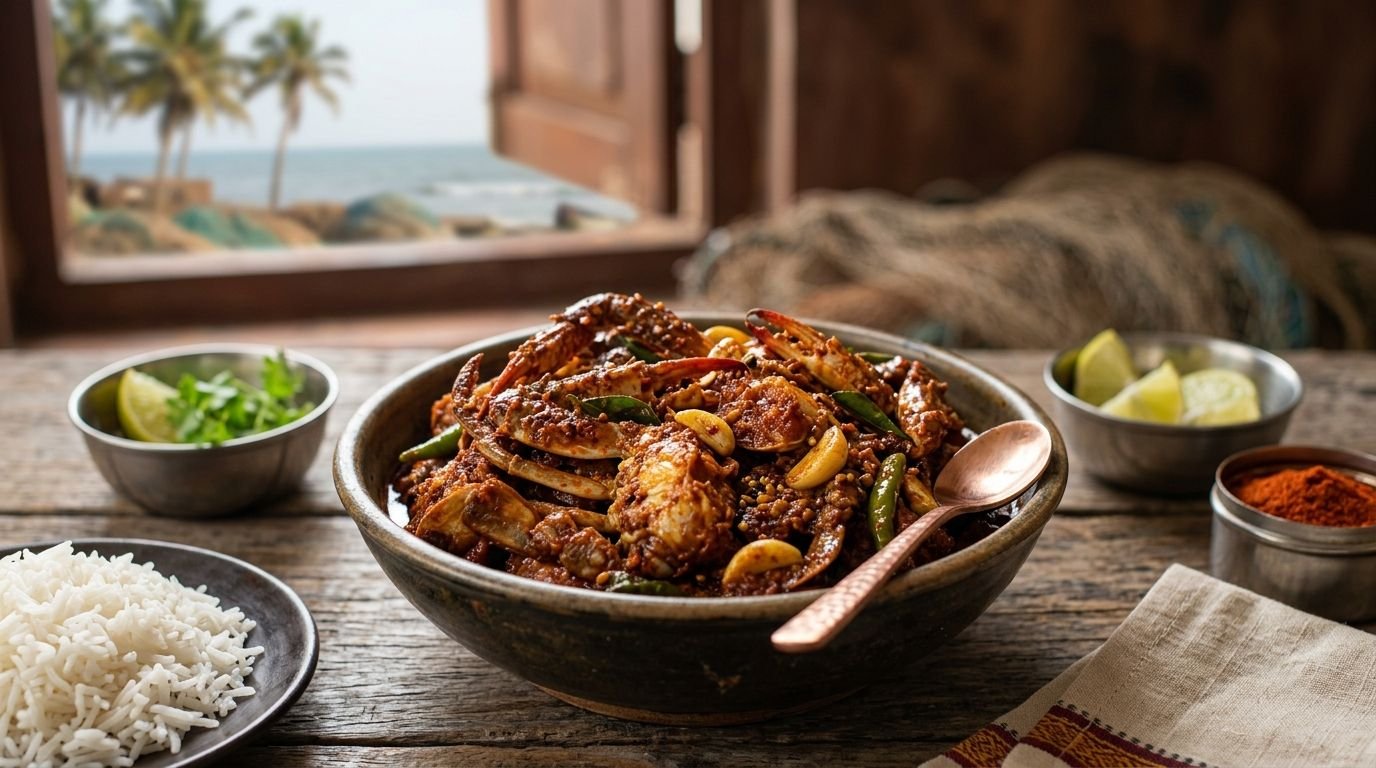
Crab pickle for coastal Andhra seafood lovers is a slow-cooked non-veg pickle made from crab meat, dry red chillies, and gingelly oil, built to recreate the brininess of Godavari and Krishna delta crab curry in a jar that keeps for months instead of days. Buyers in this segment already know the difference between a mud-crab pickle and a sea-crab one, expect a higher spice ceiling than chicken or mutton pickle eaters, and care more about how the oil layer behaves after opening than about brand packaging.
- Crab pickle for coastal Andhra buyers should show a thick oil seal and visible shredded crab meat, not a watery masala.
- Tulasi Pickles makes crab pickle in small batches using boneless crab meat cooked into red chilli and gingelly oil masala.
- Refrigerate crab pickle after opening and use a dry spoon every time to stretch shelf life past 30 days.
- Restaurant-style crab pickle tastes fresher but rarely survives shipping; bottled homemade versions travel better in 2026.
- Pair crab pickle with hot rice, ghee, and curd rice rather than rotis, which don’t hold the oil-heavy masala well.
Why crab pickle matters for coastal Andhra buyers
Seafood pickle shoppers search differently than pure vegetarian pickle buyers. They are looking for crab meat content, boneless vs. bone-in cuts, and shelf-stability information before they check flavor descriptions, because a bad batch of seafood pickle spoils faster and smells far worse than a bad batch of mango or lemon pickle.
This segment also tends to buy in smaller jars first, test the spice level, then reorder in bulk for festive gifting or for relatives settled outside Andhra Pradesh. That reorder pattern is why the difference between a 250g trial jar and a family-size batch matters more here than in most other pickle categories.
Crab pickle from Tulasi Pickles is built for coastal Andhra households who want the crab curry taste of home without the cooking time, and it holds up best when refrigerated after the seal is broken.
Check the crab-to-oil ratio before you buy
Most of the visible quality problems in bottled crab pickle come down to one thing: too much oil, not enough meat. Hold the jar up to light before opening if you can, or ask the seller directly what the meat percentage looks like.
- Look for visible shredded crab meat, not just red oil with chilli flakes floating in it
- Ask whether the crab is boneless or has small shell fragments left in
- Check if the oil has separated into a thin top layer versus a thick, cloudy mix
- Confirm the batch date if the seller shares one, since fresher batches hold texture longer
- Avoid jars where the oil smells sharply fishy rather than spiced
Confirm the crab source and cut before ordering
Sea crab and mud crab behave differently once pickled — mud crab holds more fat and gives a richer bite, sea crab is leaner and cooks down faster into the masala. Tulasi Pickles sources crab meat and prepares it boneless, which matters if you're buying for kids or elderly relatives who don't want to pick through shell.
- Ask if the crab meat is boneless or has cartilage left in
- Check if the pickle is made fresh to order or batch-produced and stored
- Confirm whether the masala is Andhra-style (heavy red chilli, garlic, gingelly oil) or a milder coastal Kerala or Odisha style
- Ask about the oil used — gingelly (sesame) oil is standard for Andhra-style seafood pickle and holds flavor longer than refined oil
Match the spice level to your household, not to nostalgia
Coastal Andhra crab pickle recipes run hot by design, often hotter than the chicken or mutton pickle from the same kitchen, because the chilli is meant to cut through the crab's natural sweetness. That's a mismatch problem for households with mixed spice tolerance.
- Order a trial-size jar before committing to a bulk batch
- Ask the seller if a reduced-chilli version exists for kids or elders
- Pair a spoon of crab pickle with plain curd rice first to gauge heat before eating it with hot rice alone
- Check whether the seller lists chilli variety used, since Guntur and Byadgi chillies behave differently in heat and color
Store it correctly once you open the seal
Seafood pickle spoils faster than vegetarian pickle once oxygen and moisture get in, so storage habits matter more here than for avakaya or lemon pickle. A jar that looked perfect at delivery can turn within two weeks if handled carelessly.
- Refrigerate the jar after first opening, even if the label says room temperature is fine before opening
- Always use a completely dry spoon — a wet spoon introduces bacteria that spoil crab pickle within days
- Keep the jar tightly sealed between uses so the oil layer stays intact
- Avoid leaving the jar in direct sunlight or near a stove, since heat breaks down the oil seal faster in seafood pickle than in veg pickle
- Check for a sour smell or bubbling on the surface before eating a spoonful from an older jar
Prep and serve it the way coastal kitchens do
Crab pickle isn't a standalone dish — it's a side that needs the right base to work. Most coastal Andhra households eat it with plain hot rice and a spoon of ghee, never with bread or rotis, because the oil-heavy masala needs starch that absorbs rather than repels it.
If you're prepping accompaniments at home — chopped onions, raw mango, or a side salad to balance the heat — the same discipline that keeps a kitchen efficient for daily cooking applies here: working off a sturdy chopping board keeps prep clean and quick when you're serving crab pickle alongside multiple sides for a family meal.
- Serve with plain steamed rice and a spoon of ghee for the classic combination
- Pair with curd rice if the batch runs hot, since dairy cuts chilli heat effectively
- Add a small portion alongside sambar or rasam meals for contrast, not as the main flavor
- Skip pairing with heavily spiced curries on the same plate — crab pickle works better as the single strong flavor at the table
Buy in the right jar size for how you actually eat it
Coastal Andhra households that eat non-veg pickle daily need a different jar size than someone buying it once for a festive spread. Overbuying a seafood pickle you eat occasionally just means more of it going stale in the fridge before you finish it.
- Start with a smaller jar if this is your first time trying a seller's crab pickle
- Move to a family-size batch only after confirming the spice level and texture suit your household
- For gifting to relatives outside Andhra Pradesh, check if the seller ships pickles safely across longer distances before ordering a large batch
Comparing your crab pickle options in 2026
| Option | Best for | Key limitation | Verdict |
|---|---|---|---|
| Homemade crab pickle (Tulasi Pickles) | Coastal Andhra households wanting boneless crab pickle shipped across India | Batch sizes are limited compared to mass-market brands | Buy for authentic Andhra-style taste with boneless prep |
| DIY home-cooked crab pickle | Families with an experienced home cook and time to prepare fresh crab | Time-intensive and inconsistent between batches | Hold unless you already have a trusted family recipe |
| Restaurant-style crab pickle | One-time tasting at a coastal restaurant | Doesn't travel or store well beyond a few days | Skip if you need something that ships or lasts |
| Mass-produced bottled crab pickle | Budget-driven buyers with no brand preference | Often uses more oil filler than actual crab meat | Wait and check the meat-to-oil ratio before buying |
“If the pickle turns oily and translucent within a week of opening, the crab meat was never fully cooked into the masala.”
Common mistakes coastal Andhra crab pickle buyers make
- Ordering a full family batch on the first try — spice tolerance and texture preference vary too much between households to skip the trial jar step.
- Storing at room temperature after opening — seafood pickle needs refrigeration post-seal in a way vegetarian pickle usually doesn't.
- Assuming all crab pickle is boneless — some batches carry small shell fragments, which matters if you're serving kids or elders.
- Pairing it with rotis instead of rice — the oil-heavy masala is built around rice-based meals, and it eats differently on bread.
- Ignoring the seller's shipping method for gifting overseas — seafood pickle needs tighter packing than dry pickles to survive transit in 2026 without spoilage.
Order crab pickle from Tulasi Pickles
Homemade boneless crab pickle shipped across India from Hyderabad.
FAQ
What is crab pickle made of?
Crab pickle is made from cooked crab meat combined with red chilli, garlic, and gingelly oil masala. The Andhra-style version uses boneless crab meat and a heavier chilli base than most vegetarian pickles.
Is crab pickle safe to eat after a few weeks?
Crab pickle stays safe to eat for weeks when refrigerated after opening and handled only with a dry spoon. Room-temperature storage after the seal is broken shortens its safe shelf life significantly.
How is crab pickle different from prawns or fish pickle?
Crab pickle has a richer, sweeter base flavor than prawns or fish pickle because of the crab meat’s natural fat content. Texture also differs — crab shreds finer into the masala than prawn or fish chunks do.
Can crab pickle be shipped overseas without spoiling?
Crab pickle can be shipped overseas when packed correctly with tight sealing and minimal air exposure. Sellers experienced with non-veg pickle exports handle this differently than those shipping only dry pickles.
What should crab pickle be eaten with?
Crab pickle pairs best with plain hot rice and a spoon of ghee, and with curd rice when the batch runs spicier than expected. It does not pair as well with rotis or bread.
Is boneless crab pickle better than bone-in?
Boneless crab pickle is easier to eat for households with kids or elders and avoids the risk of shell fragments. Bone-in versions sometimes carry slightly more flavor but require more careful eating.
How much crab pickle should a first-time buyer order?
First-time buyers should order a trial-size jar before committing to a family batch. Spice tolerance and texture preference vary enough between households that a bulk order upfront is a risk.
One last thing
The single biggest signal of a well-made crab pickle isn't the color of the oil — it's whether the crab meat still holds shred and texture after weeks in the jar. A batch that turns to mush by the second week was undercooked into the masala from the start, regardless of how good the spice blend tastes on day one.
Related guides