

Best for a dry ginger–black pepper blend: Sonti Podi (Dry Ginger Powder) | Homemade Andhra Spice. Best for a spicy dry ginger seasoning: Sonti Karam Podi. This 2026 guide compares the two options from Tulasi Pickles for cooking and serving—not as proven immunity boosters.
- Choose Tulasi Pickles sonti podi for a dry ginger–black pepper blend, not an immunity promise.
- Choose Sonti Karam Podi when you want an Andhra-style dry ginger spice powder.
- Check the complete ingredients: dry ginger powder and a seasoned podi are not interchangeable.
- Buy for flavour and intended use; neither product should replace medical care.
Why this matters
Searching for the best sonti podi for immunity mixes two different decisions: which ginger powder suits your food, and whether a product has demonstrated a health benefit. Keep those decisions separate. A traditional ingredient or familiar family recipe does not establish that a particular packaged blend prevents illness.
Sonti means dry ginger, while podi means powder. The name alone does not tell you whether the packet contains only ginger or a mixture of ingredients. That distinction matters when you want a cooking ingredient rather than a ready-made seasoning.
Tulasi Pickles sonti podi is best suited to buyers seeking an Andhra-style dry ginger–black pepper blend for food. Choose it for that clearly described purpose, rather than treating the word immunity as a product specification.
What makes the best sonti podi?
Use these criteria to compare a sonti podi product in 2026 before choosing a familiar brand name or an attractive health claim.
- Ingredient identity: Establish whether the product is plain dry ginger, ginger with black pepper, or a broader spice blend.
- Intended use: Match the powder to cooking, rice mixing, or another use described on its label. Do not assume every podi suits drinks.
- Flavour fit: Choose between a ginger–pepper blend and a product presented as karam, or spicy seasoning.
- Label clarity: Read the complete ingredients, allergen information, date marking, and storage instructions before use.
- Health-claim discipline: Keep culinary descriptions separate from promises about preventing infections or treating symptoms.
A longer ingredient list is not automatically worse. It simply describes a different product. The useful question is whether that recipe matches the way you plan to use the powder.
Sonti podi options at a glance
This is a focused comparison of two named products, not a claim that one brand has beaten every sonti podi seller. The distinction below follows their product descriptions; it is not a laboratory or blind-tasting result.
| Product | Best for | Standout detail | Key limitation |
|---|---|---|---|
| Sonti Podi (Dry Ginger Powder) | Homemade Andhra Spice | Buyers seeking dry ginger with black pepper | Described as a dry ginger–black pepper blend | Not a single-ingredient ginger powder |
| Sonti Karam Podi | Buyers seeking a spicy dry ginger seasoning | Described as an Andhra-style dry ginger spice powder | Not interchangeable with plain ginger powder |
The default choice is Sonti Podi when ginger and black pepper match your intended dish. Choose Sonti Karam Podi for the different purpose suggested by its spicy seasoning description, not because karam indicates a stronger health effect.
1. Sonti Podi: best sonti podi for a ginger–pepper blend
The full product name is Sonti Podi (Dry Ginger Powder) | Homemade Andhra Spice. Its description identifies a homemade dry ginger and black pepper powder, so you should read it as a blend rather than pure powdered ginger.
That makes the product relevant when you specifically want both ingredients in your food. It is a less direct fit for a recipe that calls only for dry ginger, because the black pepper changes the ingredient combination.
Sonti Podi pros:
- The description explicitly names dry ginger and black pepper.
- The blend suits buyers deliberately looking for that ingredient pairing.
- The product is identified as an Andhra-style homemade spice.
Sonti Podi cons:
- It is not the right substitute when a recipe requires ginger alone.
- The product name does not establish a clinical immunity benefit.
- Black pepper is an additional flavour to consider before adding other seasonings.
Best for: A home cook who wants a dry ginger–black pepper blend and will check the complete label against the intended meal.
Before choosing Sonti Podi, decide whether pepper belongs in the dish. That simple check is more useful than choosing a powder because its name appears beside a general wellness claim.
Verdict: Buy for the ginger–pepper combination; skip it when you need single-ingredient dry ginger.
2. Sonti Karam Podi: best sonti podi for spicy seasoning
Sonti Karam Podi is described as a homemade Andhra dry ginger spice powder. Its description places it in the spicy podi category, giving it a different use case from a powder chosen specifically for its ginger–black pepper pairing.
Choose this option when you want a dry ginger seasoning for savoury food. Do not assume that adding karam to the name tells you the complete recipe or provides a standardised measure of heat.
Sonti Karam Podi pros:
- Dry ginger is explicitly identified in the product description.
- Its Andhra-style spice-powder positioning gives it a clear culinary purpose.
- It provides a distinct choice for buyers seeking a spicy seasoning.
Sonti Karam Podi cons:
- It is not a direct replacement for plain dry ginger in a recipe.
- The name alone does not tell you every ingredient or the heat level.
- A spicy taste does not demonstrate a stronger immunity benefit.
Best for: A home cook looking for an Andhra-style dry ginger seasoning rather than a single-ingredient pantry powder.
Check how the complete ingredient list overlaps with the other seasonings in your meal. A prepared spice blend should be considered as a whole recipe ingredient, not counted only as ginger.
Verdict: Buy for spicy savoury seasoning; skip it when you want ginger alone or a product chosen for medical purposes.
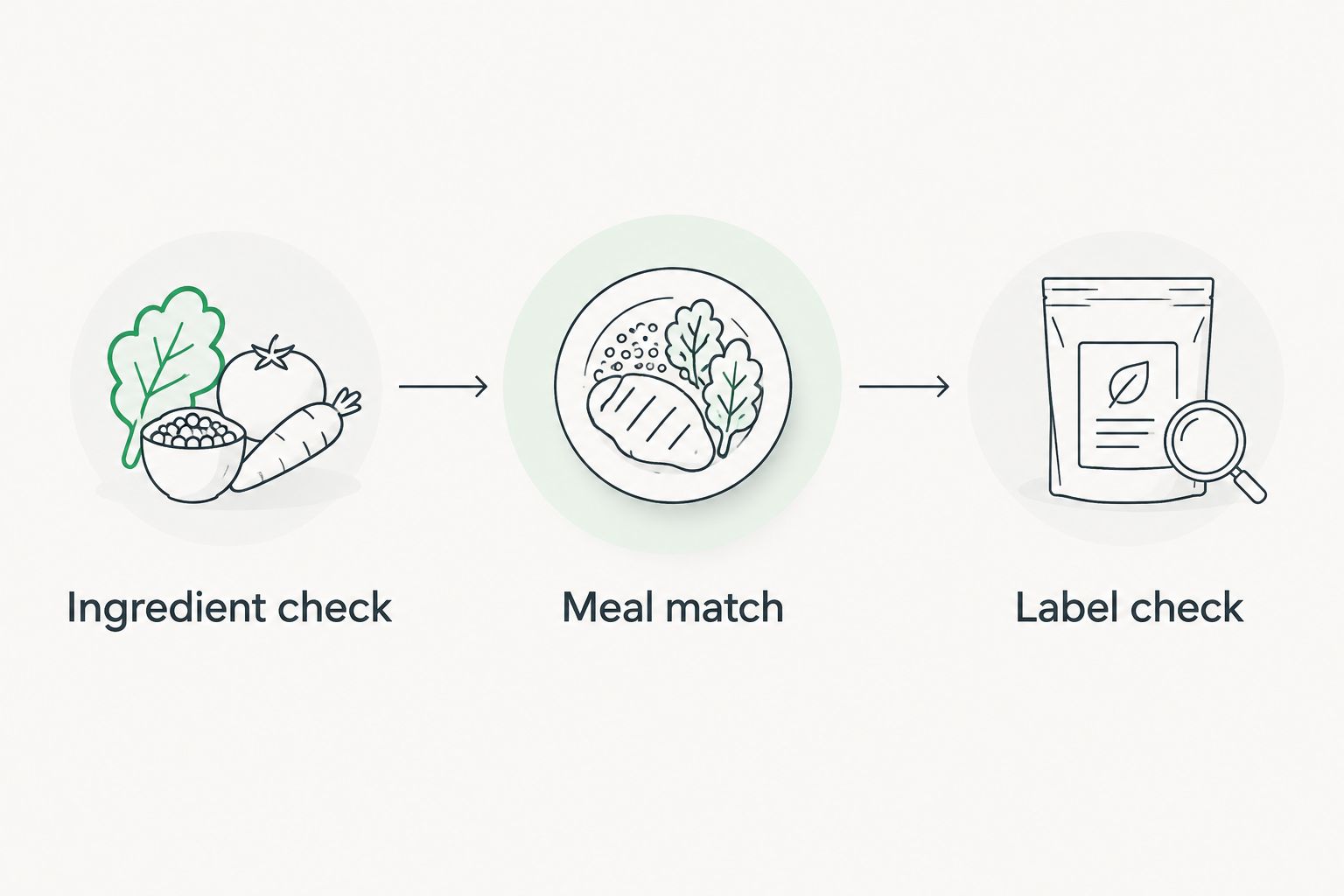
Choose the recipe before the packet
The most useful shopping decision in 2026 starts with your intended use. These three checks separate ingredient identity from flavour preference and keep a culinary purchase from becoming an unsupported health decision.
Ingredient check
Read past the front-of-pack name. Look for the complete ingredient list and identify whether ginger stands alone or appears alongside pepper and other seasonings.
If your recipe specifies plain dry ginger powder, use a product whose ingredients match that requirement. Do not assume a traditional name guarantees a single-ingredient recipe.
Meal match
Decide whether you want to season a savoury meal or follow another preparation. A podi designed as a food accompaniment is not automatically suitable for tea, milk, or a sweet recipe.
For practical serving ideas, the guide to using podi with idli, dosa and rice explains the broader meal context. Apply those ideas only where the particular blend's ingredients suit your dish.
Label check
Read the preparation and storage directions before opening the packet. Check any dietary restrictions against the complete ingredients and allergen statement rather than relying on the word homemade.
For someone buying on your behalf, give the exact product name and the intended use. Asking only for ginger powder leaves room for a blend that does not match your recipe.
Compare the two named products
The cards below identify the exact products discussed in this guide. Tulasi Pickles sells both sonti podi options; choose between them by ingredient purpose and flavour preference, not by an implied ranking for immunity.


What “for immunity” should mean when you shop
For this 2026 comparison, immunity is a reason to examine claims carefully—not a scoring category. Neither traditional use nor a strong ginger flavour establishes that a particular retail blend reduces your risk of infection.
Choose a food for its ingredients and culinary role; require separate evidence for a health claim. A statement about ginger as an ingredient is not automatically evidence about the finished product, its serving size, or the result you will get from eating it.
Avoid treating a podi as a substitute for prescribed treatment or advice about persistent symptoms. If you are buying it to manage a health condition rather than to season food, discuss that intended use with a qualified healthcare professional.
The same distinction applies when buying for relatives. Describe the gift as a dry ginger spice powder, not as protection against illness. That keeps your recommendation accurate without dismissing the food's place in an Andhra kitchen.
How to use your choice without guessing
Start with the preparation guidance on the packet. There is no universal serving instruction that fits every product sold under the name sonti podi, because recipes differ.
For a ginger–pepper blend, account for both ingredients when seasoning the rest of your dish. Taste the prepared food before adding more pepper or another strong spice mixture. You are judging flavour, not testing a health effect.
For a karam blend, check the full recipe before combining it with another podi. Layering seasonings without reading their ingredients makes it harder to control the finished taste and identify what you liked.
Keep a clean, dry spoon for the powder and follow the pack's storage directions. Do not transfer a shelf-life claim from a different podi, or assume that every homemade spice powder needs identical storage.
If you move the powder into another container, retain its label information. The product name, ingredients, date marking, and instructions remain useful after the original packet is gone.
How the choices are ranked
The ranking follows ingredient identity, intended use, flavour fit, label clarity, and responsible health framing. Sonti Podi comes first because its description explicitly identifies the ginger–black pepper pairing, making the recommendation straightforward for buyers seeking that combination.
Sonti Karam Podi takes the separate spicy-seasoning slot. This is a use-case ranking, not a sensory test, a medical assessment, or a claim that every competing brand offers a worse product.
The 2026 recommendation therefore stays narrow: buy the option that matches your food. Do not use list position as evidence of better immunity, greater potency, or suitability for a medical condition.
Which sonti podi should you choose?
Choose Sonti Podi as the default if you want dry ginger with black pepper. Choose Sonti Karam Podi if your priority is a spicy Andhra-style dry ginger seasoning.
If your recipe needs pure ginger powder, neither product should be selected simply because sonti appears in its name. Find a label that explicitly matches the recipe instead of trying to make a blend behave like a single ingredient.
For an immunity-led purchase, change the buying question. Ask which ingredients you want to eat and how you will use them; do not ask a food product to promise protection it has not demonstrated.
FAQ
What’s the best sonti podi to choose in 2026?
Choose Tulasi Pickles Sonti Podi for a dry ginger–black pepper blend, or Sonti Karam Podi for a spicy dry ginger seasoning. The right choice depends on your intended food, not an assumed immunity benefit.
Is sonti podi the same as plain dry ginger powder?
Not always: sonti podi can refer to a blend rather than ginger alone. Read the complete ingredient list before substituting it into a recipe that requires plain dry ginger.
Does sonti podi boost immunity?
Do not treat sonti podi as a proven immunity booster. Traditional use and the presence of ginger do not establish that a particular packaged blend prevents infection or treats illness.
Is Sonti Podi better than Sonti Karam Podi?
Sonti Podi is the clearer fit when you specifically want dry ginger with black pepper. Sonti Karam Podi serves a different purpose as an Andhra-style dry ginger spice seasoning.
Can I add any sonti podi to tea or milk?
No: check the ingredients and preparation directions before adding a sonti podi blend to a drink. A savoury seasoning is not automatically interchangeable with plain ginger powder.
Can I take sonti podi every day for my health?
Do not create a daily medicinal routine from a food product name. Follow its culinary directions and seek qualified advice if your intended use concerns a health condition.
How should I store sonti podi after opening?
Follow the storage instructions on the specific packet and use a clean, dry spoon. Keep the original label information if you transfer the powder to another container.
One last thing
The word after sonti can change the purchase more than the brand name. Powder, pepper blend, and karam seasoning describe different ingredient choices; none is automatically the best replacement for the others.
Before ordering in 2026, finish this sentence: “I want this powder for…” If the answer names a dish or flavour, you have a useful buying criterion. If it names a promised medical result, pause and separate that question from your grocery choice.
Related guides
- Best Andhra podi for rice and idli
- How to choose the right podi grind for mixing with rice
- How to mix podi into hot ghee rice