
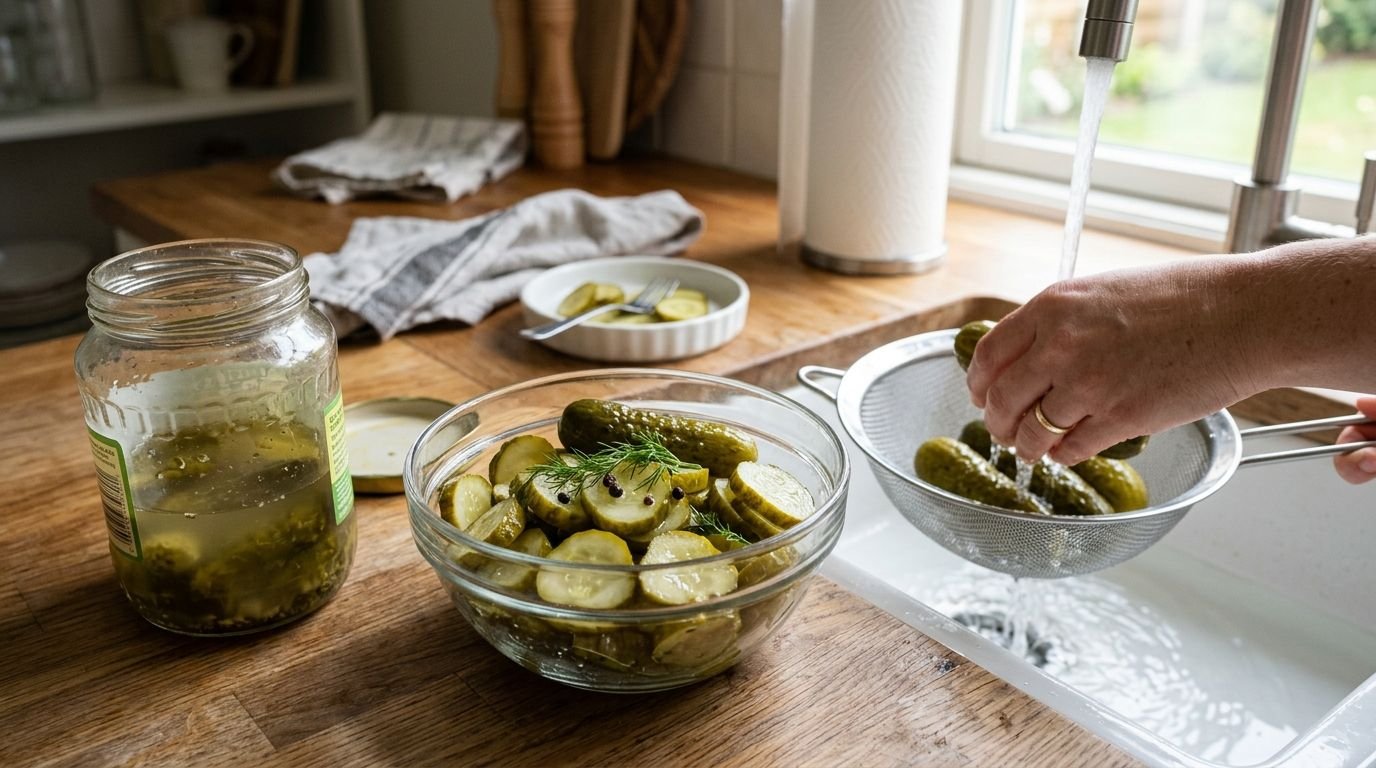
Draining pickle pieces on a spoon or strainer for about a minute before you plate them removes most of the surface oil sitting on top, but the oil that has already soaked into the vegetable or meat during curing stays put no matter what you do at the table. Andhra-style pickles use oil as a preservative rather than refrigeration, so getting a jar to zero oil isn't realistic — the goal here is cutting what lands on your plate, not stripping the jar.
- Scooping pickle pieces onto a spoon or strainer for about a minute drains most surface oil before serving.
- Oil absorbed into the pickle during curing doesn’t rinse or blot out — only the top coating comes off.
- An oil-free pickle line skips the preservation-oil layer for buyers cutting fat intake in 2026.
- Refrigerating an opened jar slows oil re-coating pieces but never lowers the jar’s oil content.
- A teaspoon-sized serving limits how much oil actually reaches your plate compared to a heaped spoonful.
Why this matters
Andhra pickles are oil-preserved by design. The oil layer blocks air and moisture that would otherwise spoil raw mango, lemon, gongura or cooked meat sitting on a counter without a fridge for months. That's also why Andhra pickle looks noticeably oilier than a fresh chutney or a vinegar-brined Western pickle.
If you're managing fat intake in 2026 but still want the real flavor, the honest answer is portion control plus a quick drain — not scrubbing the jar clean. Buyers who want a genuinely lighter option can look at oil-free pickles instead of trying to de-oil a traditional preserved jar.
How to reduce oil in store-bought pickles before serving
- Scoop, don't pour. Lift pieces out with a spoon so the oil clinging to the jar's edge drains back in instead of coming out with your serving.
- Rest on a strainer or paper towel for a minute. Surface oil drips or blots off within about a minute; this is the single biggest reduction you'll get without changing the pickle itself.
- Press gently with a second spoon or a napkin. This pushes out oil trapped between pieces, especially in chunky mango or lemon pickle.
- Rinse only for delicate veg pickles. A quick rinse under water works on mango, lemon or gongura pickle if you don't mind losing some of the spice coating with it.
- Skip rinsing on non-veg pickles. Chicken, mutton, prawns and fish pickle use the oil layer to seal the cooked meat once the jar is open — rinsing it off shortens how long the piece stays safe to eat.
- Serve a teaspoon, not a heap. A teaspoon-sized portion per meal naturally caps oil intake far more than any draining trick does.
| Method | Removes surface oil | Removes absorbed oil | Best for |
|---|---|---|---|
| Spoon-drain / strainer | Yes | No | Veg and non-veg pickles |
| Blot with paper towel | Yes | No | Mango, lemon, gongura |
| Rinse under water | Yes, plus spice coating | No | Veg pickles only |
| Refrigerate before serving | No (slows re-pooling) | No | Any opened jar |
Why pickles carry so much oil
- Oil is the preservative. Andhra-style pickles rely on an oil barrier, not cold storage, to keep out the air and moisture that spoil pickled produce and meat.
- Oil carries the spice. Red chilli, mustard and fenugreek bind into the oil so the masala coats every piece instead of settling at the bottom of the jar.
- Shelf life without a fridge depends on it. A well-oiled veg pickle jar stays edible on the counter for months; cut the oil out and the jar needs refrigeration and faster use.
- Oil rounds out sharp, sour flavors. It softens the bite of raw chilli and tamarind-based souring so the pickle doesn't taste harsh on its own.
- Non-veg pickles need a thicker layer. Chicken, mutton, prawns and fish pickle carry more oil because it also seals the cooked meat from air once the jar is opened.
“Draining takes off what’s sitting on top of the piece — it never touches what soaked in during curing.”
Does refrigerating pickle reduce its oil content?
No — refrigerating an opened jar (commonly around 4°C/40°F) slows oil from re-pooling around drained pieces, but it doesn't lower the jar's actual oil content. Cold oil also solidifies slightly, which some people find easier to spoon around when portioning a serving in 2026.
Is it safe to rinse pickle oil off before eating?
Yes, rinsing pickle pieces under water is safe for vegetable pickles such as mango, lemon or gongura, though it washes away some spice coating along with the oil. Skip rinsing on oil-cured non-veg pickles like chicken or mutton pickle, since that oil layer also protects the cooked meat once the jar is open.
Can I buy an Andhra-style pickle with less oil to begin with?
Yes — some pickle makers sell a dedicated oil-free line that skips the preservation-oil layer entirely for buyers watching fat intake in 2026. Check the oil-free pickles range and confirm storage instructions, since oil-free jars usually need refrigeration and quicker use than a traditional oil-preserved batch.
Want pickles that are lighter on oil?
Browse homemade Andhra pickles, oil-free options and podis shipped across India.
If you'd rather cut oil at the source instead of draining every serving, pair rice or curd rice with a dry spice powder instead of a wet pickle some days — it delivers the same tangy-spicy hit with none of the surface oil. Storage habits matter here too: opened jars that sit out longer than they should tend to develop more oil pooling on top, so check how to store homemade pickles for long shelf life if you're keeping a jar open for weeks.
FAQ
What’s the fastest way to reduce oil in pickles before serving?
Scoop pieces onto a spoon or strainer and let them rest for about a minute so surface oil drips off. This removes most of the visible oil in seconds without changing the pickle’s flavor.
Does draining pickle oil affect its shelf life?
Yes — the oil layer preserves the pickle, so pieces you’ve drained and returned to the jar spoil faster than pieces left in oil. Drain only what you’re eating that meal, not the whole jar.
Is it better to rinse or blot pickle oil?
Blotting with a paper towel removes surface oil without washing away the spice coating, while rinsing removes both. Blotting works for most Andhra pickles; rinsing suits milder veg pickles you don’t mind tasting plainer.
How much oil is normal in Andhra-style pickles?
Andhra-style pickles carry a visible oil layer on top by design, since the oil replaces refrigeration as the preservative. This is standard across traditional veg and non-veg jars, not a sign of excess oil in a particular batch.
Can I make pickles at home with less oil?
You can reduce the oil in homemade pickles, but the jar will then need refrigeration and faster use compared to a fully oil-preserved batch. Traditional recipes use generous oil specifically to skip that step.
Is oil in pickles bad for daily eating?
A teaspoon-sized serving of pickle per meal keeps oil intake low even from a traditionally oiled jar. The concern is usually portion size rather than the pickle itself.
What’s a good low-oil alternative to eat with meals instead of pickle?
A dry spice powder (podi) mixed into rice or curd rice delivers similar tangy-spicy flavor with no added oil. It pairs the same way pickle does at a meal but skips the oil layer entirely.
Should I rinse non-veg pickle to remove oil?
No — rinsing chicken, mutton or fish pickle removes the oil that helps preserve the cooked meat after the jar is opened. Blot it instead, and finish rinsed or drained portions the same day.
One last thing
The oil sitting on top of an unopened jar is doing more work than most people realize — it's the reason a properly made Andhra avakaya can sit on a kitchen shelf for months without spoiling. Strip that layer off too aggressively while storing the jar, not just while serving, and you shorten the jar's life along with cutting its oil.
Related guides
- How to choose the right spice level in pickles
- How to use podi with idli, dosa and rice
- Best Andhra pickles for authentic homemade taste