
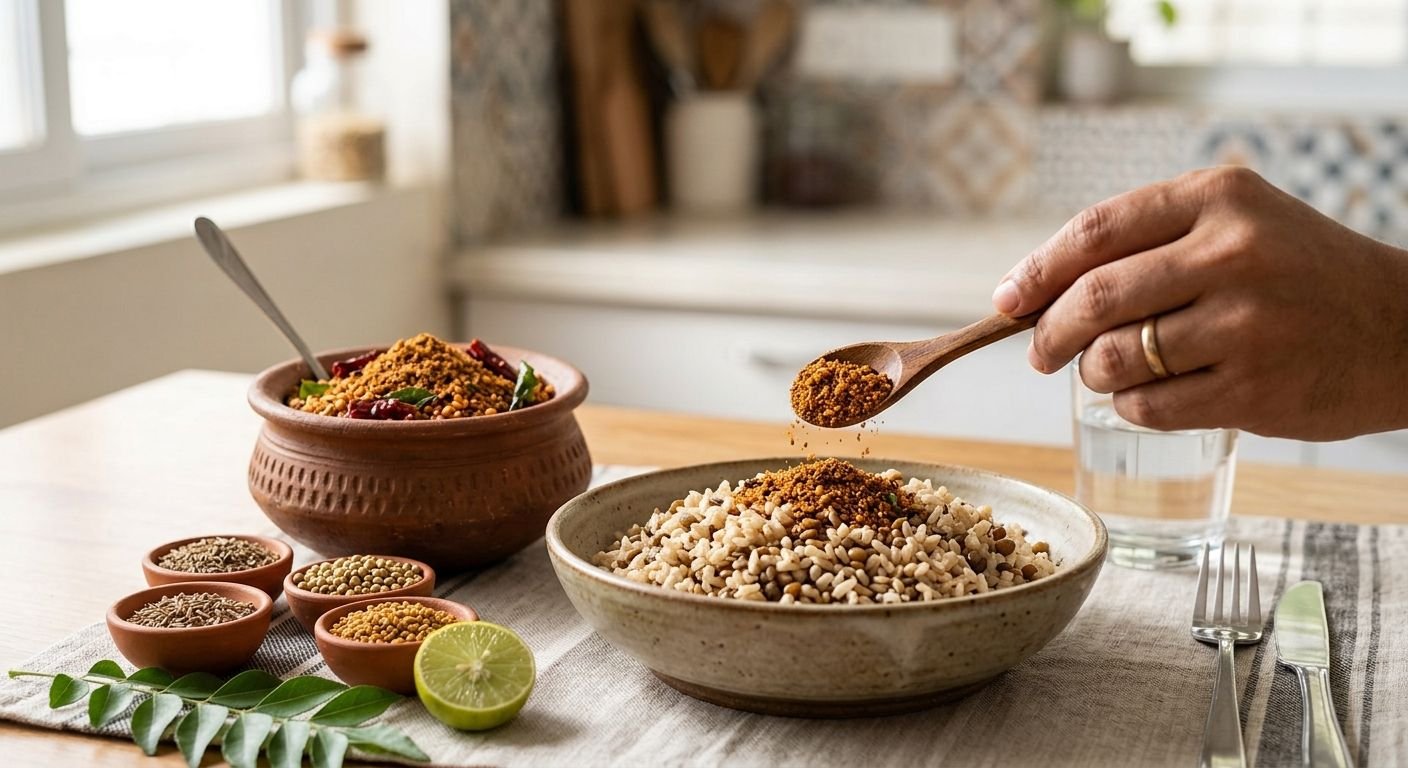
Diabetic-friendly podi combos are dry roasted lentil and seed powders mixed into rice, idli, or curd rice, built to cut the added sugar and heavy oil that pickle-and-rice meals usually carry. A diabetic eating podi needs a different checklist than a regular buyer: protein and fiber content matter more than heat level, and a jar with jaggery or rice-flour filler defeats the purpose even if the label says "healthy."
- Podi for diabetics means lentil- or seed-based powders with zero added sugar, not sweetened tea-time mixes.
- Kandi Podi (toor dal) and Nuvvula Podi (sesame) pair protein and fat with rice to slow the glucose response.
- A level teaspoon of tempering ghee, not a heaped one, is the single biggest calorie swing in a podi meal in 2026.
- Rotate two or three podi types weekly instead of eating one jar daily to avoid a sodium pile-up.
Why this matters for diabetics
Most Andhra podi is naturally low-sugar because it's built from roasted lentils, sesame, peanuts, or dried chillies rather than jaggery. The risk isn't the podi itself; it's what sits next to it on the plate. A jar of Andhra podi for rice and idli with no jaggery listed is a very different food than a sweet til mix, even though both get called "podi" casually.
Diabetics also eat rice in measured portions, which changes how podi should be used. A podi meant to be piled on for flavor works against portion control; a podi meant to be measured in half-teaspoons per cup of rice works with it. That distinction rarely shows up in general podi buying guides because it doesn't matter to a non-diabetic buyer.
Read the ingredient list on every podi jar
Check this before the podi goes in the cart, not after it's opened.
- Scan for jaggery, sugar, or "sweetener" anywhere in the ingredient line
- Confirm the base is dal, sesame, or peanut, not fried rice flour or besan bulking agent
- Check whether salt is listed early in the ingredient order, which usually means a higher sodium load
- Look for "no added preservatives" claims and verify against a short shelf-life window, since real preservative-free podi doesn't last a year
- Avoid jars labeled "sweet" or "festive mix" entirely for daily diabetic meals
Pick lentil- and seed-based podi over roasted-rice fillers
Some commercial podi blends stretch the mix with roasted rice or gram flour to cut cost. That dilutes the protein and fiber that actually help a diabetic meal, and it raises the glycemic load without adding any nutritional upside.
- Favor podi where the first ingredient is a dal (toor, chana, urad) or a seed (sesame, flax)
- Treat "mixed spice powder" labels with caution if dal isn't named specifically
- Cross-check texture: a dal-forward podi feels coarse and slightly oily from roasting, not powdery like flour
- Ask for the dal-to-spice ratio if buying from a smaller seller without a printed label
Portion your podi-to-rice ratio
The free version of this step is a kitchen scale or a measuring spoon, nothing more.
- Start with one level teaspoon of podi per cup of cooked rice, not a heaped spoon
- Increase gradually only if blood sugar response over a week stays stable
- Kandi Podi runs richer in oil-holding dal, so a smaller quantity delivers the same flavor as a larger amount of a drier podi
- Weigh the podi jar once when new and again after two weeks to gauge your actual daily intake, since eyeballing consistently overestimates or underestimates by a wide margin
Tulasi Pickles' Kandi Podi is toor dal-forward, which makes portion control easier because the dal itself adds satiety before the spice kicks in. Verdict: Kandi Podi is the strongest lentil-based pick for diabetic rice meals in 2026 because it pairs protein with flavor in a small spoon.
Cut oil and ghee tempering to a measured spoon
The podi is rarely the calorie problem; the tempering oil poured over it usually is.
- Measure ghee or oil with a spoon instead of pouring straight from the bottle
- Swap ghee for a thin layer of sesame oil on days you're watching saturated fat
- Skip the second tempering some households add "for shine" right before serving
- Use the oil that separates naturally from a well-roasted podi jar instead of adding fresh oil on top
Pair podi with fiber first, not last
A podi-rice bowl eaten alone spikes faster than one eaten with a fiber or protein side.
- Add a spoon of curd or buttermilk to the same plate
- Include a raw vegetable side, even a simple cucumber or onion salad
- Pair with a low-oil papad instead of a fried snack for texture
- Choose brown rice or a millet base on days you're stricter about carb load
Rotate podi flavors to avoid sodium overload
Eating the same salted podi at every meal compounds sodium intake fast, which matters for diabetics managing blood pressure alongside blood sugar.
- Alternate between at least two podi types across the week
- Check the salt content pattern across jars rather than assuming they're all similar
- Pair a saltier podi day with a lower-sodium pickle rather than stacking two salty condiments
- Track how your plate feels after meals heavy in podi versus lighter days, since bloating is often the first sodium signal
Build a diabetic-friendly Andhra thali around podi
Once the podi, portion, and oil are sorted, the rest of the plate follows a simple sequence.
- Measure the rice portion first, before adding anything else
- Add the measured podi and a level spoon of oil or ghee
- Add a protein side: curd, egg, or a lentil-based curry
- Add a raw or lightly cooked vegetable side for fiber
- Finish with a small portion of pickle for tang, not volume
Comparing podi options for diabetic meals
| Podi type | Best for | Key limitation |
|---|---|---|
| Kandi Podi (toor dal) | Protein-forward daily rice meals | Oil content varies by batch, portion carefully |
| Senagapappu Podi (chana dal) | Fiber with a milder flavor | Less heat, may need extra chili for taste preference |
| Nuvvula Podi (sesame) | Healthy fats and calcium | Calorie-dense in oil, needs a smaller spoon |
| Avise Podi (flaxseed) | Fiber and omega-3 boost | Strong, earthy flavor not everyone likes |
| Verusenaga Podi (peanut) | Protein and satiety | Skip if there's a peanut allergy in the household |
| Karivepaku Podi (curry leaf) | Low-calorie everyday option | Lower protein than a dal-based podi |
Verdict: Kandi Podi and Nuvvula Podi are the two strongest daily picks for a diabetic rice meal in 2026, one for protein and one for healthy fat. Rotate between the two rather than relying on either alone every day.
Browse podi and pickle combos
Check current podi varieties and combo packs before you build your weekly rice meal plan.
Common mistakes diabetics make with podi
- Buying a "podi" that's actually a sweet mix. Some festive powders carry jaggery and get shelved next to savory podi, so the label alone isn't enough.
- Doubling the ghee because "it's just a powder." The podi rarely adds meaningful fat on its own; the tempering spoon does the damage.
- Skipping the protein side entirely. Podi rice eaten alone, with no curd or egg, spikes faster than the same plate with a protein pairing.
- Ignoring sodium across multiple podi meals a day. Breakfast idli podi plus lunch rice podi plus an evening snack adds up fast if none of them rotate.
- Assuming "no added sugar" means low-glycemic. A dal-based podi is a better choice than a rice-flour-heavy one even when neither lists sugar on the label.
FAQ
What’s the best podi for diabetics in 2026?
Kandi Podi (toor dal-based) and Nuvvula Podi (sesame-based) are the strongest picks because both pair protein or healthy fat with rice instead of relying on rice-flour filler. Rotate the two through the week rather than eating one jar every day.
Is podi safe for a diabetic diet?
Most traditional Andhra podi has no added sugar and is safe in measured portions, but sweetened festive mixes labeled as podi should be avoided. Check the ingredient list for jaggery or sugar before buying.
How much podi can a diabetic eat with rice?
Start with one level teaspoon of podi per cup of cooked rice and adjust based on how blood sugar responds over a week. A heaped spoon adds more oil and salt than most diabetic meal plans account for.
Is podi better than pickle for diabetics?
Podi is generally lower in oil than pickle because it’s a dry powder rather than an oil-preserved condiment, which makes it easier to portion for a diabetic meal. Pickle still works in small amounts for flavor alongside a measured podi serving.
Which podi has the most protein for diabetics?
Dal-based podis like Kandi Podi (toor dal) and Senagapappu Podi (chana dal) carry more protein than seed-based or curry-leaf podis. Protein slows the digestion of the rice it’s mixed with, which matters more for a diabetic plate than heat level.
Can diabetics eat curry leaf podi daily?
Karivepaku Podi (curry leaf) is a low-calorie option that works daily, though it carries less protein than a lentil-based podi. Pair it with a curd or egg side to balance the plate.
Does podi raise blood sugar the same way sweet snacks do?
No, a dal- or seed-based podi with no added sugar behaves very differently from a sweetened snack, since it adds protein and fat rather than simple carbohydrates. The rice underneath still needs its own portion control regardless of which podi sits on top.
What should diabetics avoid in a podi combo pack?
Avoid combo packs that bundle a savory podi with a sweetened side like a sugar-based sweet or a jaggery-heavy pickle, since the sweet component undoes the benefit of the podi choice. Read each item in the combo separately rather than trusting the pack label as a whole.
One last thing
The podi rarely breaks a diabetic meal plan in 2026; the spoon of ghee poured over it usually does. Swap a heaped tempering spoon for a level one before changing anything else, and the rest of the plate gets easier to manage.
Related guides
- Best dry fruits combo for diabetic-friendly snacking
- Best low-sodium pickles for blood pressure patients
- Nuvvula Podi for sesame powder lovers