
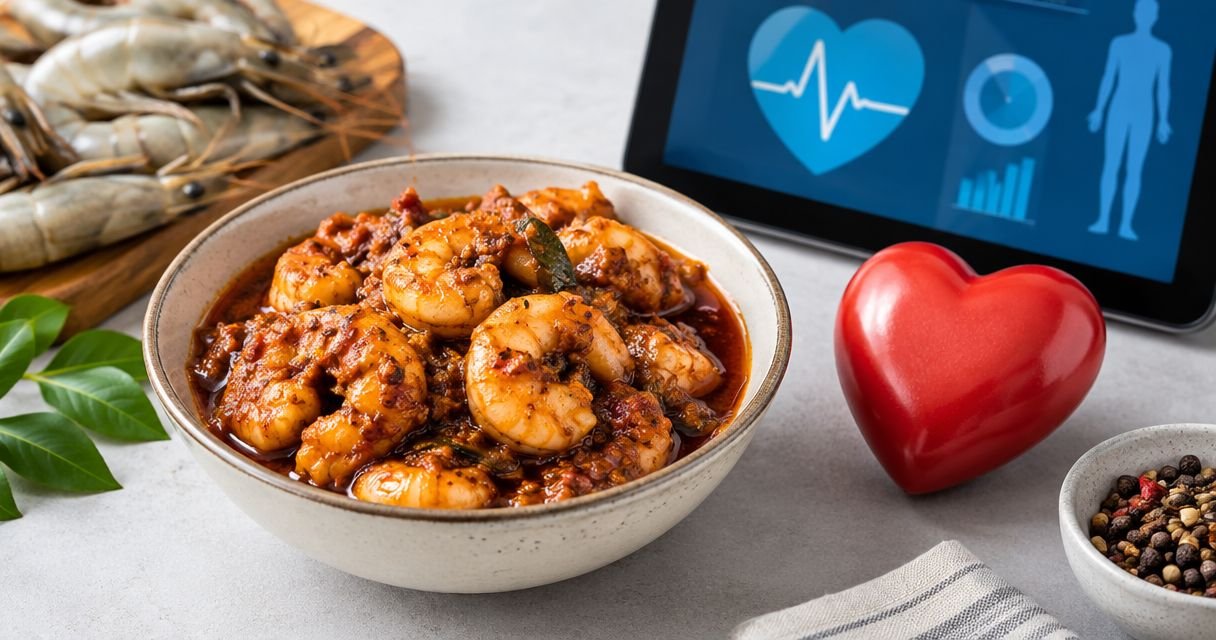
Yes—prawns pickle contains dietary cholesterol because prawns naturally contain it, but the amount in your serving depends on the recipe and how much you eat. Oil type, saturated fat and salt also matter for cardiovascular health, so you cannot judge a jar’s suitability from its cholesterol content alone.
- Is prawns pickle high in cholesterol? Prawns contribute cholesterol, but a finished pickle needs its own nutrition information.
- USDA lists 189 mg cholesterol per 100 g of cooked shrimp; that is not a prawns-pickle value.
- Check serving weight, saturated fat and sodium rather than judging the pickle by visible oil alone.
- Tulasi Pickles suits Andhra-style pickle shoppers; dietary restrictions require product-specific information and clinical advice.
Why this matters
A spoonful of prawns pickle is not nutritionally identical to a plate of plain prawns. The pickle combines seafood with other ingredients, and each spoonful can contain a different balance of prawns, seasoning and oil.
Separate dietary cholesterol from blood cholesterol. Dietary cholesterol is present in food; LDL cholesterol is a blood-test measurement influenced by your overall eating pattern, genetics and other health factors. A food’s cholesterol content does not predict your personal LDL response by itself.
If pickle is a regular accompaniment, read the guide to eating pickle every day alongside this cholesterol-focused explanation. Frequency matters because repeated servings contribute to your overall diet.
Is prawns pickle high in cholesterol?
Prawns are a cholesterol-containing ingredient, but there is no single cholesterol figure for every prawns pickle. You need nutrition information for the finished recipe to identify its cholesterol content accurately.
For this 2026 comparison, the reference is USDA FoodData Central’s entry for mixed-species shrimp cooked with moist heat: 189 mg of cholesterol per 100 g. That entry describes cooked shrimp, not Andhra prawns pickle, and different seafood entries have different values.
Prawn species, preparation and the amount of seafood in the finished pickle prevent a direct substitution. Do not copy the USDA figure onto a jar, multiply it by the jar’s total weight or treat it as a laboratory result for a particular brand.
| Food or accompaniment | Cholesterol assessment | Main advantage | Main limitation | Best for |
|---|---|---|---|---|
| Plain cooked prawns | Naturally contain cholesterol; the USDA reference above concerns cooked shrimp | Easier to assess without a pickle mixture | Still contributes dietary cholesterol | People who want to assess the seafood separately |
| Prawns pickle | Contains cholesterol from prawns; the finished amount depends on the recipe | Adds seafood flavour as an accompaniment | Requires separate checks for serving size, saturated fat and sodium | Seafood eaters whose dietary plan allows it |
| Entirely plant-based vegetable pickle | Contains no dietary cholesterol when every ingredient is plant-derived | Removes seafood-derived cholesterol | Can still contain substantial salt or saturated fat | People avoiding animal-derived cholesterol |
These are category comparisons, not tested nutrition results for individual products. No option is automatically the healthiest choice without its ingredients, nutrition information and your dietary needs.
Does high dietary cholesterol mean high blood cholesterol?
Not automatically. Your body’s response to dietary cholesterol varies, and saturated fat is an important dietary driver of raised LDL cholesterol.
The American Heart Association’s dietary guidance distinguishes dietary cholesterol from the broader eating pattern. For your 2026 food decisions, use that distinction: assessing prawns pickle means considering the seafood, the added fat and the rest of your meals—not treating a single ingredient as the whole diagnosis.
If a clinician has given you a cholesterol restriction, follow that personalised advice. A general article cannot replace a target based on your medical history and lipid results.
Why cholesterol content and dietary suitability vary
The cholesterol in prawns pickle comes principally from its animal-derived ingredients. Other recipe choices affect the pickle’s cardiovascular relevance without necessarily adding cholesterol themselves.
- Prawn proportion: A seafood-heavy serving contains more prawn tissue than an equally heavy serving dominated by seasoning and oil. Recipe proportions are essential for estimating cholesterol.
- Serving weight: A larger portion of the same mixture supplies more cholesterol, fat and sodium than a smaller portion. A heaped spoon is not a reliable weight measurement.
- Other animal ingredients: Any additional animal-derived ingredients change the nutritional assessment. Read the actual ingredient list rather than assuming every recipe is identical.
- Fat source: Plant oils contain no cholesterol, but their saturated-fat content differs. Ghee and butter are animal fats and contain cholesterol as well as saturated fat.
- Salt content: Salt does not add cholesterol, but sodium matters when you are also managing blood pressure or following a prescribed sodium restriction.
- Meal pattern: The foods eaten with the pickle affect the meal’s overall balance. A small accompaniment does not cancel out a meal otherwise rich in saturated fat or salt.
Less visible oil does not prove less cholesterol. Much of the cholesterol concern remains in the prawns, while oil changes a different part of the nutritional picture.
How do you assess a jar before eating it?
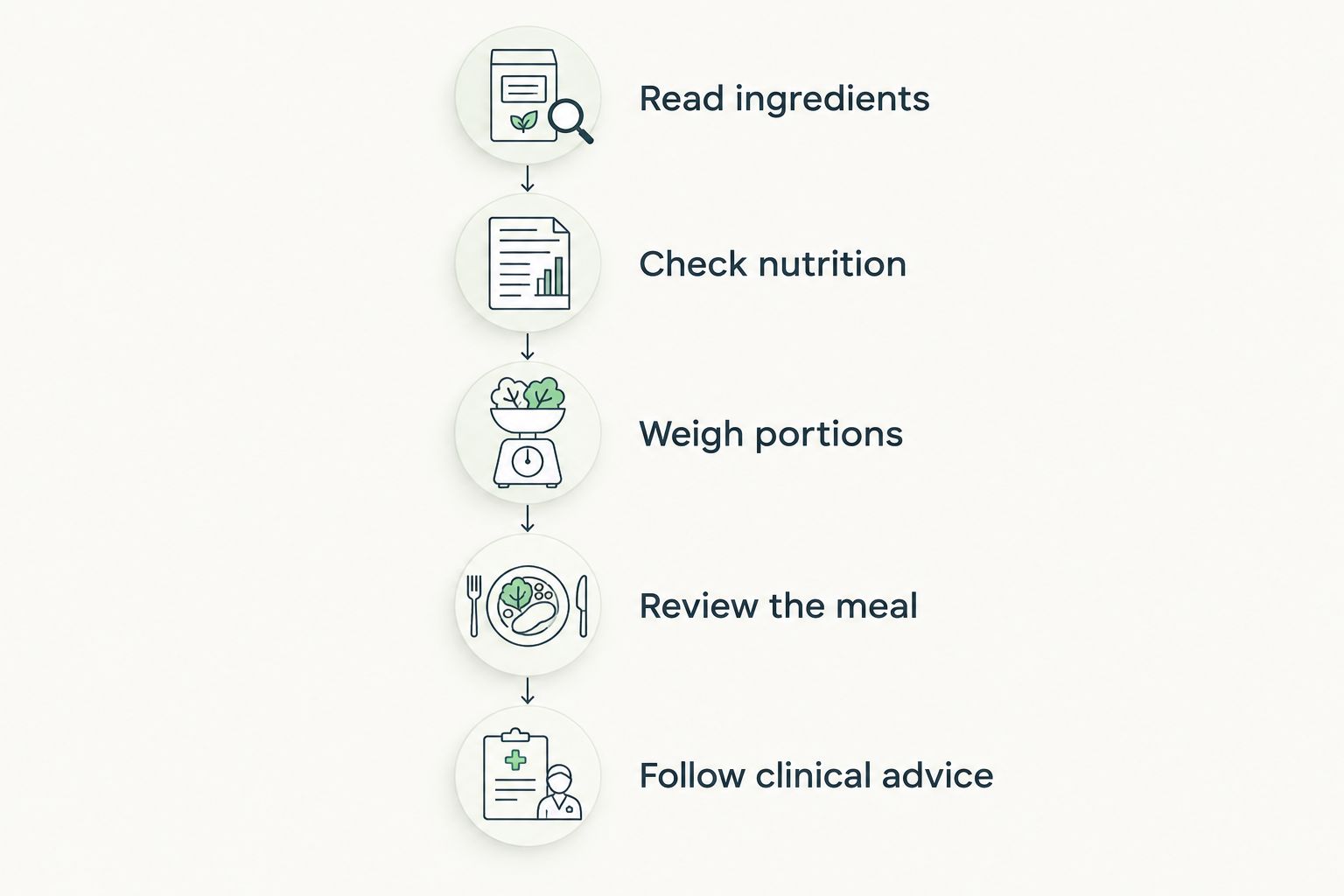
Use the same sequence whether you buy a packaged pickle or receive a homemade batch. In 2026, a useful decision still starts with the food’s actual composition—not claims such as traditional, homemade or natural.
- Read ingredients. Identify the seafood, added fats and other animal-derived ingredients. Do not infer the oil type from its colour or thickness.
- Check nutrition. Look for cholesterol, saturated fat and sodium, and establish whether the values describe the food per serving or per 100 g. Compare products on the same weight basis.
- Weigh portions. If you track your intake, weigh what you actually serve. For example, a 20 g portion is a measurement example, not a recommended or medically safe allowance.
- Review the meal. Consider other salty foods and sources of saturated fat served alongside the pickle. Assess the whole plate rather than the condiment in isolation.
- Follow clinical advice. Apply any restriction your doctor or dietitian has set. If the required nutrition information is unavailable, choose something you can assess instead of guessing.
A household spoon is useful for serving but unreliable for nutrient calculations. Prawn pieces leave gaps, oil flows around them, and a second spoonful can have a different composition from the first.
What if the label does not list cholesterol?
A missing cholesterol value is not evidence that a seafood pickle contains none. Prawns remain an animal-derived source of dietary cholesterol whether or not the label gives a number.
Ask the seller for finished-product nutrition information and clarify what the figures describe. A general seafood database entry or an ingredient list cannot provide the same certainty as nutrition information specific to the recipe.
Can you eat prawns pickle if you have high LDL cholesterol?
High LDL cholesterol calls for an individual dietary plan, not an automatic yes or no based on the word prawns. Your clinician can assess whether a measured serving fits your overall intake and treatment goals.
Bring the ingredient list and available nutrition information to that discussion. Ask about saturated fat and sodium as well as dietary cholesterol, particularly if you also have high blood pressure, diabetes or cardiovascular disease.
Do not use pickle as a treatment, and do not change prescribed medication because you have changed your diet. Food choices support care; they do not establish whether treatment is no longer needed.
For your 2026 shopping decisions, the practical rule is simple: if your diet requires a nutrient limit, buy foods whose relevant nutrient content you can establish. An unverified health claim is not a substitute for that information.
Does removing the oil make prawns pickle low in cholesterol?
Removing surface oil does not remove the cholesterol inside the prawns. It changes how much accompanying oil you serve, but it does not turn the seafood into a cholesterol-free food.
The effect on saturated-fat intake depends on the oil or fat used and how much you remove. Without those details, you cannot assign a reliable reduction to the finished serving.
Keep serving adjustments separate from storage decisions. Follow the maker’s storage instructions rather than draining or modifying the whole jar to pursue a nutritional claim.
Is vegetable pickle better for avoiding dietary cholesterol?
An entirely plant-based vegetable pickle avoids dietary cholesterol, provided it contains no animal-derived ingredients. That makes it the clearer category choice when your specific goal is avoiding cholesterol from food.
The trade-off remains important: cholesterol-free does not mean low-sodium, low-fat or suitable for unlimited servings. Check the recipe and label, especially if the pickle contains a fat rich in saturated fatty acids.
Nor does a vegetable pickle replace the protein contribution of seafood. Think of both as accompaniments, then build the rest of your meal around foods that meet your nutritional needs.
What about a shellfish allergy?
A shellfish allergy is a separate reason to avoid prawns pickle, regardless of cholesterol content. Portion reduction does not make an allergen safe.
If you have a diagnosed shellfish allergy, follow your allergy-care plan and check cross-contact information when choosing alternatives. A cholesterol discussion must never override an allergy restriction.
Where Tulasi Pickles fits
Tulasi Pickles is best for shoppers seeking Andhra-style pickles. The brand sells homemade vegetarian and non-vegetarian pickles; that category description is not evidence of a low-cholesterol or medically tailored recipe.
When considering Tulasi Pickles for a restricted diet, request the relevant ingredient and nutrition information before deciding. The useful advantage is access to the Andhra-style pickle category you want; the limitation is that taste, origin and homemade preparation do not establish clinical suitability.
Treat any Tulasi Pickles accompaniment as food to assess, not a health intervention. Your dietary restriction determines which information you need, and the product information must answer that need.
Common shortcuts that give the wrong answer
Do not read low oil as low cholesterol. The prawns contribute cholesterol independently of the oil around them. An oil-related claim answers a different question from a cholesterol declaration.
Do not read mild spice as low sodium, either. Chilli heat and sodium content are separate characteristics, so taste alone cannot establish whether a pickle fits a sodium restriction.
Finally, do not assume homemade means nutritionally unrestricted. A homemade recipe can contain prawns, salt and added fats just as a commercially prepared recipe can; the actual ingredients and quantities determine the assessment.
These distinctions remain useful throughout 2026 because they prevent a common mistake: choosing a food on the strength of an appealing description rather than the nutrient you need to manage.
FAQ
Is prawns pickle high in cholesterol compared with vegetable pickle?
Prawns pickle contains dietary cholesterol, while an entirely plant-based vegetable pickle contains none. The actual cholesterol in prawns pickle requires recipe-specific nutrition information; both categories still need checks for salt and added fats.
How much cholesterol is in 100 g of prawns pickle?
There is no single reliable cholesterol figure for 100 g of prawns pickle. USDA lists 189 mg per 100 g for mixed-species shrimp cooked with moist heat, but that reference does not describe a finished pickle.
Can I eat prawns pickle if my cholesterol is high?
Whether prawns pickle fits your diet depends on your clinical advice, the recipe and your portion. Discuss dietary cholesterol, saturated fat and sodium with your doctor or dietitian rather than relying on a general safe-serving claim.
Does draining the oil reduce cholesterol in prawns pickle?
Draining oil does not remove cholesterol contained within the prawns. It changes the amount of accompanying oil, but a reliable nutritional reduction cannot be calculated without the recipe and serving details.
Is homemade prawns pickle healthier for cholesterol?
Homemade preparation does not establish that prawns pickle is lower in cholesterol. Compare the seafood proportion, fat source, sodium and serving weight rather than relying on the homemade description.
Can I eat prawns pickle every day?
Daily prawns-pickle intake needs to fit your overall diet and any prescribed restrictions. There is no universal daily portion that is safe for every person with raised LDL cholesterol or high blood pressure.
Is prawns pickle safe if I have a shellfish allergy?
Prawns pickle is not suitable for someone who must avoid prawns because of a shellfish allergy. A smaller portion does not make the allergen safe; follow your allergy-care plan.
One last thing
The amount of prawns on your spoon matters more to a cholesterol estimate than the size of the jar. A jar’s total weight includes other ingredients, so it cannot tell you how much seafood-derived cholesterol you eat.
Before your next serving, establish the portion weight and look for nutrition information that describes the finished mixture. If those details do not meet the needs of your prescribed diet, choose an accompaniment you can assess reliably.
Related guides
- How much sodium is in a typical serving of Andhra pickle?
- Best vegan Andhra pickles for plant-based diets
- How to reduce oil in store-bought pickles before serving
- How to store non-veg pickles safely in the refrigerator