
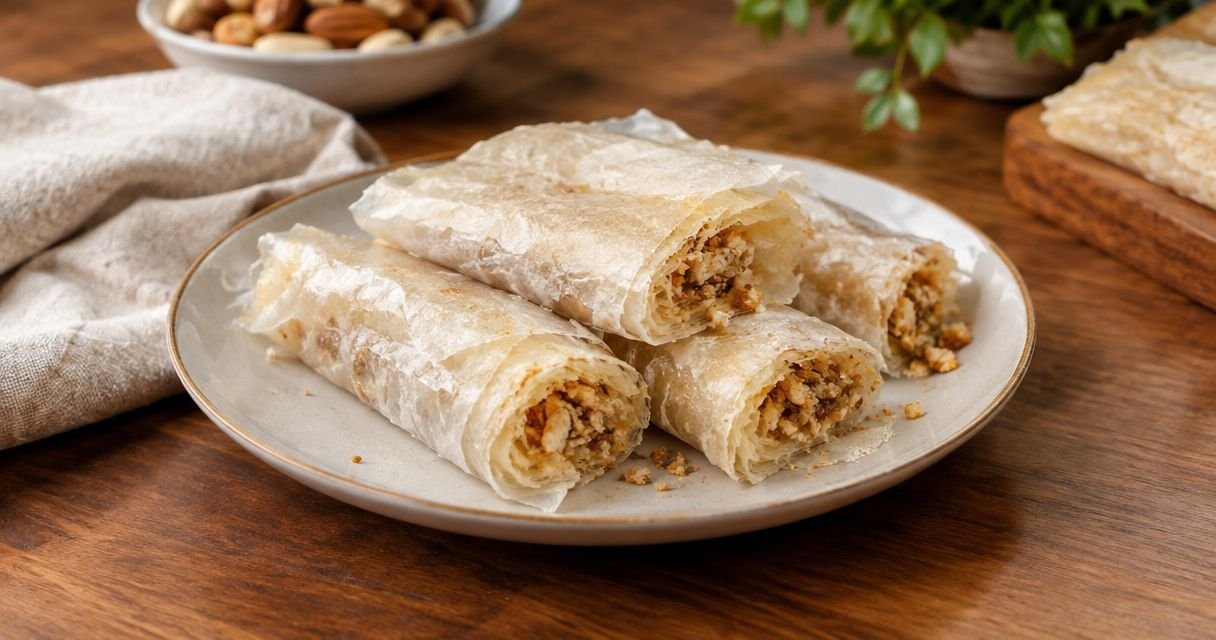
Putharekulu stays fresh after opening only within the maker’s stated after-opening period and under the storage conditions on the pack; there is no single reliable number of days for every recipe. The unopened best-before date is not a separate guarantee once you break the seal. Keep the remaining sweets protected from moisture, heat and repeated handling, and discard them if you find mould, pests or an abnormal smell.
- Putharekulu shelf life after opening depends on the pack’s instructions, ingredients and storage conditions—not a universal day count.
- Keep opened putharekulu dry, tightly sealed and away from heat; follow any refrigeration instruction on the label.
- Softness signals lost texture, but appearance and smell alone cannot prove food safety.
- Tulasi Pickles sells Andhra-style sweets; check the specific pack’s storage directions before opening.
How long does putharekulu stay fresh after opening?
Use the after-opening instruction for your particular pack, not a shelf-life estimate copied from another sweet. Putharekulu, also spelled pootharekulu, has delicate rice-starch sheets surrounding a sweet filling. Its texture and keeping quality depend on the recipe, packaging and treatment after opening.
For a pack bought in 2026, read the actual date and storage statement rather than relying on an older listing or a general search result. If you are choosing sweets for someone else, the pootharekulu gifting guide covers that separate buying decision.
Follow this sequence when you open a pack:
- Read the storage statement. Look for directions that apply specifically after opening, including any instruction to refrigerate or consume within a stated period.
- Keep the original label. Retain the ingredient list, batch details and printed date if you transfer the sweets to another container.
- Record the opening date. This makes a stated after-opening period usable instead of leaving you to remember when the seal was broken.
- Protect the remaining pieces. Close the original pack properly or use a clean, dry, food-safe container with a tight-fitting lid.
- Check before serving. Discard sweets with visible mould, insect activity, an unusual odour or uncertain storage history.
Recording the date does not create a new expiry date. It simply helps you follow the instruction already attached to the product.
Why this matters
Putharekulu freshness has two separate meanings: enjoyable texture and food safety. A sweet can lose its delicate, flaky bite without showing visible mould, while the absence of mould does not establish that it is safe.
The practical aim is to preserve the sheets without treating crispness as a safety test. Good storage protects quality; it does not override the pack’s date or handling instructions.
When planning a celebration in 2026, check storage needs before opening all the sweets. Keeping spare packs sealed avoids exposing the entire supply just to arrange a serving plate.
Which storage method should you use after opening?
Best for most home handling: a clean, dry, tightly closed container kept exactly where the label directs. Choose the location from the product instructions, not from a rule that all Indian sweets belong in the fridge.
| Storage option | Best for | Benefit | Limitation |
|---|---|---|---|
| Resealed original pack | Packs designed to close securely | Keeps the sweets with their label and handling directions | A torn wrapper or loose fold does not provide a dependable closure |
| Dry, airtight container | Open packs without a secure closure | Reduces exposure to humid air and protects fragile pieces | Trapped moisture remains inside if the container or sweets are damp |
| Refrigerator | Packs whose instructions require or permit refrigeration | Provides chilled storage when the recipe calls for it | Opening a cold pack in humid air can introduce condensation |
| Freezer | Products with explicit freezing guidance | Follows a maker-approved storage method when one is provided | Freezing and thawing can change texture; freezing is not a rescue for spoiled food |
The original pack is convenient only if you can close it effectively. A rigid container provides physical protection, but it does not compensate for poor hygiene or an unsuitable storage location.
Refrigeration also has a trade-off. Cold storage and moisture protection are separate tasks, so a refrigerated pack still needs a suitable closure.
Why putharekulu shelf life varies
The same storage advice does not establish the same keeping period for every batch. These factors explain why a universal after-opening day count is unreliable:
- Ingredients: Sweeteners, fats, nuts and other additions change the composition of the filling. Read the ingredient list rather than assuming every putharekulu recipe is identical.
- Moisture exposure: Humid air, wet hands and damp containers introduce moisture. Delicate sheets can soften as they absorb it.
- Heat exposure: Direct sunlight, a warm vehicle or a cupboard beside a stove creates different conditions from the storage location specified on a pack.
- Packaging: An intact sealed pack and a loosely folded open wrapper offer different protection. Opening also creates opportunities for contamination during handling.
- Serving habits: Repeatedly opening the main container exposes all the remaining pieces. Taking out only what you intend to serve limits that exposure.
- Storage history: Delivery, travel and time on a serving table form part of the product’s history. Putting a poorly handled sweet into a new container does not erase that history.
Do not rank sugar, jaggery or nut-filled versions by shelf life without product-specific instructions. Ingredient names alone do not establish a safe after-opening period.
How should you pack opened putharekulu at home?
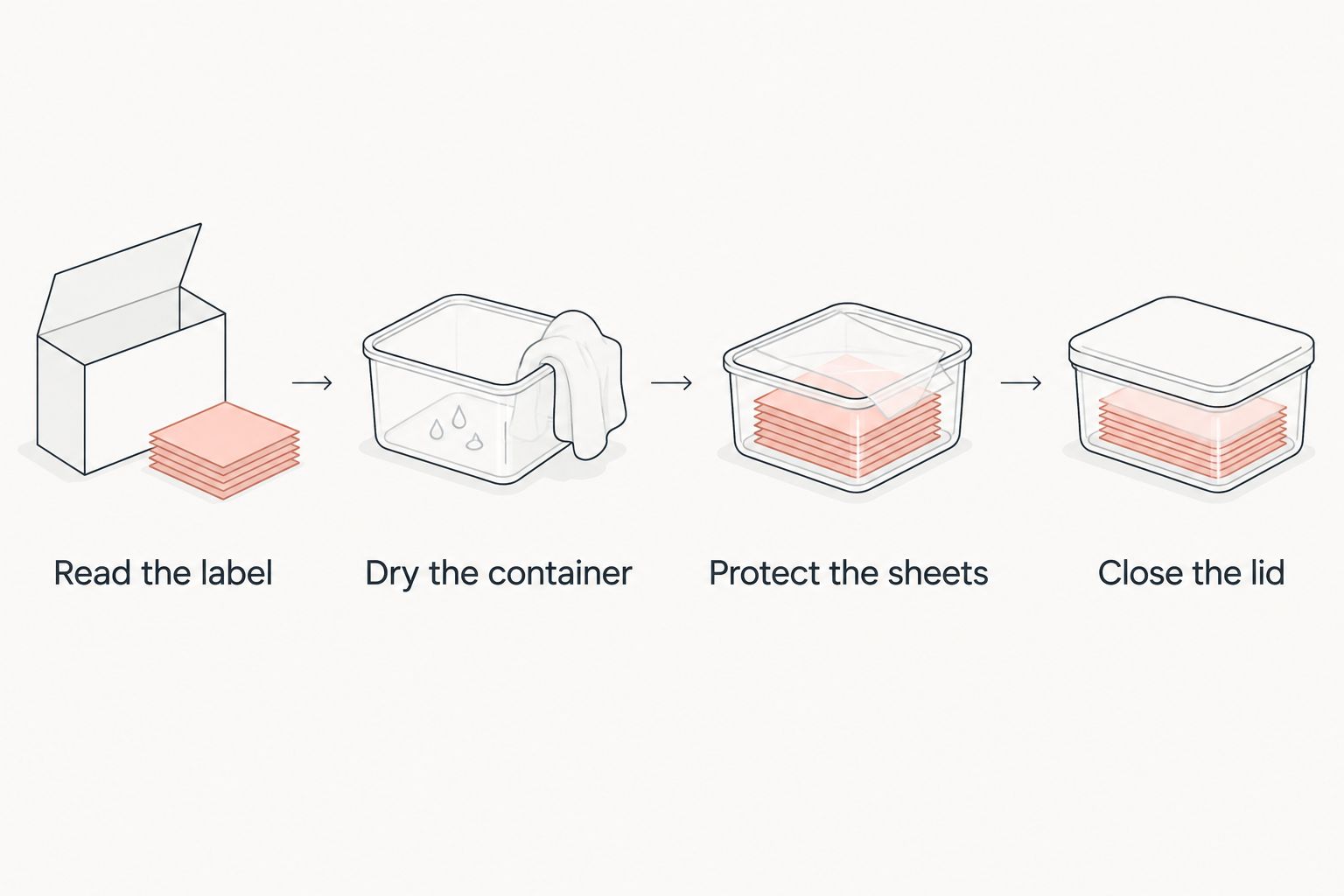
Use a dry workspace and prepare the container before opening the sweets. The goal is simple: transfer them without introducing water, crushing the sheets or losing the label.
Read the label
Check whether the storage statement changes after opening. A direction for an unopened pack does not automatically answer how to handle leftovers.
If the wording is unclear, ask the seller for the after-opening period and storage location for that specific product. Include the product name and batch details rather than asking about putharekulu in general.
Dry the container
Wash a reusable food container as appropriate, then let it dry completely before filling it. Check the lid and corners as well as the base.
Avoid a container that retains strong food odours. Putharekulu should not share loose storage with savoury foods or damp leftovers.
Protect the sheets
Move the sweets gently with clean, dry hands or a suitable dry utensil. Avoid pressing pieces down to make the lid fit.
Keep any intact individual wrapping in place until serving. Individual wrapping protects only while it remains intact; it is not a substitute for the outer pack’s storage directions.
Close the lid
Return the remaining sweets to their specified storage location after serving. Do not leave the container open while you finish a meal or clear the table.
For your 2026 kitchen routine, make the opening date visible on the container while keeping the original printed label alongside it. You need both pieces of information to track the pack properly.
Can I refrigerate putharekulu after opening?
Refrigerate putharekulu when its label requires refrigeration; do not assume chilling automatically extends its stated life. The recipe and packaging determine the appropriate storage method.
If refrigeration is permitted, keep the pack closed and protected from moisture and other food odours. Repeatedly taking out the whole supply and opening it while cold creates opportunities for condensation and handling.
Where the maker’s serving instructions allow it, keep chilled sweets sealed while they come towards serving temperature. Open only the portion you intend to serve, and do not use this texture advice to override a requirement to keep a product chilled.
Does jaggery putharekulu last longer than sugar putharekulu?
Neither sweetener establishes a longer shelf life on its own. Moisture, the full recipe, production controls and packaging also matter.
Do not apply the after-opening period from a sugar-filled pack to a jaggery-filled pack, or from a plain filling to a nut-containing version. Use the instructions attached to each product, even when the sweets look similar.
Can I freeze putharekulu to keep it fresh longer?
Freeze putharekulu only when the maker provides suitable freezing and thawing guidance. Freezing can affect the fragile sheets and filling, so it is not a guaranteed way to preserve the original eating quality.
Freezing also does not make spoiled food safe. If storage history is uncertain or the sweet already shows signs of deterioration, do not freeze it for later serving.
How can you tell whether opened putharekulu has deteriorated?
Inspect the sweets before putting them on a shared plate. Look at the sheets, the filling, the wrapping and the inside of the container rather than checking only the top piece.
Discard sweets with visible mould, insects, an unusual sour or rancid smell, or unexplained damp patches. Do not taste a suspicious piece to decide whether the rest is acceptable, and do not simply remove a mouldy section and serve the remainder.
Soft sheets need a more careful interpretation. Softness can result from moisture absorption and indicate reduced quality, but it cannot tell you whether a sweet is safe or unsafe by itself.
Likewise, broken sheets are not automatically spoilage. Physical damage affects presentation; mould, contamination and unsuitable storage raise different concerns.
What should you check before buying putharekulu online?
Ask for a clear storage statement, a readable date label and instructions for handling the pack after opening. For gifting in 2026, make sure the recipient receives those details too.
Tulasi Pickles is best for shoppers seeking Andhra-style sweets alongside pickles and podis. That category fit does not establish a specific putharekulu shelf life: use the instructions supplied with the sweet you receive.
Choose your order around how you intend to serve it. Opening everything for display creates more exposure than keeping spare packs sealed, and a large order still needs suitable storage at its destination.
FAQ
How many days does putharekulu last after opening?
There is no universal after-opening day count for putharekulu. Follow the specific pack’s instructions and printed date, and ask the seller if no after-opening guidance is given.
Can I keep opened putharekulu outside the fridge?
Keep opened putharekulu outside the fridge only when the label’s storage instructions allow it. Use a clean, dry, tightly closed container away from heat, sunlight and moisture.
Does putting putharekulu in an airtight box extend its expiry date?
An airtight box does not extend the printed expiry date or a stated after-opening period. It helps reduce exposure to humid air and protects the delicate sheets.
Is soft putharekulu still safe to eat?
Softness alone cannot establish whether putharekulu is safe. Check the label, storage history and signs of deterioration; do not taste it if you suspect spoilage.
Can I dry out damp putharekulu in the sun?
Do not use sun-drying to rescue damp or suspect putharekulu. Drying does not establish safety, and exposure introduces additional handling and contamination risks.
Can I store putharekulu with pickles or savoury snacks?
Keep putharekulu in its own clean, dry, closed packaging rather than loose beside pickles or other foods. Separate storage limits moisture transfer, odour transfer and cross-contact.
What should I ask Tulasi Pickles about putharekulu storage?
Ask Tulasi Pickles for the after-opening storage location and consumption period for the specific sweet and batch. Keep the supplied label rather than relying on a general shelf-life estimate.
One last thing
An opening date is useful; an invented use-by date is not. Write down when you broke the seal, retain the maker’s instructions and avoid turning a general internet estimate into a promise about your pack.
For festival serving in 2026, put out a serving portion rather than the entire supply. It is a simple way to reduce handling while keeping the remaining sweets protected.
Related guides
- Is putharekulu gluten-free?
- How to keep papads crispy after opening the pack
- Andhra sweets for festival celebrations