
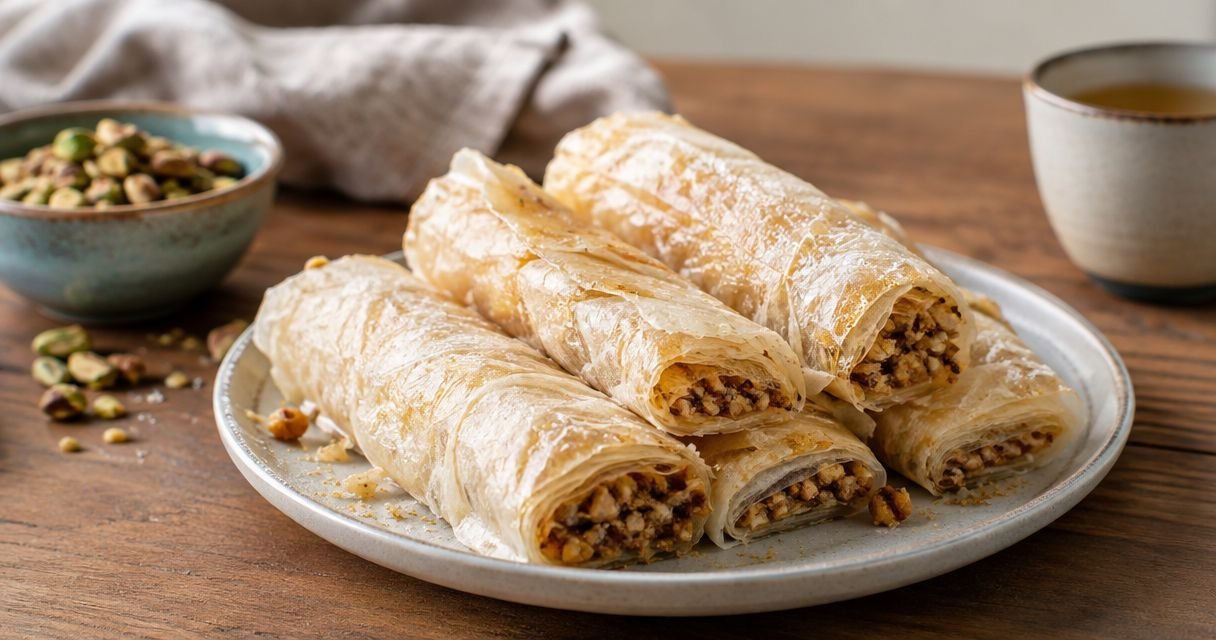
Putharekulu is gluten-free when its rice-paper sheets and fillings contain no gluten ingredients and production prevents gluten cross-contact. The traditional combination of rice starch, ghee and sugar or jaggery uses naturally gluten-free ingredients, but that recipe alone does not establish that a particular packet is suitable for someone with coeliac disease.
- Is putharekulu gluten free? Rice-based recipes can be, but the finished product needs verification.
- Rice, plain ghee, sugar and jaggery are naturally gluten-free; added ingredients and shared equipment need checking.
- For coeliac disease, choose documented gluten-free putharekulu rather than relying on a traditional recipe.
- Tulasi Pickles sells Andhra sweets; its category description is not proof of gluten-free suitability.
Why this matters
A rice-based recipe and a verified gluten-free sweet are not the same thing. If you avoid gluten for medical reasons, you need information about the complete product, not just its main ingredient. A seller's description of delicate rice sheets answers only part of the question.
If you are exploring the sweet itself, the pootharekulu gifting guide provides related reading. For a gluten-free purchase in 2026, keep the decision focused on the current packet, its ingredients and the maker's handling controls.
Is putharekulu gluten-free?
Traditional rice-based putharekulu can be gluten-free, but you must verify the specific product. Rice does not naturally contain gluten. Wheat, barley and rye do, so adding ingredients derived from those grains changes the answer.
Putharekulu, also spelled pootharekulu, usually consists of very thin rice-starch sheets folded around a sweet filling with ghee. Different spellings do not identify different gluten standards. Neither the name nor the appearance tells you whether a maker has added another flour or used shared equipment.
Use this ingredient comparison as a starting point, not as approval of an unlabelled packet:
| Ingredient or component | Gluten status in its plain form | What you need to check |
|---|---|---|
| Rice or rice starch | Naturally gluten-free | Whether another flour is included and how the rice ingredient is handled |
| Ghee | Naturally gluten-free | Whether the actual product contains added ingredients |
| Sugar | Naturally gluten-free | The complete filling recipe, not just the sweetener |
| Jaggery | Naturally gluten-free | Added ingredients and handling during preparation |
| Plain nuts and dried fruit | Naturally gluten-free | Coatings, flavourings, mixes and shared processing |
| Wheat flour or semolina | Contains gluten | Reject for a gluten-free diet |
| Barley malt | Contains gluten | Reject for a gluten-free diet |
The useful distinction is between ingredients that are naturally gluten-free and a finished food whose gluten-free status is supported. You need both the recipe and the production information when trace exposure matters.
Sugar putharekulu: check the sheets and filling
A rice-sheet sweet filled with plain sugar and ghee has a naturally gluten-free ingredient base. That makes the traditional recipe compatible with gluten avoidance at the ingredient level. It does not establish how a commercial batch was prepared.
Best for: people who prefer a sugar filling, provided the finished product meets their dietary requirements. Its advantage is an ingredient list that is straightforward to assess; its limitation is that a short recipe does not reveal shared-equipment exposure.
Ask whether the sheets contain only rice-derived ingredients and whether the filling includes anything beyond the ingredients declared. Do not treat a pale colour, fragile texture or handmade appearance as evidence of gluten-free production.
Jaggery putharekulu: changing the sweetener is not proof
Plain jaggery is naturally gluten-free, so replacing sugar with jaggery does not inherently introduce gluten. The sheets, ghee, additional ingredients and production environment still need the same checks.
Best for: people who prefer a jaggery filling, after product verification. The benefit is a different sweetener choice; the limitation is that a jaggery description says nothing about gluten cross-contact or medical suitability.
Do not use terms such as traditional, natural or homemade as substitutes for an ingredient declaration. Those descriptions do not tell you whether wheat-based sweets are made on the same work surface.
Dry-fruit putharekulu: inspect every added ingredient
Plain nuts and dried fruit do not naturally contain gluten. A dry-fruit filling, however, needs checking as a complete mixture, including any coatings, flavourings or other additions.
Best for: people who enjoy a nut-and-fruit filling and can eat its declared allergens. The advantage is filling variety; the limitation is that additional ingredients create more information to verify, and nuts introduce a separate allergy concern.
A gluten-free claim does not mean nut-free or milk-free. If you are buying for someone else, ask about all relevant dietary restrictions before selecting the filling rather than assuming one dietary label covers everything.
Why putharekulu's gluten-free status varies
The sweet's name describes a style of food, not a single controlled recipe. These factors determine whether an individual product fits a gluten-free diet:
- Sheet ingredients: rice starch is naturally gluten-free, but the complete flour or starch mixture must be confirmed.
- Filling ingredients: evaluate sweeteners, nuts, dried fruit and every additional component together.
- Supplier handling: naturally gluten-free ingredients still need protection from gluten-containing materials during processing and storage.
- Shared equipment: grinders, trays, utensils and work surfaces need appropriate controls when they also handle wheat-based foods.
- Packing and serving: shared scoops, mixed sweet boxes and communal serving utensils create additional cross-contact concerns.
- Evidence behind the claim: an ingredient description, a gluten-free declaration and independent certification provide different kinds of information.
The deciding factor is the product's evidence, not how traditional the recipe sounds. For your 2026 purchase, ask about the current formulation and handling arrangements rather than relying on an old product photograph or a previous order.
How do I check putharekulu before buying it?
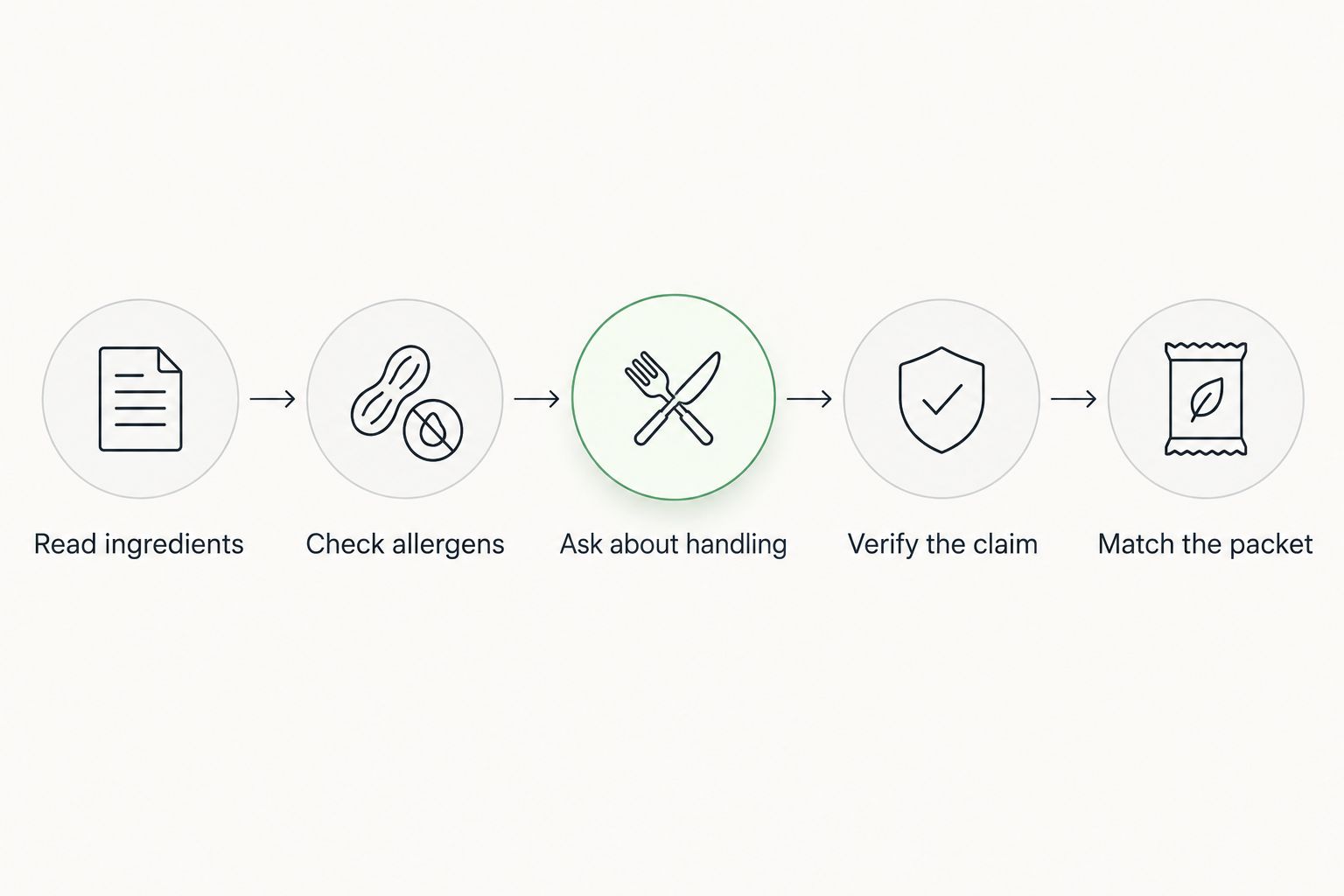
Follow this sequence before paying, especially when the purchase is for someone with coeliac disease. Keep the ingredient check separate from the production check: a satisfactory answer to one does not answer the other.
- Read ingredients. Look for the complete list covering both sheets and filling. Check for wheat, semolina, barley, rye and barley malt rather than stopping when you see rice.
- Check allergens. Read any wheat declaration and precautionary statements about shared handling. Also check milk and nuts if those matter to the recipient.
- Ask about handling. Find out whether wheat-based foods share equipment or preparation areas, and what controls prevent cross-contact.
- Verify the claim. Ask what supports a gluten-free statement. If certification is claimed, request the certifying body's name and confirm that it covers the exact product.
- Match the packet. Make sure the information applies to the flavour and packet you will receive, not merely another sweet from the same seller.
A useful enquiry asks for the full ingredients, whether wheat is handled on shared equipment, and the basis for any gluten-free claim. Ask for a written response you can match to your order. A general assurance that the sweet is made with rice leaves the handling question unanswered.
What does a gluten-free claim actually mean?
For a 2026 label check, a recognised reference is the Codex standard for foods for people intolerant to gluten, CXS 118-1979. Its gluten-free threshold is no more than 20 milligrams of gluten per kilogram of food, also expressed as 20 parts per million, or 0.002% by mass.
Those figures describe a concentration threshold, not a recommended portion or a promise that every rice-based sweet meets it. You cannot establish compliance by looking at the sweet, tasting it or counting its ingredients. A recipe description is not a laboratory result.
A gluten-free declaration and independent certification are also not interchangeable. Certification adds assessment under the certifier's scheme, while a seller's claim needs its own supporting basis. If a packet displays a certification mark, check which organisation issued it and whether the exact product is covered.
The practical question remains simple: what evidence supports the claim on the product you are buying? Apply the relevant local labelling requirements, and ask your clinician or dietitian for guidance if you are unsure how to assess the answer.
Can someone with coeliac disease eat putharekulu?
Someone with coeliac disease should choose putharekulu only when its gluten-free suitability is adequately established. A naturally gluten-free recipe is a starting point, not enough evidence on its own. If the ingredients or cross-contact controls remain unclear, choose a product with clearer documentation instead.
Coeliac disease involves an immune reaction to gluten, so judging a food by whether it causes immediate symptoms is not a reliable safety check. Do not test an uncertain packet by eating a small piece. Follow your treating clinician's advice about suitable foods and labelling.
At a sweet counter, ask how the product was prepared and served, not just what the sheets contain. A clean-looking tray does not establish the controls used earlier in production. Clear answers matter more than verbal reassurance that a small amount is harmless.
Is homemade putharekulu automatically gluten-free?
Homemade putharekulu is not automatically gluten-free. Preparing it yourself gives you control over ingredients, but you still need to manage utensils, storage, work surfaces and any equipment that handles wheat.
Use ingredients with suitable gluten-free information and prevent contact with wheat flour or crumbs during preparation. Keep the finished sweets protected during storage and serving. If someone in your household has coeliac disease, follow their dietitian's guidance on kitchen practices rather than assuming that washing one utensil resolves every exposure route.
The same principle applies when relatives make sweets for a celebration. Explain the dietary requirement before preparation begins; checking after the sweets have been arranged together cannot establish how they were made.
Where does Tulasi Pickles fit into the decision?
Tulasi Pickles is best for shoppers seeking Andhra-style sweets and snacks, not as a substitute for product-specific gluten-free verification. The brand sells sweets alongside pickles, podis, papads and other foods. That assortment does not establish gluten-free suitability for an individual sweet.
When considering Andhra sweets from Tulasi Pickles, request the current ingredient and allergen information for the exact product. The relevant limitation is straightforward: a brand description or traditional recipe cannot establish certification, test results or cross-contact controls. Use the same evidence standard for every seller.
FAQ
Is putharekulu gluten free if it is made with rice?
Putharekulu made with rice can be gluten-free, but rice alone does not establish the finished product’s status. Check every filling ingredient and the controls used to prevent gluten cross-contact.
Does putharekulu contain wheat flour?
The traditional rice-sheet recipe does not require wheat flour, but you must check the specific maker’s ingredients. Do not assume every product follows the same recipe.
Is jaggery putharekulu safer than sugar putharekulu for coeliac disease?
Jaggery putharekulu is not inherently safer than sugar putharekulu for coeliac disease. Both plain sweeteners are naturally gluten-free; the complete ingredients and production controls determine suitability.
Can I eat dry-fruit putharekulu on a gluten-free diet?
Dry-fruit putharekulu can fit a gluten-free diet when all ingredients and handling meet your requirements. Check coatings, flavourings and shared processing, and assess nut or milk allergies separately.
Does ghee add gluten to putharekulu?
Plain ghee does not naturally contain gluten. Check the actual ingredient declaration, and remember that gluten-free does not mean suitable for someone with a milk allergy.
Is Tulasi Pickles putharekulu certified gluten-free?
Treat certification as unverified unless Tulasi Pickles provides current documentation covering the exact product. The brand name, a rice-based recipe and an Andhra sweets description do not establish certification.
What should I check before gifting putharekulu in 2026?
Before gifting putharekulu in 2026, confirm the recipient’s dietary needs and obtain current product-specific ingredient and allergen information. Keep the original packaging and avoid mixing verified sweets with unverified foods.
One last thing
Keep the original packet when you serve the sweet. Moving putharekulu into an attractive mixed box separates it from the information your guest needs, even if you checked carefully before buying. Serve it separately with a dedicated utensil and let the recipient read the label.
For your next celebration in 2026, make dietary verification part of choosing the gift, not a question asked after it arrives. A clearly documented sweet is a better choice than an elaborate assortment whose ingredients and handling nobody can explain.
Related guides
- Rice papad for gluten-free crunchy snacking
- Andhra sweets for festival celebrations
- Sweets and snacks combinations for festive gifting