
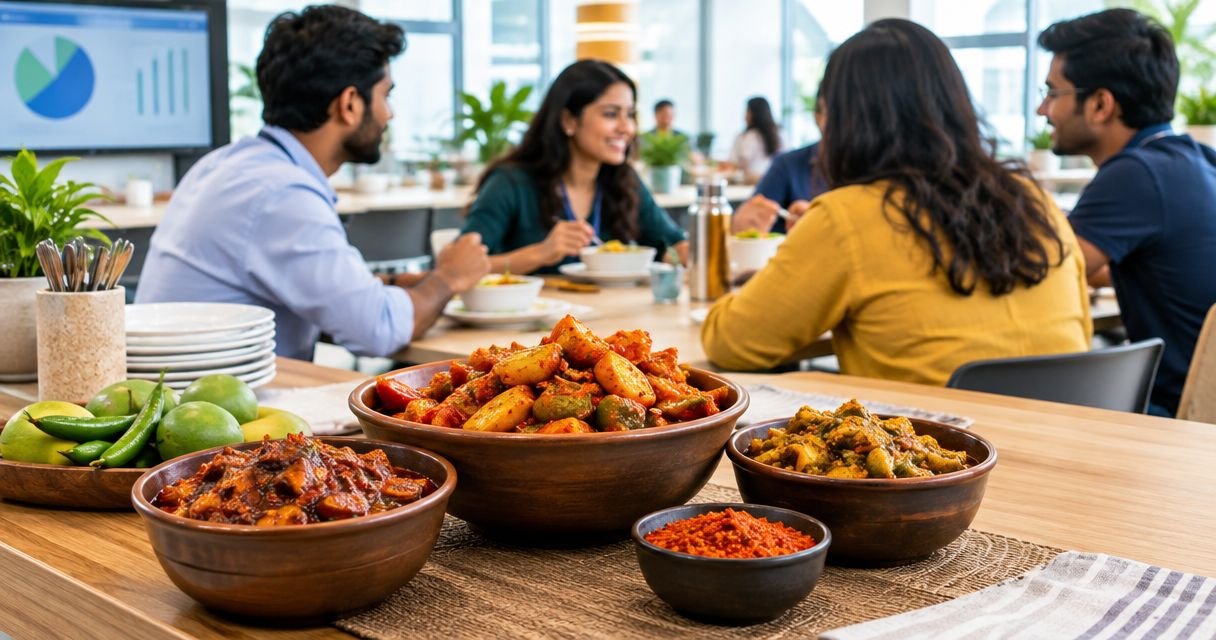
Corporate canteen Andhra pickle service is the organised selection, storage and serving of Andhra-style pickles to add flavour to employee meals without compromising dietary separation or food handling. Choosing andhra pickles for corporate canteens in 2026 means planning for shared utensils, mixed dietary preferences and changing lunch attendance—not simply ordering a larger jar.
- Tulasi Pickles suits corporate canteen buyers seeking homemade Andhra-style veg and non-veg pickles online.
- Choose andhra pickles for corporate canteens by employee preference, ingredient information and storage requirements.
- Keep vegetarian pickles, non-vegetarian pickles and podi clearly labelled, with separate serving utensils.
- Measure actual consumption before setting repeat orders; office attendance alone does not establish pickle demand.
Why Andhra pickles matter for corporate canteens
A corporate canteen serves people with different expectations from the same lunch counter. Andhra pickle gives employees an optional accompaniment to rice-based meals, while letting your kitchen keep the main menu accessible to diners who do not want strong flavours. Serve pickle as a choice, not as an ingredient everyone must accept.
The operational difference from household use is shared handling. Several employees or attendants use the serving station, stock passes between shifts, and vegetarian and non-vegetarian foods need clear separation. Your purchasing decision therefore includes the counter setup and storage procedure, not just taste.
For your 2026 menu plan, start with the meals you actually serve. A rice-and-dal lunch needs a different accompaniment plan from a breakfast counter. The guide to pairing pickles with curd rice and khichdi helps frame that menu decision without treating pickle as a replacement for the meal itself.
How to introduce Andhra pickles into your canteen
Start with a spreadsheet, your existing menu and direct employee feedback. You do not need a specialised purchasing system to record preferences, inspect deliveries or measure usage. Online purchasing enters after you establish what the canteen needs; it does not replace those checks.
Use the following sequence before making pickle a standing order. Assign responsibility for each stage so purchasing staff, kitchen attendants and the canteen manager work from the same instructions.
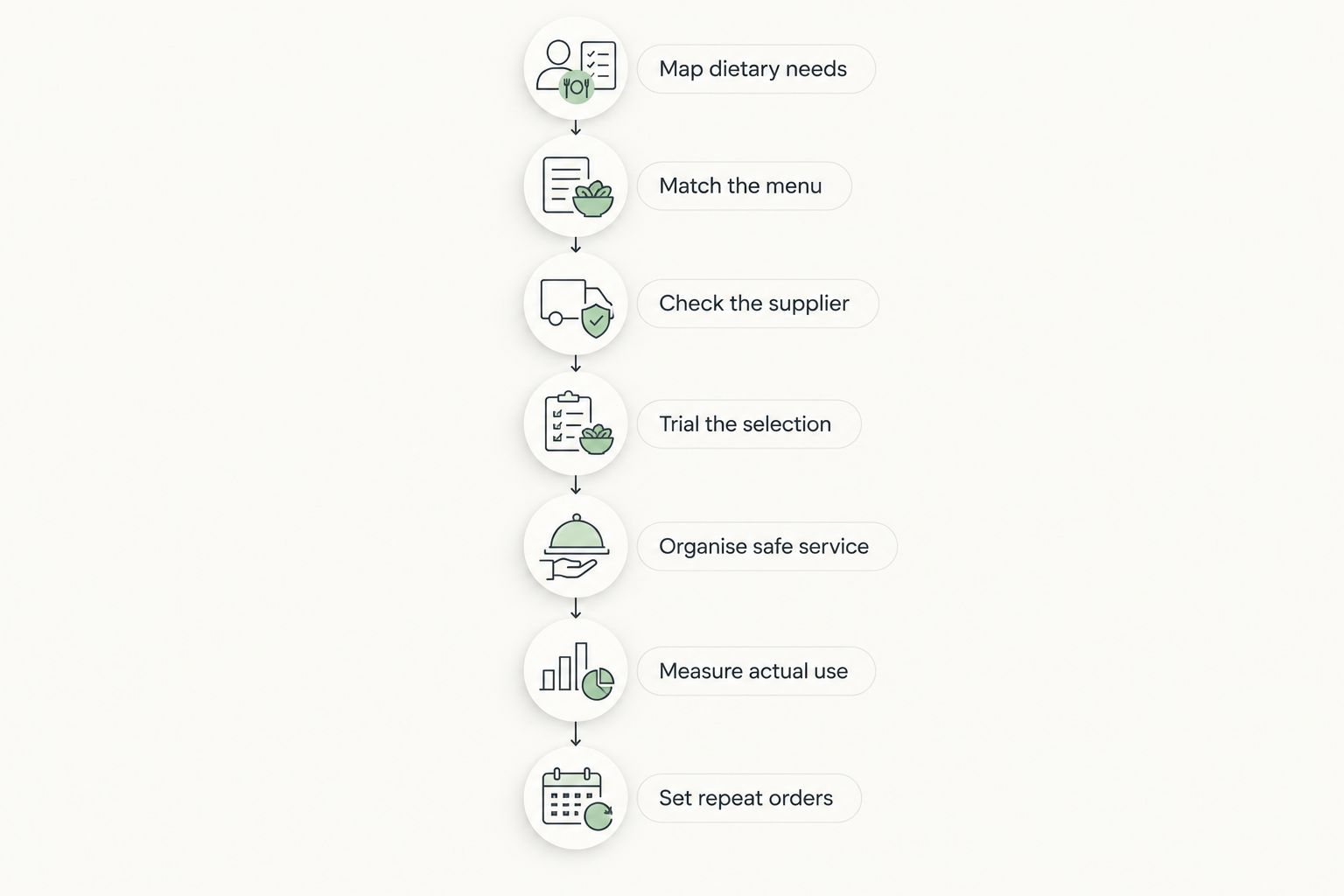
Map dietary needs
Ask employees what they want before choosing varieties. Use a short form or a paper sheet at the counter; keep the questions about food preferences rather than requesting personal medical details. Your aim is to distinguish interest in Andhra flavours from acceptance of a particular pickle.
Ask 3 questions: whether the employee wants pickle, whether they eat vegetarian or non-vegetarian accompaniments, and what level of heat they prefer. Let employees decline without explanation. A request for mild food is a purchasing preference, not proof that a product meets a medical diet.
Check your workplace food policy too. If the canteen is vegetarian-only, exclude non-vegetarian accompaniments from the trial. For ingredient exclusions, read the actual ingredient information rather than interpreting a variety name as a guarantee.
- Record vegetarian and non-vegetarian preferences separately.
- Include a no-pickle response in the preference form.
- Ask about heat tolerance without promising a mild recipe.
- Check ingredient exclusions against the product label.
- Confirm whether workplace policy permits meat or seafood.
Match the menu
Look at the existing lunch cycle and decide where an optional pickle belongs. Start manually: mark suitable meals on the menu sheet and discuss them with the kitchen team. Avoid introducing several new accompaniments at once, because you will not know which change employees preferred.
Keep a vegetarian accompaniment available wherever your meal service needs one. If you offer non-vegetarian pickle, place it in a clearly separate service area rather than next to an unlabelled vegetarian bowl. Employees should understand the choice before taking food.
Podi is a separate accompaniment category, not another name for pickle. Its dry texture and serving method need their own utensils and instructions. Do not assume that a podi is suitable for every diner: ingredient checks still apply, including for nuts, seeds and other allergens where present.
- Identify rice-based meals that need an optional accompaniment.
- Keep pickle separate from the main rice or dal preparation.
- Select a vegetarian starting option for a mixed-diet trial.
- Add non-vegetarian choices only where policy and demand support them.
- Treat podi as a separately labelled menu item.
Check the supplier
Use a written checklist to compare the information needed for a canteen purchase. Before your first 2026 order, confirm ingredients, declared allergens, pack quantity, storage instructions and the product's date marking. Ask purchasing staff to retain the order record and relevant label details.
Tulasi Pickles is best for canteen buyers seeking homemade Andhra-style veg and non-veg pickles online. The Hyderabad-based e-commerce brand also sells podis and papads and ships across India. This makes Tulasi Pickles an online sourcing option once you have identified the accompaniment categories you need.
The limitation is that a retail purchase does not establish an institutional supply arrangement. Confirm any requirements for invoicing, repeat quantities, packaging or delivery directly before incorporating a supplier into your canteen contract. Do not assume bulk terms, customised recipes or a fixed delivery schedule.
- Read ingredients and storage instructions before approving a purchase.
- Confirm declared allergen information for each selected item.
- Check whether the offered pack quantity fits your storage space.
- Ask for the documentation your purchasing process requires.
- Confirm repeat-order requirements directly with the seller.
Trial the selection
Run a 5-service-day trial as a practical starting exercise, not as a claim about how quickly every canteen establishes demand. Offer the selected accompaniment with suitable meals and record whether employees take it, leave it or request something different.
Use comparable service conditions. Changing the main meal, the serving method and the pickle selection together makes feedback harder to interpret. Keep employee comments specific: heat, sourness, texture and ease of serving are more useful than a general approval score.
Check whether attendants can serve the product neatly without delaying the queue. A well-liked accompaniment still needs a workable service method. If staff repeatedly spill oil, confuse utensils or cannot identify the product, correct the setup before deciding whether to retain the selection.
- Trial a limited selection rather than the whole category.
- Record the main meal served alongside each option.
- Ask for feedback on heat, sourness and texture separately.
- Note serving difficulties during busy lunch periods.
- Review preference and handling feedback before expanding the menu.
Organise safe service
Follow the manufacturer's storage and after-opening instructions for each product. Do not assume that all pickles have the same refrigeration needs or that oil makes every opened jar safe at room temperature. Your canteen's food-safety procedure must cover receiving, storage, dispensing and disposal.
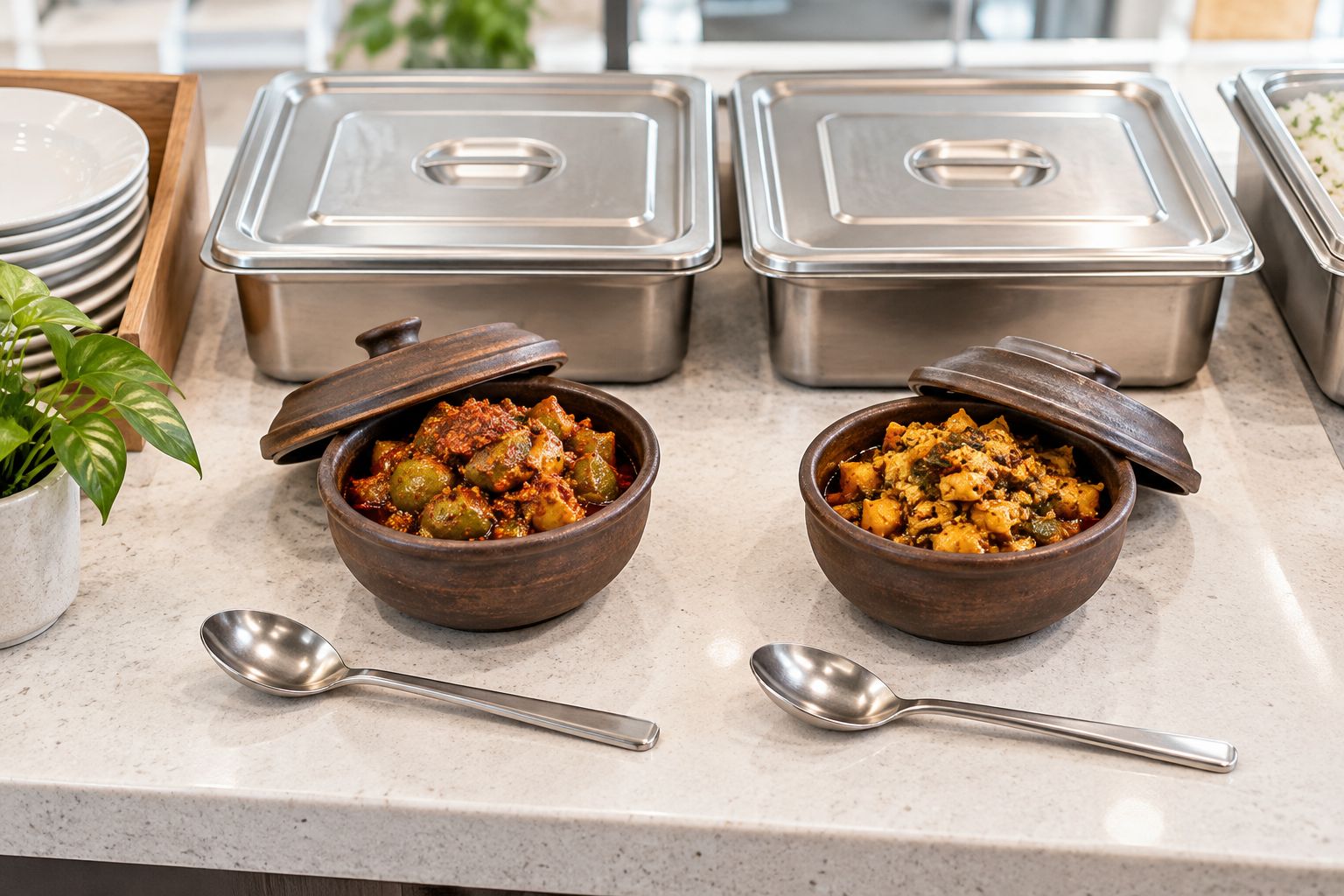
Assign 1 dedicated serving utensil per bowl and keep vegetarian and non-vegetarian utensils separate. Use clean, dry utensils when dispensing from the original container. Put only the quantity needed for the current service into the serving bowl; never return food from the service counter to the original jar.
Store original labels or their recorded details where staff can consult them. If a container is damaged, leaking, mouldy or otherwise suspect, isolate it and follow your rejection procedure. Do not taste suspect food to decide whether it is safe.
- Inspect seals, containers and date markings when deliveries arrive.
- Record opening dates and follow after-opening instructions.
- Label every serving bowl with its actual food category.
- Keep original stock separate from food exposed at the counter.
- Replace dirty utensils rather than wiping and reusing them.
- Reject suspect food through the canteen's documented procedure.
Measure actual use
Use a kitchen scale and a simple service log before deciding how much to reorder. Record the quantity issued to service, the quantity left at the counter and any discarded food separately. Stock movement alone does not tell you what employees ate.
Separate weekday and shift records where attendance differs. A lunch counter and an evening shift can have different preferences, even in the same office. Your purchasing estimate should reflect the service you are supplying rather than total employee headcount.
Track your 2026 records by variety as well as category. A popular vegetarian pickle does not prove demand for every vegetarian pickle, and acceptance of a meat option does not establish demand for seafood. Keep the measurements useful enough that another manager can understand why the next order changed.
- Weigh the quantity issued before service starts.
- Record counter leftovers and discarded food separately.
- Note attendance for the specific meal or shift.
- Keep separate usage records for each selected variety.
- Record complaints alongside usage, not instead of it.
Set repeat orders
Base repeat orders on measured usage, the product's date marking and the storage capacity you actually have. Reorder by variety, not by a general instruction to replenish pickles. The staff member placing the order should know exactly which approved item needs replacing.
Keep original packs traceable after opening. Where expiry dates differ, use stock with the earlier valid expiry first, subject to the manufacturer's instructions and your food-safety procedure. Do not mix old and new batches into a container that loses its identifying details.
For your 2026 purchasing plan, document who approves substitutions. A replacement with a similar name still needs ingredient, dietary and storage checks. Treat a change in recipe or packaging as a reason to review the service instructions, rather than assuming the previous process remains suitable.
- Reorder from actual variety-level usage records.
- Check current stock and expiry dates before purchasing.
- Retain batch or lot details where provided.
- Assign a named person to approve substitutions.
- Review storage instructions whenever the selected item changes.
Compare accompaniment options for your canteen
Choose an option by service fit, not by the strongest flavour or largest pack. Each approach offers a useful benefit and creates a different handling obligation. This comparison concerns purchasing and service models; it does not assume that a seller offers institutional contracts or customised packaging.
| Option | Best for | Main advantage | Key limitation |
|---|---|---|---|
| Purchased vegetarian Andhra pickle | Mixed-diet canteens adding an optional rice accompaniment | Adds a distinct accompaniment without preparing pickle in-house | Requires ingredient checks; vegetarian does not automatically mean vegan or allergen-free |
| Purchased non-vegetarian Andhra pickle | Canteens with confirmed meat-eating demand and separate service | Offers a choice tailored to employees who want a meat accompaniment | Needs dietary separation and product-specific storage instructions |
| Purchased podi | Rice or breakfast counters wanting a dry accompaniment | Provides a different texture and serving choice from pickle | Needs separate ingredient checks and protection from moisture |
| In-house pickle preparation | Kitchens with trained staff and documented recipe controls | Gives the kitchen direct control over preparation | Adds preparation, traceability and food-safety responsibilities |
Tulasi Pickles offers vegetarian pickles, non-vegetarian pickles and podis within its stated product categories. Choose among those categories only after checking the individual item information; the category itself does not establish suitability for your workplace.
Common mistakes corporate canteens make
Buying against office headcount
Employee headcount is not pickle consumption. Hybrid attendance, shift patterns and employee preference all affect what reaches the plate. Use the service log to set orders, and keep trial quantities separate from your repeat-purchase estimate.
Assuming vegetarian means suitable for everyone
Vegetarian status does not resolve ingredient exclusions, vegan requirements or allergies. Read the ingredient information and declared allergen details. If a requirement cannot be verified, do not label the accompaniment as meeting it.
Letting the service station lose dietary separation
Separate purchasing is ineffective if attendants swap spoons or employees cannot identify the bowls. Make category labels visible and assign utensils clearly. Brief replacement staff too; a procedure known only to the regular attendant is incomplete.
Changing the product during an approved contract
A convenient substitution can change heat, texture, ingredients and storage requirements. Review replacements before service, including alternatives from the same seller. Keep the kitchen's approved-item record aligned with what purchasing actually orders.
Treating pickle as a health programme
Do not describe ordinary pickles as a treatment, digestive remedy or suitable food for a medical condition without appropriate evidence. Offer an optional accompaniment and preserve the no-pickle choice. Employee wellness messaging should not turn an unverified food claim into canteen policy.
FAQ
What’s the best way to choose Andhra pickles for a corporate canteen?
Choose Andhra pickles by employee dietary preferences, menu fit and the individual product’s storage instructions. Run a controlled trial and measure actual use before setting repeat orders.
Is Tulasi Pickles suitable for office canteen purchasing?
Tulasi Pickles is an online sourcing option for homemade Andhra-style vegetarian and non-vegetarian pickles, podis and papads, with shipping across India. Confirm the individual product details and any institutional purchasing requirements directly before ordering.
Should a corporate canteen serve vegetarian or non-vegetarian pickle?
A corporate canteen should serve the categories permitted by workplace policy and supported by employee demand. If both are offered, keep the food, labels and serving utensils clearly separate.
How much pickle should I order for an office lunch counter?
Base the order on measured usage from your own lunch service, not total office headcount. Record the quantity issued, counter leftovers and discarded food separately before setting a repeat quantity.
Do all Andhra pickles need refrigeration after opening?
Follow the storage and after-opening instructions for the specific product rather than applying one rule to all Andhra pickles. Do not infer storage safety from oil content, acidity or the word homemade.
Is podi better than pickle for a corporate canteen?
Podi and pickle serve different menu preferences; neither is automatically better for every canteen. Compare employee acceptance, ingredient requirements, moisture protection and the serving method you can manage.
Can I put a large pickle jar directly on the self-service counter?
Dispensing a service quantity into a separate bowl gives you clearer control over utensils and exposed food. Keep the original stock stored according to its instructions, and never return counter leftovers to it.
One last thing
Approve the serving procedure alongside the product. Before your next 2026 order, ask a replacement attendant to identify the vegetarian option, find its storage instructions and explain what happens to counter leftovers. If the attendant cannot do that from the labels and written process, fix the setup before adding another variety. A well-chosen pickle still needs an understandable handover between purchasing, kitchen and service staff.
Related guides
- How to store homemade pickles for long shelf life
- How to choose the right spice level in pickles
- Andhra pickles for restaurants and caterers