
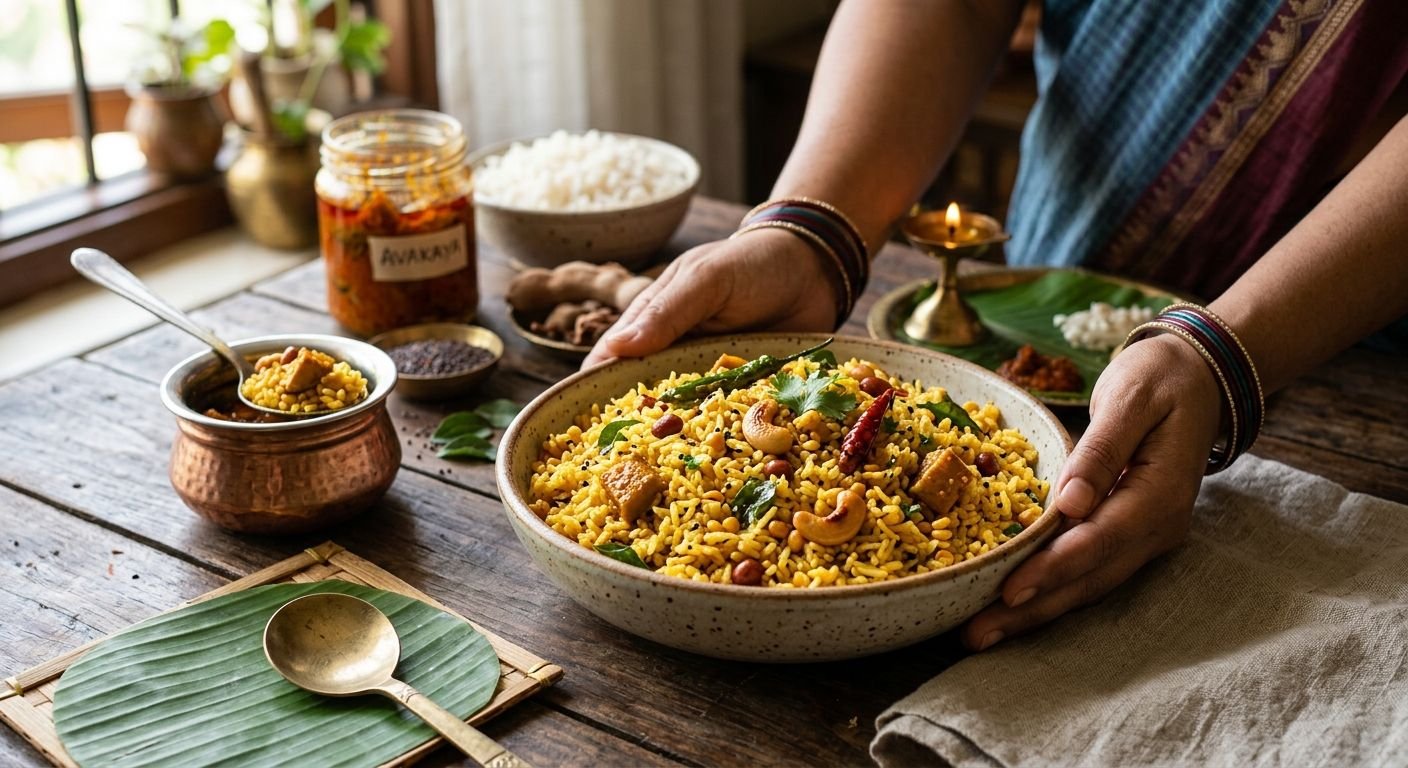
Avakaya pulihora is Andhra-style rice mixed with mashed avakaya mango pickle, a mustard-urad dal tempering, and roasted peanuts — no cooking beyond the rice, ready in under 15 minutes. The dish lives or dies on the pickle you stir through it: a thin, low-oil avakaya turns the rice dry and clumpy, while a properly cured one with real oil coats every grain and holds flavor for hours.
- Avakaya pulihora recipe needs 2 cups cooled rice, 3-4 tbsp avakaya pickle, and a fresh mustard-urad dal tempering.
- Cook rice 3-4 hours ahead in 2026’s kitchens too — warm rice turns mushy when mango pickle oil hits it.
- Tulasi Pickles’ homemade avakaya works straight from the jar without extra oil or salt.
- Leftover pulihora keeps about 24 hours at room temperature, longer once refrigerated.
Why this matters
Avakaya pulihora is the dish Telugu households reach for when there's leftover rice and no time to cook a full meal — it travels well, needs no refrigeration for a day, and shows up in lunchboxes, train journeys, and temple prasadam counters across Andhra and Telangana. In 2026, most home cooks skip the traditional souring process entirely and build the dish around a jar of ready-made authentic Andhra avakaya pickle, which is why pickle quality — not technique — decides whether the rice tastes right.
Get the ratio wrong and you end up with either a bland bowl of rice with pickle bits, or an oily mess that overwhelms the tempering. The recipe below fixes both problems.
How to make avakaya pulihora at home
Here's the full ingredient list and method for a standard batch that serves 3-4 people.
| Ingredient | Quantity |
|---|---|
| Cooked rice, cooled | 2 cups |
| Avakaya pickle (with oil) | 3-4 tbsp |
| Mustard seeds | 1 tsp |
| Urad dal | 1 tsp |
| Chana dal | 1 tsp |
| Dry red chilies | 2 |
| Curry leaves | 1 sprig |
| Roasted peanuts | 2 tbsp |
| Turmeric | a pinch |
| Cooking oil | 2 tbsp |
| Salt | to taste — pickle is already salted |
Steps:
- Cook rice 3-4 hours ahead and spread it on a plate to cool completely. Warm rice releases steam that turns the dish sticky within minutes.
- Heat 2 tbsp oil in a pan. Add mustard seeds and let them pop, then add urad dal and chana dal. Fry until golden, about 1 minute.
- Add dry red chilies, curry leaves, and a pinch of turmeric. Fry 30 seconds until the leaves crisp up.
- Add roasted peanuts and stir for 20 seconds, then switch off the heat immediately so the peanuts don't burn.
- In a large bowl, add cooled rice, 3-4 tbsp avakaya pickle (mango pieces mashed lightly with the back of a spoon), and the hot tempering. Mix gently with your fingers or a flat spoon — never a whisk, it breaks the rice grains.
- Taste before adding salt. Most avakaya pickles already carry enough salt for the whole batch. Let the pulihora rest 5-10 minutes before serving so the oil distributes evenly.
Traditional avakaya pulihora with fresh tempering
Full six-step method above, made fresh each time with hot tempering poured directly onto the rice. Best for weekend meals and guests. Verdict: Make this when you have 15 minutes and want the tempering aroma at its peak.
Quick 5-minute avakaya pulihora (no tempering)
Skip steps 2-4 entirely. Mix cooled rice directly with avakaya pickle and a spoon of raw sesame oil, add a handful of raw peanuts for crunch. Best for lunchboxes and mornings with no cooking time. Verdict: Buy-ready shortcut — tastes flatter than the tempered version but works when minutes matter.
Travel-friendly avakaya pulihora (no perishables)
Use rice cooked the night before, skip peanuts (they soften on long trips), and pack tempering oil separately to mix at the destination. Best for train journeys and flights. Verdict: Pack this over any curd-based rice dish since it doesn't need refrigeration for 6-8 hours.
Why avakaya pulihora tastes different every time
The same recipe produces wildly different results depending on a few variables home cooks rarely control for:
- Oil content of the pickle — a well-cured avakaya carries visible oil on top; pickles that skimp on oil leave the rice dry no matter how much you mix.
- Mango-to-spice ratio in the avakaya — homemade batches vary jar to jar; taste a spoon before deciding how much to add.
- Rice grain and age — day-old, cooled rice with separated grains (sona masuri or raw rice) absorbs oil better than fresh, sticky rice.
- Tempering freshness — peanuts and curry leaves fried more than a few hours ahead lose crunch and aroma fast.
- Salt added on top — since avakaya pickle is pre-salted, adding table salt without tasting first is the most common mistake in this recipe.
- Rest time before eating — pulihora mixed and served immediately tastes patchy; a 5-10 minute rest lets the oil and spice coat every grain evenly.
“If the rice needs extra salt after mixing in the avakaya, the pickle itself was under-salted to begin with.”
What rice is best for avakaya pulihora?
Raw rice or sona masuri, cooked 3-4 hours ahead and cooled completely, works best for avakaya pulihora because the grains stay separate instead of clumping. Basmati works too but its longer grain can break during mixing — stir gently if you use it.
Can you make avakaya pulihora with store-bought avakaya pickle?
Yes — store-bought avakaya pickle is what most 2026 home cooks use, since making avakaya from scratch takes weeks of sun-curing raw mango. Tulasi Pickles makes its avakaya the traditional Andhra way with visible oil and mango pieces sized for exactly this kind of mixing, and you can check what separates a properly made batch from a thin one on the best Andhra pickles for authentic homemade taste page before you buy.
How long does avakaya pulihora stay fresh?
Avakaya pulihora stays fresh about 24 hours at room temperature and longer once refrigerated, because the pickle's oil and salt act as natural preservatives. Skip adding peanuts or curry leaves if you're packing it for a full day trip — they soften and shorten how good the dish tastes by evening.
Is avakaya pulihora the same as avakaya pickle?
No — avakaya pickle is the raw mango pickle itself, cured in oil and spice over weeks, while avakaya pulihora is cooked rice mixed with that pickle plus a fresh tempering. One is a condiment, the other is a full meal built around it.
If the pickle you're using tastes flat or watery even after tempering, the problem usually isn't the recipe — it's the batch. Pickles made with less oil or under-ripe mango don't carry flavor into rice the way a fully cured one does, and that's worth checking against a guide on choosing the right spice level in pickles before you commit to a jar for weekly cooking.
Order homemade avakaya pickle online
Andhra-style avakaya made in Hyderabad, shipped fresh across India.
FAQ
What is the best avakaya pulihora recipe for beginners?
The best avakaya pulihora recipe for beginners uses 2 cups cooled rice mixed with 3-4 tbsp avakaya pickle and a simple mustard-urad dal tempering — no soaking or overnight steps required. It takes about 15 minutes start to finish.
How much avakaya pickle should I use per cup of rice?
Use 1.5 to 2 tbsp of avakaya pickle per cup of cooked rice, adjusting up if the pickle is mild or the mango pieces are small. Taste after mixing before adding more, since salt levels vary batch to batch.
Can I make avakaya pulihora without peanuts?
Yes, avakaya pulihora works fine without peanuts — they add crunch but aren’t essential to the flavor. Substitute roasted chana dal or skip the crunch element entirely for a softer texture.
Is avakaya pulihora spicy?
Avakaya pulihora is as spicy as the pickle used to make it, since the rice itself carries no heat. Mild avakaya batches produce a tangy, low-heat dish, while spicier batches make the rice noticeably hot.
Can I refrigerate avakaya pulihora?
Yes, refrigerate avakaya pulihora in an airtight container and it stays good for 2-3 days. Bring it to room temperature before eating since the oil solidifies when cold.
What’s the difference between avakaya pulihora and gongura pulihora?
Avakaya pulihora is made with raw mango pickle while gongura pulihora uses sorrel leaf pickle — the base tang differs, mango is sharper and fruitier, gongura is more sour and earthy. Both follow the same rice-and-tempering method.
Do I need to cook the rice fresh for avakaya pulihora?
No, day-old refrigerated rice actually works better for avakaya pulihora than freshly cooked rice, since cooled, firmer grains absorb pickle oil without turning mushy. Bring refrigerated rice to room temperature before mixing.
One last thing
Day-old rice isn't a shortcut, it's the actual technique — the starches firm up as rice cools, which is exactly why restaurant-style pulihora never uses rice straight off the stove. Cook it the night before, spread it out to dry slightly the next morning, and the avakaya pulihora recipe above will hold together far better than anything made with fresh, warm rice, in 2026 or any other year.
Related guides