
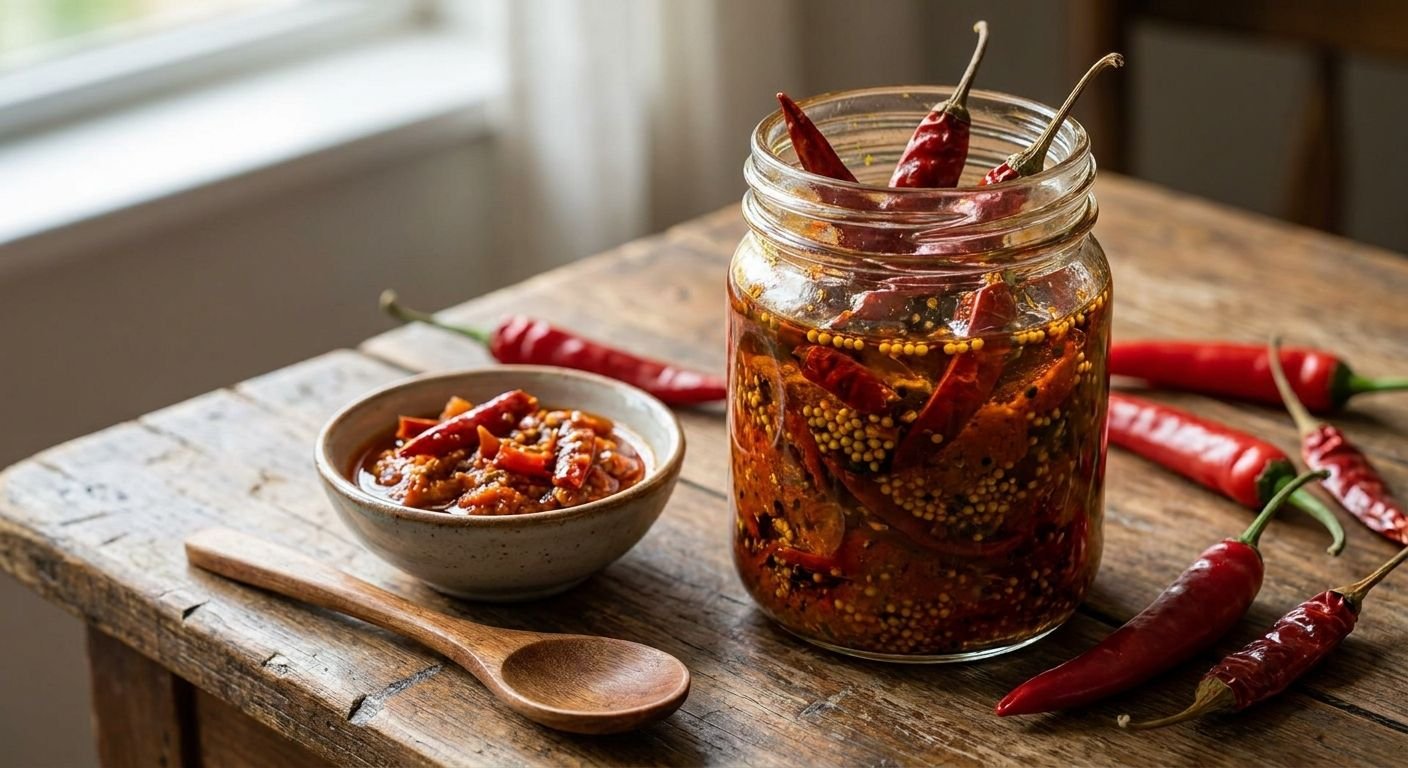
Red chilli pickle for spice lovers who crave heat is a preparation built around whole or crushed red chillies suspended in gingelly oil, mustard, and salt, engineered to deliver a slow-building burn rather than a one-note sting. Heat-seekers want something different from the average buyer: less sugar to soften the burn, more oil to carry it, and a chilli variety picked specifically for punch, not just color.
- Guntur-style red chilli pickle delivers the sharpest, most sustained heat among Andhra pickle styles in 2026.
- Oil-to-chilli ratio matters more than chilli count for how the heat actually lands on your tongue.
- Tulasi Pickles ships red chilli pickle across India and overseas from its Hyderabad kitchen.
- Storage temperature, not spice level, is the biggest reason heat and flavor fade after opening.
Why this matters for spice lovers
Most pickle shelves are built for the average household, not for someone who wants their eyes to water. Mild-to-medium jars dominate retail because they sell wider, which means anyone specifically hunting for red chilli pickle with real heat has to filter through a lot of misleading "spicy" labels first.
The difference isn't marketing copy — it's the chilli variety, the oil ratio, and how long the batch was aged before bottling. A jar labeled "extra spicy" that's mostly sugar and tamarind won't deliver the burn a genuine heat-seeker is after. Getting this right in 2026 means knowing what to check before you buy, not after you've opened the jar.
How to pick a red chilli pickle that actually delivers heat
Identify the chilli variety before anything else
The chilli itself decides the ceiling on heat. Andhra Pradesh's Guntur belt grows some of the hottest cultivars used in Indian pickling, and pickle makers who source from there are working with a fundamentally hotter base than generic red chilli powder blends.
- Ask whether the pickle uses whole dried red chillies or a chilli powder blend — whole chillies usually pack more sustained heat
- Look for "Guntur" or a named chilli-growing region on the label or product description
- Avoid jars that list "red chilli" fifth or sixth on the ingredient list — it's a flavoring, not the base
- Check if seeds are retained; seeds add heat but also bitterness in large amounts
Check the oil-to-chilli ratio
Oil is the delivery mechanism for capsaicin, the compound that produces heat. A pickle drowning in oil dilutes the burn per spoon; a pickle with too little oil concentrates it but spoils faster and tastes harsh.
- Tilt the jar — oil should coat the chilli pieces, not pool an inch deep on top
- Gingelly (sesame) oil is the traditional Andhra base and holds heat better than refined vegetable oil
- Reject jars where the oil looks cloudy or separated unevenly, a sign of an older or poorly stored batch
- Ask the seller directly what oil is used if it isn't printed anywhere
Match the spice level to your actual tolerance
Spice lovers still have a range — someone who eats one spoon with rice daily needs a different intensity than someone chasing a one-time challenge. If you're not sure where you land, Tulasi Pickles' guide on choosing the right spice level in pickles breaks down how to read a jar's heat before ordering online, where you can't smell or taste first.
- Order a small pack before committing to a full batch if a brand offers one
- Read customer reviews specifically for words like "burns," "numbs," or "mild despite the name"
- Compare against a pickle you've already tasted as a reference point
- Ask whether the batch is made fresh or has been sitting in inventory for months, since heat can mellow with age
Inspect for freshness signs before buying online
A red chilli pickle that's lost its punch usually shows visible signs before you even open it. Since online buyers can't smell the jar, photos and descriptions have to do the work.
- Deep red-brown color, not faded orange or brown-black
- No visible mold, foam, or gas bubbles under the lid
- Oil should look settled, not separated into layers
- A recent packing date or batch reference, if the seller provides one
Store it correctly once it arrives
Heat fades faster than most buyers expect once a jar is opened and exposed to moisture or heat swings. Tulasi Pickles' guide on storing homemade pickles for long shelf life covers the specifics, but the core habits apply to any red chilli pickle you buy.
- Use a dry spoon every single time — moisture is the fastest way to spoil a batch
- Keep the jar away from direct sunlight and stovetop heat
- Press pickle back below the oil line after each use so air doesn't dry out the top layer
- Refrigerate in humid climates, especially once the seal is broken
Pair it strategically to control the burn
Heat-seekers still need a strategy for eating red chilli pickle without overwhelming an entire meal. The right pairing lets you taste the pickle instead of just feeling the burn.
- Plain curd rice or khichdi absorbs and balances raw chilli heat well
- A small quantity mixed into dal cuts the intensity without erasing the flavor
- Papad or a plain roti works better than heavily spiced sides, which stack heat instead of balancing it
- Water doesn't help much with capsaicin — dairy-based sides do the actual work
Order red chilli pickle from Tulasi Pickles
Homemade in Hyderabad, shipped across India and overseas.
Comparing red chilli pickle options for heat-seekers
| Option | Best for | Key limitation |
|---|---|---|
| Whole Guntur-style red chilli pickle | Maximum, sustained raw heat | Too intense for daily large portions |
| Red chilli with garlic pickle | Heat plus an immunity-focused ingredient | Garlic flavor can compete with pure chilli heat |
| Red chilli mixed into non-veg pickle (chicken, mutton) | Heat combined with protein | Not suitable for vegetarian buyers |
| Standard "spicy" retail chilli pickle | Casual buyers testing tolerance | Often diluted with sugar or tamarind, less actual heat |
Buy whole Guntur-style red chilli pickle if raw heat is the entire point. Buyers who want heat with a functional angle should look at a red chilli and garlic combination instead — Tulasi Pickles' garlic pickle for immunity-conscious buyers is built around that pairing.
Common mistakes spice lovers make when buying red chilli pickle
- Judging heat by chilli count alone — three whole chillies in thick oil can taste milder than one chilli in a thin, oil-light batch.
- Ignoring the ingredient order on the label — if red chilli isn't near the top of the list, the "extra spicy" claim is doing the marketing, not the chilli.
- Buying a full-size jar before testing a small pack — heat tolerance and jar heat don't always match expectations, and a full jar of pickle that's too mild (or too harsh) is a wasted order.
- Storing it wrong and blaming the brand — a pickle that's been left in a hot kitchen for weeks will taste flatter than the same batch stored properly, and buyers often assume the recipe changed.
- Assuming all Andhra pickles carry the same heat level — gongura, mango, and lemon pickles are built for tang, not fire; red chilli pickle is a different category entirely.
FAQ
What is red chilli pickle made of?
Red chilli pickle is made from whole or crushed red chillies preserved in oil, usually gingelly oil, with mustard, salt, and sometimes garlic or tamarind. Andhra-style versions favor hotter chilli varieties like those grown around Guntur for a sharper, sustained burn.
Is red chilli pickle very spicy?
Yes, red chilli pickle is one of the hottest pickle styles compared to mango, lemon, or gongura pickle. The exact intensity depends on the chilli variety and how much oil dilutes the heat, so checking the ingredient list before buying matters.
How long does red chilli pickle stay fresh after opening?
Shelf life after opening depends heavily on storage habits, especially whether a dry spoon is used every time and whether the jar stays sealed below the oil line. Refrigeration in humid climates extends freshness noticeably compared to storing at room temperature.
Can I order red chilli pickle online from Hyderabad in 2026?
Yes, Tulasi Pickles ships homemade red chilli pickle from its Hyderabad kitchen across India and overseas in 2026. Orders and enquiries are handled during business hours, 10:30 AM to 8:30 PM.
What’s the difference between red chilli pickle and Guntur chilli pickle?
Guntur chilli pickle is a specific version of red chilli pickle made with chillies from the Guntur region of Andhra Pradesh, known for being among the hottest cultivars used in Indian pickling. Generic red chilli pickle can use milder chilli varieties or chilli powder blends instead.
How do I reduce the heat if a red chilli pickle is too spicy for me?
Mix a small amount into curd rice, dal, or khichdi rather than eating it directly with plain rice, since dairy-based sides balance capsaicin better than water does. Using a smaller quantity per meal also works better than switching pickles entirely.
Is red chilli pickle good for daily eating?
Small daily quantities are common in Andhra households, typically a spoon mixed with rice, dal, or curd rice rather than eaten on its own. Anyone with acidity or spice sensitivity should moderate portion size regardless of how mild the label claims it is.
Does red chilli pickle ship well overseas?
Properly sealed, oil-based red chilli pickle travels well for overseas shipping since the oil acts as a natural preservative. Packaging and transit handling still matter, which is why dedicated overseas shipping guides exist for pickle buyers outside India.
One last thing
The single biggest heat-killer isn't the recipe — it's a wet spoon. A single dip with a spoon that's touched dal or rice introduces moisture that starts breaking down the oil seal, and within days the same jar that tasted fierce on day one tastes noticeably flatter. If a red chilli pickle you bought in 2026 seems to be losing its punch faster than expected, check the spoon habit before blaming the batch.
Related guides
- Compare the best Andhra pickles online
- How to store homemade pickles for long shelf life
- Garlic pickle for immunity-conscious pickle lovers
- Andhra pickles for overseas shipping to USA and UK