
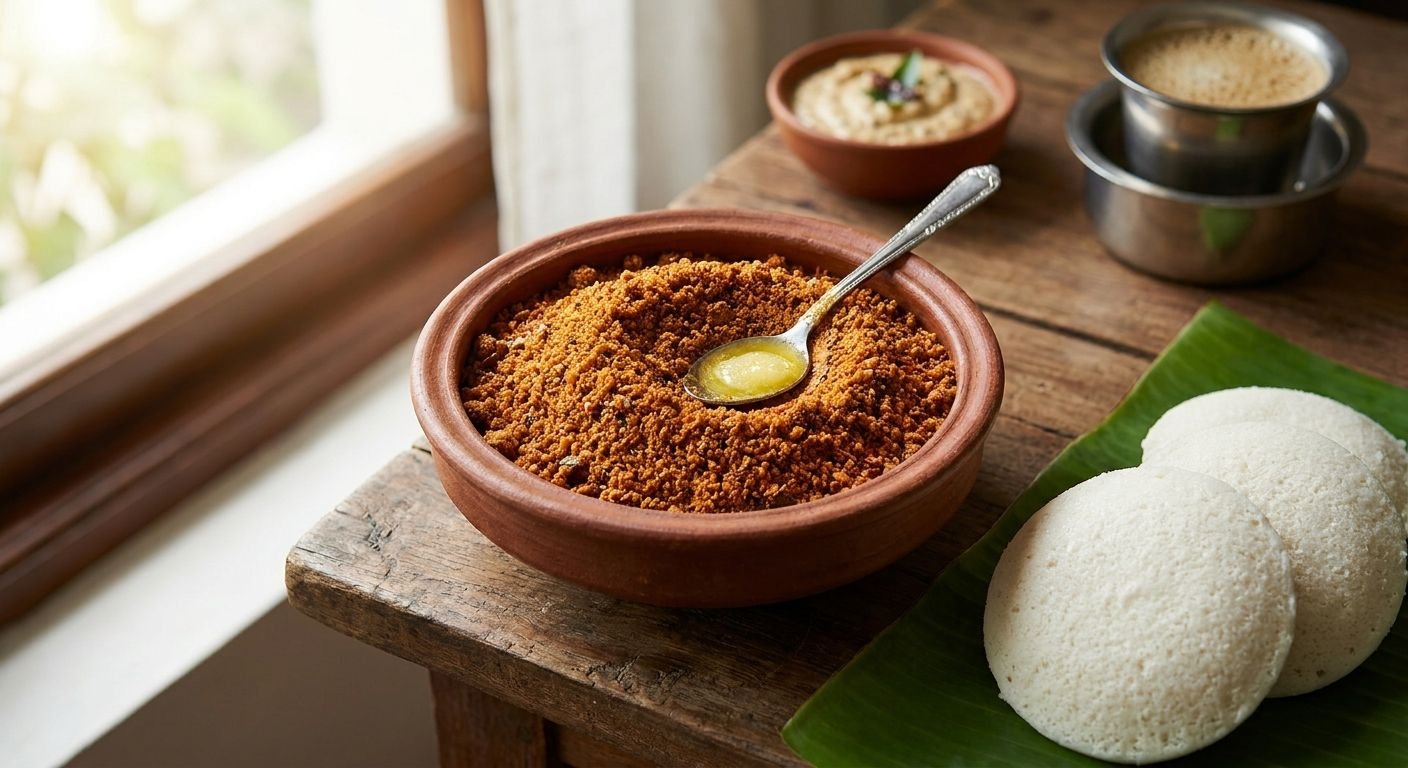
Idli karam podi for spicy breakfast cravings is a roasted red chilli, lentil, and sesame powder that you mix with warm ghee or gingelly oil and spoon over hot idli or dosa when you want heat right now, not after a 20-minute chutney grind. Spicy breakfast eaters need something that survives a rushed weekday morning, keeps for weeks without refrigeration, and still tastes like it came off a stone grinder in an Andhra kitchen.
- Idli karam podi mixed with warm ghee turns plain idli into a spicy breakfast in under a minute.
- Byadgi chilli gives color and mild heat; Guntur chilli brings the punch spicy breakfast eaters actually search for.
- Tulasi Pickles’ idli karam podi skips the mixer grind entirely — open the jar, mix, eat.
- Store karam podi in an airtight jar away from stove steam or it clumps within a week.
- Kandi podi and idli karam podi aren’t interchangeable — kandi podi leans dal-forward, karam podi leans hot.
Why idli karam podi matters for spicy breakfast eaters
Most mornings don't allow for a fresh coconut chutney or a tomato pachadi made from scratch. Idli karam podi solves that gap because it's shelf-stable, needs zero cooking at the table, and delivers the same heat hit every time you open the jar.
Spicy breakfast eaters treat podi as a pantry backup — the thing you reach for when the fridge has nothing else to go with idli. That's a different job than a podi meant for rice mixing later in the day, and it changes how you grind, roast, and store it.
A jar mixed with the right ratio for idli, dosa, and rice stretches across a week of breakfasts without a second trip to the kitchen counter for fresh chutney.
Build the podi spicy breakfast eaters actually want
Pick the right chilli base for your heat threshold
The chilli you roast decides whether the podi is a background note or the main event on your plate.
- Use Byadgi chilli for color and a milder burn if you eat idli with young kids or elders
- Use Guntur chilli when you want the podi to actually make you reach for water
- Mix both varieties in the same batch to control smoke-to-heat ratio
- Skip store-bought pre-ground chilli powder — it turns bitter once it hits a hot pan a second time
Toast your lentils before grinding
Raw lentils in podi taste flat and grainy. Toasting is what gives karam podi its nutty backbone under the chilli heat.
- Dry roast chana dal and urad dal separately until light golden, not dark brown
- Toast sesame seeds until they pop, not until they smoke
- Cool every roasted ingredient fully before grinding — hot lentils turn the powder oily and clumpy
- Pulse-grind in short bursts so the texture stays coarse instead of turning into a paste
Balance heat with tamarind and garlic
A one-note chilli podi tires the palate by the third idli. Tamarind and garlic round out the heat.
- Add a small piece of dry tamarind for tang without adding liquid
- Roast whole garlic cloves separately, then crush them into the final mix
- A few curry leaves add an earthy note without adding heat
- Salt at the very end, after everything cools — salting hot lentils changes the roast color
Get the grind texture right for idli, not for rice
Idli karam podi and rice-mixing podi are not the same grind, even if the ingredients look identical on the label.
- Idli karam podi needs a coarser grind so it sits on top of the idli instead of sinking into it
- A powdery-fine grind turns pasty the moment ghee touches it
- Test the batch by rubbing a pinch between your fingers — it should feel gritty, never smooth
- Grind in two passes if your mixer runs hot; stop and cool the jar between passes
Mix podi with warm ghee, not oil, right before serving
The fat you use changes how fast the chilli oils release onto your idli.
- Warm ghee dissolves chilli oils faster than room-temperature gingelly oil
- Pour ghee over the podi just before serving — never pre-mix and store the two together
- One teaspoon of ghee per two tablespoons of podi keeps it moist without turning greasy
- Gingelly oil works as a lighter substitute if you're avoiding ghee that morning
Buy ready-made podi when mornings are too rushed to toast and grind
Roasting, cooling, and grinding a fresh batch takes real time most weekday mornings don't have.
- Ready-made podi skips the roasting, cooling, and grinding steps entirely
- Tulasi Pickles' idli karam podi ships pre-mixed with roasted lentils and sesame, ready to spoon over hot idli straight from the jar
- Keep a jar as backup for mornings when fresh chutney isn't made yet
- Compare it against your own homemade batch once — most spicy breakfast eaters keep both stocked for different days
Skip the morning grind
Order idli karam podi and other podi varieties online from Tulasi Pickles.
Store karam podi so it stays crisp through the week
A good batch can turn into a damp cake within days if it's stored wrong.
- Keep podi in a dry, airtight jar — never scoop with a wet spoon
- Store away from stove-top steam and direct sunlight
- Refrigerate in humid coastal cities to extend shelf life
- Moisten only the portion you're eating that meal; never mix ghee into the whole jar
Compare your podi options for spicy breakfasts
| Option | Best for | Heat control | Key limitation |
|---|---|---|---|
| Homemade karam podi | Cooks who want to set exact chilli ratios | Full control, adjust chilli type live | Needs a mixer and a roasting session every week |
| Tulasi Pickles idli karam podi | Spicy breakfast eaters short on weekday time | Fixed at time of making, consistent jar to jar | Not customizable once the jar is open |
| Kandi podi | Rice mixing more than idli topping | Milder, dal-forward heat | Less punch for karam-style breakfast eaters |
| Restaurant-style loose podi packets | One-off tasting, not daily stock | Inconsistent, varies by vendor | No shelf-life information on the packet |
Tulasi Pickles' idli karam podi wins for spicy breakfast eaters who want fresh-grind heat without the Sunday-morning mixer cleanup.
“If your podi turns into a lump in the jar, the oil ratio is wrong, not the powder.”
Common mistakes spicy breakfast eaters make with podi
- Mixing podi with cold oil instead of warm ghee — the chilli aroma never fully releases, so the podi tastes duller than it should
- Skipping the roast and using raw chilli powder — leaves a raw, bitter edge that no amount of ghee fixes
- Storing the jar next to the stove — steam turns a week's batch into a damp block by day four
- Using the same grind for idli and rice — idli needs a coarser texture; a fine rice-mixing grind turns pasty on idli
- Not tasting before adding ghee — over-salted podi is nearly impossible to correct once the fat goes in
FAQ
What is idli karam podi made of?
Idli karam podi is made from roasted red chillies, chana dal, urad dal, and sesame seeds, ground coarse and mixed with tamarind and garlic. Ghee or gingelly oil is added right before serving to bring out the heat.
How much podi should I mix with idli?
Start with one to two teaspoons of podi mixed with a teaspoon of warm ghee per idli, then adjust to taste. Spicy breakfast eaters who prefer more heat often double the podi rather than the ghee.
Is idli karam podi vegan?
The dry powder itself is vegan since it’s made from lentils, chillies, and sesame with no dairy. Using gingelly oil instead of ghee to mix it keeps the full dish vegan.
How long does karam podi stay fresh?
Stored in an airtight jar away from moisture and heat, karam podi stays fresh for several weeks without refrigeration. Humid climates shorten that window, so refrigerating extends shelf life noticeably.
Can I use dosa podi and idli karam podi interchangeably?
Yes, but the texture works differently — idli karam podi is ground coarser so it sits on top of idli, while a finer grind spreads more evenly on dosa. Either works in a pinch.
What’s the difference between karam podi and kandi podi?
Karam podi is built around chilli heat with lentils as a supporting note, while kandi podi is dal-forward with milder spice, better suited to mixing with rice than topping idli.
How spicy is Tulasi Pickles’ idli karam podi?
Tulasi Pickles’ idli karam podi is made with a Guntur-Byadgi chilli blend for noticeable heat balanced by roasted lentils and sesame, aimed at spicy breakfast eaters rather than mild-palate diners.
Can podi be shipped overseas without spoiling?
Dry podi ships well overseas because it has no liquid content to leak or ferment, unlike oil-based pickles that need tighter packing controls for long transit.
One last thing
The grind, not the chilli, is what separates a good idli karam podi from a mediocre one — spicy breakfast eaters chasing more heat usually need a coarser grind and a warmer ghee pour before they need a hotter chilli. Get the texture right in 2026 and the heat takes care of itself.
Related guides