
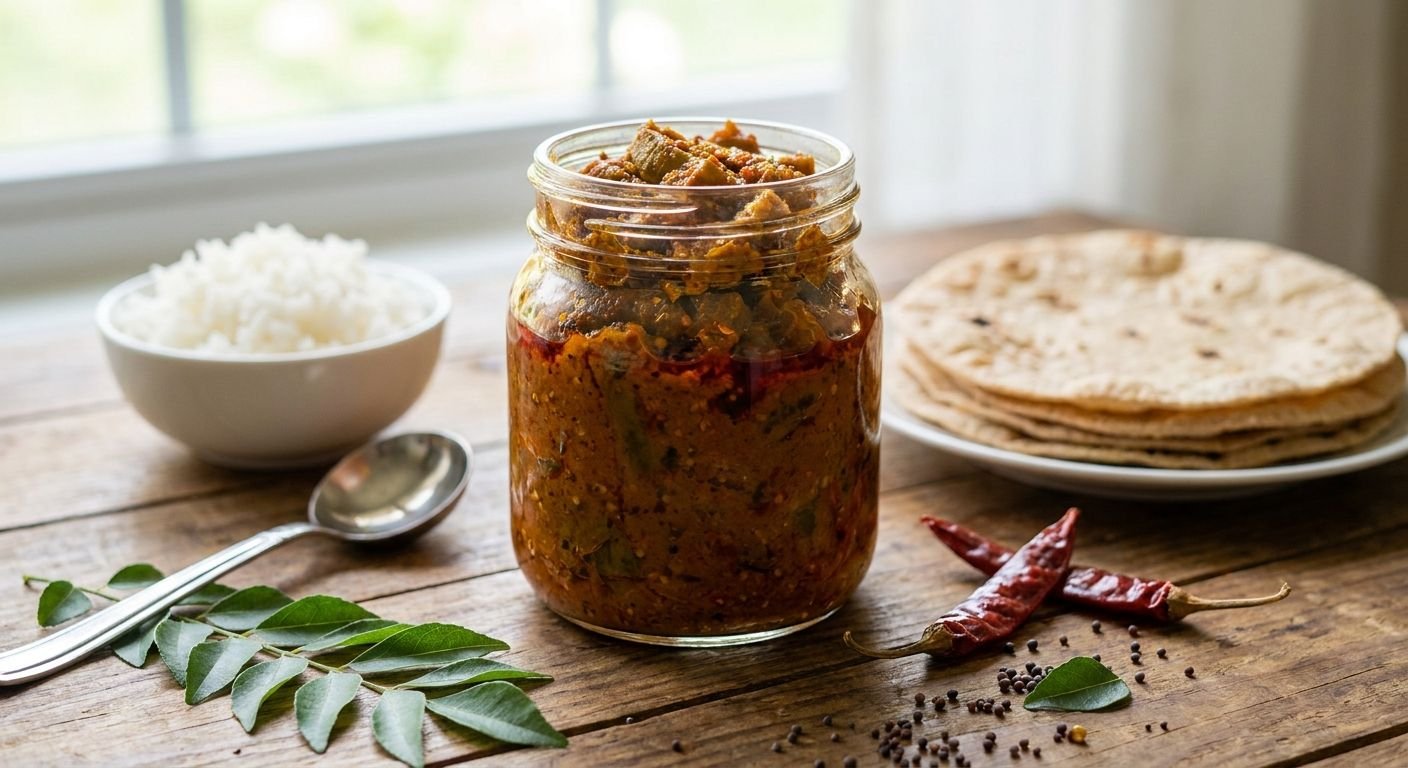
Beerakaya pickle (ridge gourd pickle) is a low-oil, mildly tangy Andhra pickle made for people who eat simple vegetarian meals every single day, not just for festive spreads. Ridge gourd holds less fat and a milder bite than mango or gongura, so it sits lighter on the stomach even when you spoon it out with lunch and dinner all week.
- Beerakaya pickle is the lightest daily-use option in an Andhra vegetarian pickle rotation — pick it over oil-heavy avakaya for everyday rice meals.
- Ridge gourd needs less oil than mango or lemon pickle, so a spoon a day does not weigh down a light thali.
- Store beerakaya pickle in an airtight glass jar and always use a dry spoon; moisture is the main reason it spoils faster than heavier pickles.
- Pair beerakaya pickle with curd rice, khichdi, or plain dal rice — skip pairing it with a curry that is already oily.
Why beerakaya pickle matters for everyday vegetarian meals
Most Andhra pickle talk centers on avakaya and gongura — bold, oil-forward, made for a spoonful every few days rather than daily use. Someone eating curd rice or khichdi five nights a week needs something different: a pickle that adds flavor without adding a second helping of oil to a meal that's supposed to be light.
That's the gap beerakaya pickle fills. Ridge gourd carries a mild, slightly sweet base flavor before spicing, so the finished pickle reads as tangy and warm rather than sharp. Compare the best veg pickles for daily meals side by side and beerakaya consistently sits at the milder, lower-oil end — the profile that works for a Tuesday lunch, not just a wedding thali.
Pick beerakaya pickle over heavier options for daily meals
The first decision is whether a pickle belongs in daily rotation at all. Not every jar in a pickle lineup is built for that.
- Choose beerakaya or drumstick over avakaya for meals you eat five or more times a week
- Read the ingredient list for oil quantity relative to vegetable weight, not just spice count
- Favor single-vegetable pickles over mixed jars for a more predictable, lighter bite
- Skip anything marketed as "extra spicy" or "festival special" for everyday use
- Keep one light jar (beerakaya) and one bold jar (avakaya or gongura) separate in the kitchen so you're not reaching for the wrong one out of habit
Check the oil content before you buy or make it
Oil is a preservative in traditional Andhra pickling, but it's also the reason a pickle can turn a light meal heavy. For daily eating, oil quantity matters more than spice level.
- Look for pickles described as low-oil or traditionally sun-pickled rather than deep-oil-cured
- Avoid a visible oil layer thick enough to pool at the top of the jar
- Ask whether the batch uses gingelly (sesame) oil in moderate quantity — heavier in flavor, but usually used sparingly in ridge gourd recipes compared to mango pickle
- If you're cooking beerakaya pickle at home, sauté the diced ridge gourd lightly first to reduce moisture before adding oil and spice — this cuts down how much oil the pickle needs to stay shelf-stable
Match the spice level to everyday eating, not festive eating
A pickle you eat once a month can carry more chili than one you eat daily. Daily-use spice tolerance is a different calculation.
- Start with a mild or medium batch rather than the hottest variant on the shelf
- If you're new to a brand's beerakaya pickle, order the smallest size first to gauge heat before committing to daily use
- Balance chili with a slightly higher tamarind or lemon note — tang carries flavor without raising heat
- Read how the right spice level in pickles is graded before ordering, since "medium" varies a lot between home kitchens and commercial batches
Pair beerakaya pickle with the right staple
A light pickle paired with an already-heavy curry cancels out the point of choosing it. Pairing decides whether the meal stays light or not.
- Curd rice: the classic pairing — beerakaya's mild tang cuts through the cooling yogurt without overpowering it
- Khichdi: a small spoon adds contrast to a dish that's otherwise soft and mild
- Plain dal rice: works better here than a heavier tomato or sambar rice, which already carries acidity
- Roti with a dry vegetable curry: skip beerakaya here and use a drier podi instead, since two wet condiments compete on the plate
See the full breakdown on pairing pickles with curd rice and khichdi for combinations beyond beerakaya.
Store it correctly so daily use doesn't spoil the batch
A jar opened and dipped into every day is more exposed to moisture and contamination than one opened once a week. Storage habits matter more here than for occasional-use pickles.
- Use a completely dry spoon every single time, no exceptions
- Keep the jar sealed tightly between uses, even if you're reaching for it again in an hour
- Store in a cool, dark spot; refrigerate if your kitchen runs warm through most of 2026's summer months
- Watch for a change in smell or a cloudy oil layer — both signal it's time to stop using that batch
- Never scoop pickle onto a plate and pour leftover oil back into the jar
Portion it out — a light pickle still needs portion control
Beerakaya pickle being lighter than avakaya doesn't mean unlimited quantity is fine. Oil and salt still add up across a week of daily servings.
- Stick to a level teaspoon per meal rather than a heaping spoon
- If you're eating it daily, treat it as a condiment, not a side dish
- Track salt intake separately if you're also using podi or papad in the same meal
- Reduce portion size on days you're also having a salted snack alongside the meal
Rotate it with other light vegetarian pickles across the week
Eating the same jar every day gets repetitive fast, and rotation also spreads out any single ingredient's oil or salt load.
- Alternate beerakaya with tomato pickle for weekday variety
- Bring in an oil-free pickle option once or twice a week if you're managing fat intake closely
- Save bitter gourd or drumstick pickle for days you want a stronger flavor without switching to a heavy non-veg option
- Keep one mixed vegetable jar on hand for days you can't decide
Order beerakaya pickle for daily meals
Browse the full range of light vegetarian pickles from Tulasi Pickles.
Beerakaya pickle vs. other everyday options
| Option | Best for | Key limitation |
|---|---|---|
| Beerakaya (ridge gourd) pickle | Daily light vegetarian meals | Milder flavor, less punch for bold-taste eaters |
| Gongura pickle | Tangy flavor lovers who still want a lighter daily jar | Sharper tartness, not ideal for sensitive stomachs |
| Avakaya (mango) pickle | Festive or occasional strong-flavor meals | Higher oil content, heavier for daily use |
| Oil-free pickle range | Health-conscious, low-fat daily diets | Shorter shelf life without oil as a preservative |
| Mixed vegetable pickle | Variety in a single jar | Uneven texture across vegetables, less consistent bite |
Verdict: beerakaya pickle wins for anyone eating simple vegetarian meals every day and wanting flavor without added heaviness. Gongura or oil-free pickle are the next-best swaps depending on whether you want more tang or less oil.
Common mistakes with beerakaya pickle for daily meals
- Treating it like a festival pickle: piling on a large spoon because "it's mild" defeats the purpose of choosing a light option in the first place
- Using a wet spoon: daily-use jars get dipped into far more often than occasional pickles, so moisture contamination shows up faster
- Pairing it with an already oily curry: the meal ends up just as heavy as if you'd used avakaya
- Skipping refrigeration in warm months: ridge gourd's higher moisture content compared to mango makes beerakaya pickle more sensitive to heat once opened
- Buying the oil-free version but not adjusting storage habits: less oil means less natural preservation, so the same casual handling that works for an oily pickle won't work here
“A pickle you eat five times a week has to be lighter than one you eat five times a year.”
FAQ
What is beerakaya pickle made of?
Beerakaya pickle is made from ridge gourd (beerakaya), diced and cooked or sun-cured with red chili, tamarind or lemon, mustard, and a moderate amount of oil. It uses less oil than mango-based avakaya, which is why it reads lighter on the plate.
Is beerakaya pickle good for daily eating?
Yes, beerakaya pickle is one of the milder, lower-oil Andhra pickles, which makes it suited to daily use with curd rice, khichdi, or dal rice. Stick to a level teaspoon per meal to keep salt and oil intake in check across a week.
How is beerakaya pickle different from avakaya pickle?
Beerakaya pickle uses ridge gourd instead of raw mango and carries less oil and a milder heat profile. Avakaya is built for occasional, bold-flavor eating; beerakaya is built for regular, everyday meals.
How long does beerakaya pickle last after opening?
Shelf life depends on oil content and storage conditions, but a properly sealed jar kept away from moisture and heat lasts several weeks once opened. Always use a dry spoon and watch for smell or oil-layer changes as early spoilage signs.
Is beerakaya pickle spicy?
Beerakaya pickle is typically mild to medium in heat compared to gongura or avakaya, since ridge gourd’s mild base flavor doesn’t need heavy chili to balance it. Order a small batch first if you’re trying a new brand’s spice grading.
Can beerakaya pickle be eaten with curd rice?
Yes, curd rice is one of the most common pairings for beerakaya pickle since its mild tang cuts through the cooling yogurt without overpowering the dish. It also works well with khichdi and plain dal rice.
Is beerakaya pickle oil-free?
Standard beerakaya pickle recipes use a moderate amount of oil for preservation, not zero oil. If you need a fully oil-free option, look for pickles specifically labeled oil-free, which have a shorter shelf life once opened.
How much beerakaya pickle should I eat daily?
A level teaspoon per meal is a reasonable daily portion for most people, treating it as a condiment rather than a side dish. Reduce the portion on days you’re also eating salted snacks or podi in the same meal.
One last thing
Ridge gourd carries more water than raw mango, which is exactly why traditional beerakaya pickle recipes call for a light sauté before pickling rather than pickling it raw. Skip that step at home and the batch turns watery and spoils faster — it's the single detail that separates a beerakaya pickle that lasts through 2026's humid months from one that doesn't make it past two weeks.
Related guides
- How to choose the right spice level in pickles
- How to store homemade pickles for long shelf life
- Gongura pickle for tangy Andhra pickle lovers