
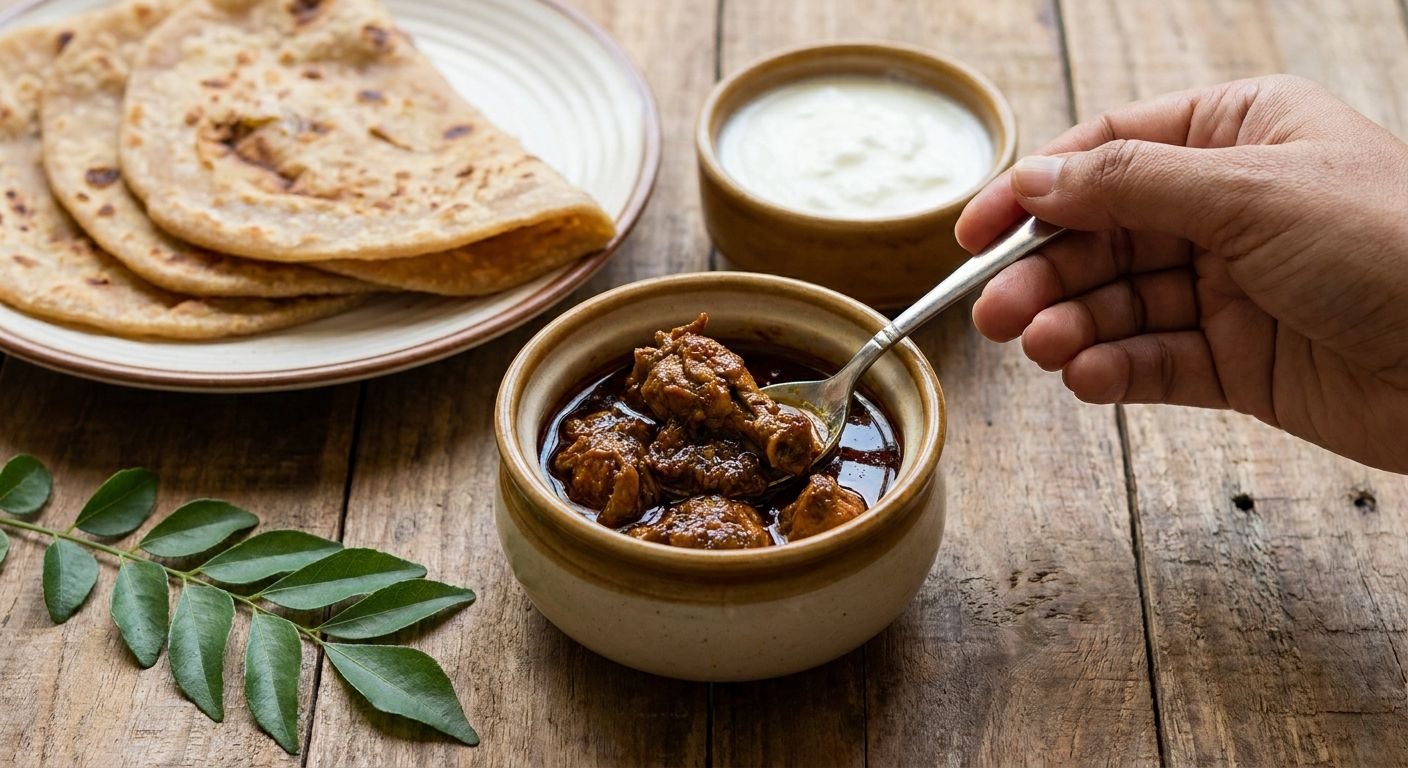
Non-veg pickle belongs on the plate as a condiment, not a curry — a spoonful next to rice, dal, and ghee, never a scoop eaten on its own. Serve it at room temperature in small portions, a teaspoon to a tablespoon per person, with enough oil clinging to the meat pieces to coat the first bite of rice. The hidden mistake most home cooks make in 2026 is treating a non-veg pickle jar like a side curry and over-serving it, which drowns the meal in oil and salt instead of accenting it.
- Serve non-veg pickle as a condiment: one teaspoon to one tablespoon per person, not a curry-sized portion.
- Chicken pickle and boneless mutton pickle pair best with hot rice, ghee, and a papad on the side.
- Bring the jar to room temperature before serving — cold oil clumps and mutes the spice.
- Prawns and fish pickle need a shorter shelf window once opened than chicken or mutton varieties.
- A dry papad or plain rice balances the oil content of any non-veg pickle Tulasi Pickles ships.
Why this matters
Andhra households treat non-veg pickle as a flavor concentrate, not a main dish. A jar of boneless mutton pickle or chicken pickle carries more oil, chili, and salt per gram than a fresh curry, so the serving math is different from what most first-time buyers expect.
Get the portion wrong and the meal tips into greasy and over-salted territory. Get it right, and one small spoon lifts a plain plate of rice and dal the way a pickle is meant to — as backup flavor, not the headline.
How to serve non-veg pickle as a side dish
Follow this order every time you plate a meal with non-veg pickle as the side:
- Bring the jar to room temperature for a few minutes before serving — refrigerated oil turns cloudy and mutes the chili.
- Stir the jar once so oil, masala, and meat pieces redistribute evenly instead of oil pooling at the top.
- Portion one teaspoon to one tablespoon per plate — enough to coat two or three spoons of rice, not a standalone helping.
- Plate it beside the rice, not mixed in from the start, so each diner controls how much heat they add bite by bite.
- Pair with a plain starch — steamed rice, curd rice, or roti — to buffer the salt and oil concentration.
- Add a papad or vadiyalu on the side; the crunch and neutral flavor cut through the pickle's richness.
Chicken pickle: one tablespoon per plate
Chicken pickle, whether boneless or chicken pickle with bone, carries diced meat suspended in chili-oil masala. One tablespoon spread over hot rice is enough for an adult portion — go past two tablespoons and the salt overwhelms the plate. If you're buying for the first time, start with a smaller jar and check how to pick the right chicken pickle for your budget before committing to a bigger pack.
Mutton pickle: half a tablespoon for bone-in cuts
Boneless mutton pickle serves closer to a full tablespoon per plate since every bite is meat. Bone-in preparations run richer per spoon, so half a tablespoon alongside rice and ghee is the more common serving in Andhra households — check the boneless mutton pickle page if you want the meat-forward version without bone work at the table.
Prawns and fish pickle: a teaspoon, served fresh from the fridge window
Seafood pickles — prawns and fish — carry a shorter usable window once opened compared to chicken or mutton, so buy the size you'll finish soon rather than stockpiling. A single teaspoon per plate is standard since the seafood flavor is more concentrated than meat pickle; pair it with plain rice rather than a heavily spiced curry so the flavors don't compete.
Why serving size varies
- Oil content — higher-oil pickles need smaller portions to avoid an overly greasy plate.
- Bone-in vs. boneless — bone-in chicken or mutton pickle delivers less edible meat per spoon, so people naturally serve slightly more to compensate.
- Spice level — a hotter batch of Guntur-style chili calls for a smaller portion regardless of pickle type.
- Meal pairing — curd rice needs less pickle than plain steamed rice since the yogurt already carries flavor.
- Number of side dishes — a thali with a curry, dal, and papad already needs less pickle than a bare rice-and-dal plate.
- Guest preference — first-time non-veg pickle eaters should start with a half portion and adjust upward.
“Non-veg pickle is a condiment, not a curry — a spoonful is a serving, not a scoop.”
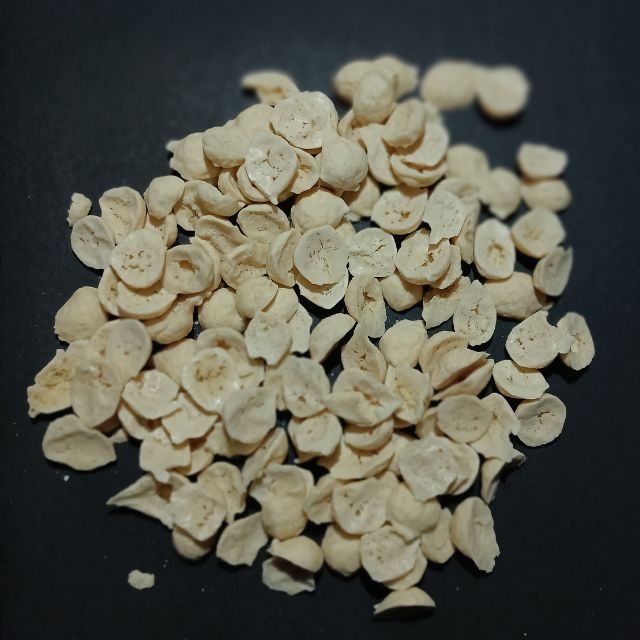
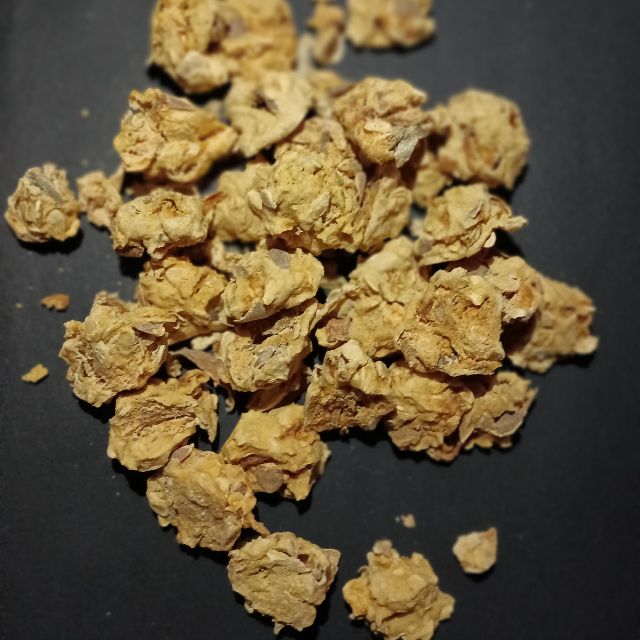
A plain-tasting side does more work than people expect. Papads and vadiyalu are the traditional counterbalance to a heavy non-veg pickle, cutting the oil with crunch instead of adding more richness to the plate.

Related questions about serving non-veg pickle
Should non-veg pickle be heated before serving?
No — non-veg pickle is served straight from the jar at room temperature, never heated on the stove. Heating breaks down the preserving oil layer and shortens how long the rest of the jar stays fresh once opened.
Can non-veg pickle be served with roti instead of rice?
Yes, non-veg pickle works with roti, though rice is the more common Andhra pairing because the grains absorb the pickle oil evenly. With roti, use a slightly smaller portion since there's less surface area to spread the masala across.
Does non-veg pickle need refrigeration once opened?
Most non-veg pickle needs refrigeration after opening, especially prawns and fish pickle, since seafood spoils faster than chicken or mutton in oil. Check the storage guide for jar-specific handling once you've broken the seal.
FAQ
How much non-veg pickle should you serve per person?
Serve one teaspoon to one tablespoon of non-veg pickle per person as a side, never a full curry-sized portion. Bone-in cuts need slightly less since they carry less edible meat per spoon.
What is the best way to serve chicken pickle as a side dish?
Serve chicken pickle at room temperature, one tablespoon per plate, alongside hot rice and a papad. Stir the jar first so oil and masala redistribute evenly before plating.
Is mutton pickle served hot or cold?
Mutton pickle is served at room temperature, never heated. Cold, refrigerated pickle should sit out a few minutes so the oil loosens before it goes on the plate.
Can non-veg pickle replace a curry in a meal?
No, non-veg pickle is a condiment meant to sit beside a curry or dal, not replace one. It carries too much concentrated oil and salt to serve as a standalone dish.
How is prawns pickle different from fish pickle when serving?
Prawns pickle and fish pickle are both served in smaller portions than chicken or mutton pickle, roughly a teaspoon per plate, because the seafood flavor is more concentrated. Both pair better with plain rice than with a spiced curry.
Does non-veg pickle go with curd rice?
Yes, non-veg pickle pairs well with curd rice, and you’ll need slightly less than with plain rice since the yogurt already carries its own flavor. A teaspoon is usually enough.
What side dishes cut the oiliness of non-veg pickle?
Papads and vadiyalu are the standard counterbalance to non-veg pickle, adding crunch without extra oil. A dry roasted papad works better than a fried one for this purpose.
How long does opened non-veg pickle stay good?
Chicken and mutton pickle generally hold longer once opened than prawns or fish pickle, which spoil faster in oil. Refrigerate after opening and check the storage guide for jar-specific handling.
One last thing
The portion mistake runs in one direction only — people under-serve papad and over-serve pickle, never the reverse. Cut the pickle spoon in half and double the papad on the plate, and the same jar of chicken or mutton pickle stretches across more meals in 2026 without anyone noticing a smaller portion.
Related guides
- Best prawns pickle for spicy seafood lovers
- Best papads to pair with Andhra meals
- Best non-veg pickles in Hyderabad for meat lovers