
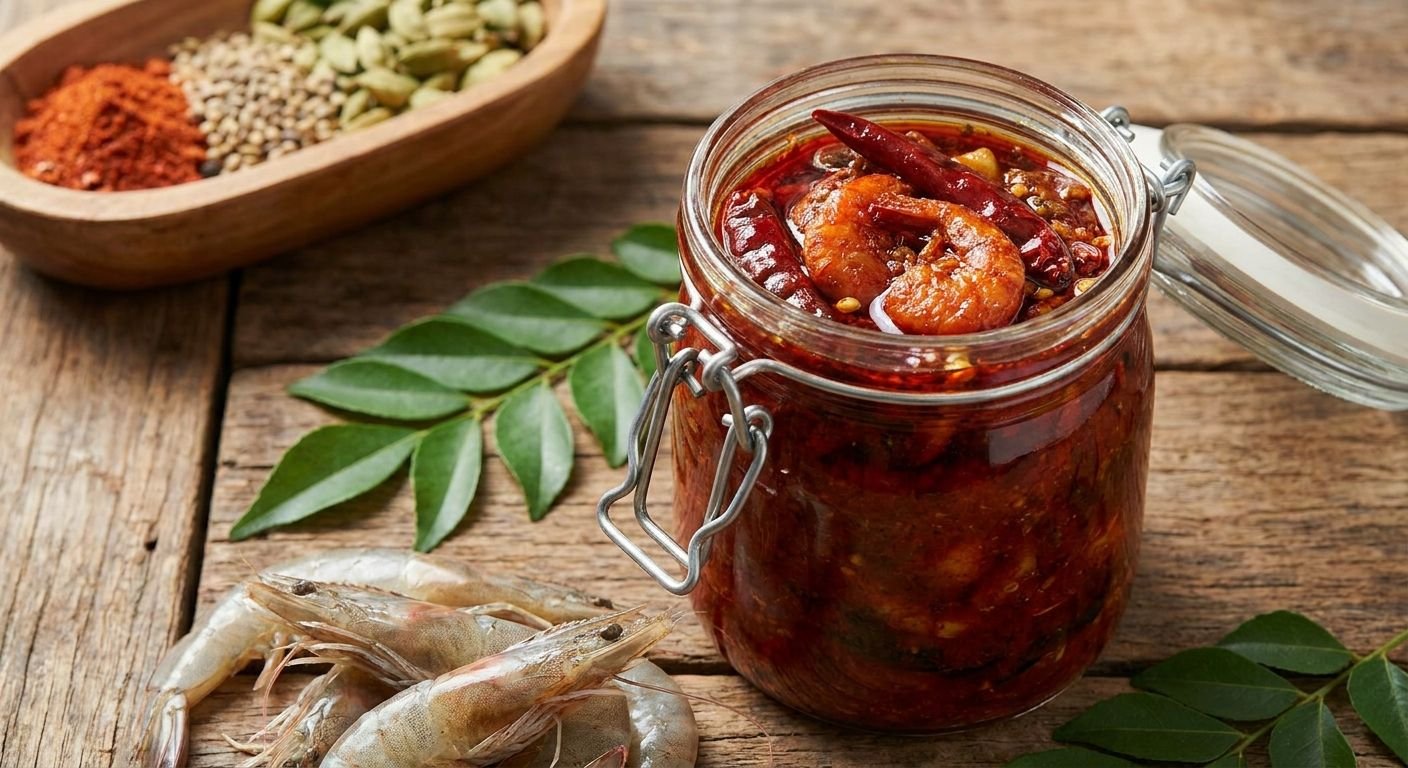
Spicy seafood lovers searching for the best prawns pickle in 2026 need to know the regional styles first — Andhra oil-cured, Goan Balchao, Kerala coconut-oil, and dry masala all deliver heat differently, and picking the wrong one means a jar that's either too mild or too short-lived on your shelf.
- Andhra-style oil-cured prawns pickle wins for daily heat and shelf life among the best prawns pickle styles in 2026 — Buy.
- Goan Prawn Balchao brings vinegar tang over chilli-oil heat — Consider if you prefer sour over fiery.
- Dry masala prawns pickle needs refrigeration and eats faster — Hold unless you finish a jar within days.
- Mass-market bottled prawns pickle with preservatives dilutes prawn content — Skip if authentic Andhra taste matters.
- Tulasi Pickles’ Andhra-style Fish Pickle is the closest coastal-heat match while a dedicated prawns pickle isn’t in the current lineup.
Why this matters
Most "best prawns pickle" lists online rank brands nobody can verify. What actually separates a good jar from a mediocre one is the regional method behind it — oil-cured Andhra style, vinegar-based Goan style, or dry masala style — because that method decides heat level, shelf behavior, and whether refrigeration is optional or mandatory.
Spicy seafood lovers who default to whatever jar shows up first on a marketplace often end up with a preservative-heavy pickle that tastes nothing like home-style Andhra pachadi. Tulasi Pickles, the Hyderabad-based homemade pickle and podi brand, makes its non-veg range — fish, chicken, mutton — using the same coastal Andhra chilli-oil method described below, which is the benchmark this guide ranks against.
How this list is ranked
Each style is ranked on three factors that matter for a spicy seafood eater: heat delivery (oil-cured vs vinegar vs dry masala), shelf stability without refrigeration, and how close the method stays to traditional Andhra coastal preparation. Styles that rely on cold-pressed oil as the preserving medium score higher on shelf stability. Styles built on vinegar or minimal oil score higher on tang but lower on shelf life. No pricing or brand claims are made here beyond what Tulasi Pickles states on its own product pages — this is a style-first buying guide, not a brand shootout.
The ranked list: prawns pickle styles for 2026
1. Andhra-style oil-cured prawns pickle — the traditional pick
Cooked prawns marinated in a red chilli-garlic paste and submerged in cold-pressed sesame or groundnut oil is the classic coastal Andhra method, the same one used across the region's Nellore and Kakinada belts. The oil layer does double duty: it carries the chilli heat evenly through the prawn and acts as the traditional preservative, which is why oil-cured pickles from this belt have historically been shelf-stable at room temperature for months rather than days.
This is the style spicy seafood lovers actually mean when they ask for "authentic" prawns pickle. Verdict: Buy — if you can find one made with real cold-pressed oil and whole red chillies, this is the benchmark. Tulasi Pickles applies this exact coastal method to its Andhra-style fish pickle, the closest match in the current lineup for anyone chasing this heat profile.
2. Goan Prawn Balchao — the tangy wildcard
Balchao swaps the chilli-oil base for a vinegar and Kashmiri chilli reduction, a Portuguese-influenced technique unique to Goa's coastal cuisine. The heat is sharper and more acidic rather than the slow-burn oil-cured heat of Andhra pickles.
It's a completely different eating experience — sour-forward, not oil-forward. Verdict: Consider if you want tang alongside spice rather than a pure heat hit; Skip if oil-cured Andhra heat is what you're actually craving.
3. Kerala-style prawn pickle with curry leaves and coconut oil — the coastal alternative
Kerala's version leans on coconut oil, curry leaves, and mustard seed tempering instead of the sesame or groundnut oil used further north on the coast. The flavor profile is nuttier and less chilli-forward than Andhra style, even at comparable spice quantities.
Good for readers who want a milder, more aromatic seafood pickle. Verdict: Consider for a gentler introduction to seafood pickle; not the pick for someone specifically chasing maximum heat.
4. Dry masala prawns pickle — the low-oil pick
This style uses minimal or no oil, relying instead on a thick dry spice coating. It's chilli-forward and intensely flavored, but without an oil barrier it doesn't hold at room temperature the way oil-cured versions do, so it typically needs refrigeration soon after opening.
Great for someone who wants a smaller batch eaten fast. Verdict: Hold — only buy this if you're finishing the jar quickly and have fridge space; it's not built for long-distance shipping or slow eating.
5. Mass-market bottled prawns pickle — the one to skip
Commercial jars sold at general grocery counters often stretch prawn content with filler oil and lean on chemical preservatives instead of the traditional oil-cure method. The result reads as "prawns pickle" on the label but tastes closer to a generic chilli-oil condiment.
If the label lists preservatives ahead of prawn and oil as primary ingredients, that's the tell. Verdict: Skip for anyone who's tasted real homemade Andhra-style pickle before.
Where Tulasi Pickles fits for spicy seafood lovers
Tulasi Pickles doesn't currently list a dedicated prawns pickle in its catalog. For the same coastal Andhra chilli-oil heat profile, its Andhra-style fish pickle is the direct substitute, prepared with the same cold-pressed oil method described above. Readers who want more variety at the same heat level can also look at the brand's broader non-veg pickle range for meat lovers, which covers chicken and mutton at comparable Guntur-chilli intensity — Guntur chillies, the base of most Andhra pickle heat, sit in the 40,000-50,000 Scoville range, among the hotter chillies grown commercially in India.
Comparison table
| Style | Oil base | Heat delivery | Shelf approach | Verdict |
|---|---|---|---|---|
| Andhra oil-cured | Sesame/groundnut | Slow, even heat | Room-stable, oil as preservative | Buy |
| Goan Balchao | Vinegar-based | Sharp, acidic | Shorter shelf, vinegar-preserved | Consider |
| Kerala coconut-oil | Coconut oil | Milder, aromatic | Moderate, oil-preserved | Consider |
| Dry masala | Minimal/none | Intense, dry heat | Needs refrigeration | Hold |
| Mass-market bottled | Filler oil | Inconsistent | Preservative-dependent | Skip |
Where to buy
- Check the oil claim before the price. Cold-pressed sesame or groundnut oil is what makes Andhra-style pickle shelf-stable; if the label doesn't specify oil type, assume filler oil.
- Buy from a seller who states the region. Andhra coastal sellers, Goan sellers, and Kerala sellers each use a distinct method — a generic "seafood pickle" listing with no regional claim is a red flag.
- For pan-India or overseas shipping, favor oil-cured over dry masala. Oil-cured pickles travel and store better; dry masala styles are better bought locally and eaten fast. Tulasi Pickles ships its non-veg pickle range across India, detailed in its Hyderabad delivery guide, the same logistics that apply to its fish pickle.
FAQ
What’s the best prawns pickle for very spicy food lovers?
Andhra-style oil-cured prawns pickle delivers the most consistent heat because the chilli-garlic paste sits in cold-pressed oil rather than vinegar or a dry coating. It’s the traditional coastal Andhra method and the benchmark for heat-focused seafood pickle in 2026.
Is prawns pickle better than fish pickle for heat?
Heat level depends on the chilli quantity and oil method, not the seafood itself, so an Andhra-style fish pickle made with the same chilli-oil base delivers comparable heat to an Andhra-style prawns pickle. Tulasi Pickles’ fish pickle uses this exact method.
How long does homemade prawns pickle last?
Oil-cured styles preserved with cold-pressed oil traditionally hold at room temperature for months because the oil layer blocks air exposure. Dry masala or low-oil styles have a shorter window and generally need refrigeration soon after opening.
Should prawns pickle be refrigerated?
Oil-cured Andhra-style prawns pickle doesn’t strictly require refrigeration once opened, provided the oil layer stays intact over the pickle. Dry masala or low-oil versions should go in the fridge immediately after opening.
What oil is used in Andhra-style seafood pickle?
Cold-pressed sesame oil or groundnut oil is standard for Andhra coastal pickles, chosen for both flavor and its role as a natural preservative. Kerala-style versions substitute coconut oil instead.
Can NRIs order Andhra seafood pickle from India?
Yes, oil-cured Andhra pickles are suited to overseas shipping because the oil base keeps them stable in transit. Tulasi Pickles ships its Andhra-style range, including fish pickle, to customers ordering from outside India.
Is Goan prawn pickle spicier than Andhra prawn pickle?
Goan Prawn Balchao is more acidic and tangy than spicy, since it’s built on a vinegar and Kashmiri chilli base rather than the oil-cured chilli-garlic paste used in Andhra pickle. Andhra style typically reads hotter due to Guntur chilli content, which runs 40,000-50,000 Scoville.
Does Tulasi Pickles sell prawns pickle?
Not currently — Tulasi Pickles’ non-veg lineup in 2026 covers fish, chicken, and mutton pickle made in Andhra style. Its fish pickle is the closest match for spicy seafood lovers looking for the same coastal chilli-oil heat.
One last thing
Andhra Pradesh's coastline runs roughly 974 km, and nearly every fishing town along it has its own house recipe for seafood pickle — which is why two jars labeled "Andhra-style" can taste completely different depending on whose kitchen it came from. If you can't find a dedicated prawns pickle you trust, an oil-cured Andhra fish pickle from a home-style seller gets you the same chilli-oil heat profile without the guesswork.
Related guides
- Boneless mutton pickle for traditional Andhra taste
- Chicken pickle with bone for authentic Andhra flavor