
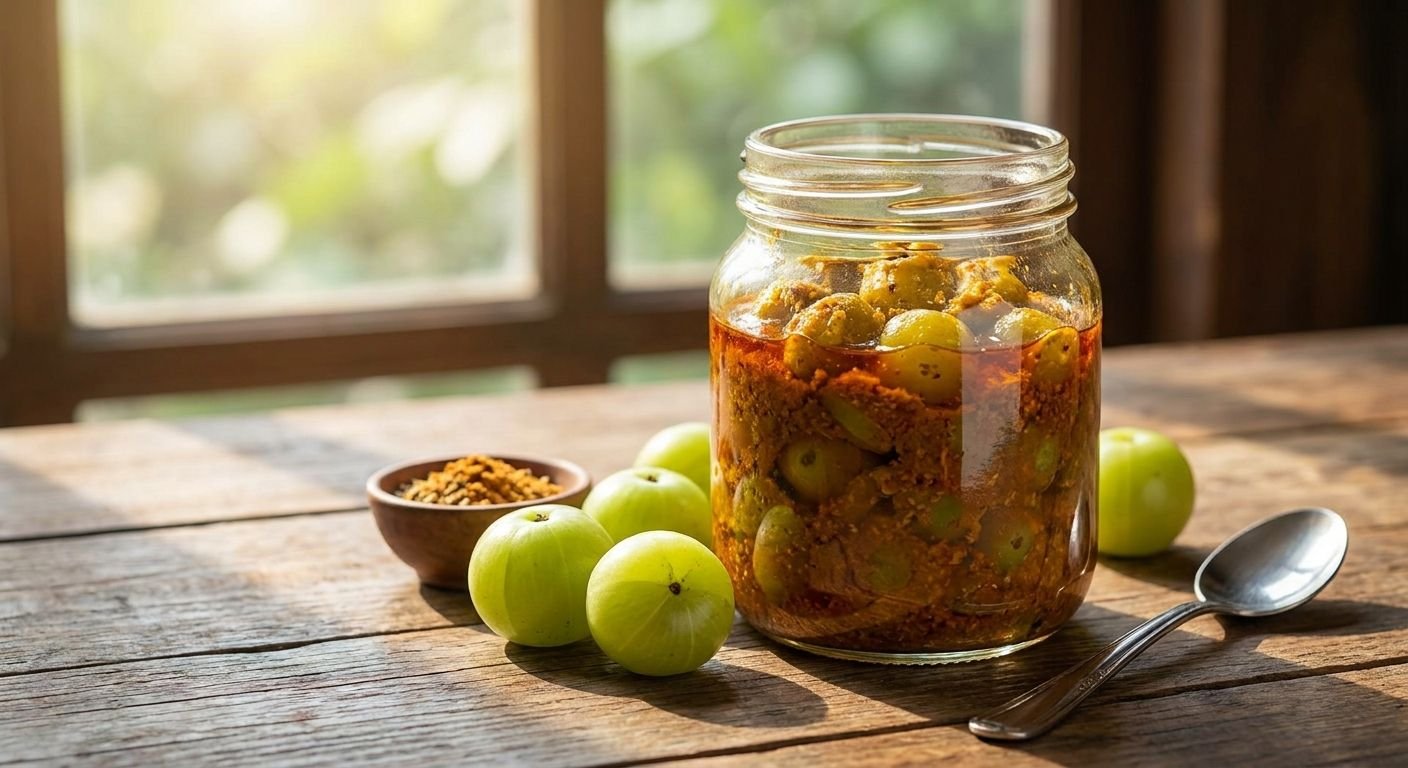
Amla pickle sits in a strange spot on the health-food shelf: it is oil-cured, salt-heavy, and still one of the few pickles a nutrition-conscious snacker can defend at the dinner table. This guide breaks down what actually makes an amla pickle worth keeping in the fridge in 2026, and which picks from Tulasi Pickles fit a health-focused routine.
- Tulasi Pickles’ Amla Pickle (Usirikaya) at ₹150 is the daily-use Buy for anyone tracking oil and salt intake.
- Amla (Indian gooseberry) carries roughly 600 mg of vitamin C per 100 g, well above most citrus fruits.
- Skip sugar-syrup ‘amla candy’ sold as pickle — it’s dessert, not a condiment for a health-conscious diet.
- Homemade, small-batch amla pickle without added preservatives travels and ships better than mass-market bottled versions.
Why this matters
Amla, or Indian gooseberry, is one of the few fruits that holds a genuinely high vitamin C count even after cooking and oil-curing — published nutrition data puts it around 600 mg per 100 g, several times what an orange delivers. That's the reason amla pickle keeps showing up on health blogs instead of just festival tables.
But "pickle" is a loaded word for anyone watching sodium or refined oil. A jar labeled amla pickle can mean a traditional Andhra-style preparation with groundnut oil and whole spices, or it can mean a mass-produced bottle padded with preservatives and cheap refined oil. In 2026, with more shoppers checking ingredient lists before checkout, that distinction decides whether the jar helps or undercuts a health goal.
Who this is for
This guide is for the snacker who wants the tang and digestion benefits of amla without loading up on refined oil, added sugar, or preservative-heavy shortcuts — someone who reads the ingredient list on Tulasi Pickles before adding a jar to cart, tracks sodium out of habit, and treats a spoonful of pickle as a condiment, not a side dish. It's also written for NRIs and frequent travelers who want a shelf-stable, oil-cured pickle that survives shipping without turning into a preservative bomb.
What to look for in amla pickle for health-conscious snackers
Oil type and quantity
Groundnut or sesame oil in moderate quantity is the traditional Andhra base for amla pickle, and it's what keeps the fruit preserved without synthetic additives. A jar swimming in oil at the top after opening usually means the maker is using oil as filler, not as a preservation method — that's a sign to check the label twice.
Salt level
Salt is the second preservative in traditional pickle-making, but it's also the number health-conscious buyers watch closest. A pickle that tastes aggressively salty in the first bite is usually compensating for thinner spice work, not just following an old recipe.
No added preservatives or artificial color
Homemade-style amla pickle preserved through oil, salt, and spice doesn't need sodium benzoate or artificial coloring to hold shelf life. If the ingredient list has a chemical name you can't pronounce, that's the shortcut talking, not tradition.
Batch size and freshness
Small-batch preparation matters more for amla than for oilier pickles like mango, because amla's texture breaks down faster once cut. A pickle made in smaller batches and shipped fresher holds its bite; mass-produced stock sitting in a warehouse for months goes soft and starts tasting flat.
Spice balance, not just heat
A health-conscious snacker wants the mustard, fenugreek, and chili to round out the sourness of amla, not just add heat for heat's sake. Andhra-style preparation leans on this balance — it's part of what separates authentic Andhra-style pickles from generic bottled versions sold as "spicy pickle."
Packaging built for shipping, not just shelf display
If you're ordering online — especially overseas — the jar needs to survive transit without oil separation ruining the texture. Vacuum-sealed or well-packed glass jars matter more here than flashy labels.
Top picks
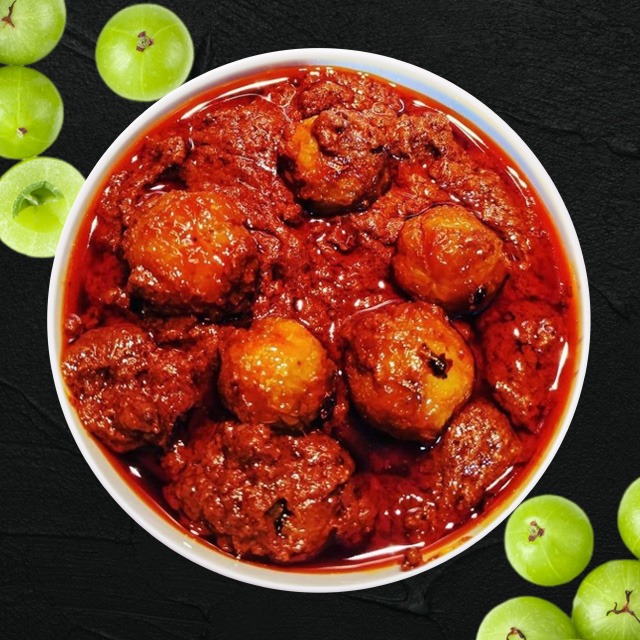
The Daily Digestive Pick. Tulasi Pickles' Amla Pickle (Usirikaya), priced at ₹150, uses groundnut oil and a traditional Andhra spice mix rather than a sugar-forward recipe. One tablespoon alongside rice or curd is enough to get the tang without overloading on oil. Verdict: Buy — this is the one to keep in daily rotation.
The Travel and Shelf-Stable Pick. The same Amla Pickle (Usirikaya) preparation, oil-cured rather than water-based, holds up better in transit and in a bag than a low-oil "diet" version would — oil-curing is what gives it shelf stability without preservatives. Anyone commuting with a tiffin box or shipping a jar cross-country needs that stability more than a marginally lower oil count. Verdict: Buy for frequent travelers.
The NRI and Gifting Pick. For anyone shipping a taste of home overseas, the priority shifts from daily portion control to packaging and distance. Amla's oil-and-spice base travels better than water-based pickles, which is part of why it shows up often in orders for pickles shipped to NRIs. Verdict: Consider if you're mailing a gift box rather than restocking your own kitchen.
The Budget-Conscious Pick. At ₹150, amla pickle sits in a reasonable range for a homemade, small-batch condiment, but it's worth checking it against other jars before assuming it's the cheapest option in the lineup. Verdict: Consider — compare against your usual weekly pickle spend before committing to a bulk order.
What to avoid
- Sugar-syrup "amla candy" sold as pickle. It's a dessert preparation, not a condiment, and it defeats the point of choosing amla for its low-sugar profile.
- Bottled amla pickle padded with refined oil. A thick oil layer that looks "traditional" is sometimes just cheap filler oil masking a thinner spice mix underneath.
- Preservative-heavy imported jars marketed as "diet" pickle. A label claiming low calories doesn't mean low sodium — check the nutrition panel, not just the front-of-pack claim.
Verdict comparison
| Pick | Best for | Oil/salt profile | Verdict |
|---|---|---|---|
| Amla Pickle (Usirikaya) — Daily use | Everyday snacking | Groundnut oil, traditional Andhra spice | Buy |
| Amla Pickle (Usirikaya) — Travel jar | Commuters, travelers | Oil-cured, shelf-stable | Buy |
| Amla Pickle (Usirikaya) — Gift/NRI order | Overseas shipping, gifting | Oil-based, holds up in transit | Consider |
| Sugar-syrup amla candy | Dessert cravings only | High sugar, not a condiment | Skip |
| Preservative-heavy bottled amla | Long shelf life on a store rack | Chemical preservatives, refined oil | Skip |
FAQ
What’s the best amla pickle for a health-conscious diet in 2026?
A small-batch, oil-cured amla pickle without artificial preservatives is the healthiest option in 2026, since the oil and salt handle preservation naturally instead of chemical additives. Tulasi Pickles’ Amla Pickle (Usirikaya) follows this traditional Andhra method.
Is amla pickle better than raw amla for health?
Raw amla retains slightly more vitamin C, but amla pickle is far easier to eat daily since the sourness is balanced by oil and spice. Cooking and oil-curing do reduce some vitamin C, but the fruit still carries meaningful nutrition compared to most condiments.
How much does amla pickle cost in 2026?
A homemade jar of amla pickle typically runs around ₹150 for a standard size in 2026, though pricing varies by batch size and brand. Mass-produced bottled versions can be cheaper but usually trade quality and freshness for shelf life.
Does amla pickle help digestion?
Amla is traditionally used in Andhra households to support digestion, largely due to its fiber and acidity working alongside mustard and fenugreek in the pickle spice mix. It’s commonly eaten alongside curd rice for this reason.
Can amla pickle be shipped overseas without spoiling?
Yes, oil-cured amla pickle in a well-sealed jar travels well for overseas shipping because the oil and salt act as natural preservatives during transit. This is why it’s a common pick among NRIs ordering pickles shipped from Hyderabad.
Is amla pickle high in sodium?
Amla pickle does carry meaningful sodium from the salt used in curing, so portion control matters more than avoiding it entirely. A tablespoon serving alongside a meal keeps sodium intake reasonable for most diets.
What’s the difference between amla pickle and amla murabba?
Amla pickle is oil- and spice-cured and savory, while amla murabba is a sugar-syrup preserve and closer to a sweet. Health-conscious snackers looking to limit sugar should reach for the pickle, not the murabba.
One last thing
Amla's vitamin C content, often cited around 600 mg per 100 g in published nutrition data, survives oil-curing better than heat-based cooking methods — which is part of why the pickle format holds more nutritional value than boiled or fried amla preparations. If you're buying for the health angle specifically, that's the detail worth remembering over any other claim on the jar.
Related guides