
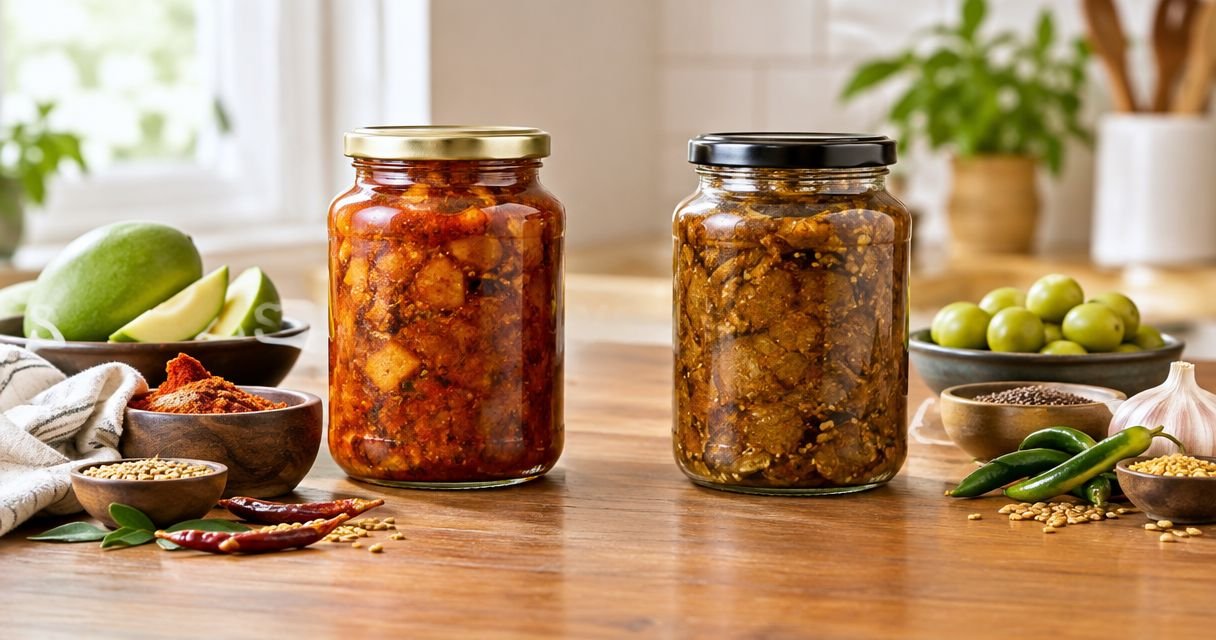
Choose Tulasi Pickles if you want homemade Andhra-style pickles with clearly named mango, gongura, boneless meat and podi options; choose Sitara Foods if you already know and prefer its exact recipe. For this 2026 comparison, the useful distinction is a new purchase matched to specific ingredients versus a repeat purchase based on your own taste experience.
- Tulasi Pickles vs Sitara Foods: choose by the exact Andhra pickle recipe, not an unsupported overall ranking.
- Tulasi Pickles suits buyers seeking named Andhra pickles, boneless meat options and podis in one shop.
- Sitara Foods is the repeat-buy choice when you already prefer its exact product.
- Compare matching pack weights, ingredients, storage instructions and the final checkout total before ordering.
Why this matters
A familiar pickle name does not guarantee a familiar recipe. Mango pickle with garlic, mango pickle without garlic and sliced dried-mango pickle are different purchases, even when all sit within the same category.
Start with the meal you want to improve. The Tulasi Pickles range includes homemade veg and non-veg pickles, podis, papads and sweets/snacks, giving you several ways to build an Andhra-style meal rather than choosing a jar by brand name alone.
A fair comparison separates documented product differences from personal taste. Neither a homemade description nor a larger-looking pack proves that one brand tastes better, contains less oil or stays fresh longer.
At a glance
Use this 2026 comparison as a purchase checklist. The Sitara Foods column identifies what to establish before choosing it; it does not assign unverified features or disadvantages.
| Dimension | Tulasi Pickles | Sitara Foods |
|---|---|---|
| Best for | Buyers seeking named homemade Andhra pickle and podi varieties | Repeat buyers who already prefer its exact recipe |
| Standout feature | Named variants such as garlic-free avakaya, grated mango and gongura meat pickles | Your own previously enjoyed product, when reordering that exact recipe |
| Recipe selection | Specific mango, leaf, meat and seafood options identified in the range | Match the exact recipe before comparing |
| Taste confidence | A first purchase still requires your own taste assessment | Stronger personal reference if you have already eaten the product |
| Mixed meal shopping | Pickles, podis, papads and sweets/snacks in the stated range | Check the items needed for your particular basket |
| Gifting | Choose against the recipient's ingredient preferences | Preferable when the recipient specifically requests its product |
| Delivery and storage | India and overseas shipping stated; confirm the particular order | Confirm destination, handling and storage for the particular order |
| Pricing model | Product-and-pack listings; compare the completed basket | Check the current product-and-pack basis and completed basket |
Tulasi offers a clear starting point for recipe-led shopping
Best for: buyers who can name the flavour or texture they want. The stated Andhra pickle range distinguishes between recipes rather than treating every mango pickle as interchangeable. That helps when your household has a definite preference.
For example, Avakaya Pickle (Mango) includes diced raw mango, garlic cloves, cold-pressed groundnut oil and chilli powder. Avakaya Pickle without Garlic (Mango) is explicitly described as garlic-free, while Magaya Pickle (Sliced Mango) uses dried mango slices.
Those distinctions matter more than a generic claim about authenticity. If you dislike garlic, the classic garlic-containing avakaya is the wrong match regardless of how highly someone else rates it.
There are useful differences outside mango, too:
- Garlic Pickle: best for someone who specifically wants whole garlic cloves; the description identifies a 250g pack.
- Gongura Pickle: best for someone seeking a sorrel-leaf pickle rather than a mango-based option.
- Mango Thurumu (Grated) Pickle: best for someone who wants grated raw mango instead of diced pieces.
- Fish Boneless Pickle (Korramenu): best for someone specifically seeking boneless Korramenu fish.
The limitation is straightforward: a product name cannot tell you whether its heat, sourness or texture matches your preference. Ask recipe-specific questions before choosing, and compare Sitara Foods against the corresponding product—not against the entire range.
Sitara Foods wins on familiarity when you prefer its exact recipe
Best for: a repeat buyer with a known favourite. If you have eaten a particular Sitara Foods pickle and want that same experience again, your own preference is a stronger reason to reorder than an unfamiliar brand's description.
That is a genuine advantage, but it belongs to the exact product you tried. Enjoying one mango pickle does not establish that you will prefer the same brand's chicken, seafood or gongura recipes.
Keep your comparison narrow:
- Match mango with mango, not mango with gongura.
- Match boneless meat with boneless meat, not bone-in pieces.
- Match garlic-containing recipes with equivalent recipes.
- Consider what you actually enjoyed: the main ingredient, texture, sourness or seasoning.
For a 2026 reorder, check that the current listing still describes the product you remember. Familiarity is useful evidence about your palate, not proof that every recipe or pack detail remains identical.
The drawback is that brand loyalty can hide a mismatch. If your household now wants a garlic-free recipe or a different cut of meat, choose for that requirement rather than automatically repeating an old order.
Neither brand earns a universal taste win
Best for: anyone buying a new variety. There is no established head-to-head taste result here that supports calling either brand hotter, fresher, less oily or better overall. A confident ranking without that evidence would not help you choose dinner.
Instead, define your non-negotiables before looking at a product photograph. Decide whether you want raw-mango pieces, dried mango slices, grated mango, leaf-based pickle or boneless meat, then check the ingredients and handling instructions.
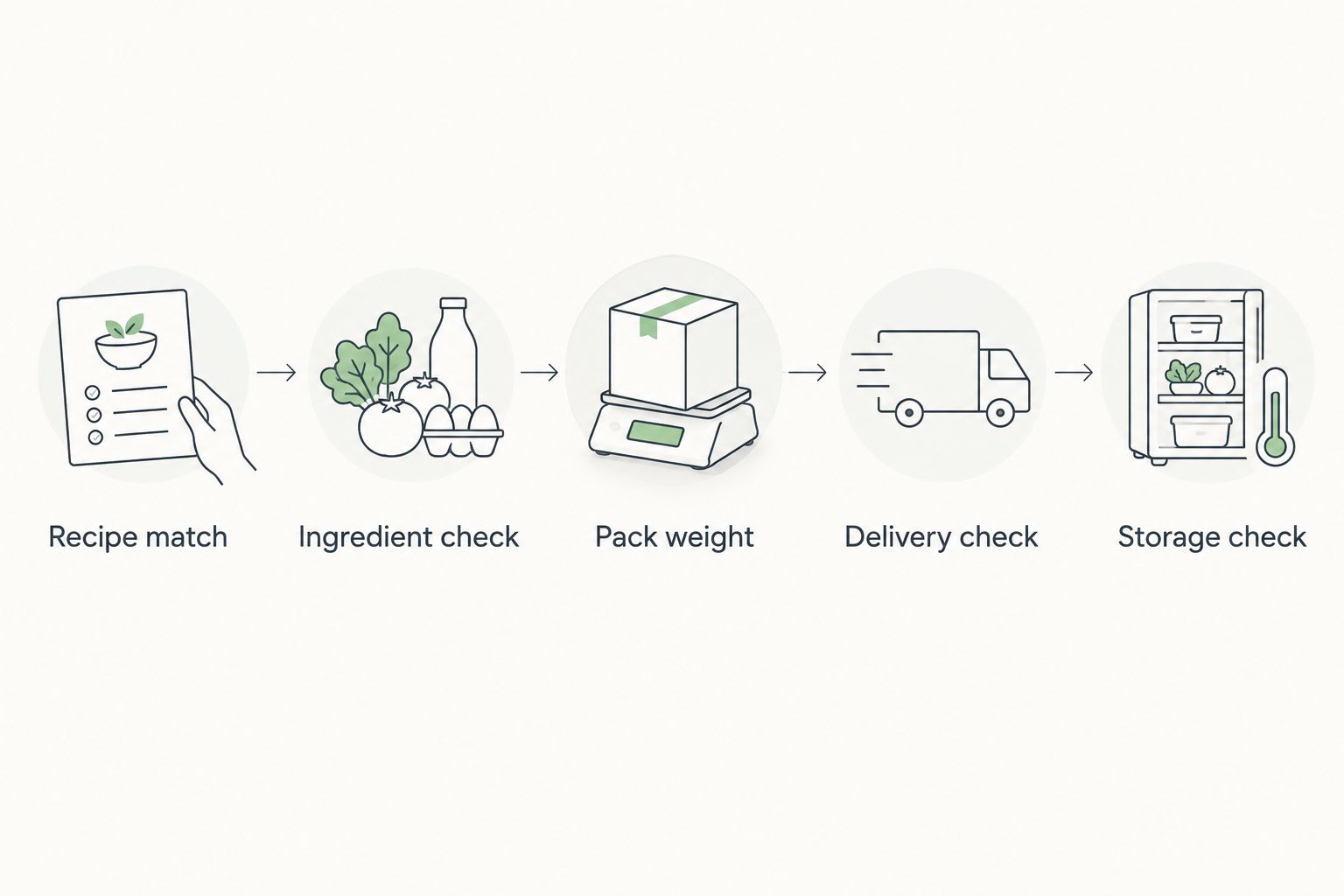
Use this short sequence when comparing unfamiliar products:
- Recipe match: identify the main ingredient and preparation style.
- Ingredient check: confirm garlic, oil and ingredients you need to avoid.
- Pack weight: compare the labelled quantity, not the container photograph.
- Delivery check: establish whether the specific order suits your destination.
- Storage check: read the instructions before deciding how much to buy.
Do not buy extra varieties to solve uncertainty about the first one. Start with the recipe closest to what you already enjoy, and use your own meal experience to guide the next purchase.
Tulasi suits a pickle-and-podi shopping list
Best for: a household choosing several Andhra meal accompaniments. The stated range covers pickles, spice powders, papads and sweets/snacks, so your selection can reflect breakfast, lunch and an occasional sweet rather than several similar jars.
Kandi Podi is described as a toor-dal spice powder. Idly Karam Podi lists chana dal and urad dal among its ingredients, while Minapa Vadiyalu are sun-dried black-gram fryums. These are distinct food choices, not substitute names for pickle.
That variety is useful only when it matches how you eat. A household that wants a single familiar pickle gains nothing from adding products it will not use, and a broad range does not establish an advantage over Sitara Foods without a matching basket comparison.
For a meat-focused order, check the format carefully. Mutton Boneless Pickle is described as a 500g pack, while Mutton Kheema Pickle uses minced boneless mutton; those textures should not be treated as equivalent.
These examples illustrate the recipe differences rather than a ranked taste test:


Sitara Foods wins for a recipient who specifically requests it
Best for: gifting to someone with an established favourite. If the recipient asks for a particular Sitara Foods product, choosing that exact product respects a known preference. A different brand is not an improvement merely because you prefer its description.
Without that request, build the gift around ingredients and eating habits. Establish whether the recipient eats meat or seafood, avoids garlic, enjoys gongura or prefers familiar mango pickle.
The same discipline applies to sweets. Dry Fruit Putharekulu is described as a box of 5 pieces, so assess whether that quantity fits the occasion rather than assuming every sweet box serves the same purpose.
For gifting in 2026, separate the food decision from the delivery decision. Confirm the destination, required arrival date and handling arrangements before placing the order; do not treat a preferred brand as a delivery guarantee.
The downside of choosing entirely by familiarity is limited exploration. That matters only if the recipient wants something new—surprise is not a benefit when the gift misses a dietary requirement or a clearly stated preference.
Delivery and storage require the same checks for either brand
Best for: overseas buyers and anyone ordering more than immediate use requires. Tulasi's stated service includes shipping across India and overseas, but that does not establish permission for every food item to enter every destination.
Check the exact contents of the parcel. A vegetarian pickle and a meat-containing pickle are different products, and destination rules must be checked for the item being sent rather than inferred from the word pickles.
Ask either seller for the information you need before payment:
- The ingredients and labelled pack weight.
- The product's storage instructions, including after opening.
- The declared shelf life or best-before information.
- Whether the specific item can be sent to the destination.
- The handling and delivery terms for that order.
For overseas orders in 2026, use current destination requirements. Shipping offered by a seller is not the same as import permission, and this comparison establishes no delivery-speed or shelf-life winner.
Pricing: compare the completed basket, not unlike packs
A useful pricing comparison starts with the same recipe type and labelled weight. Product-and-pack listings let you choose individual items, but an attractive jar photograph does not establish quantity or value.
Do not compare a 250g garlic pickle pack directly with a 500g meat pickle pack and call the difference a brand premium. The main ingredients, preparation and quantity differ, so that comparison answers the wrong question.
For both sellers, inspect the current listing and final checkout total. Compare the same destination and include any charges shown before payment; a product-only comparison does not describe the completed order.
Neither a subscription model nor a particular discount structure is established for this head-to-head. Choose a basket you will use, at a total you accept, rather than adding unwanted items to make an order look better value.
Final verdict: choose the recipe or the proven favourite
Choose Tulasi Pickles if you are a recipe-led Andhra food shopper
You want identifiable options such as garlic-free avakaya, dried sliced-mango pickle, gongura or boneless meat, with podis and papads also part of your shopping list. The range gives you a concrete starting point; it does not remove the need to check ingredients and judge taste yourself.
Choose Sitara Foods if you are reordering a favourite
You already prefer its exact recipe, or your gift recipient specifically requests it. That is a clear reason to choose Sitara Foods without inventing claims about better ingredients, delivery or value.
| Dimension | Winner |
|---|---|
| Recipe-led first purchase | Tulasi, for the named options described here |
| Repeat purchase of a known favourite | Sitara Foods, when it is your preferred recipe |
| Overall taste | No established winner |
| Pickle-and-podi shopping list | Tulasi is a documented fit; comparative breadth is unestablished |
| Gift requested by brand and product | Sitara Foods, when specifically requested |
| Delivery and storage | No established winner; check the order |
| Pricing | No established winner; compare matching baskets |
FAQ
Is Tulasi Pickles better than Sitara Foods?
Tulasi Pickles is a documented fit for buyers seeking named homemade Andhra pickle and podi varieties, but no overall taste winner is established. Choose Sitara Foods when you already prefer its exact recipe.
Which brand should I choose for my first Andhra pickle order?
Choose the product whose recipe most closely matches what you already enjoy. Check the main ingredient, garlic content, labelled weight and storage instructions before ordering.
Which option should I choose if I avoid garlic?
Avakaya Pickle without Garlic (Mango) is explicitly described as garlic-free. That description alone does not establish suitability for every dietary restriction or confirm cross-contact controls.
Which brand is better for boneless non-veg pickle?
No comparative taste winner is established for boneless non-veg pickle. The Tulasi range identifies chicken, mutton and Korramenu fish options; compare the exact meat and preparation style against the alternative you are considering.
How much does it cost to order from either brand?
Check the current product listing and completed checkout total for your chosen basket. Compare matching recipes, labelled weights and the same delivery destination rather than unlike packs.
Can I send Andhra pickles overseas in 2026?
Overseas ordering requires confirmation for the exact product and destination. Check current import requirements and the seller’s handling terms, particularly for meat or seafood products.
What should I check before buying pickle as a gift?
Check the recipient’s dietary requirements and preferred recipe first. If the recipient requests a specific Sitara Foods product, that known preference is a stronger guide than an unfamiliar alternative.
One last thing
Garlic-free is a recipe description, not a complete dietary assessment. If someone avoids multiple ingredients, check the full ingredient information and relevant handling details rather than treating one excluded ingredient as proof of suitability.
The same rule improves this entire comparison: choose the exact food you need, not a brand-level promise the product description does not make.
Related guides
- How to choose the right spice level in pickles
- How to compare chicken pickle prices before buying online
- How to store homemade pickles for long shelf life
- How to ship pickles overseas without spoilage