
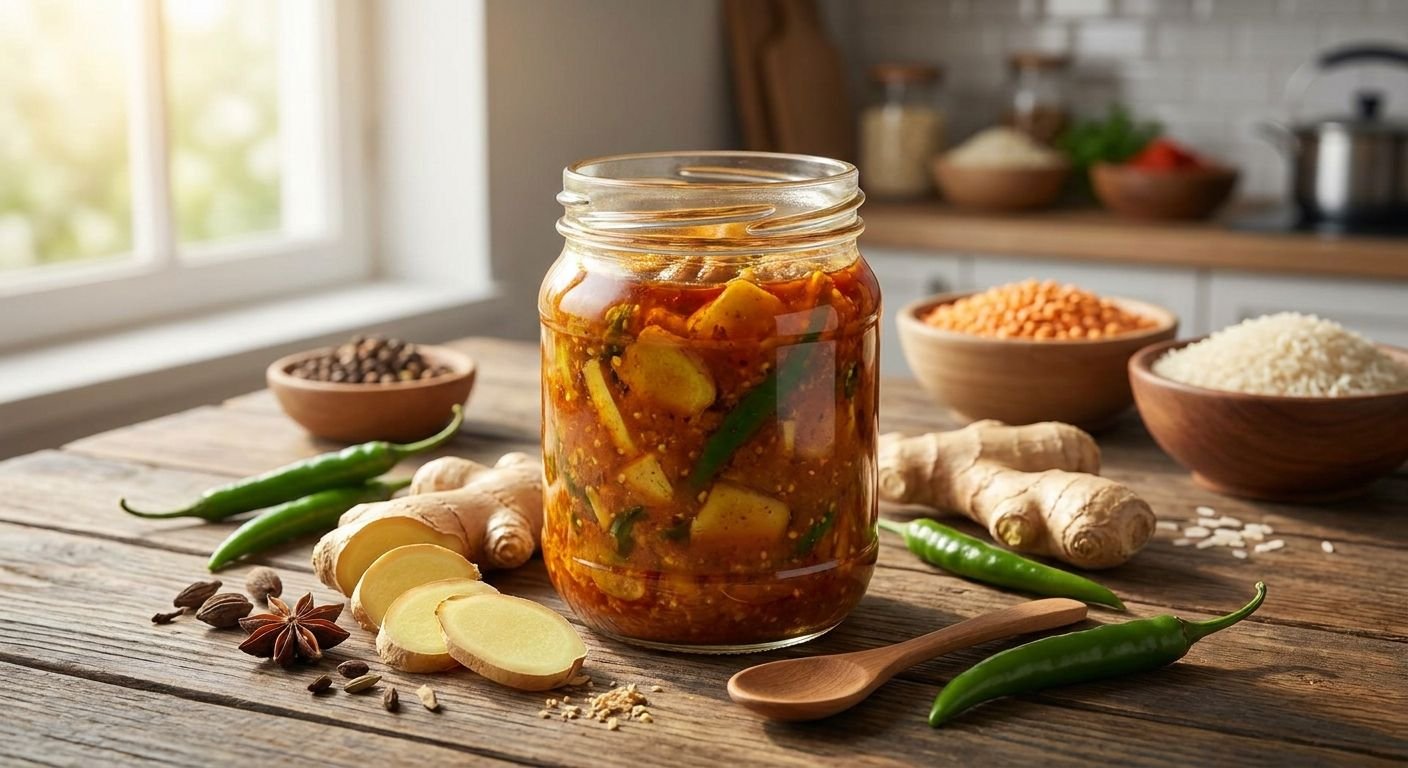
Ginger pickle for digestion and immunity boosting meals is a spiced, oil-cured ginger condiment that home cooks spoon onto rice, curd, or khichdi to support gut comfort and everyday immune resilience. Immunity-focused eaters need something different from a casual pickle buyer: a jar that stays potent for weeks, doesn't drown the ginger in oil, and fits into a daily routine rather than an occasional treat.
- Ginger pickle delivers concentrated gingerol in a shelf-stable form, unlike raw ginger that loses potency within days.
- Tulasi Pickles’ ginger pickle uses traditional Andhra tempering, best eaten in half-teaspoon portions with meals, not by the spoonful.
- Pairing ginger pickle with curd rice or khichdi in 2026 meal plans supports digestion without adding extra oil to the dish.
- Rotating ginger pickle with garlic or amla pickle across the week covers a wider immunity-support base than one jar alone.
- Oil-heavy jars work against health-conscious eaters; check the oil-free route before committing to a full-size jar.
Why ginger pickle matters for immunity-conscious eaters
Ginger has been part of Ayurvedic digestive routines for centuries because of gingerol and shogaol, the compounds responsible for its warming, gut-settling effect. The problem for a modern kitchen in 2026 is timing: fresh ginger loses pungency and some of its active compounds within days of being peeled and cut, and grating it fresh into every meal isn't realistic for anyone juggling a job or a hostel mess schedule.
A jarred ginger pickle solves the storage problem the way pickling always has — oil, salt, and chili slow spoilage and hold the ginger's character for weeks rather than days. That's precisely why this segment searches for ginger pickle instead of fresh ginger: they want the digestive benefit without the daily prep. Garlic pickle shows up in the same searches for the same reason — both are condiment-format immunity foods, not medicine, and both work best as a regular small addition to meals rather than a one-time fix.
Build a ginger pickle habit for digestion and immunity
Start with your first meal of the day
A half-teaspoon of ginger pickle with breakfast — plain rice, upma, or even toast — settles the stomach before the rest of the day's meals arrive.
- Stick to half a teaspoon per serving; ginger pickle is concentrated, not a side dish
- Avoid pairing it with very oily breakfasts — the pickle already carries oil
- Skip it on an empty stomach if you have acidity issues; take it with food, not before
Choose the right spice level for daily use
A jar meant for occasional weekend meals and a jar meant for daily digestion support are not the same purchase. Choosing the right spice level in pickles matters more here than flavor preference alone.
- Mild-to-medium heat is easier on the stomach lining for daily servings
- High-chili jars work for occasional use, not everyday digestion routines
- Read the ingredient note on chili quantity before buying for daily use
- If you're sensitive to spice, sample a smaller pack before committing to a full jar
Pair ginger pickle with foods that support digestion
What you eat ginger pickle with changes how well it works for gut comfort. Pairing pickles with curd rice and khichdi is one of the oldest combinations in Andhra households, and it isn't accidental — curd's probiotics and ginger's warming effect complement each other.
- Curd rice with a half-teaspoon of ginger pickle is a standard after-meal digestive combo
- Khichdi and ginger pickle work well on days your stomach feels off
- Avoid pairing ginger pickle with already-spicy non-veg curries — the heat stacks up fast
- Plain steamed rice with ghee and ginger pickle is a lighter option for evening meals
Rotate ginger pickle with other immunity-focused pickles
No single pickle covers every nutrient angle. Rotating jars across the week gives you variety without abandoning the habit.
- Ginger pickle for digestion-focused days
- Garlic pickle for its own immunity-supporting reputation in Andhra kitchens
- Amla pickle for vitamin C-rich variety, especially in winter months
- Keep two jars open at a time rather than finishing one before starting another — variety beats volume
Watch portion size and oil intake
The oil in a traditional pickle preserves it, but it also adds up if you're eating pickle daily across multiple meals.
- Cap daily intake at one to two teaspoons total across all meals
- Health-conscious eaters managing oil intake should look at oil-free formats before buying by the jar
- Drain excess oil off the spoon before serving if you're watching fat intake closely
Store it right so the ginger stays active
A ginger pickle that's improperly stored loses both flavor and the digestive benefit you bought it for.
- Keep the jar refrigerated after opening if you live in a hot, humid city
- Always use a dry spoon — moisture is the fastest way to spoil a batch
- Press the pickle down so oil covers the surface after each use
Comparing immunity-focused pickle options in 2026
| Option | Best for | Key limitation |
|---|---|---|
| Ginger pickle | Daily digestion support with meals | Strong flavor can overpower mild dishes if overused |
| Garlic pickle | Eaters wanting a stronger immunity-linked pickle | Not ideal for those avoiding raw garlic aftertaste |
| Amla pickle | Vitamin C variety, especially in cold months | Tart flavor isn't for everyone; smaller serving size needed |
| Oil-free pickle | Buyers actively limiting daily oil intake | Shorter usable window once opened compared to oil-cured jars |
Ginger pickle wins for anyone building a daily digestion routine around rice, curd, or khichdi in 2026 — it's the most versatile of the four for everyday meals, not just festive ones.
Common mistakes immunity-focused eaters make with ginger pickle
- Treating it as medicine, not food — a spoonful of pickle won't replace an actual digestive issue needing attention; it's a supportive habit, not a cure
- Overloading the plate — three or four teaspoons in one sitting cancels out the "light on the stomach" benefit and adds unnecessary salt and oil
- Buying the spiciest jar available — high chili content can irritate rather than soothe a sensitive stomach
- Skipping refrigeration in summer — Hyderabad and coastal city heat speeds up spoilage faster than most buyers expect
- Sticking to one jar all year — rotating with garlic or amla pickle covers more ground than repeating the same jar month after month
FAQ
Is ginger pickle good for digestion?
Ginger pickle contains gingerol, the same compound responsible for fresh ginger’s digestive reputation, held in an oil-cured form that stays active for weeks. A half-teaspoon with meals is the standard serving for digestion support, not a full spoon.
How much ginger pickle should I eat daily?
One to two teaspoons total across the day’s meals is the practical range for daily use. Eating more than that adds unnecessary oil and salt without extra digestive benefit.
Is ginger pickle better than garlic pickle for immunity?
Neither replaces the other — ginger pickle leans toward digestion support while garlic pickle carries its own immunity-linked reputation in Andhra cooking. Rotating both across the week covers more ground than picking one over the other.
Can I eat ginger pickle every day?
Yes, in small daily portions of half a teaspoon to one teaspoon per meal. Daily use is exactly how this pickle fits into Andhra households, alongside curd rice or khichdi.
Does ginger pickle need refrigeration after opening?
In hot, humid cities refrigeration after opening keeps the jar usable longer and protects the active compounds in the ginger. Always use a dry spoon to avoid introducing moisture.
What should I pair ginger pickle with for best digestion results?
Curd rice and khichdi are the traditional pairings because the probiotics in curd and the warming effect of ginger complement each other. Avoid pairing it with already spicy non-veg curries where the heat just stacks up.
Is oil-free ginger pickle available for health-conscious buyers?
Oil-free formats exist across the pickle category for buyers actively limiting daily oil intake, though they typically have a shorter usable window once opened compared to oil-cured jars.
How is Tulasi Pickles’ ginger pickle made?
Tulasi Pickles makes its ginger pickle using traditional Andhra-style tempering and oil-curing, the same method used for its other pickle lines shipped across India and overseas in 2026.
One last thing
The single biggest shift immunity-focused eaters miss in 2026 isn't which pickle to buy — it's serving size. A half-teaspoon of Tulasi Pickles ginger pickle eaten daily with the right meal does more for a digestion routine than an occasional heaping spoonful eaten once a week. Consistency in small portions beats intensity in large ones, every time.
Related guides
- Andhra pickles for every meal
- Best oil-free pickles for health-conscious buyers
- Amla pickle for health-conscious snackers