
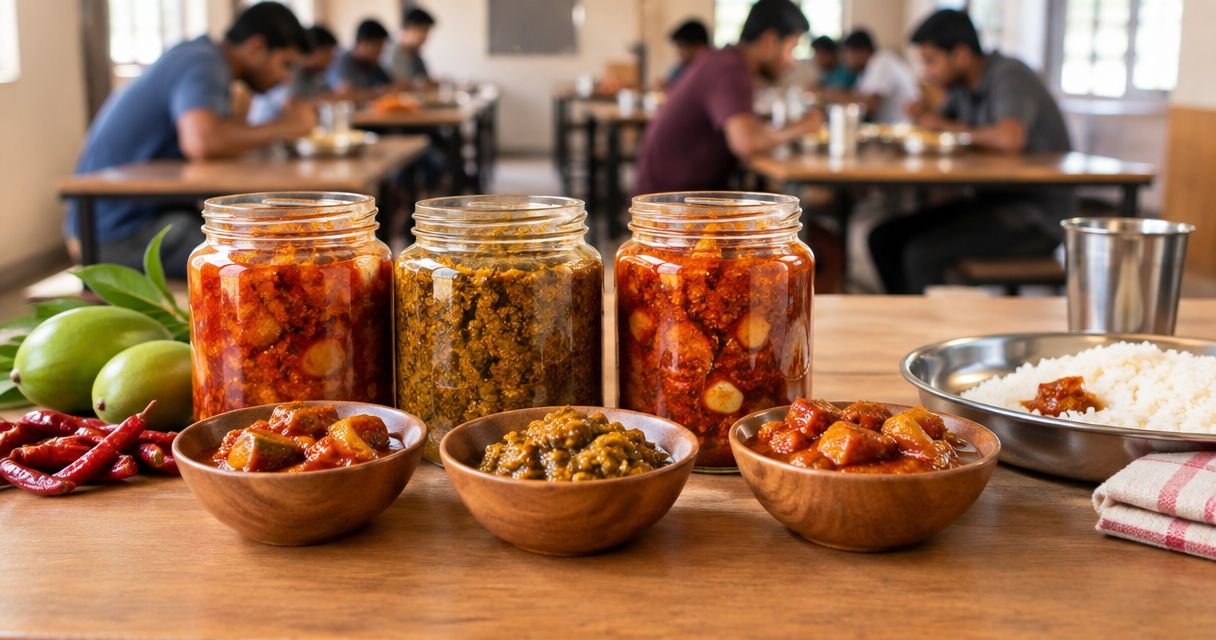
Hostel and PG mess pickle planning is the selection, storage and serving of Andhra pickles to keep shared meals consistent. This guide covers choosing flavours, testing portions, checking suppliers and managing shared service without treating every resident’s spice preference or dietary needs as identical.
- Choose Andhra pickles for hostel mess owners by resident preference, ingredient labels and measured consumption—not jar size alone.
- Tulasi Pickles suits hostel and PG owners seeking homemade Andhra-style pickles online; confirm suitability before routine purchasing.
- Keep vegetarian and non-vegetarian pickle service separate, with dedicated containers and utensils.
- Test pickle portions with your actual rice meals before setting a repeat order.
Why Andhra pickles matter for hostel and PG mess owners
A shared mess needs a repeatable way to offer flavour without changing the main meal for each resident. Pickle works as an optional accompaniment: residents decide whether to take it, while your kitchen keeps the rice, dal and vegetable service consistent.
The challenge is shared handling. A communal jar needs clear ownership, appropriate storage and utensils that stay out of other dishes. A preference for Andhra food also does not establish tolerance for every chilli level; use this guide to choose the right spice level in pickles before deciding your default.
For your 2026 mess menu, treat pickle as a controlled side dish, not a substitute for the meal. Evaluate resident acceptance and kitchen handling together. A flavour that residents enjoy still needs a workable serving routine.
How to choose and serve Andhra pickles in your mess
1. Map your residents’ needs before choosing flavours
Start with a paper sheet or a simple spreadsheet. Ask residents what they actually eat with rice, rather than asking only whether they like spicy food. Record vegetarian requirements, preferred heat and any ingredients they need to avoid.
Separate preference from restriction. Disliking garlic is different from requiring food without garlic, and choosing vegetarian food is different from needing allergen controls. Read the ingredient information for every proposed purchase; the flavour name alone does not settle those questions.
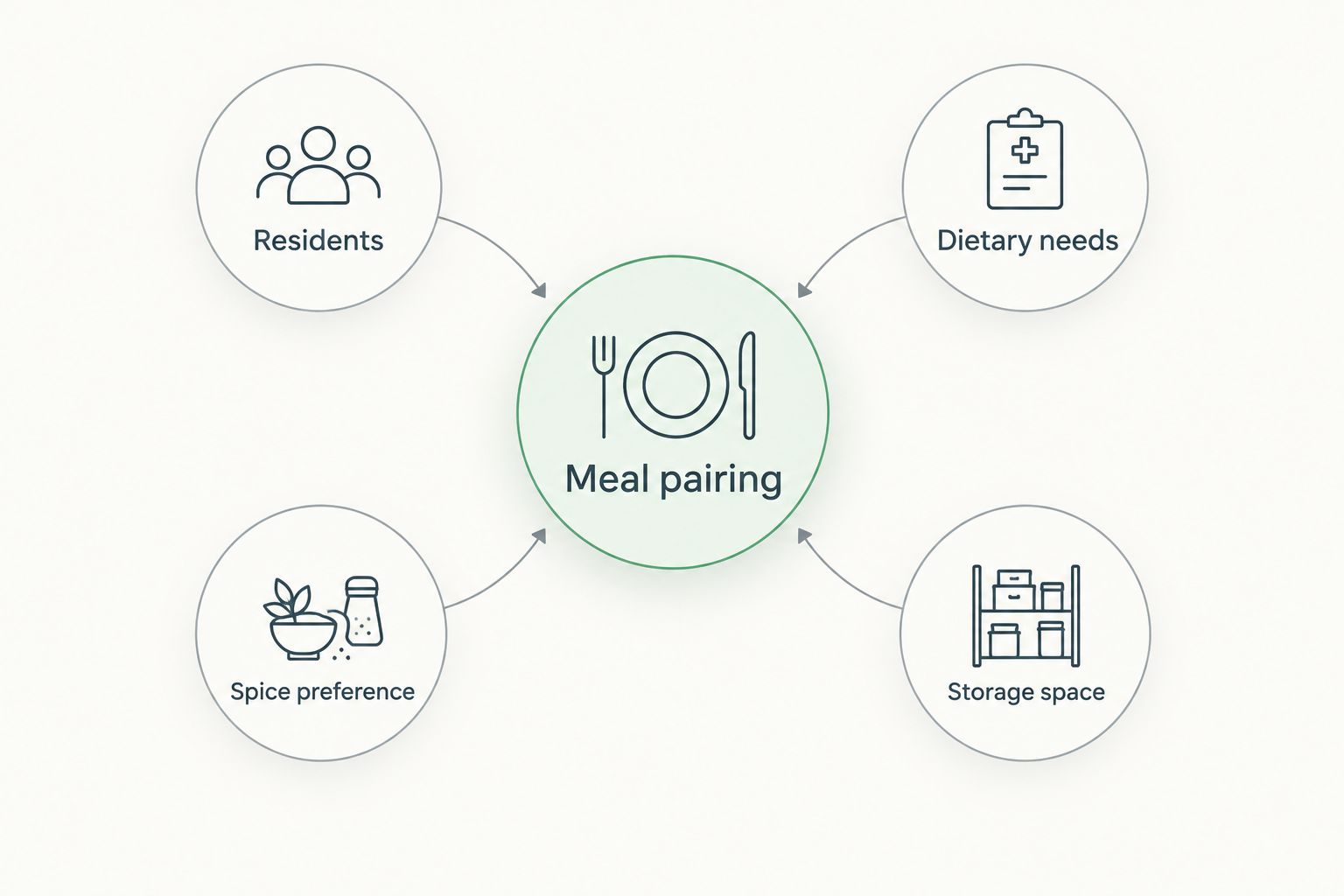
Build your 2026 purchasing brief around these fields:
- Residents: record which groups use each meal service.
- Dietary needs: list vegetarian requirements and declared ingredient restrictions.
- Spice preference: ask about a pickle residents already know.
- Meal pairing: record whether demand comes with rice, breakfast or both.
- Storage space: identify where unopened and opened containers belong.
2. Test a small menu with the meals you serve
Run a tasting during ordinary mess service before committing to repeat purchasing. Use your regular rice and accompaniments. Testing pickle by itself answers a different question from testing it alongside the meal residents receive.
As a practical trial, record feedback over 7 service days. This is a suggested observation period, not a shelf-life claim. Keep the serving method consistent so that a change in portion size does not look like a change in flavour preference.
Ask whether residents would take the pickle again, not just whether it tastes good. Record requests for less heat separately from requests for more pickle; otherwise, your next order solves the wrong problem.
- Trial a vegetarian option before adding optional non-vegetarian service.
- Offer pickle separately rather than mixing it into every plate.
- Note which main meals accompany stronger demand.
- Record repeat requests, refusals and unfinished portions.
- Keep ingredient information accessible during the trial.
3. Check the supplier before making repeat orders
Create a supplier checklist yourself before browsing a catalogue. Confirm ingredients, storage instructions, pack labelling and whether the ordering process fits your mess. Keep those checks separate from claims about homemade taste.
Tulasi Pickles is a Hyderabad-based e-commerce brand selling homemade vegetarian and non-vegetarian pickles, podis and papads, with shipping across India. Its online ordering route is an alternative to arranging your own pickle preparation. Tulasi Pickles is best for hostel and PG owners seeking homemade Andhra-style pickles online.
Do not treat an online retail catalogue as confirmation of a wholesale arrangement. For your 2026 supplier shortlist, establish the terms of repeat purchasing before putting a brand on the routine menu. Product-specific handling instructions matter more than a general description of the range.
- Read the ingredient list for each selected pickle.
- Check the pack’s date information and storage instructions.
- Confirm the details of the actual pack you intend to order.
- Ask about repeat-order requirements before making a commitment.
- Keep the order record and supplier details with your stock records.
4. Measure consumption before deciding order quantity
Use a kitchen scale and a service sheet rather than estimating from how quickly a jar looks empty. Weigh the serving container before and after service, using the same container and accounting for anything added during the meal.
For a portion check, weigh 10 trial servings prepared with the utensil staff will actually use. Divide their combined weight by the number of servings to establish your own working average. This measures your serving method; it is not a recommended dietary portion.
Repeat the measurement across 3 meal services before using it for purchasing. Separate residents served, pickle taken and leftovers. Attendance alone does not show how much pickle your mess needs, especially when taking it is optional.
- Record the starting weight of the serving container.
- Record any refill added during service.
- Record the closing weight using the same scale.
- Log discarded leftovers separately from residents’ consumption.
- Calculate future needs from measured use and expected attendance.
5. Separate bulk storage from the serving station
Write the storage procedure before opening the first container. Follow the specific product’s instructions, including refrigeration where required. There is no universal opened-jar shelf life that applies to every vegetarian and non-vegetarian pickle.
Keep the main container away from the dining queue and transfer only the amount needed for the current service into a clean serving container. Use a clean, dry, dedicated utensil; never let a spoon from curd, dal or a resident’s plate return to the pickle.
Do not return dining-service leftovers to the main container. For a mess, separating reserve stock from service stock gives staff a clear handling boundary. Label both so the next shift knows what it is using.
- Follow the label’s opened and unopened storage instructions.
- Record opening dates without treating them as replacement expiry dates.
- Assign separate utensils to vegetarian and non-vegetarian containers.
- Keep lids closed whenever staff are not serving.
- Remove damaged or suspect containers from use; do not taste-test them.
6. Match the pickle to the menu and label optional additions
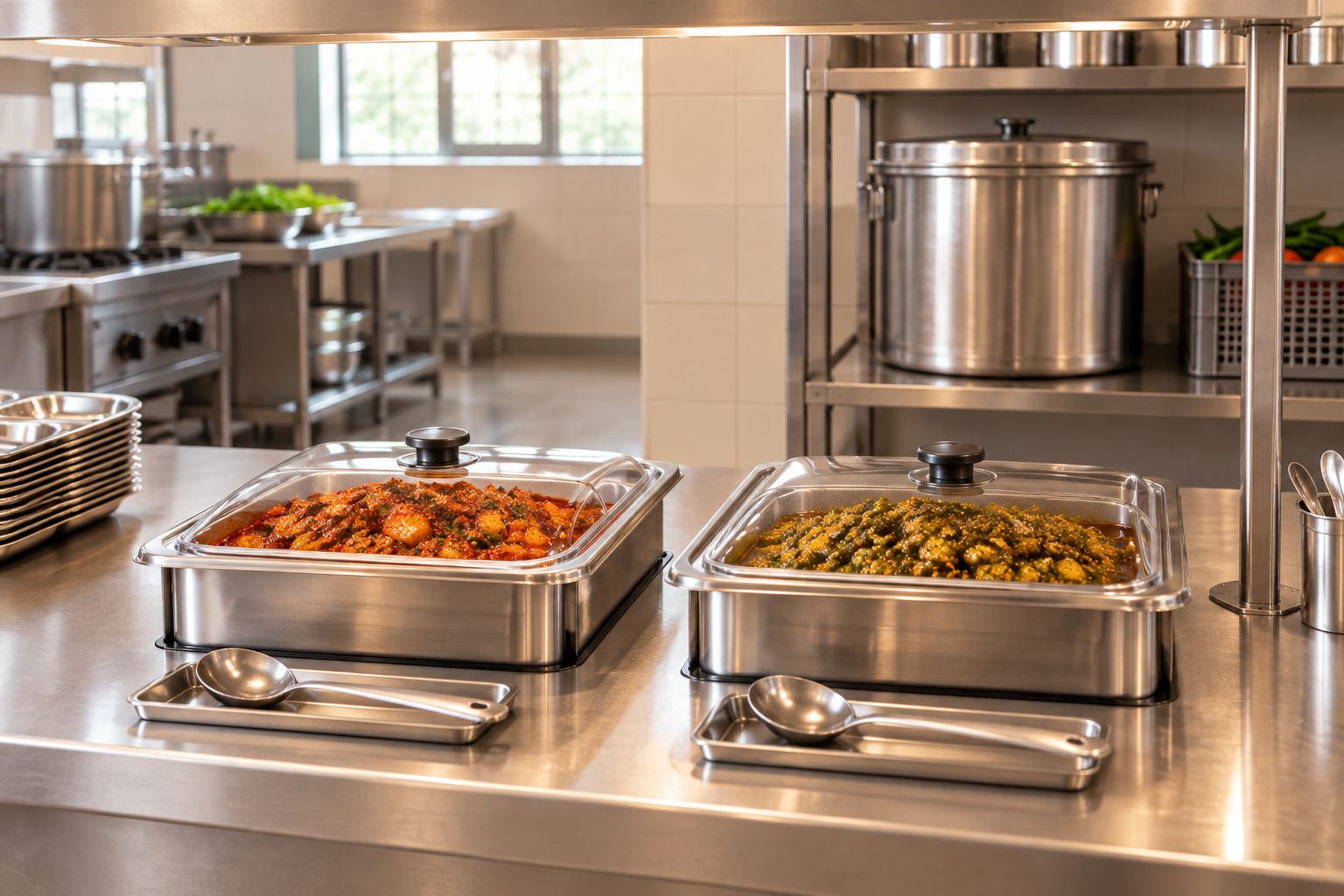
Start with a handwritten menu note that identifies the pickle and whether it is vegetarian or non-vegetarian. Add relevant ingredient information from the actual label. Do not rely on container colour or a staff member’s memory to communicate the difference.
Tulasi Pickles sells both vegetarian and non-vegetarian Andhra-style pickles, so the category you select matters as much as the flavour. Keep a vegetarian service clearly separate from any meat or seafood accompaniment. Resident demand does not remove the need for separate handling.
For your 2026 menu rotation, change one element at a time. Changing the main dish, pickle and portion together makes feedback difficult to interpret. Keep pickle optional for residents who prefer their meal without it.
- State the pickle’s name on the meal notice.
- Mark vegetarian and non-vegetarian service clearly.
- Use ingredient information from the selected product.
- Keep meat and seafood accompaniments at a separate station.
- Offer podi or papad only with its own ingredient and handling checks.
7. Review the trial before setting a repeat order
Use your own attendance and consumption sheets to decide what stays on the menu. Compare like-for-like meal services instead of combining quiet weekends with full weekday attendance. Keep the handling record beside the flavour feedback.
A repeat order should answer practical questions: did residents choose the pickle again, did staff serve it consistently, and did storage follow the instructions? If one answer is no, fix that part before increasing the quantity.
Keep the purchasing record understandable to the next person responsible for the mess. A routine that only works when the owner is present is not ready for handover.
- Retain flavours with repeat demand during normal service.
- Remove choices repeatedly left unfinished.
- Adjust order quantities to measured consumption.
- Review storage space before increasing purchases.
- Record which staff member checks incoming packs and opening dates.
Compare the options for your hostel or PG mess
The best option is the one your kitchen can handle consistently. Compare preparation work, dietary separation and resident acceptance before choosing a routine. Ordering finished pickle removes the preparation task, but receiving, storing and serving it remain your responsibility.
| Option | Best for | Practical advantage | Key limitation |
|---|---|---|---|
| In-house vegetarian pickle preparation | Messes with a documented recipe and handling process | Direct control over recipe and production schedule | Your kitchen owns preparation, consistency and storage decisions |
| Tulasi Pickles online ordering | Owners seeking homemade Andhra-style vegetarian or non-vegetarian pickles | Finished pickles ordered online, with shipping across India | Confirm pack-specific handling and repeat-order requirements; do not assume wholesale terms |
| Vegetarian pickle-only service | Shared messes keeping the condiment station vegetarian | Avoids introducing meat or seafood into the pickle station | Vegetarian status does not establish suitability for every ingredient restriction |
| Separate non-vegetarian pickle service | Messes with explicit resident demand and separate handling | Offers an optional accompaniment for residents who choose it | Requires dedicated containers, utensils and clear identification |
| Podi alongside pickle | Messes wanting another optional Andhra-style accompaniment | Adds a different accompaniment without changing the main rice service | Needs separate ingredient checks and dry handling; it is not interchangeable with pickle |
Choose your mess accompaniments
Review vegetarian pickles, non-vegetarian pickles, podis and papads before planning your trial.
Common mistakes hostel and PG mess owners make
Buying for bed capacity instead of meal attendance
Bed capacity is not the same as residents eating at each service, and meal attendance is not the same as pickle consumption. Use your service records to decide quantities. Revise the plan when residents leave for holidays or meal participation changes.
Treating Andhra flavour as a single spice preference
Residents can enjoy Andhra food while choosing different heat levels. Keep pickle optional, test it with the actual meal and record repeat demand. Do not resolve a spice complaint by changing the entire mess menu.
Sharing a spoon between vegetarian and non-vegetarian containers
A separate jar does not establish separate service if the same utensil moves between containers. Assign dedicated equipment and explain the procedure to every shift. Keep the distinction visible at the serving station.
Calling the largest pack the best purchasing decision
A larger quantity only fits your mess when consumption and storage support it. Decide from measured use, label instructions and space, not from the appearance of a bulk purchase. Ask suppliers about the actual ordering arrangement rather than assuming it exists.
Copying another hostel’s shelf-life rule
Different products and handling conditions need different instructions. Follow the label for the pickle you bought. Your 2026 stock sheet should record the product’s dates and opening history, not an expiry rule borrowed from another mess.
FAQ
What are the best Andhra pickles for hostel mess owners?
The best Andhra pickles for hostel mess owners are those residents repeatedly choose and staff can store and serve according to the label. Start with a vegetarian trial, measure consumption and add separate non-vegetarian service only when demand and handling arrangements support it.
Is Tulasi Pickles suitable for a PG mess?
Tulasi Pickles suits PG owners seeking homemade Andhra-style pickles through online ordering. The brand sells vegetarian and non-vegetarian pickles and ships across India; confirm the selected product’s ingredients, handling instructions and repeat-order requirements.
How much pickle should I order for my hostel?
Base your order on measured consumption and expected meal attendance, not the number of beds. Weigh serving stock before and after meals, account for refills and record discarded leftovers separately.
Can I serve vegetarian and non-vegetarian pickles together?
Serve vegetarian and non-vegetarian pickles through separate, clearly identified containers and dedicated utensils. Check ingredient information and keep meat or seafood service separate from the vegetarian station.
Do all Andhra pickles need refrigeration after opening?
Follow the refrigeration instructions for the specific product; do not apply one storage rule to every Andhra pickle. Keep the label accessible to staff and record when the container was opened.
Is podi better than pickle for a hostel mess?
Podi and pickle are different accompaniments, so choose according to the meal and residents’ preferences. Podi needs its own ingredient checks and dry handling, while pickle needs product-specific storage and serving controls.
Can I put leftover serving pickle back into the main jar?
Do not return pickle from dining service to the main jar. Keep reserve stock separate and transfer only the amount needed into a clean serving container.
One last thing
Label the spoon as clearly as the container. A correctly identified vegetarian jar still needs a dedicated utensil, and a new staff member should not have to guess which spoon belongs where. Before your next order, walk through service with the person who will handle it—not only the person who buys it.
Related guides
- How to store homemade pickles for long shelf life
- Pickles for students living in hostels
- How to serve non-veg pickle as a side dish