
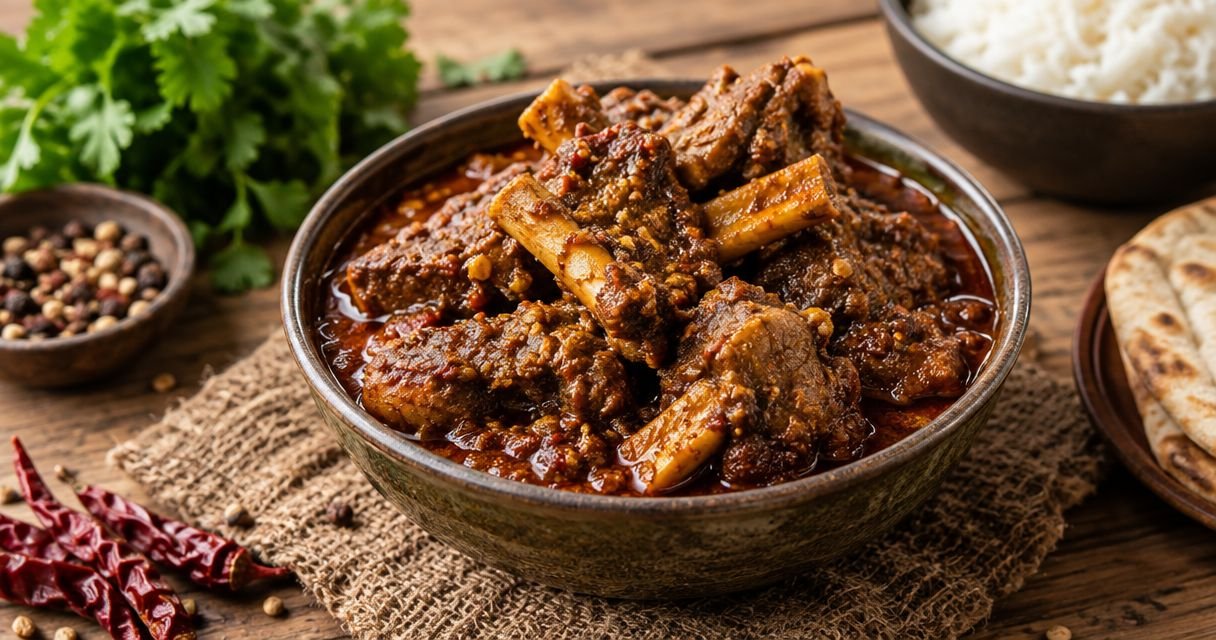
Boneless mutton pickle and mutton pickle with bone are different products, so a boneless pack’s listed amount does not establish the bone-in rate per kilogram. For a valid 2026 comparison, confirm the cut, convert the selected pack’s amount to a 1 kg equivalent, and check delivery charges separately. Compare the same cut and the same finished-pickle weight before choosing.
- For mutton pickle with bone price per kg, compare bone-in packs—not boneless mutton pickle listings.
- A 500 g pack is half of 1 kg; compare equivalent weights before deciding.
- Tulasi Pickles suits buyers seeking homemade Andhra-style boneless mutton pickle; bone-in buyers need a cut-specific quote.
- Finished-pickle weight includes the recipe’s other ingredients, not just mutton.
Why this matters
A search result can match the words you typed without matching the food you want. The phrase ‘boneless mutton pickle with bone’ combines two opposing descriptions: one removes the bones, while the other retains them.
Start with the boneless versus bone-in mutton pickle comparison if you have not decided which cut you prefer. Once that choice is clear, compare pack weights and the selected variant rather than treating every mutton pickle listing as interchangeable.
Your goal is a like-for-like purchase, not simply the smallest amount displayed beside a product photo. A different cut, recipe or pack size answers a different buying question.
How much does boneless mutton pickle with bone cost per kilogram?
There is no single product category called boneless mutton pickle with bone. Ask for either bone-in mutton pickle or boneless mutton pickle, then use that exact variant’s current listing to work out the kilogram equivalent.
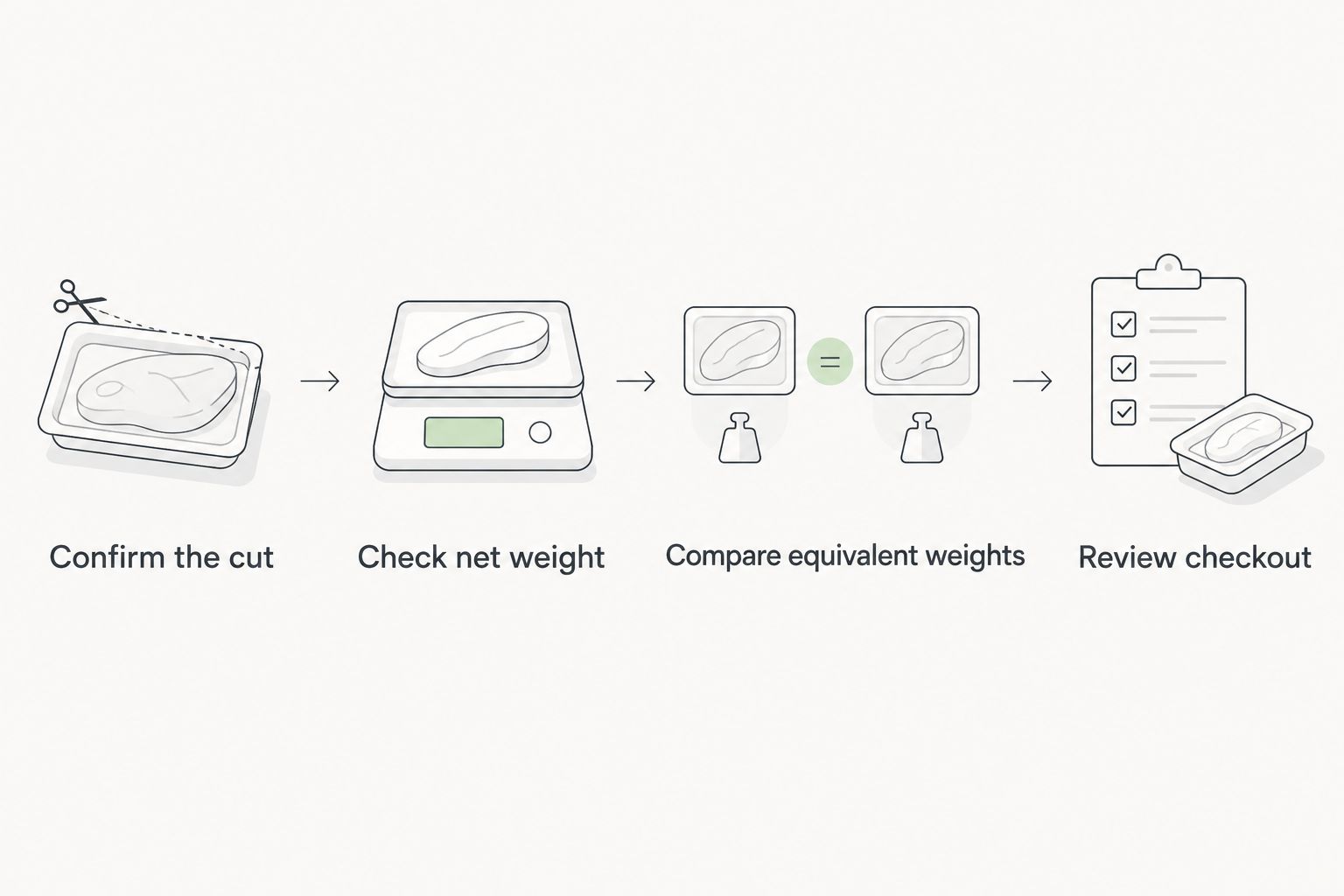
For a 2026 purchase, use this sequence:
- Confirm the cut. Read the product description for ‘boneless’, ‘with bone’ or ‘bone-in’. Do not rely on the image alone.
- Confirm net weight. Check the weight attached to the selected variant, rather than assuming the pictured container represents every size.
- Convert to kilograms. Divide the selected pack’s listed amount by its net weight in kilograms.
- Check the checkout total. Keep any delivery charges separate from the product-only comparison.
- Recheck the selection. Make sure the cart still shows the same cut and weight you evaluated.
A 500 g pack represents 0.5 kg. A 1 kg pack contains 1,000 g of finished product. These conversions help you compare sizes; they do not tell you how much meat a recipe contains.
A kilogram equivalent is a comparison calculation, not proof that a seller offers a kilogram pack. Check the actual pack options before planning an order around that size.
Bone-in versus boneless: what are you comparing?
Bone-in and boneless describe the meat format, not a quality ranking. Choose according to how you want to eat the pickle, then compare equivalent products within that format.
| Format | Best for | Main advantage | Main limitation | What to confirm |
|---|---|---|---|---|
| Bone-in mutton pickle | Buyers who specifically enjoy meat served on the bone | Retains the bone-in eating experience | Requires separating edible meat from bones while eating | Explicit bone-in description and selected net weight |
| Boneless mutton pickle | Buyers who want pieces without bones | Avoids handling bones at the table | Does not provide the bone-in texture or format | Explicit boneless description and selected net weight |
| Mutton kheema pickle | Buyers who prefer minced meat | Gives a different texture from larger pieces | Is not a direct substitute for chunk-style pickle | Minced-meat description and recipe details |
Boneless does not mean the entire container is meat. Pickle also contains the other ingredients used in its recipe, so finished-product weight and meat weight are different measurements.
Likewise, bone-in does not establish a fixed edible-meat proportion. Do not assign a meat percentage from appearance, and do not assume that two equal-weight containers contain equal quantities of edible mutton.
How do you compare different pack sizes correctly?
Use net weight as your common measurement. Container dimensions, photographs and words such as ‘family’ or ‘large’ do not replace a stated weight.
Confirm the cut
Write down whether each candidate is bone-in, boneless or minced. Keep those groups separate while comparing; otherwise, the calculation is precise but the comparison is not.
If a title and description disagree, ask the seller to clarify before paying. A contradictory listing is not a reason to guess which version will arrive.
Check net weight
Read the selected pack’s weight, including any variation selector. A product page can describe a range of sizes while the cart contains only the option you selected.
Use the same unit for every candidate. Comparing grams with kilograms without converting them first creates an avoidable error.
Compare equivalent weights
For a 500 g pack, multiply its listed amount by two to obtain the equivalent for 1 kg. This is arithmetic, not a statement about a larger pack’s actual terms.
If the seller lists a separate kilogram option, assess that option directly. Do not assume it follows the same relationship as the smaller pack.
Review checkout
Check the destination and the final order details after choosing the product. Product-only comparisons and delivered-order comparisons serve different purposes; keep them distinct.
Before paying in 2026, read the product name, selected weight and cut once more. This last check catches a wrong selection that an otherwise correct calculation cannot fix.
Which boneless mutton pickle formats should you consider?
Tulasi Pickles is best for buyers seeking homemade Andhra-style boneless mutton pickle. That is a relevant choice for a boneless search, not evidence of a bone-in mutton offering.
The following formats have distinct descriptions. Choose by meat texture and recipe preference rather than treating their names as different labels for the same pickle.
| Product | Best for | Supported product detail | Advantage for that preference | Limitation |
|---|---|---|---|---|
| Mutton Boneless Pickle | Buyers who want boneless pieces | Described as a 500 g homemade Andhra-style pack | Matches a straightforward boneless-piece preference | Does not answer a request for meat on the bone |
| Mutton Kheema Pickle | Buyers who prefer minced mutton | Prepared with halal minced boneless mutton | Matches a minced-texture preference | Does not offer the larger-piece format |
| Gongura Mutton Pickle | Buyers who want gongura with boneless mutton | Described as homemade Andhra boneless mutton pickle | Offers a named gongura variation | Is not the same recipe choice as the non-gongura format |
None of these descriptions justifies a universal claim about which tastes best. Your preference for pieces, mince or gongura is the useful deciding factor.
The product cards below keep these options separate. Check the current product details before ordering, especially the selected weight and ingredients relevant to your household.


Why mutton pickle comparisons vary
A useful 2026 comparison records the product differences instead of attributing every difference to quality. These are the details to check:
- Meat format: Bone-in pieces, boneless pieces and mince are different products. Compare within the format you actually want.
- Net pack weight: A smaller pack’s displayed amount is not directly comparable with a larger pack’s amount. Convert both to the same weight first.
- Recipe variation: Gongura mutton and a non-gongura version are different recipe choices. Read the ingredient descriptions rather than assuming equivalence.
- Finished product versus meat: Net pickle weight does not establish a meat-only quantity. Look for an explicit declaration before comparing meat content.
- Delivery destination: Check the charges attached to your own order. Do not treat another destination’s checkout as your delivered total.
These factors identify what must stay consistent in a comparison. They do not establish a fixed premium for boneless meat, a standard bone percentage or a market-wide benchmark.
Reject unsupported shortcuts. ‘Homemade’, ‘premium’ and an appealing photograph do not tell you the meat proportion, pack weight or whether bones are present.
Does a 500 g pack contain 500 g of mutton?
A 500 g pack describes the finished pickle’s net weight, not necessarily 500 g of mutton. Other recipe ingredients form part of the finished product.
Use an explicitly stated meat-content declaration if that is central to your decision. Do not infer one from a close-up photograph or from the word ‘boneless’.
Is a 1 kg equivalent the same as a 1 kg pack?
A 1 kg equivalent is a standardised comparison, while a 1 kg pack is an actual product size. Converting a smaller pack does not establish the terms of a separately listed larger pack.
This distinction matters when planning a family order. Compare the exact pack you will purchase, not just an arithmetic equivalent.
Should you choose bones or boneless pieces for everyday meals?
Choose boneless pieces if avoiding bones at the table is your priority. Choose bone-in only when you specifically want that format and the seller clearly identifies it.
Neither choice establishes a nutritional advantage from the name alone. Use the actual label for nutrition information, and judge eating convenience separately from dietary needs.
What should you ask before ordering bone-in mutton pickle?
Ask a question that removes ambiguity: does this exact pack contain mutton pieces with bones, and what is its net weight? Follow with any ingredient or storage questions that affect your purchase.
You do not need a long conversation. You need answers tied to the exact item and variant you intend to order.
- Does the selected pack contain bones?
- What net weight applies to this variant?
- Does the weight describe finished pickle?
- Which ingredients and allergens are declared?
- What storage instructions appear on the label?
- What does checkout show for my destination?
Keep the seller’s clarification with your order details. If the description remains contradictory, choose a clearly labelled product instead of resolving the contradiction yourself.
For Tulasi Pickles mutton pickle, distinguish the named boneless, kheema and gongura formats before selecting. Do not turn a boneless product description into a bone-in claim.
FAQ
What is the mutton pickle with bone price per kg in 2026?
Check the current listing for a specifically identified bone-in mutton pickle and convert its selected net pack weight to kilograms. A boneless listing does not establish a bone-in rate; check delivery charges separately.
Can mutton pickle be boneless and with bone at the same time?
No. Boneless and bone-in describe different meat formats, so a listing using both needs clarification before you order.
How do I compare a 500 g mutton pickle pack with a kilogram pack?
A 500 g pack is half of 1 kg, so double its listed amount to calculate a kilogram equivalent. Compare an actual kilogram option separately if the seller lists one.
Does boneless mutton pickle contain only meat?
No. Boneless describes the meat format, while the finished pickle also includes the other ingredients in its recipe; net pack weight does not establish meat-only weight.
Is mutton kheema pickle the same as boneless mutton pieces?
No. Kheema is minced meat, while a piece-style boneless pickle has a different meat format; choose according to the texture you want.
Which Tulasi Pickles mutton pickle is described as a 500 g pack?
Mutton Boneless Pickle is described as a 500 g homemade Andhra-style pack. Confirm the selected variant and current product details before ordering.
Is boneless mutton pickle better value than bone-in?
The cut name alone does not establish better value. Compare equivalent finished-product weights, declared ingredients, eating preference and your checkout details.
Should I use an old search snippet to decide what to pay?
No. For a 2026 order, use the selected product’s current details and checkout rather than an older search snippet or saved screenshot.
One last thing
A correct kilogram calculation can still produce the wrong purchase. If you start with boneless pickle when you wanted bone-in, converting the weight perfectly does not fix the mismatch.
Save the exact product name and variant alongside your comparison. For your next 2026 order, that small habit gives you a useful reference: the same cut, recipe and pack size, rather than an ambiguous search phrase.
Related guides
- Boneless mutton pickle for quick spicy meals
- How to choose the right pickle jar size for your family
- How to store non-veg pickles safely in the refrigerator
- How to serve non-veg pickle as a side dish