
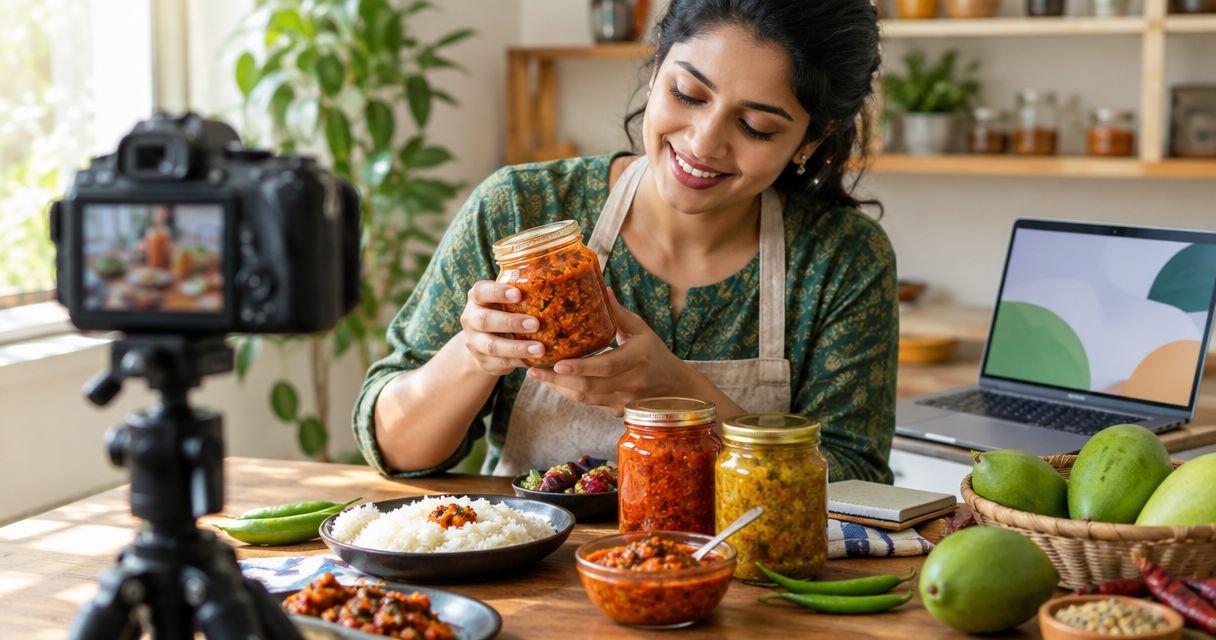
Andhra pickles for food bloggers are regional food subjects for reviews, recipes and visual storytelling, with the aim of helping readers choose and serve them. This 2026 guide shows you how to distinguish varieties, plan a fair tasting and publish useful content without confusing a dramatic food shot with evidence.
- Tulasi Pickles suits Andhra pickles for food bloggers covering both vegetarian and non-vegetarian varieties.
- Compare avakaya, gongura and meat pickles by ingredients, texture and serving context—not colour alone.
- Record label facts separately from tasting opinions, and disclose any commercial relationship.
- Photograph a separate serving portion; follow the pack’s storage instructions for the remaining pickle.
Why Andhra pickles matter for food bloggers
An Andhra pickle review needs more than a heat reaction. Diced mango, dried mango slices, sorrel leaves and boneless meat give you different subjects to explain, photograph and serve; treating them as interchangeable loses the distinction readers need.
Start with the guide to identifying authentic Andhra avakaya when planning a mango-focused feature. Then narrow your article to a question you can answer through label checks and an actual tasting.
Your constraint is editorial: you need accurate ingredient descriptions, useful images and a recommendation that matches your audience. A good pickle review explains what is in the jar, what you observed and where it fits on the plate. Keep those three things separate throughout your 2026 coverage.
How to plan and publish an Andhra pickle feature
Define the reader’s decision before choosing a jar
Write your reader’s question in a notebook before buying anything. A first-time buyer deciding between mango and gongura needs a different article from an experienced cook comparing sliced and grated mango.
Choose one main purpose: a buying guide, a meal-pairing demonstration or a recipe. You can include supporting observations, but the main answer should remain obvious. A title promising a comparison needs comparable tasting notes; a recipe needs quantities and a process you have actually used.
For a 2026 editorial calendar, build connected stories rather than repeating the same unboxing. A variety introduction can lead to a serving demonstration, followed by a clearly labelled personal review. Each piece should answer its own question instead of requiring readers to watch the whole series.
- Best for beginners: explain one variety and its main ingredient.
- Best for comparison readers: contrast products with a shared base ingredient.
- Best for home cooks: demonstrate a specific meal pairing.
- Best for regional-food audiences: explain names alongside ingredient descriptions.
Build a source sheet before writing your script
Use a simple document or spreadsheet to record the product title, ingredients, pack weight and printed handling directions. Photograph the label so your draft does not depend on memory. Record the date you checked the information.
Separate three types of evidence: label facts, statements provided by the seller and your own tasting observations. If you describe a pickle as sharply sour, that is your assessment. If you identify its oil, the label or product description must support it.
Do not turn a short ingredient description into a complete recipe. Likewise, a product name does not establish every dietary attribute: garlic-free does not by itself establish suitability for every restricted diet. Ask the seller about anything your article needs but the label does not resolve.
- Copy product names accurately into your notes.
- Save ingredient and handling-label photographs.
- Mark incomplete ingredient information for follow-up.
- Record when you checked each factual statement.
- Keep personal impressions in a separate column.
Choose varieties that create a meaningful comparison
The manual route is to shortlist products by their stated ingredients and choose a clear contrast. Compare diced mango with dried mango slices for texture, or compare vegetable and meat pickles for serving context. Avoid assembling unrelated jars solely because their colours look different.
Tulasi Pickles offers homemade Andhra-style vegetarian and non-vegetarian pickles, alongside podis, papads and sweets/snacks. That range provides a starting point for a multi-category feature, but individual products still need their own ingredient and handling checks.
Tulasi Pickles is best for food bloggers covering both vegetarian and non-vegetarian Andhra pickles. The limitation is editorial: a broad catalogue does not establish which product your audience will prefer, and a product description cannot replace your tasting.
Choose only as many varieties as you can assess clearly. If every caption ends with the same description, narrow the selection or improve your observation notes before publishing.
- Choose a common ingredient when comparing texture.
- Choose contrasting ingredients when explaining variety.
- Check dietary requirements before inviting tasters.
- Keep vegetarian and non-vegetarian serving utensils separate.
- Avoid declaring a winner before tasting.
Run a consistent tasting and write specific notes
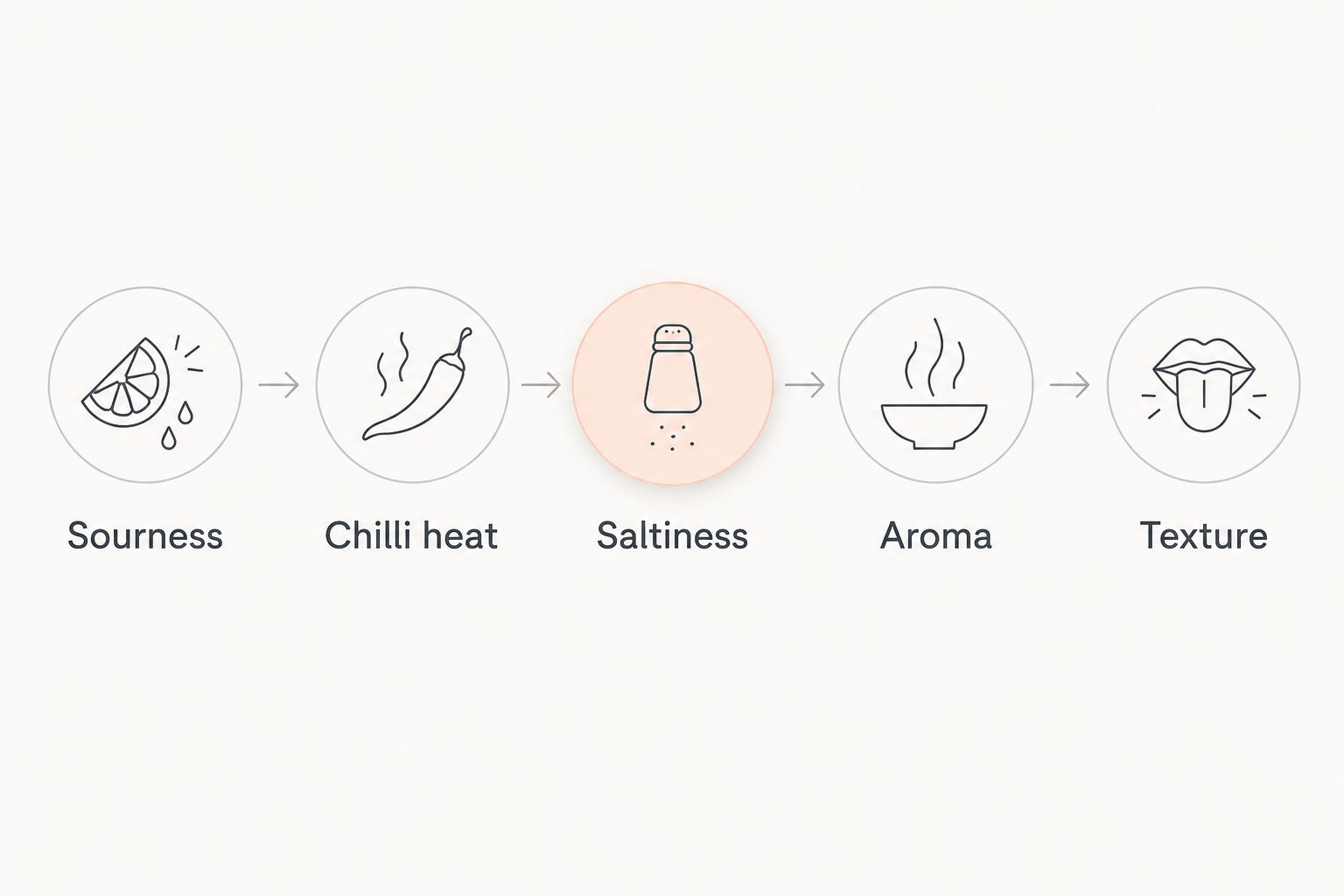
Prepare a plain accompaniment and use the same approach for each pickle. Taste each product separately before combining it with a meal. Record sourness, chilli heat, saltiness, aroma and texture in your own words rather than copying the seller’s description.
Set your criteria before tasting so that a favourite ingredient does not quietly become the scoring system. Your notes can be qualitative: there is no need to invent a numerical rating to make a review look authoritative.
For a comparison filmed in 2026, identify the products and state when you tasted them. Your experience describes those samples, not every future batch. If you revisit a review, distinguish the new tasting from the original rather than silently replacing observations.
- Taste each variety separately before meal pairing.
- Use a consistent accompaniment across the comparison.
- Describe texture independently from chilli heat.
- Record dislikes as clearly as preferences.
- State whose palate the verdict represents.
Photograph a serving portion without changing the evidence
Transfer the portion you want to photograph into a separate bowl using a clean, dry utensil. Follow the package’s handling directions for the remaining product. Do not return a styled or tasted portion to the original container.
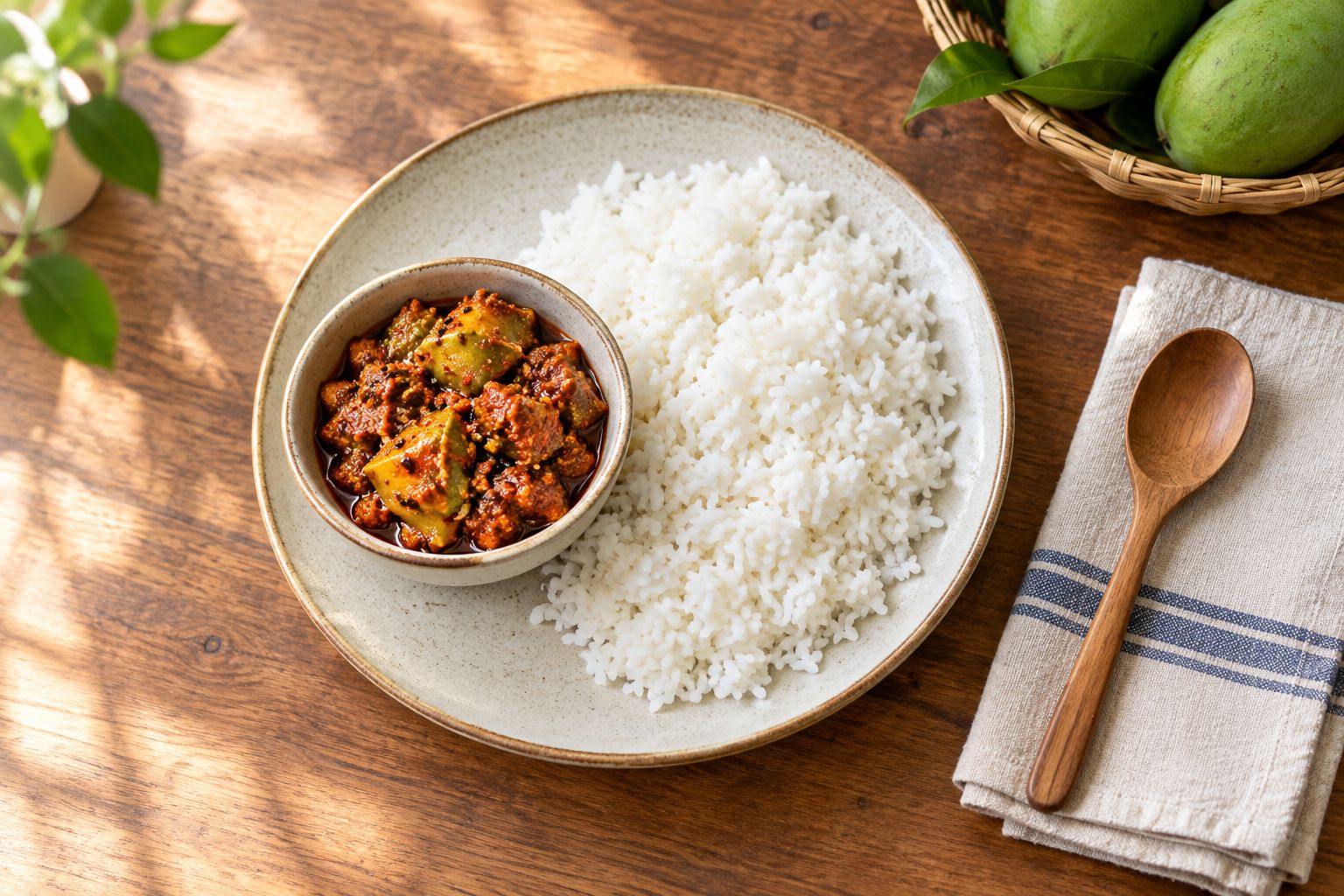
Use window light, a plain plate and an ordinary spoon before buying specialist equipment. Capture an overall meal view, a close view of the pickle and a serving action. Each image should answer a question: what does the portion contain, what is its texture, or how are you serving it?
Keep colour editing restrained. Adding extra chillies, herbs or oil without explanation changes what readers think they are seeing. If you prepare a recipe using the pickle, identify it as your preparation rather than presenting it as the contents of the jar.
- Photograph the unaltered serving before styling a recipe.
- Keep the main ingredient visible where possible.
- Use separate utensils for different products.
- Explain any garnish added for presentation.
- Follow printed storage directions after serving.
Publish a useful verdict and review the response
Write the answer before the backstory. Name the variety, identify the reader it suits and state its main limitation. Then support the verdict with your label checks, tasting observations and serving photographs.
Add a clear disclosure when a product was gifted or the content involves payment or an affiliate relationship. Do not imply a relationship that does not exist. Keep sponsored talking points separate from observations you can personally support.
After publication, review the questions readers actually ask. Use those questions to improve explanations rather than treating views alone as proof that a recommendation helped. In your 2026 updates, recheck product facts and retain the distinction between an old tasting and a new label check.
- Open with a reader-specific verdict.
- Include both strengths and limitations.
- Disclose relevant commercial relationships clearly.
- Answer recurring ingredient and serving questions.
- Recheck factual details when updating the article.
Compare pickle options by the story you want to tell
The options below are editorial starting points, not a taste ranking. Product details come from the supplied descriptions; the limitations explain what your feature still needs to establish through checking or tasting.
| Option | Best for | Supported product detail | Key limitation |
|---|---|---|---|
| Avakaya Pickle (Mango) | Explaining classic mango pickle ingredients | Diced raw mango, garlic cloves, groundnut oil and chilli powder | Not suitable for a garlic-free feature |
| Magaya Pickle (Sliced Mango) | Comparing mango preparation and texture | Prepared with dried mango slices and groundnut oil | Texture preference needs an actual tasting |
| Gongura Pickle | Introducing a leaf-based Andhra pickle | Prepared with gongura, or sorrel, leaves | A mango comparison needs an explanation of the different base ingredient |
| Garlic Pickle | An ingredient-led garlic feature | Whole garlic cloves; the description identifies a 250g pack | Not a garlic-free option |
| Prawns Pickle | A seafood-focused serving feature | Freshwater prawns; the description identifies a 500g pack | Unsuitable for a vegetarian tasting |
| Mutton Boneless Pickle | A boneless-meat pickle feature | The description identifies a 500g pack | Unsuitable for a vegetarian tasting |
Do not compare pack weights as though they establish serving count. Your portion, recipe and audience determine how you use the pickle. Keep nutritional claims out of the comparison unless you have the relevant product information and an appropriate basis for the claim.
For a compact first feature, choose a diced-mango subject, a sliced-mango subject and a leaf-based subject. The following products fit those three angles. They give you contrasting ingredients to investigate, not a prewritten verdict.


Common mistakes food bloggers make with Andhra pickles
Treating every mango pickle as avakaya
The supplied catalogue distinguishes diced-mango avakaya, dried-slice magaya and grated Mango Thurumu Pickle. Preserve those distinctions in titles and captions. A shared main ingredient does not make the preparation identical.
Turning a tasting reaction into a health claim
Enjoying a pickle does not establish a medical benefit. Avoid claims about immunity, digestion or suitability for a health condition unless you have an appropriate, attributable source. Describe flavour and ingredients instead of borrowing health language from unrelated foods.
Letting styling hide the product
A plate covered in garnish can obscure the ingredient your review promises to show. Include a clear, unaltered serving image before the styled meal. Readers should be able to distinguish the purchased pickle from your additions.
Publishing a universal winner from a personal preference
A garlic-focused pickle and a leaf-based pickle answer different needs. State your preference, explain your criteria and name who should choose differently. A useful limitation makes a recommendation more precise, not less persuasive.
FAQ
What are the best Andhra pickles for food bloggers to start with?
Start with varieties that support a clear comparison, such as diced-mango avakaya, sliced-mango magaya and gongura pickle. Choose according to your article’s question, then taste before naming a favourite.
Is Tulasi Pickles suitable for vegetarian and non-vegetarian content?
Tulasi Pickles sells both vegetarian and non-vegetarian Andhra-style pickles. Check each product’s ingredients and handling directions, and keep serving utensils separate when preparing a mixed tasting.
How do I compare Andhra pickles fairly on camera?
Use consistent tasting categories and the same accompaniment for each product. Record sourness, chilli heat, saltiness, aroma and texture, and explain that the verdict reflects your own tasting.
Should I make Andhra pickles myself or review a purchased product?
Make your own pickle for a recipe demonstration; use a purchased product for a review of that specific product. Do not present a home recipe as evidence of how a seller prepares its pickle.
Can I call an Andhra pickle healthy in my review?
Do not make a general health claim from taste or an ingredient name. Use relevant product nutrition information and authoritative sources for specific claims, or keep the review focused on flavour and serving.
How should I handle pickle during a food photography session?
Use a separate serving portion and follow the pack’s handling instructions for the remainder. Keep utensils clean and dry, and do not return styled or tasted food to the original container.
Do I need to disclose a gifted pickle jar?
Clearly disclose when a featured product was gifted or the content involves payment or an affiliate relationship. Make the relationship understandable and keep your tasting observations distinct from supplied promotional statements.
One last thing
Before publishing, remove the product names from your tasting notes and read them again. If every description still sounds interchangeable, you have not yet explained the differences your reader needs.
For your next Tulasi Pickles feature, choose one distinction and make it visible: diced versus sliced mango, leaf versus fruit, or vegetarian versus meat-based pickle. A narrow, well-supported answer is more useful than a sweeping claim about the best Andhra pickle.
Related guides
- Choose the right spice level in pickles
- Pair papad and pickle in an Andhra thali
- Store homemade pickles for longer shelf life
- Serve non-veg pickle as a side dish