
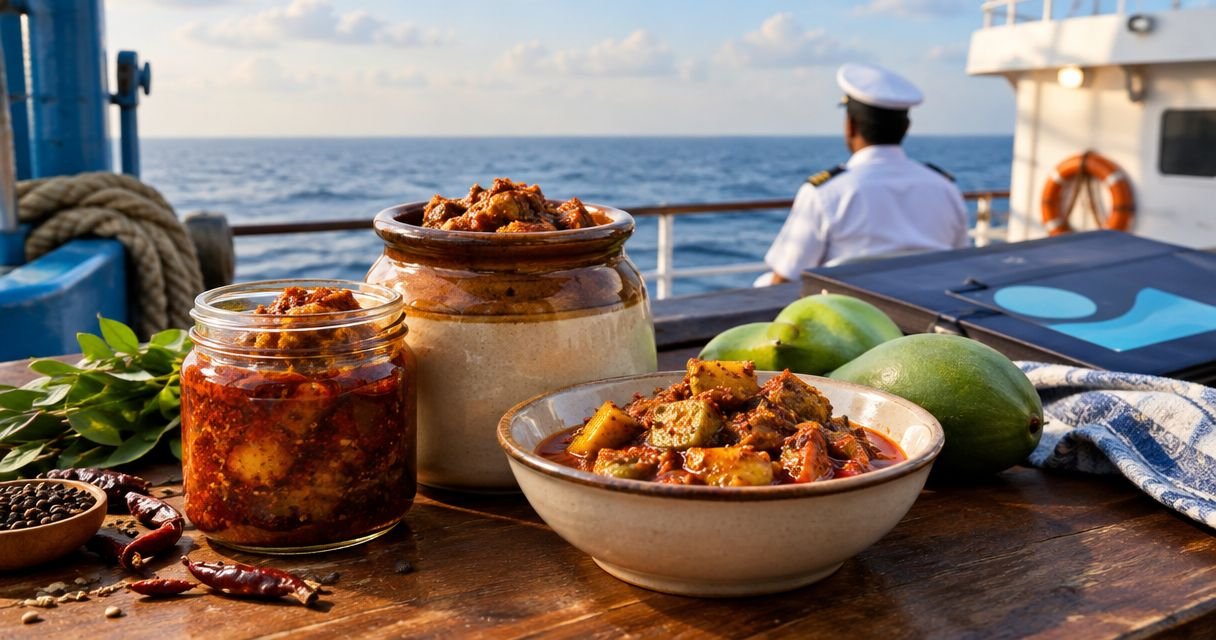
Seafarers’ Andhra pickle planning is the selection, transport and storage of familiar meal accompaniments with the aim of making onboard meals more enjoyable without compromising food safety or joining requirements. This 2026 guide to Andhra pickles for seafarers starts with your route and storage conditions—not a promise that any pickle will last an entire contract.
- Tulasi Pickles suits seafarers seeking homemade Andhra pickles; suitability onboard depends on route permissions and product-specific storage instructions.
- Choose Andhra pickles for seafarers around actual meals, permitted ingredients and reliable onboard storage.
- Check every transit country, joining port and vessel requirement before packing vegetarian or non-vegetarian pickles.
- Keep original labels, protect containers against leaks and follow each product’s after-opening instructions.
Why Andhra pickles matter for seafarers
A familiar accompaniment gives you a way to adjust a plain meal without changing what the galley serves. The practical question is whether you can carry, store and use that accompaniment correctly throughout your journey.
Tulasi Pickles is best for seafarers seeking homemade Andhra pickles, subject to route permissions and product-specific storage requirements. Tulasi Pickles sells vegetarian and non-vegetarian pickles, alongside podis, with shipping across India and overseas. Overseas shipping does not establish permission to import a particular food or arrange delivery directly to a vessel.
For a 2026 joining journey, separate the decisions: permission to carry food, protection in transit and storage after arrival. A sealed container addresses only part of that chain. It does not replace customs clearance, vessel permission or the label’s storage instructions.
Choose and prepare your onboard selection
Confirm your route before choosing varieties
Start with a written itinerary covering your departure airport, transit points, joining country and vessel. Ask your crewing team or port agent how personal food should be handled, then check the relevant official customs and carrier requirements yourself.
Do not treat another seafarer’s previous journey as permission for yours. Rules attach to the actual route and ingredients, not to whether someone once carried a similar jar successfully. Meat, seafood and plant products need separate checks rather than a single assumption about pickles.
For 2026 travel, record the date you checked each requirement. Keep the relevant instructions accessible offline alongside your joining documents.
- List every country where your luggage or food enters customs control.
- Check the exact ingredients against current official import requirements.
- Confirm baggage and container requirements with your carrier.
- Ask whether the vessel permits personal food and where it belongs.
- Declare food whenever the applicable rules require it.
Match storage instructions to the vessel
Write down the storage you can actually use before making a shopping list. A place in a cabin is not a substitute for refrigeration when the product requires refrigeration, and an unopened-storage instruction does not necessarily apply after opening.
Ask whoever manages onboard food storage whether personal containers are accepted and how they should be identified. Get a clear answer about access, too: storage that you cannot use when needed does not support your plan.
Choose the product around confirmed storage; never choose storage around an assumption about pickle preservation. If the label leaves a question unanswered, ask the seller before taking the product aboard.
- Read unopened and after-opening instructions separately.
- Confirm access to any refrigeration the label requires.
- Ask where personal food can be stored securely.
- Check whether communal storage requires names or dates.
- Leave out products whose storage requirements you cannot meet.
Select familiar flavours before adding variety
Make a manual shortlist from meals you expect to eat: rice, dal, curd rice or breakfast dishes. Choose flavours you already enjoy rather than testing your tolerance during a joining journey. One familiar accompaniment is more useful than several unfamiliar jars you avoid opening.
Tulasi Pickles offers homemade Andhra pickles including Avakaya Pickle without Garlic (Mango), Gongura Pickle and Garlic Pickle. These give you different ingredient and texture choices, but none should be treated as automatically suitable for every dietary restriction or voyage.
Use the ingredient description to narrow the choice, then read the complete label. A garlic-free name, for example, answers a garlic preference; it does not establish every other dietary characteristic.
- Choose a familiar mango, leaf or garlic-based flavour first.
- Check the complete ingredient list for allergens and restrictions.
- Match the pickle to meals you will actually receive.
- Ask about spice intensity instead of assuming a mild option.
- Add meat or seafood only after permission and storage checks.
Compare portions before deciding how much to carry
Record how much pickle you normally use with a meal at home. Use that observation to plan quantities; do not borrow someone else’s serving size or assume every onboard meal needs pickle.
Pack weight and usable food are different considerations. The supplied Garlic Pickle description identifies a 250g pack, while Mutton Boneless Pickle and Prawns Pickle descriptions each identify a 500g pack. Those figures describe the listed packs—not how long they will remain suitable after opening or how many meals you should expect.
Avoid buying for an entire contract unless the product’s dated label and your storage arrangements support that plan. Quantity does not extend shelf life.
- Note your normal usage over meals at home.
- Check the selected pack weight before ordering.
- Include containers and protective packaging in baggage planning.
- Allow for meals where you will not use pickle.
- Keep your planned use within the product’s stated limits.
Protect the container without losing its identity
Inspect the original container and closure before packing. Retain the ingredient list, batch information, date marking and storage instructions; these remain useful for both inspection and everyday use aboard.
Add secondary containment to protect belongings against leakage, then cushion the container against movement. Packing material protects the package, but it does not make an unsuitable food safe or an unpermitted ingredient admissible.
For the wider transport checklist, read how to ship pickles overseas without spoilage. Use transport guidance alongside the product label and official route requirements, never instead of them.
- Keep the original label readable and attached.
- Check the closure and container for visible damage.
- Place the container inside suitable secondary containment.
- Cushion it so it cannot strike hard items in your bag.
- Keep food accessible if an inspection is required.
Arrange a dependable handover before departure
If family members are ordering for you, give them the product shortlist, ingredient restrictions and the address where you can reliably receive the parcel. Prefer a confirmed shoreside handover over assuming that a parcel can find you aboard.
Tulasi Pickles ships across India and overseas, but that fact does not establish a delivery date, customs outcome or ship-chandler service. Confirm the actual destination and dispatch arrangements before relying on an order for your joining journey.
For a 2026 departure, keep a fallback: join without the pickle if the parcel or required information is not ready. A familiar accompaniment is optional; your joining schedule is not.
- Confirm the recipient’s name and complete receiving address.
- Ask about destination-specific delivery arrangements before ordering.
- Allow time to inspect labels and packaging before departure.
- Avoid sending directly to a vessel without explicit coordination.
- Recheck the plan if your joining port changes.
Set an opening and serving routine aboard
Once aboard, check that the agreed storage is actually accessible before opening anything. Follow the label immediately rather than waiting until the jar has spent time in an unsuitable location.
Use a clean, dry utensil and serve a separate portion instead of bringing the whole container to a shared meal. Do not return leftovers from your plate to the jar. Keep vegetarian and non-vegetarian utensils separate when that distinction matters to you or your crewmates.
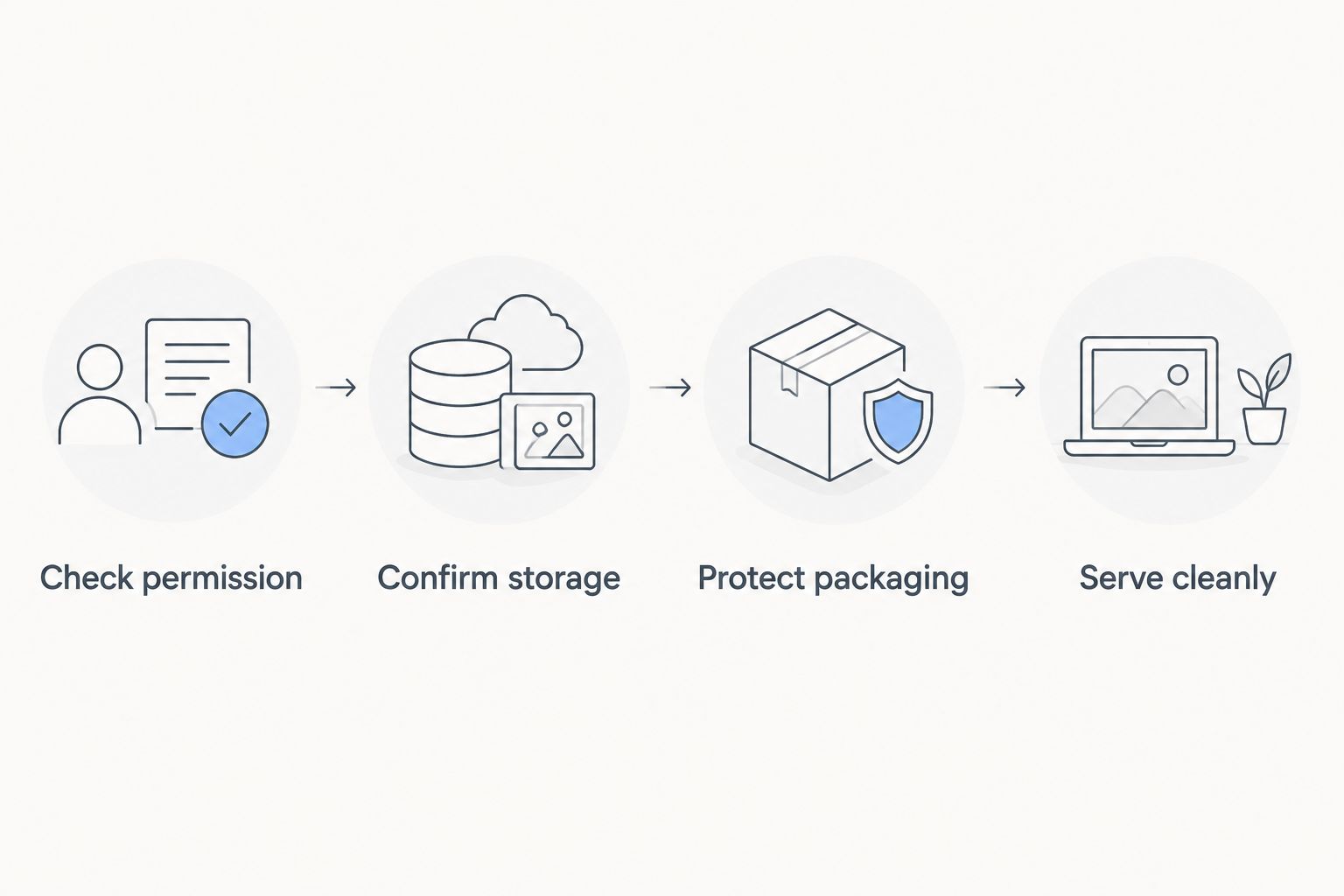
The routine is straightforward: Check permission, Confirm storage, Protect packaging, Serve cleanly. Keeping these decisions separate makes it easier to spot a weak point before the food reaches your plate.
Record the opening date where it remains visible. That record helps you follow any after-opening limit; it does not create a new limit when the label gives none.
- Follow the product’s after-opening storage instructions.
- Mark the opening date without covering the original label.
- Use a clean, dry serving utensil each time.
- Close the container promptly after serving.
- Do not taste food to determine whether suspected spoilage is safe.
Compare pickle options for onboard meals
There is no universal best pickle for a merchant navy contract. Choose by preferred flavour first, then eliminate anything incompatible with your route, ingredients or storage arrangements. The table compares named options, not verified voyage endurance.
| Option | Best for | Useful distinction | Key limitation |
|---|---|---|---|
| Avakaya Pickle without Garlic (Mango) | Buyers seeking mango pickle without garlic | Described as diced raw mango pickle without garlic | Garlic-free does not establish suitability for every restricted diet |
| Gongura Pickle | Buyers who prefer sorrel-leaf pickle | Prepared with gongura leaves | Leaf-based does not establish shelf life or permitted storage |
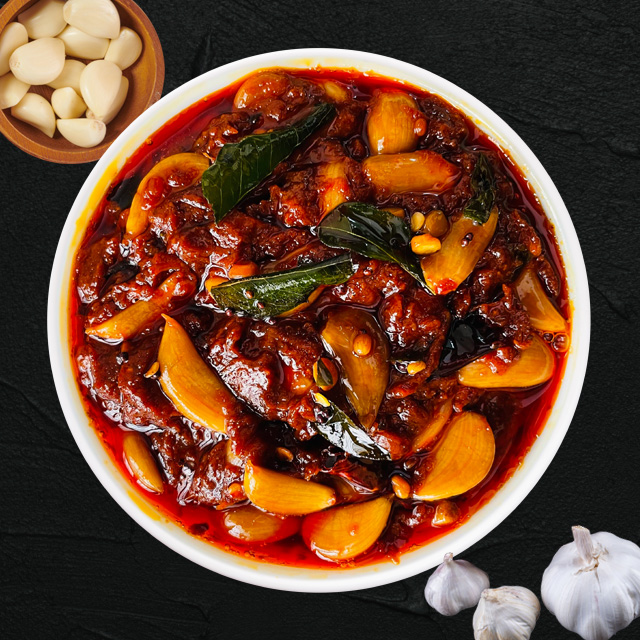
| Garlic Pickle | Buyers who enjoy whole garlic cloves | Described as a 250g Andhra Vellulli Pachadi pack | Not suitable when you need to avoid garlic |
| Mutton Boneless Pickle | Meat eaters with confirmed permission and suitable storage | Described as a 500g homemade Andhra pack | Requires route-specific meat checks and compliance with its storage instructions |
| Prawns Pickle | Seafood eaters with confirmed permission and suitable storage | Described as a 500g pack made with freshwater prawns | Contains shellfish and requires route-specific food checks |
Vegetarian does not mean unrestricted, and non-vegetarian does not mean automatically prohibited everywhere. Check the actual product against the actual journey. Do not infer either conclusion from the category name.
The following vegetarian choices offer different flavour directions for your shortlist. Read their complete labels before deciding which belongs in your luggage.


Common mistakes seafarers make with pickles
Buying for contract length instead of labelled storage
A long assignment does not establish a matching shelf life. Plan around the product’s date marking, after-opening instructions and confirmed storage—not the day you expect to sign off. If those conditions do not cover your plan, reduce the quantity or leave it behind.
Treating delivery overseas as import permission
A seller’s overseas shipping service and a traveller’s permission to bring food are separate matters. For a 2026 joining itinerary, check the relevant customs requirements even if a previous parcel reached the same country. Do not conceal ingredients or describe meat pickle as vegetarian food.
Relying on oil as a safety guarantee
An oil layer is not proof that a product remains safe under every temperature or handling condition. Follow the label and avoid adding water, wet utensils or plate leftovers. Visible mould, a damaged seal or an unexplained change calls for caution, not a taste test.
Taking unlabeled containers from home
Decanting into an anonymous jar removes information you need during inspection and use. Keep the original packaging wherever practical. A handwritten flavour name does not replace ingredients, date marking or storage directions, particularly when someone else packed the food for you.
Sharing without checking ingredients
A pickle that suits you does not automatically suit a crewmate. Before sharing, make the original ingredient information available and use separate serving utensils. Never describe a product as allergen-free, low-salt or suitable for a medical diet without supporting label information.
FAQ
What are the best Andhra pickles for seafarers?
The best Andhra pickles for seafarers are familiar varieties that meet the journey’s food rules and the product’s storage requirements. Tulasi Pickles offers homemade Andhra choices, but no variety is automatically suitable for every vessel or contract.
Can merchant navy crew carry chicken or mutton pickle abroad?
Permission depends on the countries involved, carrier requirements and vessel rules. Check the exact meat product with the relevant official authorities and your joining team before packing it, and declare food when required.
Are vegetarian pickles always allowed through customs?
No, vegetarian pickles are not automatically permitted on every route. Check the actual ingredients and packaging against the destination’s current food-import requirements.
Can I keep Andhra pickle in my cabin without a refrigerator?
Only choose cabin storage when it meets the product’s stated storage instructions and vessel requirements. If refrigeration is required, a cabin cupboard is not a substitute.
Will an unopened pickle last my entire sea contract?
An unopened container does not establish suitability for an entire contract. Use the product’s date marking and storage instructions, and account separately for any after-opening limit.
Should I choose boneless non-vegetarian pickle for onboard meals?
Boneless pickle suits buyers who prefer not to handle bones while eating. It still requires the same ingredient, route-permission and product-specific storage checks; boneless does not mean shelf-stable.
Can my family send a pickle parcel directly to my ship?
Do not arrange a direct-to-ship parcel without confirmation from the receiving agent or responsible vessel contact. Verify the receiving address, customs requirements and handover arrangements before ordering.
One last thing
Before packing, photograph the complete label—not just the front of the jar. Keep the ingredients, date marking and storage directions available offline, while retaining the physical label for inspection.
For your 2026 joining checklist, put the receiving and storage confirmation beside your travel documents. The useful question is not how much pickle fits in your bag; it is how much you can legally carry and correctly store. If either answer is uncertain, resolve it before departure.
Related guides
- How to carry pickles on flights without customs trouble
- How to store homemade pickles for long shelf life
- How to store non-veg pickles safely in the refrigerator