
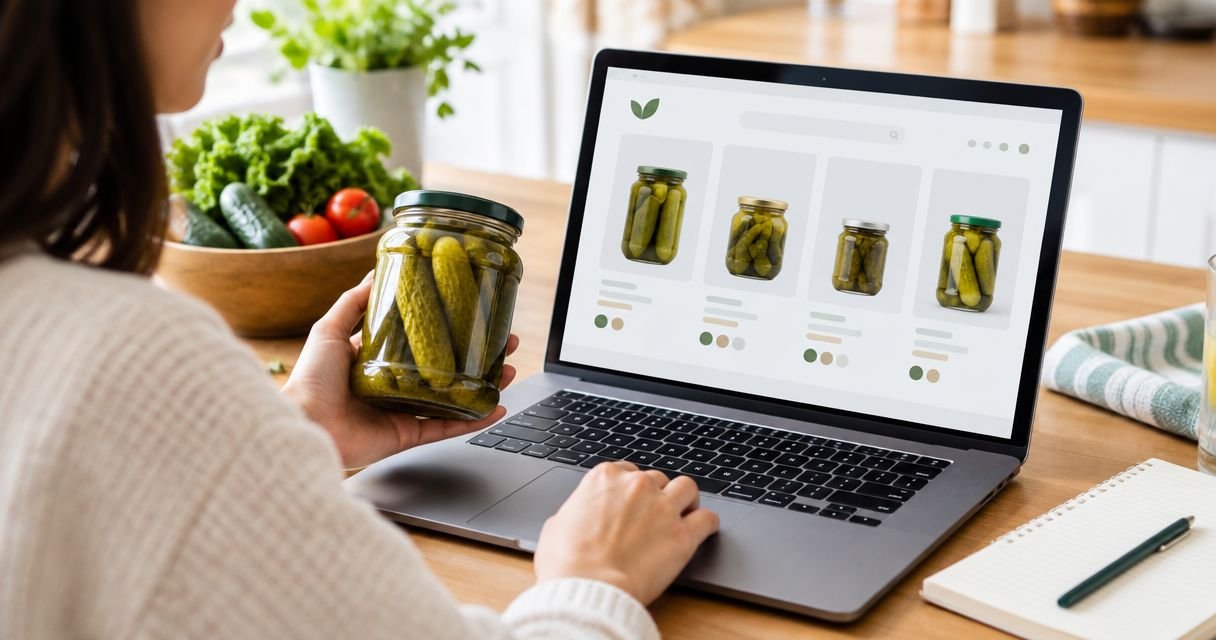
Preservative-free pickles carry no INS-coded chemical additives like sodium benzoate (211), potassium sorbate (202) or sodium metabisulfite (223) on the ingredient panel — the jar relies instead on oil, salt, red chilli and souring agents like tamarind or vinegar to hold shelf life. The catch: a "no preservatives" claim on the front label doesn't guarantee the same for colour, flavour enhancers, or how the jar behaves once opened, so the ingredient list at the back always overrides the marketing line on the front.
- Preservative free pickles online means no INS 211, 202 or 223 on the label — check the back panel, not the front claim.
- Traditional Andhra pickles use oil, salt and tamarind as the preservation method instead of chemical additives.
- A shorter best-before window (3-6 months) usually signals a homemade, additive-light batch rather than a factory-run one.
- Homemade brands like Tulasi Pickles ship pan-India and overseas — always confirm the ingredient panel on the product page before ordering.
Why this matters
Most buyers assume "homemade" and "preservative-free" mean the same thing. They don't — a seller can hand-make a batch in a home kitchen and still add sodium benzoate to survive a two-week courier delay in 2026's summer heat.
The only way to know for certain is to read what's printed on the jar, not what's printed on the landing page. Tulasi Pickles ships homemade veg and non-veg pickles, podis, papads and sweets across India and overseas from Hyderabad, and the checks below apply whether you're ordering from a brand like this or any other online pickle seller.
How to check for preservative-free pickles before buying online
Run through these checks before you add a jar to the cart. Each one takes under a minute if the seller's product page is complete.
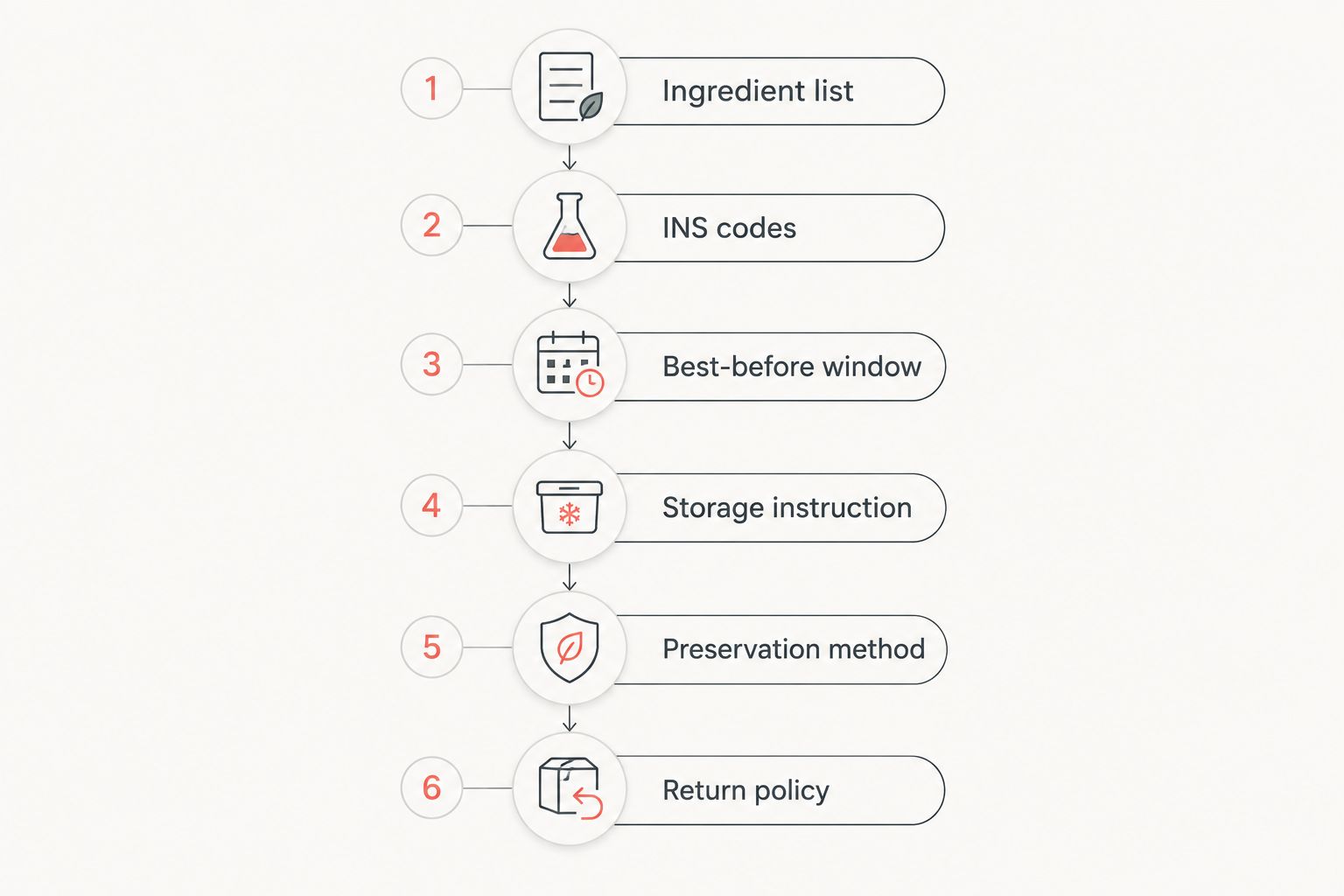
- Open the ingredient list first, skip the hero image. Every packaged food sold in India carries a mandatory ingredient declaration under FSSAI labelling rules — if the product page doesn't show one, ask for it before ordering.
- Scan for INS codes. Sodium benzoate (INS 211), potassium sorbate (INS 202) and sodium metabisulfite (INS 223) are the three most common chemical preservatives in commercial pickles. No codes listed usually means no added chemical preservative.
- Check the best-before window. A pickle rated for 3-6 months from packing typically leans on oil, salt and acid for preservation. A 12-18 month shelf claim on an unrefrigerated jar is worth a second look.
- Read the storage instruction, not just the shelf-life number. "Store in a cool, dry place" versus "refrigerate after opening" tells you how much the seller is depending on the fridge versus the additive.
- Look for the preservation method in the description. Andhra-style pickles that name oil, mustard, tamarind or vinegar as the preserving agent are describing a traditional method, not a marketing phrase.
- Cross-check against a return or replacement policy. A seller confident in a short-shelf, additive-free batch usually states clear handling terms rather than vague "quality guaranteed" language.
Reading the FSSAI label for preservative codes
The Food Safety and Standards Authority of India requires packaged food to declare additives by name or INS number under the Food Safety and Standards (Packaging and Labelling) Regulations. That single requirement makes this the fastest verification step available to any online buyer in 2026.
If a jar's label lists only vegetable oil, salt, chilli powder, mustard, fenugreek and a souring agent, that's a traditional Andhra preservation base with no synthetic additive. If you spot a three-digit INS number anywhere in the list, the pickle carries a chemical preservative regardless of what the front label claims.
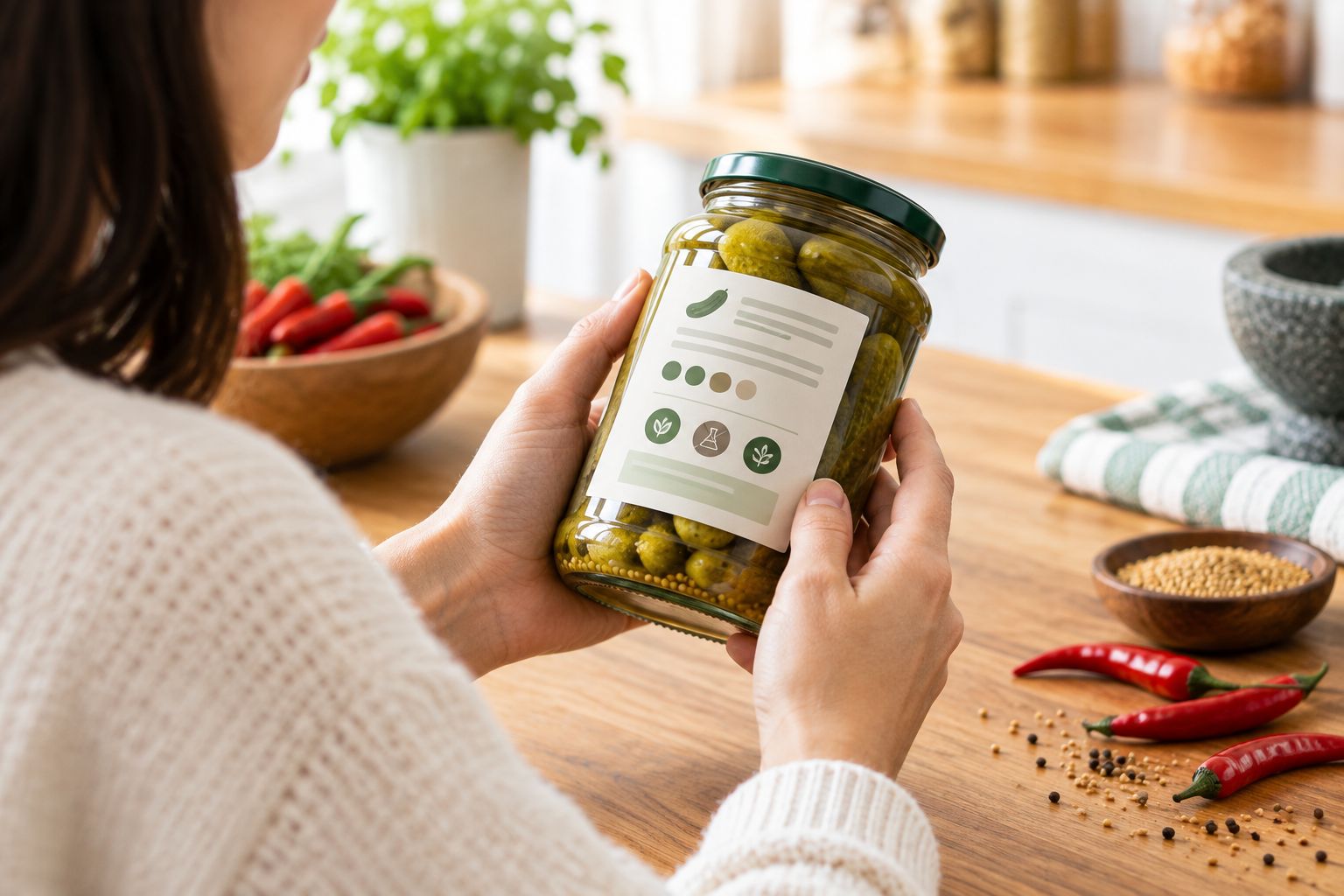
When a jar's shelf life runs short and the storage line reads "consume within a few weeks of opening," that's consistent with an oil-and-salt preservation base rather than a chemical one. Check how to tell if a pickle jar has gone bad before you assume a change in colour or smell is spoilage rather than natural oil separation.
Checking shelf life and storage instructions
Shelf life is the single most honest number on any pickle listing. A preservative-free batch made with traditional oil-salt-spice methods generally holds for months at room temperature if the oil layer stays intact and the jar stays sealed — refrigeration after opening extends that window further.
Sellers who ship overseas in 2026 face a harder version of this problem: longer transit times mean the preservation method has to survive weeks, not days, in a container or cargo hold. If a listing promises a long shelf life with no mention of refrigeration and no visible ingredient panel, treat that as a flag, not a feature.
Why preservative use varies among online pickle sellers
- Shipping distance — a seller sending jars overseas needs the pickle to survive longer transit windows than a seller delivering within Hyderabad.
- Batch size — small-batch, homemade production often skips chemical preservatives because the batch moves fast enough that it doesn't need to.
- Category — non-veg pickles (chicken, mutton, fish, prawns) generally need tighter temperature control than veg pickles like mango or lemon, which changes how sellers approach preservation.
- Regulatory labelling — FSSAI's mandatory ingredient declaration forces every seller to disclose additives, but it doesn't stop sellers from using them.
- Cost of oil — pickles preserved mainly through a thick oil layer cost more in raw material than pickles that lean on a cheaper chemical preservative to cut oil content.
- Customer expectation — buyers searching specifically for preservative free pickles online are usually willing to accept a shorter shelf life in exchange for a cleaner ingredient list.
Check the ingredient panel before you order
Browse Tulasi Pickles’ homemade Andhra pickles and read the full ingredient list on each product page.
Is homemade pickle the same as preservative-free pickle?
No — homemade describes who made the pickle, not what's in it. A home-kitchen batch can still include sodium benzoate or potassium sorbate if the maker adds it for shelf stability, so the ingredient panel is the only reliable check, not the word "homemade" on its own.
How long do preservative-free pickles last unopened?
Preservative-free pickles made with a traditional oil-salt-spice base generally last several months unopened when the oil layer covers the pickle pieces and the jar seal stays intact. Once opened, the window shortens, and refrigeration extends it further — the exact number depends on the specific pickle and how it's packed, so check the seller's own storage guidance rather than assuming a fixed figure.
Are Andhra-style pickles naturally preservative-free?
Andhra-style pickles are traditionally preserved with oil, salt, red chilli, mustard and tamarind rather than chemical additives, which is why they're often marketed as preservative-free. That said, "traditional style" and "actually preservative-free" aren't automatically the same claim — verify the specific jar's ingredient list rather than assuming the regional style guarantees it.
FAQ
What does preservative free pickles online actually mean?
It means the ingredient list carries no chemical additive like INS 211, 202 or 223, and the pickle is preserved through oil, salt and spice instead. Always confirm this on the product’s own ingredient panel rather than a front-label claim.
How can I tell if a pickle has added preservatives without opening the jar?
Read the printed ingredient list on the jar or the product page — any INS number or named chemical preservative will be listed there under Indian food labelling rules. If the list only shows oil, salt, chilli and a souring agent, no chemical preservative is present.
Is potassium sorbate harmful in pickles?
Potassium sorbate (INS 202) is an approved food preservative under Indian food safety regulations and is used within permitted limits in commercial pickles. Buyers looking for a preservative-free option simply choose jars where it isn’t listed at all.
Do non-veg pickles need more preservatives than veg pickles?
Non-veg pickles like chicken, mutton, fish and prawns generally need tighter storage and shorter shelf windows than veg pickles, which is why some sellers lean more on refrigeration than on chemical preservatives for these categories. Check the specific storage instruction on each non-veg listing before ordering.
Does a longer shelf life always mean a pickle has preservatives?
Not always, but a long, unrefrigerated shelf claim with no visible ingredient list is a common pattern for chemically preserved pickles. Cross-check the shelf-life number against the printed ingredient panel before assuming either way.
Can homemade pickles still contain sodium benzoate?
Yes — homemade describes the production method, not the ingredient list, and a home-kitchen batch can include sodium benzoate (INS 211) for shelf stability. The only way to confirm is to read the ingredient panel on that specific jar.
Why do some online pickle sellers not list ingredients clearly?
Incomplete listings usually come down to a rushed product page rather than an attempt to hide additives, but the effect is the same for a buyer trying to verify preservative content. Ask the seller directly for the ingredient list before ordering if the page doesn’t show one.
Should I refrigerate preservative-free pickles after opening?
Yes — pickles preserved mainly through oil and salt benefit from refrigeration once opened, since the chemical backup that commercial preservatives provide isn’t there. Follow the specific storage line on the jar or product page for the exact guidance.
One last thing
The fastest tell isn't the shelf-life number or the marketing copy — it's whether the seller's product page shows a full ingredient list at all in 2026. A seller confident enough in an oil-salt-spice preservation base will print it plainly; one hiding behind a vague "100% natural" claim with no ingredient panel is the jar to skip, not the jar to trust on faith.
Related guides
- How to store homemade pickles for long shelf life
- Best oil-free pickles for health-conscious buyers
- Best low-sodium pickles for blood pressure patients
- How to identify authentic Andhra avakaya pickle