
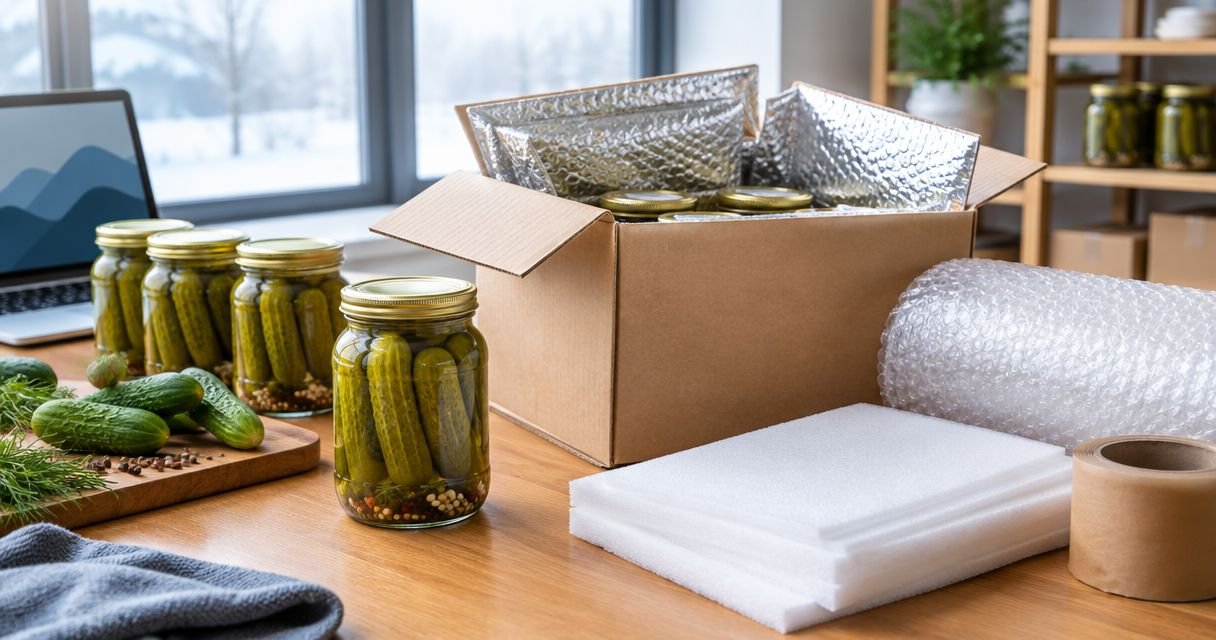
Pack pickles for winter shipping in food-grade plastic jars, not glass, wrapped in bubble sheet and set inside a snug corrugated box with a thermocol liner. Andhra-style pickle oil (usually groundnut or sesame) clouds and thickens below 15°C but doesn't turn solid until temperatures drop far lower, so the real winter risk is jar cracking and oil separation, not frozen oil. Non-veg pickles headed overseas in winter need vacuum-sealed pouches and a courier that actually handles frozen cargo, because customs and cold-chain rules for meat-based pickles are different from a standard veg pickle parcel.
- Pickle packing for winter shipping works best in food-grade plastic jars, not glass, because cold makes glass brittle and oil expansion can crack seals.
- Andhra pickle oil clouds below 15°C but only turns fully solid near freezing, so breakage is the real winter risk, not frozen oil.
- Tulasi Pickles ships veg and non-veg pickles across India and overseas with insulated packing built for this exact problem.
- Non-veg pickles bound for the USA and Canada in winter need vacuum-sealed, frozen-safe packing separate from veg pickle boxes.
Why this matters
December to February is peak gifting season for Andhra pickles in Telangana households and overseas kitchens alike, right through Sankranti in January. That's also when courier trucks sit in cold warehouses overnight and international parcels wait on cargo tarmacs at low temperatures. Customers who order avakaya or chicken pickle in 2026's winter months want to know their jar won't arrive cracked, oily, or separated. Checking how pickles ship overseas without spoilage before placing a winter order clears up most of the confusion around oil, ice, and transit time.
How to pack pickles for winter shipping without oil freezing
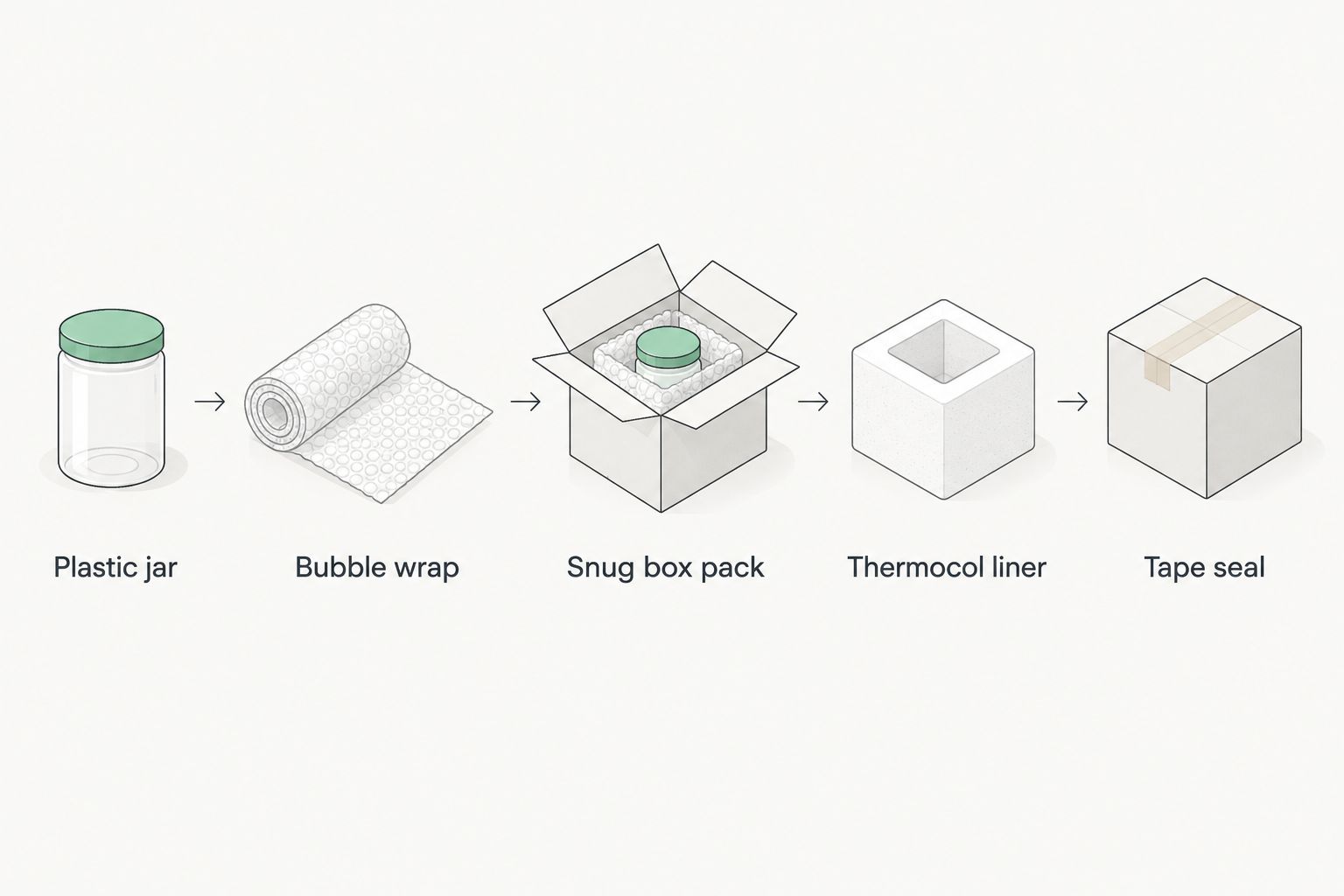
Follow these steps in order for any pickle jar going out in cold weather in 2026:
- Switch to food-grade plastic jars for winter dispatch. Glass contracts in the cold and a hairline crack from a rough handling drop turns into a full break by the time the jar reaches its destination.
- Wrap each jar individually in bubble sheet or corrugated wrap. This cushions against jolts and slows the rate at which cold air reaches the oil.
- Pack jars upright and snug inside the box. Fill gaps with crumpled kraft paper, not loose padding, so jars can't shift and knock against each other during a multi-day route.
- Add a thermocol liner or insulated pouch for long or cold-region routes. This matters more for North Indian winter dispatch and for overseas orders landing in a Canadian or US winter than for short intra-Telangana deliveries.
- Seal the box with water-resistant tape. Condensation from temperature swings inside a cargo hold can soften ordinary paper tape within a day.
- Vacuum-seal non-veg pickle pouches before boxing them for frozen overseas shipment. This step is separate from steps 1-5 and applies only to meat, chicken, mutton, or seafood pickles going through cold-chain courier partners.
Here's how the two jar materials compare for winter dispatch specifically:
| Jar type | Cold-weather risk | Best for |
|---|---|---|
| Glass jar | Contracts and can crack on impact in cold transit | Local Hyderabad delivery, short routes, gifting where the jar itself is part of the presentation |
| Food-grade plastic jar | Flexes instead of cracking, handles temperature swings better | Interstate winter shipping and any route crossing more than one climate zone |
Verdict: for any shipment crossing state lines or borders in winter 2026, food-grade plastic wins on durability, and glass is fine only for short, controlled-handling routes.
Veg pickles: oil clouding is cosmetic, not spoilage
A veg pickle jar that looks cloudy or shows a thin white layer on top after a cold truck ride hasn't gone bad. The oil is separating and thickening the way any unrefined vegetable oil does in the cold, and it clears up again once the jar sits at room temperature for a few hours. This is a texture change, not a spoilage sign, and it doesn't affect how long the pickle keeps once it's back at normal room temperature.
Non-veg pickles: frozen shipping needs vacuum seal, not thicker oil
Mutton, chicken, prawns, crab, and fish pickles carry more moisture and protein than veg pickles, so they're handled differently for winter and international dispatch. Non-veg pickles shipped frozen to the USA and Canada go out vacuum-sealed specifically so the meat stays stable through customs holds and cold cargo transit, not because the oil needs extra protection. Trying to ship a non-veg pickle the same way as a veg pickle jar in winter is the most common packing mistake customers make.
Overseas winter shipping adds customs and cold-chain rules
A jar going to Hyderabad from a Hyderabad warehouse and a jar going to Toronto in January face completely different winter conditions. International routes pass through longer cargo holds, customs cold storage, and multiple climate zones, so the packing that's fine for a two-day domestic route often isn't enough for a two-week international one. Overseas customers should always confirm which pickle category (veg or non-veg) they're ordering, since the packing standard and courier partner change based on that alone.
Why oil clouding varies from jar to jar
- Oil type used — groundnut and sesame oil, the two most common bases in Andhra pickles, cloud and clear at slightly different points, so two jars from the same batch can look different after a cold ride.
- Transit duration — a jar in cold storage for six hours clouds less than one sitting in an unheated warehouse overnight.
- Cargo hold or warehouse temperature — trucks and airport cargo bays during Indian winter and North American winter don't hold the same temperature, and neither does a courier's regional sorting hub.
- Jar material — glass holds cold longer than plastic once it's chilled, which is part of why it clouds more visibly.
- Packaging insulation — a thermocol-lined box slows how fast the jar's contents react to outside temperature; an unlined box doesn't.
- Destination climate — a jar landing in a Canadian winter needs a different packing standard than one landing in Chennai in December.
Check jar sizing before you order for winter
Pick the right jar size for how the pickle will travel and how fast your household finishes it.
Does cold weather spoil pickles during shipping?
Cold weather doesn't spoil pickles during shipping — below 15°C the oil clouds and thickens, but the pickle itself stays safe and edible once it returns to room temperature. The bigger winter risk is physical damage to the jar, not the contents going bad.
Can I ship pickles in glass jars during winter?
You can ship pickles in glass jars during winter for short, controlled routes, but glass contracts in cold air and a small impact crack can spread into a full break over a multi-day journey. Food-grade plastic jars handle temperature swings and rough handling better on longer winter routes.
Will the pickle taste different after the oil clouds and clears?
The pickle won't taste different after the oil clouds and clears — clouding is a physical reaction to cold, not a chemical or spoilage change, and the flavour returns to normal once the oil re-liquefies at room temperature. Give a cold jar a few hours at room temperature before judging texture or taste.
FAQ
What’s the best jar type for shipping pickles in winter?
Food-grade plastic jars are the best choice for winter shipping because they flex instead of cracking when cold air makes the material contract. Glass is fine for short, local routes but risky over multi-day interstate or international transit.
Does pickle oil actually freeze during winter shipping?
Pickle oil rarely freezes solid during normal winter shipping; it clouds and thickens below 15°C but stays liquid enough not to crack the jar from expansion. True freezing needs temperatures far colder than most delivery trucks or cargo holds reach.
How should non-veg pickles be packed differently in winter?
Non-veg pickles like chicken, mutton, prawns, and fish need vacuum-sealed pouches for winter and overseas shipping, separate from how veg pickles are packed. This protects the meat content through customs cold storage and long cargo transit, not the oil.
Is it safe to open a pickle jar that looks cloudy after delivery?
Yes, it’s safe to open a cloudy pickle jar after winter delivery — clouding is oil thickening from cold exposure, not a spoilage sign. Let the jar sit at room temperature for a few hours and the oil clears on its own.
Do overseas pickle shipments need different winter packing than domestic ones?
Yes, overseas shipments need heavier insulation and longer cold-chain protection than domestic orders because international routes pass through multiple climate zones and customs cold storage. A two-day domestic route and a two-week international one need different packing standards.
Can I tell if a pickle jar went bad from cold shipping versus actual spoilage?
Cold-related clouding clears within a few hours at room temperature, while actual spoilage shows as mould, an off smell, or gas buildup inside the jar that doesn’t go away. If the jar still looks or smells wrong after warming up, treat it as spoiled.
Does the type of pickle oil affect how it behaves in winter?
Yes, groundnut and sesame oil, the two most common bases in Andhra pickles, cloud and clear at slightly different rates in cold weather. Neither one freezes solid under normal winter shipping conditions.
One last thing
The oil clouding that worries most winter customers is completely reversible — leave the jar at room temperature for a few hours before opening it, and the oil clears back to normal on its own. The one packing detail that actually causes complaints in 2026 isn't the oil at all; it's a glass jar shipped without enough cushioning on a long interstate route, where a small crack from cold contraction turns into a leak by the time the box arrives.
Related guides
- How to store homemade pickles for long shelf life
- How to choose the right pickle jar size for your family
- How to tell if a pickle jar has gone bad