
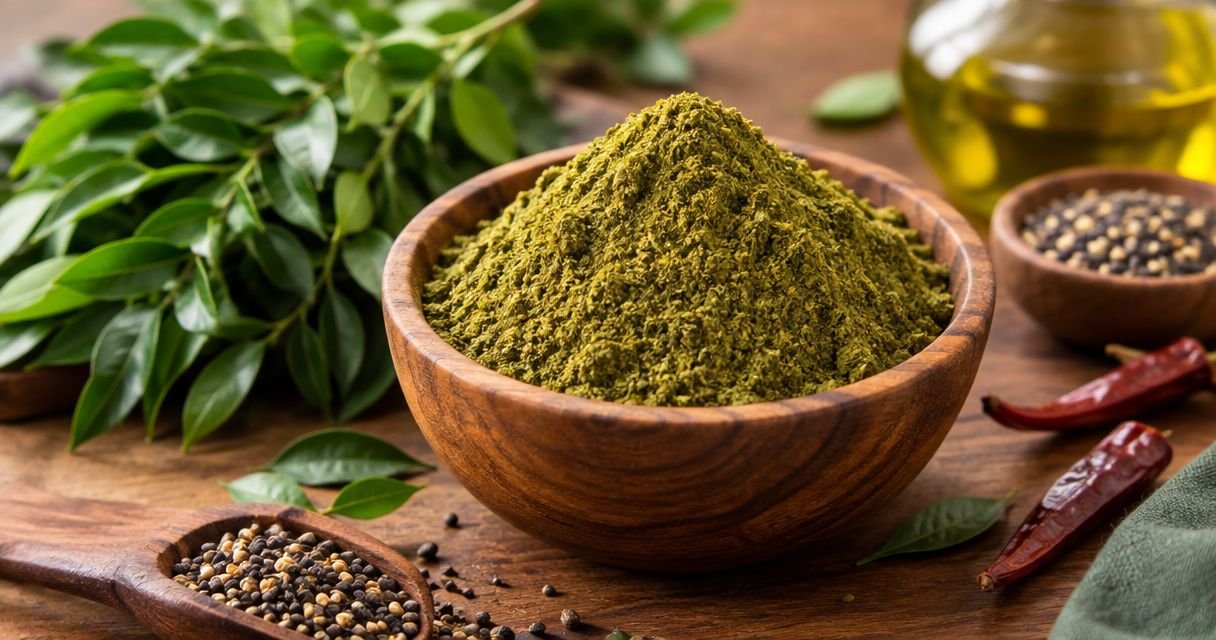
Karivepaku podi for curry leaf spice powder lovers is dried curry leaf powder ground with roasted lentils, dry chili and a touch of asafoetida, built for cooks who want the sharp, slightly bitter curry leaf note out front instead of buried under garlic, sesame or peanut. This guide covers how to judge a fresh batch, how to use it correctly, how to store it, and where most curry leaf podi buyers go wrong in 2026.
- Karivepaku podi is Andhra curry leaf powder for rice, idli and dosa, distinct from kandi or nuvvula podi.
- Fresh karivepaku podi smells sharp and green, not dusty or oily; stale batches lose the curry leaf bite fast.
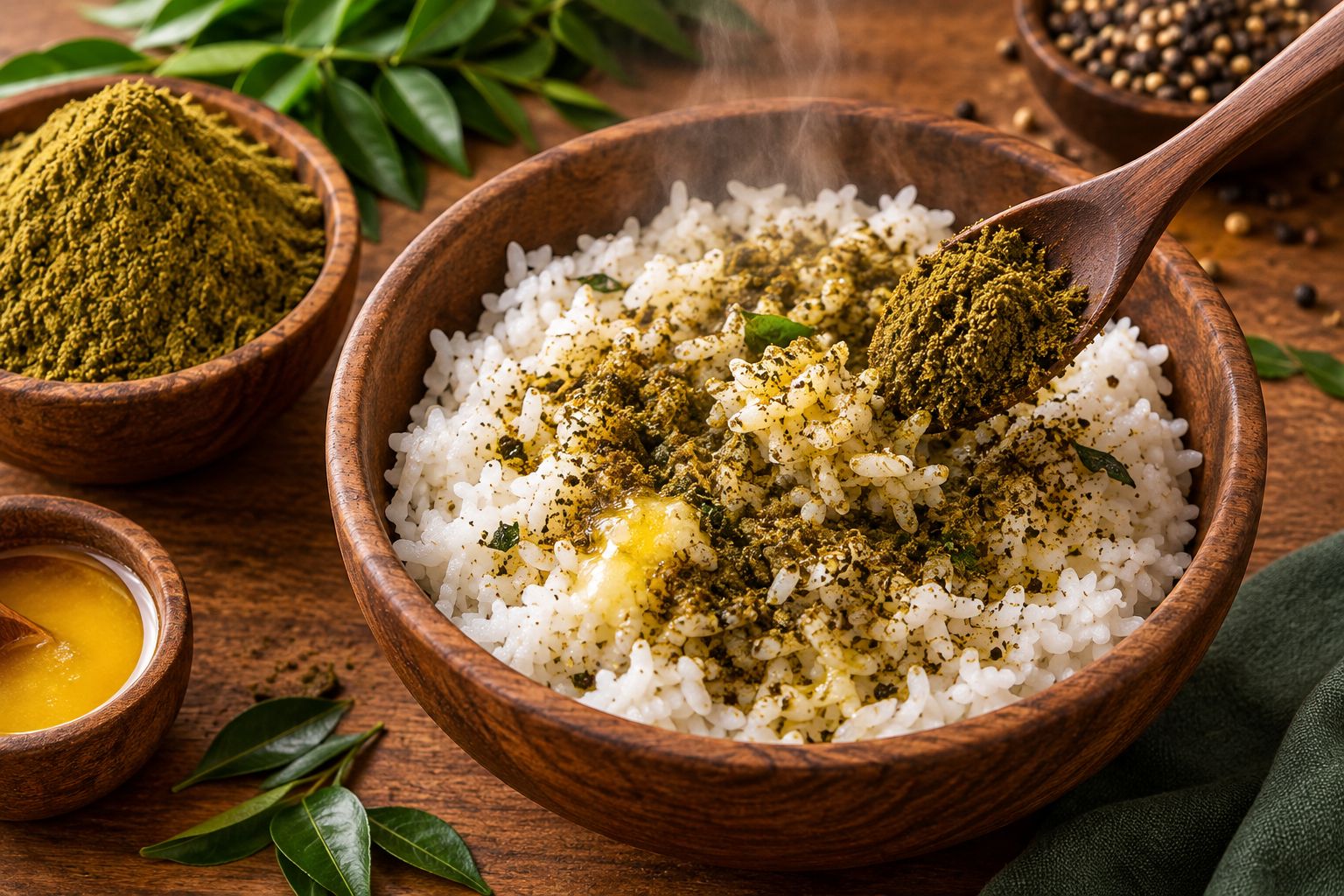
- Mix one to two spoons into hot ghee rice or hot idli for the strongest curry leaf release.
- Store karivepaku podi airtight and away from humidity; moisture is what kills it fastest in 2026’s Andhra summers.
- Tulasi Pickles ships Karivepaku Podi from Hyderabad for buyers who want a consistent batch without grinding it at home.
Why karivepaku podi matters for curry leaf spice powder lovers
Curry leaves (karivepaku) show up in almost every Andhra tempering, but they don't survive well once dried unless they're roasted and ground the same day they're picked. That's the whole reason a dedicated karivepaku podi category exists instead of everyone just tossing dried leaves into a generic mixed podi.
People who specifically search for karivepaku podi aren't looking for a general spice powder — they want the curry leaf flavor to lead, not hide behind chili or sesame the way it does in many all-purpose podi blends. That distinction matters when you're comparing jars, because two products labeled "podi" can taste nothing alike if one uses curry leaf as a filler and the other builds the whole recipe around it.
Curry leaves are also used traditionally in Andhra and broader South Indian kitchens for their role in digestion-friendly tempering, which is part of why this podi gets bought as a daily rice mix rather than an occasional condiment. Check the Tulasi Pickles product range if you're comparing this against other podi varieties before deciding what to stock.
How to buy and use karivepaku podi without wasting a batch
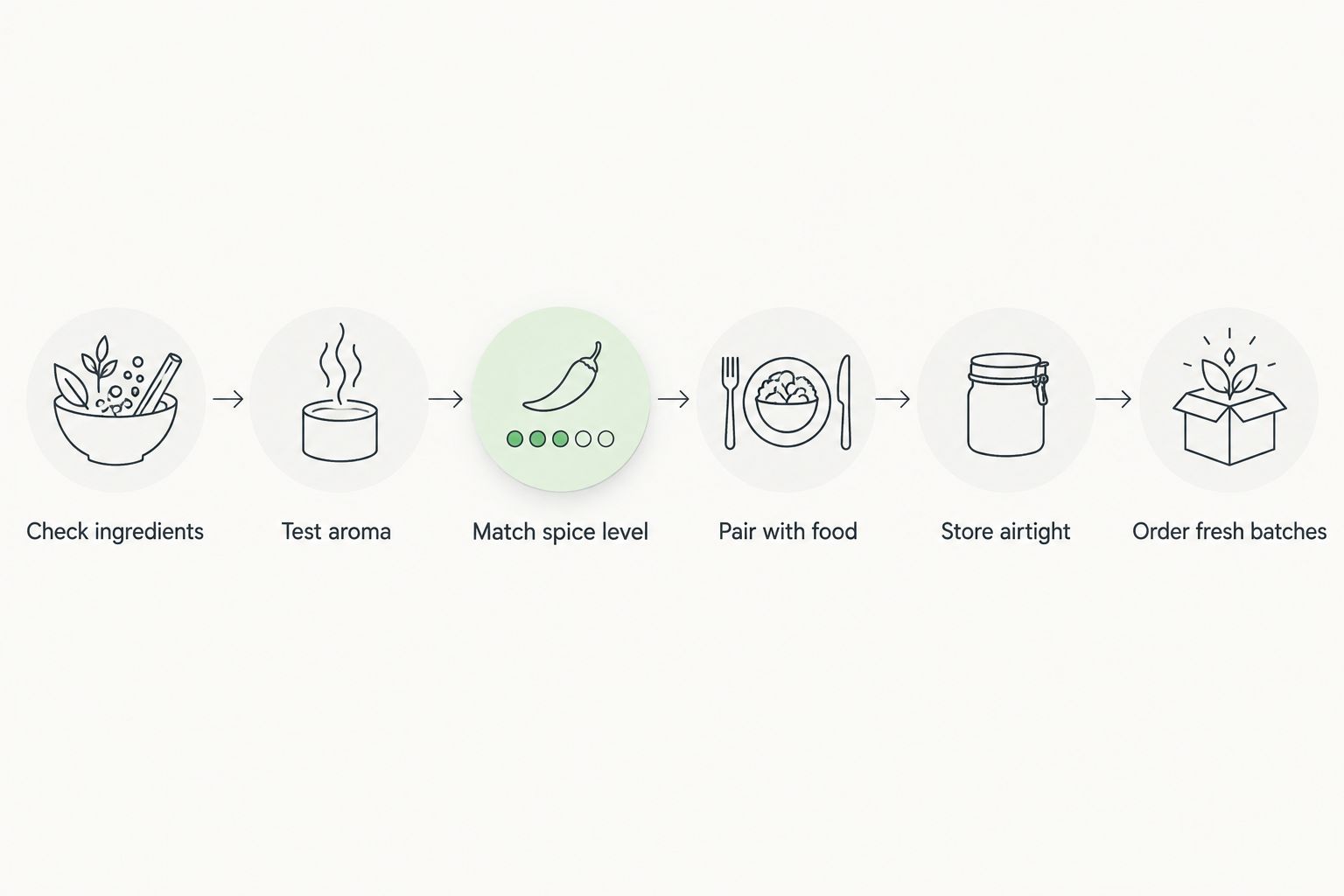
Check the ingredient list before you buy
The ingredient order tells you more than the label claims. Curry leaves should be listed first or second, not buried after rice flour or peanut.
- Curry leaves should appear as the first or second ingredient, not a minor add-in
- Look for a named chili variety rather than "spices" as a vague catch-all
- Avoid jars listing artificial color — good karivepaku podi is naturally olive-brown, not bright green
- Skip anything padded heavily with rice flour purely as filler
- Confirm there's no added preservative if you want the traditional Andhra version
Test the aroma and color of a fresh batch
Smell before you commit to a full jar, whether that's a spoon at a store counter or a small trial pack ordered online.
- Fresh karivepaku podi smells sharp and slightly bitter-green, close to fresh curry leaves
- A stale, flat, oily smell means the batch sat too long after roasting
- Color should be olive to dark brown, never gray or ashy
- Texture should be a fine, even powder without hard, unground clumps
- If it smells mostly of chili with no curry leaf note at all, it's mislabeled
Match the spice level to your household
Karivepaku podi ranges from mild to sharply hot depending on the chili ratio used, and this is where a lot of first-time buyers get burned — literally.
- Ask the seller directly what chili variety and ratio they use before ordering a large jar
- Start with a smaller pack size if you're buying for kids or elderly family members
- Medium-spice batches work best mixed with curd rice to soften the heat
- Hot batches are better sprinkled sparingly over hot ghee rice rather than mixed in fully
- If you're unsure, order the smallest available size first and scale up on repeat orders
Pair karivepaku podi with the right foods
This is where most of the flavor payoff happens, and it's also where people underuse a good batch by only ever mixing it into rice.
- Mix one to two spoons into hot ghee rice, letting the heat release the curry leaf aroma
- Sprinkle directly over plain or ghee-roasted idli
- Stir a spoon into curd rice for a tangier, milder version of the classic combination
- Dust it over dosa batter just before folding for a curry-leaf crust
- Mix into upma or plain khichdi as a finishing spice rather than a base ingredient
For a broader walkthrough of ratios and timing, see this guide on using podi with idli, dosa and rice.
Store it to protect shelf life
Karivepaku podi doesn't spoil the way a wet pickle does, but it loses its aroma fast if it's handled wrong.
- Keep it in an airtight glass or steel jar, never a loosely closed plastic pouch
- Store away from direct sunlight and stove heat
- In humid months, keep the jar in a cool cupboard or refrigerate it
- Never dip a wet or used spoon into the jar
- Buy a quantity you'll finish within a few weeks rather than stockpiling a large jar
The same airtight-and-dry principle applies across podi and pickles — this guide on storing homemade pickles for long shelf life covers the moisture-control basics in more detail.
Order from a supplier that ships fresh, small batches
Once you know what to look for, the fastest path in 2026 is ordering from a seller who roasts in small runs instead of sitting on old stock.
- Ask when the batch was roasted, not just when it was packed
- Check whether the jar is vacuum-sealed or just loosely closed
- Confirm overseas shipping options if you're ordering outside India
- Pick a seller who separates veg and non-veg product lines clearly if that matters to your kitchen
- Read the return or freshness policy before ordering a large size
Tulasi Pickles ships Karivepaku Podi out of Hyderabad, and it's worth comparing a sample-size order against your usual brand before switching your full pantry stock over.
Comparison: where to get karivepaku podi
| Option | Best for | Key limitation |
|---|---|---|
| Homemade karivepaku podi | Cooks with a stocked spice box and time to roast in small batches | Burning the curry leaves during roasting is easy to get wrong on a first try |
| Local kirana store podi | A quick, one-off top-up when you're out | Freshness varies jar to jar with no way to check the roast date |
| Supermarket packaged podi | Long pantry shelf life | Curry leaf flavor is often diluted with extra rice flour or peanut |
| Tulasi Pickles Karivepaku Podi | Curry leaf spice powder lovers who want a consistent Andhra-style batch shipped from Hyderabad | Best used within a few weeks of opening, like any additive-light podi |
Verdict: for curry leaf spice powder lovers who want the leaf flavor to lead rather than hide, karivepaku podi from a small-batch Andhra seller beats a supermarket jar on aroma every time.
Common mistakes curry leaf spice powder lovers make
- Buying in bulk before sampling a batch — curry leaf aroma fades over months even in a sealed jar, so a large first order is a bigger risk than it looks
- Storing the jar near the stove — heat and steam cake the powder and dull the smell within weeks
- Mixing podi into cold rice — the curry leaf oils need heat to release; cold rice mutes the whole point of the podi
- Assuming a darker color means spicier — dark, near-black color usually means the curry leaves were over-roasted or burnt, which reads as bitter, not hot
- Confusing a curry-leaf-flavored blend with real karivepaku podi — some cheaper mixes use flavoring instead of actual dried curry leaves as the base
FAQ
What is karivepaku podi made of?
Karivepaku podi is made from dried curry leaves roasted and ground with lentils, dry red chili and a small amount of asafoetida. The curry leaf content should dominate the flavor, not just add color.
How long does karivepaku podi stay fresh once opened?
An airtight jar kept away from heat and moisture holds its aroma well for several weeks in 2026’s typical Andhra kitchen conditions. Aroma fades gradually rather than the podi spoiling outright, so smell it before assuming a jar has gone bad.
Is karivepaku podi the same as curry leaf powder sold abroad?
Not always — many curry leaf powders sold outside India are single-ingredient dried leaf with no lentil or chili base. Karivepaku podi is a composed Andhra spice mix, closer to a seasoning than a plain dried herb.
Can karivepaku podi be eaten daily?
Yes, it’s commonly mixed into rice or idli as a daily accompaniment in Andhra households. Portion size should still account for the salt and chili content of the specific batch.
How much karivepaku podi should I mix with rice?
One to two spoons per serving of hot rice with a little ghee is the standard starting ratio. Adjust up or down based on how sharp the batch’s spice level is.
Does karivepaku podi need refrigeration?
It doesn’t require refrigeration if stored airtight in a cool, dry spot, but refrigeration helps during humid months. Moisture, not temperature, is the main threat to shelf life.
Is karivepaku podi spicy?
Spice level depends on the chili ratio used by the maker, ranging from mild to quite hot. Ask the seller about their chili ratio before ordering a large jar if you’re sensitive to heat.
Can karivepaku podi be shipped overseas?
Yes, sellers who regularly ship Andhra pickles and podi internationally, including Tulasi Pickles, offer overseas shipping options. Confirm packaging and transit expectations with the seller before ordering for delivery outside India.
One last thing
The single biggest freshness factor for karivepaku podi has nothing to do with the jar or the packaging — it's how fast the curry leaves were roasted after being picked. Leaves that sit for even a day before roasting lose much of their sharp aroma, which is why two jars labeled identically can taste noticeably different depending on how the seller sources their leaves. Ask that one question before your next order in 2026, and you'll filter out most of the mediocre batches without needing to taste-test a dozen brands.
Related guides