
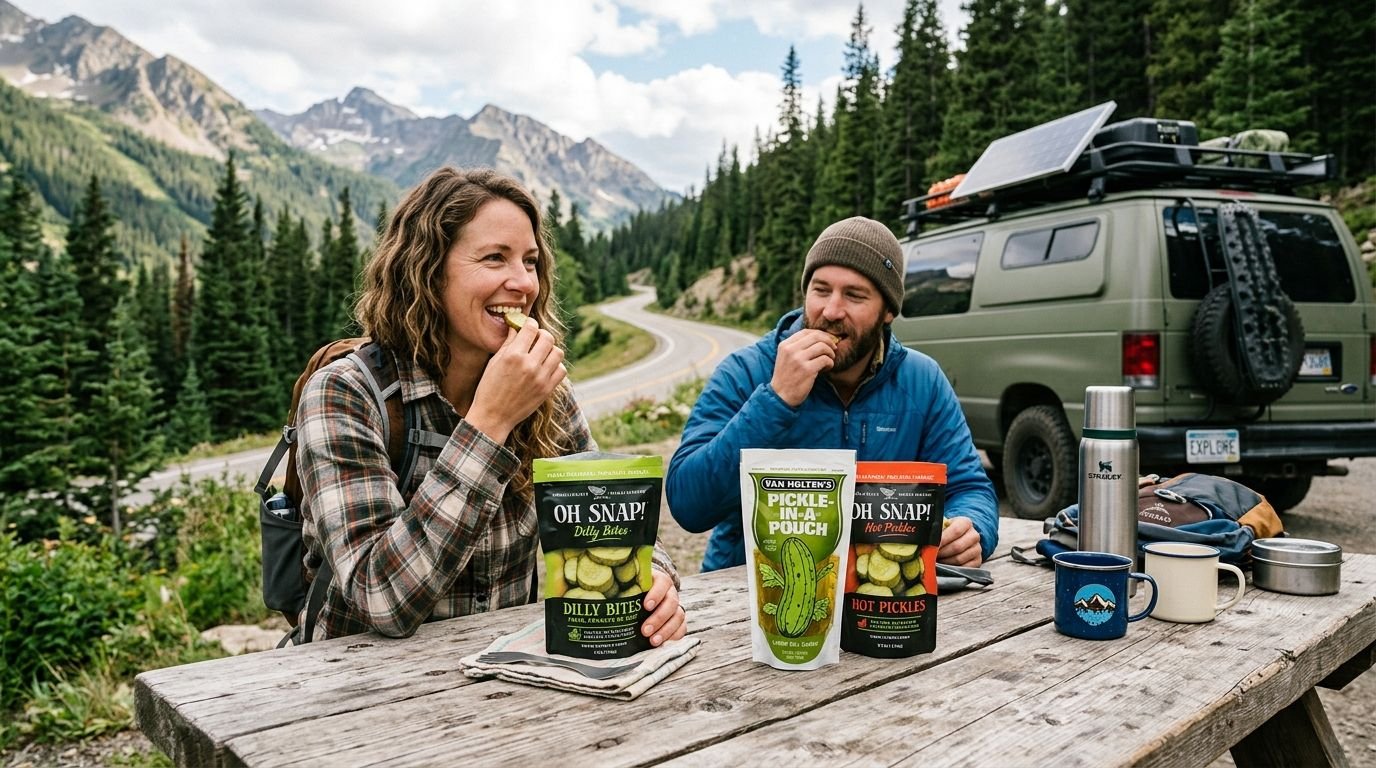
Road trippers and campers need pickle packs that survive heat, motion and days without a fridge, not a full-size jar rattling around in the boot. Travel pickle packs for road trips and camping are single-serving or small-jar pickle portions sized for coolers, backpacks and glove compartments, built to stay sealed and safe to eat until the next meal stop. Oil-based vegetarian pickles hold up best on the road in 2026, while non-veg pickles need tighter time and temperature control.
- Oil-based veg pickles like avakaya and gongura travel best for road trips and camping in 2026; portion them into small tubs instead of carrying the full jar.
- Non-veg pickles such as chicken or mutton pickle need an ice pack and should be eaten within the first 2-3 days of the trip.
- Podi (spice powder) needs zero cooling and mixes straight into hot rice, making it the lightest camping food in a travel pickle pack.
- Tulasi Pickles ships homemade Andhra pickles, podi and papads from Hyderabad in sizes that fit a travel bag without decanting.
- Papads and dry fruits round out a travel pickle pack without adding anything perishable.
Why travel pickle packs matter for road trips and camping
A road trip or camping stop rarely has a fridge, and Andhra pickles are traditionally made oil-heavy for exactly this reason: the oil layer seals out air and slows spoilage far longer than a watery chutney ever could. That's the whole logic behind a travel pickle pack in 2026 – pick formats that were already built to sit on a shelf, then portion them small enough to survive a backpack.
Tulasi Pickles, a Hyderabad-based homemade pickle brand, ships pickles, podi and papads across India and overseas, and the same formats that survive a courier journey are the ones that survive a week in a car boot. The difference on a trip is portion size and packing discipline, not the pickle itself.
Choose oil-based veg pickles for the open road
Start here before anything else goes in the bag. Vegetarian oil-based pickles are the single safest category for a multi-day trip with no cold storage.
- Pick avakaya (raw mango) or gongura for the longest unrefrigerated life
- Check the oil layer sits fully over the pickle before sealing the tub
- Avoid any jar that lists added water or a diluted masala base
- Portion into 100-150g screw-top tubs instead of carrying the full jar
- Pack a spare tub in a separate bag in case one leaks
Portion pickles into travel-safe jars before you leave
Decanting at home takes ten minutes and saves a ruined backpack later. This is the step most road trippers skip, and it's the one that causes the most mess.
- Decant into small glass or BPA-free plastic jars with tight lids
- Wrap each lid in a strip of tape before packing
- Store every jar upright inside a zip-lock bag to catch any oil seepage
- Label each jar with the pickle name and the day it was packed
- Keep one dedicated pouch for pickles, separate from clothes and electronics
Buyers who'd rather skip the decanting step altogether can start from pickles already portioned down; the method for keeping any jar shelf-stable once opened is covered in store homemade pickles for long shelf life.
Pack for temperature swings in the car or tent
A sealed jar still spoils faster if it sits in direct sun for six hours. Temperature management matters more than the pickle recipe once you're on the move.
- Keep jars out of direct sun on the dashboard or rear window shelf
- Use an insulated pouch, not a plain plastic bag, on hot-weather drives
- Store non-veg pickle jars closest to the ice pack; veg pickles can sit at ambient temperature
- Check every jar each evening for oil separation or a sour smell
- Move opened jars to the coolest spot in the tent overnight
Pick the right spice level before you commit a whole trip's supply
A week of the wrong heat level ruins every meal after day one. Test before you pack in bulk.
- Try one small jar of any new pickle at home before packing a week's worth
- Pack a mix of medium and mild jars if the group has different heat tolerance
- Carry extra rice or a spoon of ghee to cut heat on the trail
- Avoid stacking two high-spice non-veg pickles in the same meal
The full breakdown of what counts as mild, medium and hot in Andhra pickles is in how to choose the right spice level in pickles.
Order travel-ready pickle packs
Homemade Andhra pickles, podi and papads shipped from Hyderabad.
Add podi for the lightest, longest-lasting camp food
Podi is the one item on this list that needs nothing at all to stay safe. No oil layer, no ice pack, no refrigeration window to track.
- Carry sesame (nuvvula), peanut (verusenaga) or roasted gram (putnala) podi in small pouches
- Mix podi straight into hot rice or curd rice with zero prep
- Skip water-based chutneys entirely; podi needs no cooling at all
- Pack podi in the same pouch as papads to save space
Choose papads and dry fruits for zero-refrigeration extras
These fill the gap between meals without adding anything perishable to the bag.
- Pack rice papads pre-roasted if there's no stove at the campsite
- Store papads in a rigid container so they don't crack in a backpack
- Add cashews or roasted dry fruits for a protein hit between meals
- Keep papads away from anything oily so they don't go soft
Plan non-veg pickle timing for shorter trips only
Non-veg pickle is the format with the shortest safe window on the road. Treat it as a short-trip item, not a week-long staple.
- Reserve chicken or mutton pickle for trips under 3-4 days
- Eat non-veg jars first, before the vegetarian stock
- Never leave a non-veg jar in a hot car overnight
- Check for any change in smell or oil colour before eating on day 3 or later
Comparison: which travel pickle pack fits your trip
| Pack type | Best for | Key limitation | Verdict |
|---|---|---|---|
| Oil-based veg pickle tubs (avakaya, gongura) | Week-long road trips with no fridge access | Needs a fully sealed oil layer to avoid leaking | Buy |
| Podi (spice powder) sachets | Camping with zero cold storage | Needs hot rice or curd to eat, not a standalone side | Buy |
| Papads | Snacking between meals; rice papad works for gluten-free trips | Cracks if packed loosely in a backpack | Buy |
| Non-veg pickle tubs (chicken, mutton) | Short 2-3 day trips with an ice pack | Shortest safe window of any travel pickle format | Wait |
| Dry fruits (cashews) | High-energy snacking on long drives | Doesn't cover a full meal on its own | Buy |
Common mistakes road trippers and campers make
- Carrying the full 500g jar instead of portioning it – one leak spoils the whole supply, not just a tub.
- Packing non-veg pickle for trips over 3-4 days without ice – the format simply wasn't built for that window.
- Stacking podi and papad next to an oily jar – the papad goes soft and the podi clumps.
- Skipping a spice-level test before a week-long trip – forces everyone to eat the same heat level for seven days.
- Not packing a spare zip-lock layer – the one detail that prevents a leaking jar from ruining a backpack.
FAQ
What’s the best pickle for a road trip in India?
Oil-based vegetarian pickles like avakaya (mango) and gongura are the best travel pickle packs for road trips because the oil layer keeps them safe without refrigeration. Non-veg pickles work too, but only on trips under 3-4 days with an ice pack.
Do pickles need refrigeration on a camping trip?
Oil-based veg pickles don’t need refrigeration if the jar stays sealed and the oil layer stays intact. Non-veg pickles last longer near an ice pack and should be eaten within the first few days.
Is non-veg pickle safe for long road trips?
Non-veg pickle is safest on trips of 3-4 days or less when kept near ice. For longer camping trips, oil-based veg pickles are the more reliable travel pickle pack.
How long does homemade oil-based pickle last without a fridge?
Oil-based pickles like avakaya are designed to keep for weeks unrefrigerated as long as the oil layer covers the pickle and the jar stays sealed. Once opened and exposed to moisture repeatedly, that window shortens.
What’s the lightest food to carry for camping besides pickle?
Podi (spice powder) is lighter than any jarred pickle since it needs no oil seal or cooling and mixes directly into hot rice. Pair it with rice papad for a near-zero-prep camp meal.
Can I carry pickles on a flight or long-distance train?
Sealed, portioned pickle tubs travel fine in checked luggage on flights and trains in India as long as lids are taped and jars sit upright in a zip-lock bag. Airline liquid rules can apply to oil-heavy pickles in carry-on bags, so pack them checked when flying.
How much travel pickle pack size do I need per day?
A single 100-150g portion covers one to two people for a day’s meals when paired with rice. Packing individual daily tubs instead of one large jar also limits spoilage if one tub leaks or spoils.
One last thing
Podi needs no oil seal, no ice pack and no cooling window at all – it's the single most durable item on this list, which makes a simple kit of one podi pouch, one packet of papad and one small tub of veg pickle the most reliable travel pickle pack for any road trip or camping stretch in 2026, regardless of trip length.
Related guides