
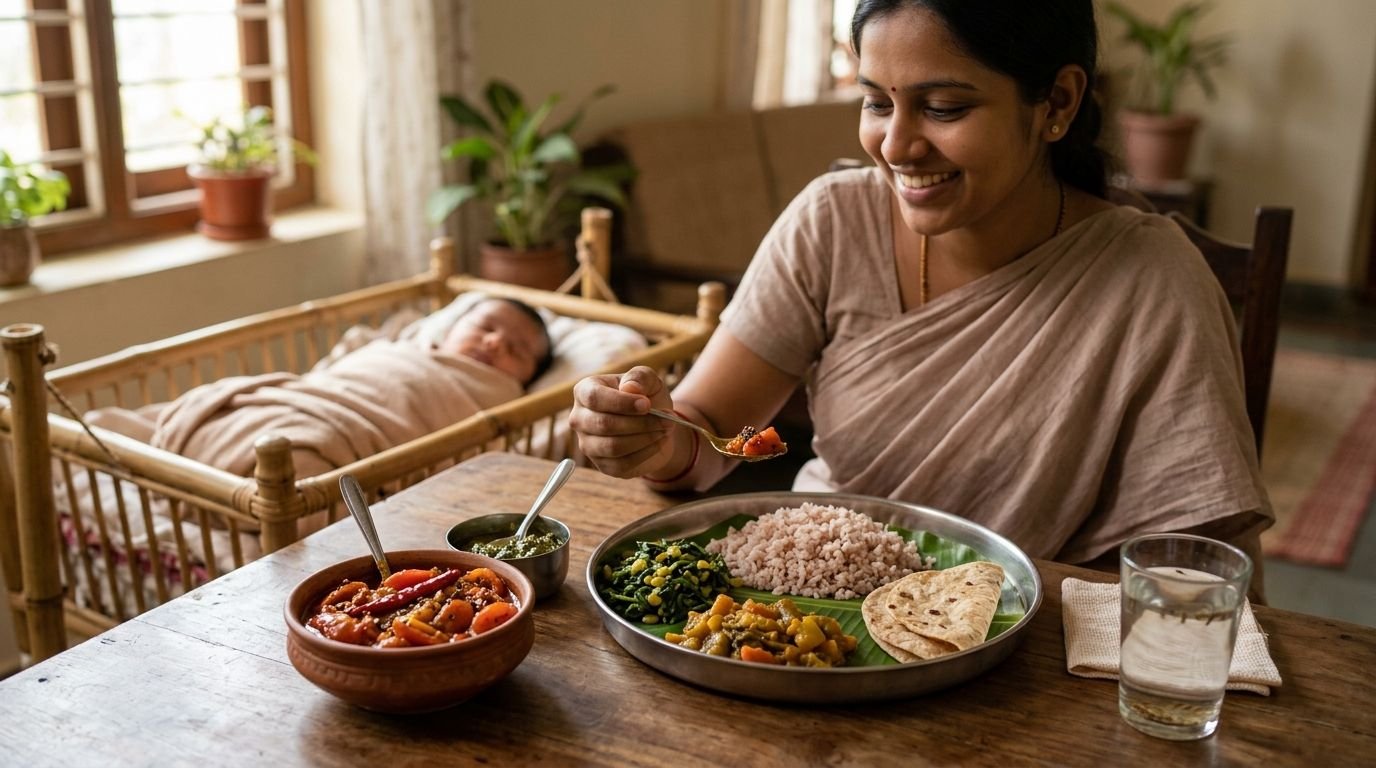
New mothers following the Andhra postpartum diet can eat pickles safely only when the pickle is warming, low in raw chilli, and portioned to match a gut that's still healing, not the household's regular spice level. The Andhra postpartum diet leans on ghee, dal, and warming spices during the traditional 40-day rest period, which means the tangy, oil-heavy pickles the region is famous for get held back until digestion settles.
- Pickles for new mothers work best when picked for warmth, not heat: ginger pickle and garlic pickle rank as the safer early choices in the Andhra postpartum diet.
- Sour pickles like gongura, tamarind, and lemon usually wait out the traditional 40-day rest period before returning to the plate.
- A half-teaspoon serving mixed into a full plate of rice or curd rice is the standard portion for testing tolerance in 2026.
- Spicy non-veg pickles like chicken and mutton pickle are better held back until the 6 to 8 week recovery window closes and the baby tolerates milder pickles.
Why pickles matter for the Andhra postpartum diet
Andhra families don't ban pickle after delivery, they sequence it. The first two weeks focus on plain, warm food; pickle enters gradually as appetite and digestion return to normal. That sequencing exists because a new mother's gut is more sensitive to acid, salt, and oil right after delivery, and because whatever she eats can show up in breast milk within hours.
The constraint isn't spice level alone. Sourness is usually the bigger trigger for acidity than chilli heat, which is why gongura and tamarind pickle get pushed back further than a mild ginger pickle. Ginger pickle sits at the front of most postpartum meal plans in Andhra households precisely because ginger is considered warming and digestion-friendly rather than acidic.
How to choose pickles during the Andhra postpartum diet
Time your pickle choices to your recovery stage
Don't treat pickle as an all-or-nothing decision on day one. Stage it against how your body is healing, week by week.
- Days 1-14: skip pickle entirely, stick to plain dal, rice, and ghee
- Days 15-40: introduce one warming pickle in a half-teaspoon portion
- After the 40-day period: most Andhra families return to near-normal spice levels
- Watch for gas or acidity after every new pickle, not just the first try
Pick warming spices over sour ones
The pickle's base ingredient matters more than its heat level for early postpartum comfort.
- Ginger, garlic, and dry red chilli pickles are considered warming in Andhra households
- Gongura, tamarind, and lemon pickle are usually held back until digestion settles
- Ask a family elder which pickle they leaned on during their own recovery
- Check with a doctor first if you have gestational diabetes or high blood pressure
Watch your baby's reaction, not just your own
What you eat can change breast milk within hours, so track the baby alongside your own digestion.
- Garlic and asafoetida-heavy pickles can change the taste of milk for some babies
- Introduce one new pickle at a time and wait 24-48 hours before trying the next
- Note fussiness, gas, or rash in the feeding log you're already keeping
- Drop the pickle immediately if the baby reacts, no need to pin down the exact cause first
Portion the pickle instead of skipping it
A full spoon eaten alone is a different meal from a half-teaspoon folded into rice.
- Start with half a teaspoon mixed into a full plate of rice, not a spoon eaten on its own
- Increase gradually across the 6 to 8 week recovery window as digestion normalizes
- Pair every serving with ghee or curd to buffer the salt and oil
- Avoid eating pickle on an empty stomach in the first month
Pair pickles with easy-to-digest staples
The pickle rarely stands alone in an Andhra postpartum meal, it rides along with something bland and warm.
- Curd rice and khichdi are the two staples most families lean on during recovery, and pairing pickles with curd rice and khichdi is worth reading before you build your own week-by-week plate
- Mix the pickle through the rice rather than eating it as a side bite
- Add a spoon of ghee to the same plate to slow down digestion
- Keep portions of rice larger than the portion of pickle, not the reverse
Check oil and salt before buying
Not every pickle jar suits the first month of recovery, even within the same brand's range.
- Oil-free pickles suit early recovery weeks better than oil-heavy jars
- Read the ingredient list for sesame or groundnut oil used in smaller quantity
- Skip pickles with heavy preservative loads if you're unsure how your gut handles them right now
- Buy smaller pack sizes so unused pickle doesn't sit in the fridge for months
Hold off on the spiciest non-veg pickles until cleared
Chicken and mutton pickle typically carry more red chilli than most vegetarian pickles, which is why they sit later in the recovery timeline.
- Reintroduce non-veg pickle only after the 40-day rest period and once milder pickles are tolerated
- Check with your doctor first if you had a C-section or a difficult delivery
- Start with a boneless cut so meals stay quick and light through the first weeks
- Keep the first non-veg pickle serving to a half-teaspoon, same rule as any other pickle
Comparison: pickle options for the Andhra postpartum diet
| Option | Best for | Key limitation | Verdict |
|---|---|---|---|
| Ginger pickle | Early recovery, digestion support | Still contains oil and salt, use sparingly | Buy |
| Garlic pickle | Immunity-conscious mothers past week two | Pungency can change milk taste for some babies | Hold until baby is settled |
| Sesame (nuvvula) podi | Warming rice mixes with less oil than pickle | Calorie-dense once mixed with ghee | Buy |
| Oil-free pickle | Lighter digestion in the first weeks | Shorter shelf life without oil as a preservative | Buy |
| Regular chilli-heavy non-veg pickle | Later stage, once spice tolerance returns | Too hot for an early postpartum gut | Wait |
Ginger pickle and a warming podi like nuvvula podi are the safest starting point for new mothers on the Andhra postpartum diet in 2026, with the spicier non-veg jars waiting until the 40-day period closes.
Common mistakes new mothers make with postpartum pickles
- Treating gongura or tamarind pickle as a comfort food in week one, when the tang is exactly what worsens the acidity most new mothers already report
- Sharing a meal with the rest of the family without adjusting portion, ending up with a full spoon instead of a half-teaspoon
- Avoiding pickle entirely for 40 days out of caution, then loading up on the spiciest jar in the house right after, which shocks a gut that hasn't reintroduced spice gradually
- Blaming a fussy baby on formula or feeding position instead of checking whether garlic pickle or a heavy podi changed the milk that day
- Buying whichever chicken pickle a friend recommends before checking its spice level against week-by-week appetite and recovery stage
Looking for lighter pickle options?
Browse oil-free pickles built for easier digestion during recovery.
FAQ
What’s the best pickle for new mothers following the Andhra postpartum diet?
Ginger pickle in a half-teaspoon portion is the standard early choice because it’s considered warming rather than acidic. Garlic pickle and sesame-based podi usually follow once the first two weeks pass.
Is garlic pickle safe while breastfeeding?
Garlic pickle is generally fine in small portions once the mother’s own digestion has settled. Watch the baby for fussiness or gas after each new serving since garlic can change the taste of breast milk for some infants.
How much pickle can a new mother eat per meal?
Start with half a teaspoon mixed into a full plate of rice or curd rice. Increase gradually across the 6 to 8 week recovery window rather than jumping to a full spoon.
Can new mothers eat gongura pickle during the Andhra postpartum diet?
Gongura pickle is usually held back during the first 40 days because its sourness tends to worsen acidity in a still-healing gut. Most families reintroduce it once the traditional rest period ends.
When can new mothers start eating spicy non-veg pickle again?
Most Andhra families wait until after the 40-day rest period and until the baby tolerates milder pickles first. Chicken and mutton pickle carry more chilli than vegetarian pickles, so they sit later in the sequence.
Are oil-free pickles better for postpartum recovery?
Oil-free pickles are lighter on digestion during the first weeks after delivery. The tradeoff is a shorter shelf life since oil normally acts as the preservative.
Do pickles affect breast milk taste?
Garlic and asafoetida-heavy pickles are the most likely to change milk taste for a sensitive baby. Introduce one new pickle at a time and wait 24-48 hours before adding another.
Which Tulasi Pickles product suits new mothers best in 2026?
Ginger pickle and nuvvula (sesame) podi are the two picks that fit the warming, low-spice profile the Andhra postpartum diet calls for. Spicier non-veg pickles are better saved for after the 40-day period.
One last thing
Most people assume spice is the thing to avoid after delivery, but in the Andhra postpartum diet, sourness is the real trigger — that's why a warming ginger pickle can sit on the plate in week two while a mild-tasting gongura pickle waits until week six. Judge a pickle by its base ingredient, not by how hot it looks in the jar.
Related guides