
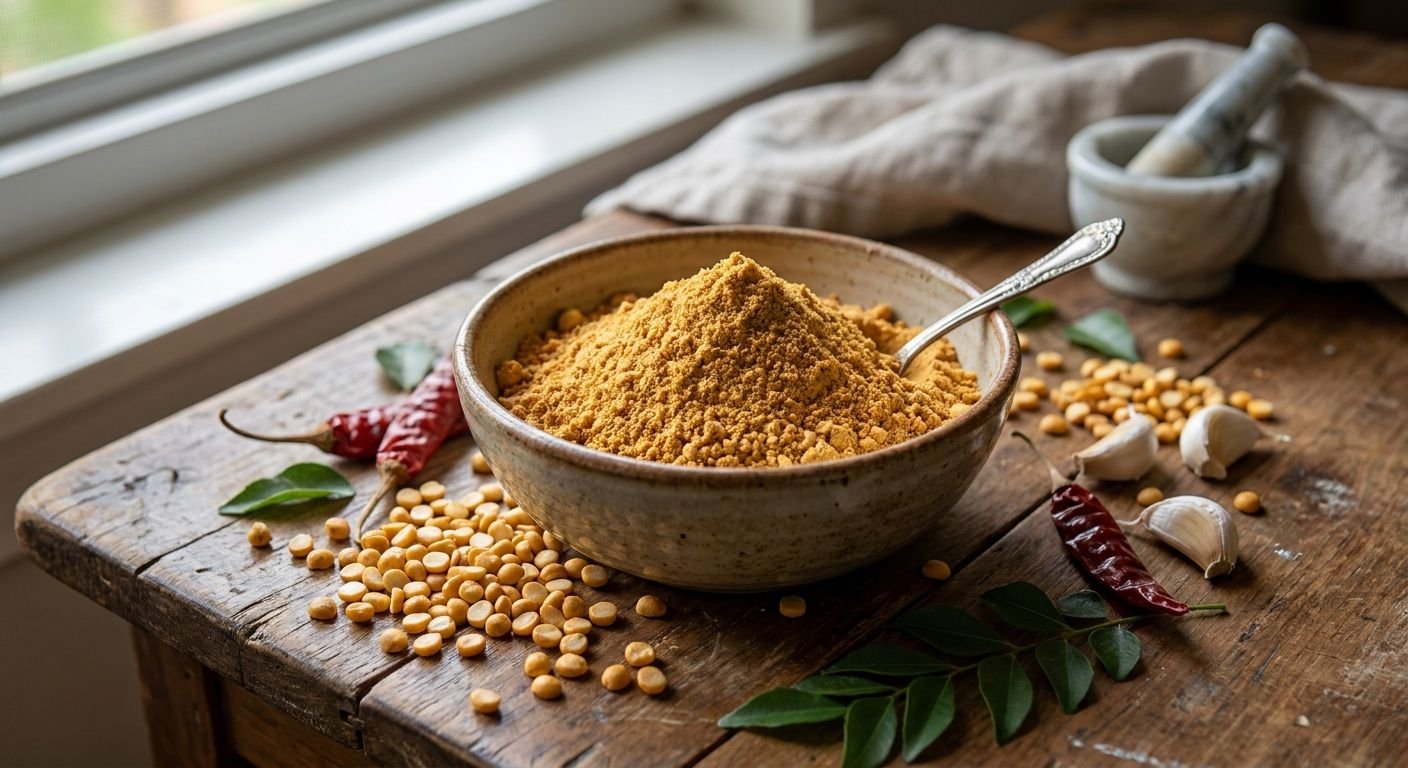
Roasted gram flavor lovers pick senagapappu podi because it carries a nutty, toasted taste from split chana dal instead of the raw bite of chili-forward mixes. This guide breaks down what senagapappu podi actually is, how to use it through 2026, and which format suits a Hyderabad kitchen or an overseas pantry.
- Senagapappu podi is roasted split chana dal ground with red chili, garlic and curry leaves for a nutty finish.
- Tulasi Pickles roasts senagapappu podi in small Hyderabad batches for buyers who want gram flavor over peanut or sesame podi.
- Mix one to two teaspoons of senagapappu podi with hot ghee per cup of rice for the clearest roasted-gram taste.
- Putnala podi uses whole roasted gram; senagapappu podi uses split roasted dal, so the texture is finer and smoother.
- Seal senagapappu podi airtight after opening; roasted gram powder loses its aroma faster than chili-heavy podis in humid weather.
Why senagapappu podi matters for roasted gram flavor lovers
Roasted gram flavor lovers aren't chasing heat first. They want the dal's nuttiness to sit on top of garlic and curry leaves instead of getting buried under chili powder, and that's exactly what separates senagapappu podi from most of the podi shelf.
Podi buyers researching this category in 2026 usually land on one of four bases: peanut (verusenaga), sesame (nuvvula), toor dal (kandi), or gram. Anyone searching specifically for senagapappu podi has already ruled out the other three and wants the gram version.
The closest comparison inside the gram family is putnala podi, which uses whole roasted gram (putnalu) instead of split dal. Putnala podi grinds coarser and gives a crunchier bite; senagapappu podi grinds finer because the dal is already split before roasting, so it coats rice and idli more evenly. Both sit in the roasted-gram family, but they are not interchangeable if texture matters as much as flavor to you.
Identify real senagapappu podi before you buy
Podi labels get loose fast, and "gram podi" sometimes means a peanut blend with a pinch of chana dal added for flavor cover. Check the label before it goes in the cart.
- Confirm split chana dal (senagapappu) is listed first or second on the ingredient list, not peanut or toor dal
- Look for visible pale-yellow dal flecks in the powder, not a uniform fine red-chili dust
- Smell for a nutty, toasted note; a sharp raw-garlic smell usually means the dal wasn't roasted long enough
- Avoid tins that list "gram flour" instead of "roasted gram dal" since flour skips the roasting step entirely
- Check for curry leaves and garlic on the ingredient list; senagapappu podi without either tastes flat
Match the roast level to your own taste
Roasted gram flavor sits on a spectrum from light-toasted to deep-roasted, and the difference changes how the whole podi tastes on rice.
- Light roast keeps a mellow, slightly sweet gram taste that works well for kids and first-time buyers
- Deep roast gives a stronger, almost coffee-like nuttiness that stands up better to ghee and hot rice
- Ask whether chili is roasted along with the dal or added after; podi roasted with whole red chilies tastes smokier
- Test a spoon dry, off the tongue, before mixing with oil, since oil can mask a weak roast
Buy from a source that roasts in small batches
Home roasting senagapappu podi takes practice. Split chana dal scorches fast once it hits the right color, and a batch gone fifteen seconds too long turns bitter. That's the point where buying from a small-batch maker becomes the faster path instead of a prerequisite.
Tulasi Pickles roasts senagapappu podi in small batches out of its Hyderabad kitchen rather than large factory runs, so buyers get gram roasted closer to order in 2026 instead of stock that sat on a shelf for months. The honest trade-off: a homemade-style batch from Tulasi Pickles tends to run stronger on garlic than some factory podis, so first-time buyers who want a milder gram flavor should ask about the spice level before ordering in bulk.
Pair senagapappu podi with the right base
Senagapappu podi behaves differently depending on what it's mixed into, and pairing it wrong is the fastest way to waste a good batch.
- Plain steamed rice with a spoon of ghee brings out the roasted gram note the strongest
- Idli and dosa need a thinner oil coat so the podi doesn't clump on the batter
- Curd rice mutes the roast slightly, so add an extra half-teaspoon compared to plain rice
- Upma and khichdi absorb podi well if stirred in while still hot
- For a side-by-side on ratios and technique across podi types, the round-up on Andhra podi for rice and idli lines up the options
Balance oil and podi ratio
Too much oil buries the roasted gram taste under grease; too little leaves the powder dry and hard to swallow.
- Start with one teaspoon of ghee or sesame oil per cup of cooked rice, then add podi
- Increase podi in small pinches rather than dumping a full spoon at once
- Use ghee for a rounder, sweeter finish, or sesame oil for a sharper, more traditional Andhra taste
- Mix while the rice is still warm so the oil carries the roasted aroma through each grain
Store senagapappu podi to protect the roasted aroma
Roasted gram powder loses its toasted smell faster than chili-forward podis because the oils in roasted dal turn stale quickly in humid air.
- Transfer to an airtight glass or steel jar right after opening the pack
- Keep it away from the stove and any steam source in the kitchen
- Use a dry spoon every time; moisture is what triggers clumping and mold
- In Hyderabad's monsoon months, refrigerate opened jars if you won't finish the batch within a few weeks
- Smell-test before use each time; a flat or sour note means it's past its best
Build senagapappu podi into a weekly rotation
A jar that only comes out on weekends goes stale before it's finished. Rotate it into meals that already happen daily.
- Pack a small pouch of senagapappu podi with rice for tiffin boxes and hostel meals
- Stir a spoon into curd rice on days you're short on time for a full meal
- Use it as a dry filling inside plain dosa when you're out of chutney
- Offer it alongside pickle at festival meals for guests who avoid chili-heavy sides
Senagapappu podi vs other podi bases for 2026 buyers
| Podi type | Best for | Key limitation |
|---|---|---|
| Senagapappu podi (Tulasi Pickles) | Roasted gram flavor lovers who want a fine, nutty powder for rice, idli and dosa | Needs an airtight jar or the roasted aroma fades within weeks |
| Putnala podi | Buyers who prefer a coarser, whole-gram bite over a smooth powder | Grainier texture, doesn't coat rice as evenly |
| Kandi podi | Buyers who want a toor-dal-forward, protein-heavy podi for straight rice mixing | Roasted gram note is weaker; toor dal dominates the flavor |
| Verusenaga (peanut) podi | Buyers who want peanut richness instead of gram nuttiness | Different flavor family entirely, not a gram substitute |
Verdict: senagapappu podi from Tulasi Pickles is the pick for anyone who specifically wants roasted gram flavor without peanut or heavy toor-dal notes; buyers chasing texture over flavor should look at kandi podi or putnala podi instead.
Common mistakes roasted gram flavor lovers make
- Buying a peanut-heavy blend labeled "gram podi." Peanut is a cheaper filler, and it flattens the roasted-dal taste you're paying for.
- Over-roasting at home. Split chana dal turns bitter within seconds past the right color, so most first attempts at home come out scorched.
- Drowning the podi in oil. A heavy oil coat masks the roast instead of carrying it, especially with sesame oil.
- Storing it near the stove. Heat and steam speed up staleness faster than direct sunlight does.
- Skipping the garlic-curry leaf balance. Senagapappu podi without either ingredient tastes like plain roasted flour, not a finished podi.
Order senagapappu podi from Tulasi Pickles
Small-batch roasted gram podi from Hyderabad, shipped across India and overseas.
FAQ
What is senagapappu podi made of?
Senagapappu podi is roasted split chana dal ground with red chili, garlic and curry leaves. The dal is roasted before grinding, which gives the powder its nutty, toasted taste.
Is senagapappu podi the same as putnala podi?
No, senagapappu podi and putnala podi are not the same. Senagapappu podi grinds split roasted dal into a fine powder, while putnala podi uses whole roasted gram (putnalu) for a coarser texture.
How long does senagapappu podi stay fresh after opening?
Senagapappu podi holds its roasted aroma best for a few weeks once opened, and refrigeration helps in humid months like Hyderabad’s monsoon season. Store it in an airtight jar and use a dry spoon every time.
What’s the best way to eat senagapappu podi?
Mix one to two teaspoons of senagapappu podi with warm ghee or sesame oil into a cup of steamed rice. It also works stirred into curd rice, spread inside dosa, or packed with rice for tiffin.
Is senagapappu podi spicy?
Senagapappu podi carries moderate chili heat balanced against the roasted gram flavor, not the sharp heat of a chili-forward podi. The gram’s nuttiness is meant to be the dominant taste, with chili as a background note.
Can senagapappu podi be shipped overseas?
Tulasi Pickles ships podi and pickles across India and overseas to customers outside the country. Check current shipping options on the site before ordering for delivery outside India.
Does senagapappu podi contain peanuts?
Standard senagapappu podi is built around split chana dal, not peanuts. Buyers with peanut allergies should still confirm the ingredient list, since some brands add peanut as filler under a generic gram podi label.
How much senagapappu podi should I mix with rice?
Start with one teaspoon of senagapappu podi per cup of warm rice along with a teaspoon of ghee, then adjust upward in small pinches. Adding too much at once can overpower the rice instead of complementing it.
One last thing
The texture difference between senagapappu podi and putnala podi comes down to one step: splitting the dal before roasting versus roasting it whole. That single step is why senagapappu podi mixes into rice without leaving grit at the bottom of the bowl, while putnala podi always leaves a few coarser bits behind. If smooth texture matters as much as roasted flavor, senagapappu podi is the safer buy in 2026.
Related guides