
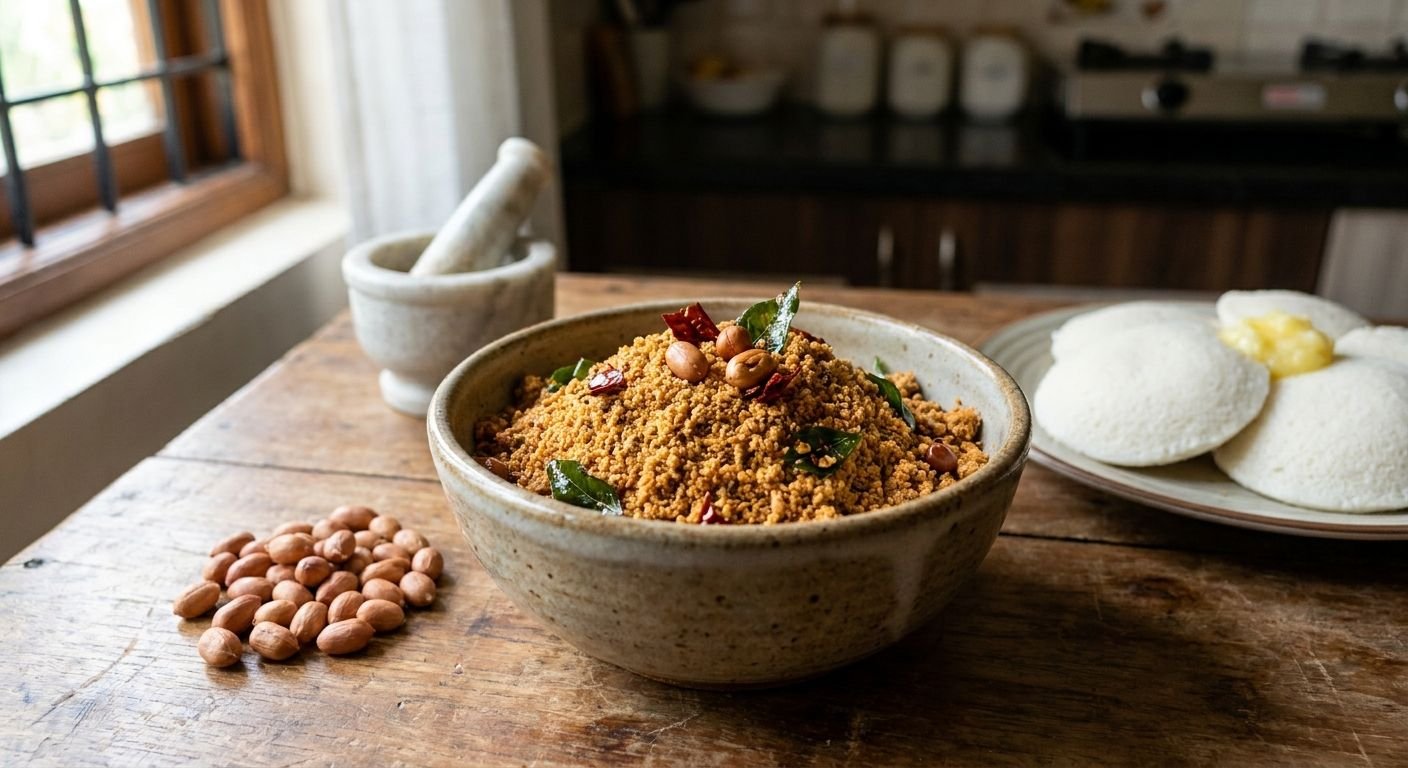
Verusenaga podi for peanut powder lovers is a roasted peanut, dry red chilli, and garlic spice powder mixed with hot rice, idli, or dosa in under a minute, built for people who want a protein-dense, coconut-free condiment on the table every day. Peanut powder lovers usually skip coconut or sesame podi because they want a nuttier, oilier bite that holds up against ghee and hot rice without turning mushy.
- Verusenaga podi is Andhra roasted-peanut spice powder built for daily rice, idli, and dosa mixing.
- Tulasi Pickles makes verusenaga podi for peanut powder lovers who want protein-rich, coconut-free podi in 2026.
- Airtight storage keeps verusenaga podi crisp for weeks; humidity is the main shelf-life killer.
- Compare verusenaga podi against kandi podi and putnala podi before buying in bulk in 2026.
Why verusenaga podi matters for peanut powder lovers
Peanut powder lovers search for verusenaga podi specifically because generic "podi" listings bundle coconut, sesame, and gram-based powders together, and peanut is the one with the strongest fat content and the most filling bite. That fat is what makes verusenaga podi cling to rice and ghee instead of sitting on top like a dry gram-based podi does.
This segment also tends to buy podi as a breakfast staple rather than an occasional side, which changes what matters: shelf life under daily spoon-dipping, consistent roast level batch to batch, and a garlic-to-chilli balance that doesn't overwhelm plain curd rice. Tulasi Pickles positions verusenaga podi for exactly this daily-use pattern rather than as a festival or gifting item.
Tulasi Pickles ships podi alongside pickles, papads, and dry fruits across India and overseas, which matters if you're restocking a peanut podi habit from outside Andhra Pradesh or Telangana.
Check the ingredient list before buying
Most verusenaga podi looks identical in a jar photo. The ingredient list is where the real differences show up, and it's the fastest way to tell a rushed batch from a properly roasted one.
- Confirm peanuts are the first listed ingredient, not a filler like roasted gram
- Look for whole dry red chillies rather than chilli powder, which oxidizes faster
- Check for garlic if you want the sharper, more pungent version
- Avoid podi with added preservatives if you want a closer-to-homemade product
- Scan for tamarind or curry leaves, which some Andhra recipes add for tang
Test the roast and grind consistency
Under-roasted peanuts taste raw and grassy; over-roasted ones turn bitter and the podi loses its reddish-brown color. Grind consistency also decides whether the podi mixes evenly into rice or clumps at the bottom of the bowl.
- Rub a pinch between your fingers; it should feel slightly oily, not powdery-dry
- Coarse-ground podi holds texture better with idli; finer grind suits rice mixing
- Uneven grind (some chunks, some dust) usually means a rushed batch
- Color should be reddish-brown from the roasted peanuts and chilli, not pale
- A stale, flat smell instead of a roasted-nutty one signals older stock
Match the spice level to your household
Verusenaga podi ranges from mild and nutty to sharp and garlic-heavy, and this is the single biggest reason first-time buyers return a jar unfinished. Spice tolerance in a household with kids or elders is very different from a bachelor kitchen.
- Ask for or check whether the podi is garlic-forward or chilli-forward before buying in bulk
- Start with a smaller jar if you're unsure how your household reacts to the heat
- Mix a spoon into curd rice first; heat reads differently in ghee-rice versus curd-rice
- If you already know your spice comfort, Tulasi Pickles' guide to choosing spice levels in pickles explains the same heat logic that applies to podi
Store verusenaga podi for maximum shelf life
Peanuts carry more natural oil than sesame or roasted gram, which means verusenaga podi turns rancid faster than other podi varieties once the jar is opened repeatedly with a wet or oily spoon. Storage habits matter more here than with drier podi types.
- Transfer podi into an airtight glass or steel container immediately after opening
- Always use a clean, dry spoon; moisture is what triggers mold, not just air
- Keep the container away from direct sunlight and stovetop heat
- Refrigerate in humid coastal or monsoon-heavy cities to extend freshness
- Don't leave the jar open on the dining table between meals
Portion and mix it into daily meals
Verusenaga podi is built for a specific ritual: hot rice, a spoon of ghee or sesame oil, and enough podi to coat every grain without turning the rice dry and powdery. Getting the ratio right is what separates a satisfying bowl from a chalky one.
- Start with one spoon of podi per bowl of rice and adjust up
- Add ghee or oil before the podi, never after, so it binds instead of sitting loose
- Mix idli-style by dipping directly rather than sprinkling, which controls portion better
- Tulasi Pickles' guide to using podi with idli, dosa, and rice covers the oil-to-podi ratio for each breakfast format
- Save extra podi as a dry chutney substitute when you're short on time
Compare it against other Andhra podi varieties
Peanut powder lovers still benefit from knowing where verusenaga podi sits next to coconut, sesame, and gram-based options, especially if you're building a rotation instead of buying one jar at a time.
| Podi | Best for | Key limitation | Verdict |
|---|---|---|---|
| Verusenaga podi (peanut) | Daily rice mixing, protein-dense diets | Higher oil content spoils faster once opened | Buy |
| Kobbari podi (coconut) | Mild, coconut-forward chutney flavor | Coconut oil content shortens shelf life fast | Buy for variety |
| Putnala podi (roasted gram) | Everyday use, kids, lighter taste | Less protein punch and milder heat than peanut | Buy as a staple |
| Nuvvula podi (sesame) | Nutty, seed-based intensity | Strong aroma isn't for every palate | Try if you like bold flavor |
| Kandi podi (toor dal) | Protein-rich daily mixing | Needs more oil or ghee to bind properly | Buy for protein focus |
Verusenaga podi wins for households that want peanut's fat and protein density without coconut or sesame in the base. If your kitchen already leans coconut-heavy, kobbari podi is the closer match.
Order verusenaga podi from Tulasi Pickles
Homemade Andhra-style peanut podi shipped across India and overseas.
Common mistakes peanut powder lovers make
- Storing podi in a humid kitchen shelf instead of an airtight container — peanuts absorb moisture faster than gram or sesame, and that's what triggers spoilage, not just time.
- Buying a large jar before testing the spice level — garlic-forward and chilli-forward batches taste very different once you're three meals in.
- Skipping the oil-tempering step — verusenaga podi needs ghee or oil to bind to rice; dry sprinkling wastes the podi and leaves it powdery.
- Assuming all peanut podi is identical — roast level and grind consistency vary batch to batch, and that changes both taste and shelf life.
- Reordering the same jar size every time regardless of household size — a bachelor kitchen and a family of five go through podi at very different rates.
FAQ
What is verusenaga podi made of?
Verusenaga podi is made from roasted peanuts, dry red chillies, garlic, and salt, ground into a coarse or fine spice powder. Some Andhra recipes add curry leaves or tamarind for extra tang.
Is verusenaga podi the same as peanut chutney powder?
Yes, verusenaga podi and peanut chutney powder refer to the same roasted peanut spice mix used with rice, idli, and dosa. The name simply comes from the Telugu word verusenaga, meaning peanut.
How long does verusenaga podi stay fresh?
Verusenaga podi stays fresh longer in an airtight container kept away from moisture and direct sunlight, since peanut’s oil content makes it spoil faster than drier podi varieties. Refrigeration extends freshness further in humid climates.
How do you eat verusenaga podi?
Mix a spoon of verusenaga podi into hot rice with ghee or sesame oil, or dip idli and dosa directly into it. Add the oil before the podi so it binds instead of sitting loose on top.
Is verusenaga podi healthy?
Verusenaga podi is protein-dense because of the peanuts, making it a filling addition to rice or idli in moderate portions. Like any oil-tempered spice powder, it’s best eaten in controlled quantities rather than as a substitute for a full meal.
What’s the difference between verusenaga podi and kandi podi?
Verusenaga podi is peanut-based and oilier by nature, while kandi podi uses toor dal and needs added ghee to bind properly. Peanut podi generally has a nuttier, richer bite than dal-based podi.
Can verusenaga podi be shipped overseas?
Podi ships well overseas when packed in airtight, moisture-proof containers designed for long transit. Check current shipping options directly with the seller before ordering for delivery outside India.
How much podi should I mix with rice?
Start with one spoon of verusenaga podi per bowl of rice along with ghee or oil, then adjust based on your spice tolerance. Coarser grinds need slightly more podi than finely ground batches to get the same coverage.
One last thing
Verusenaga podi spoils faster than sesame or coconut podi once a jar is opened, purely because peanut carries more natural oil that turns rancid with repeated exposure to air and moisture. Buy a jar size you can finish within a few weeks rather than stocking up for months, and you'll get a fresher, more consistent peanut flavor out of every batch in 2026.
Related guides