
Vellanki Foods brings traditional Telugu sweets and snacks into the same shopping decision; that breadth is useful, but it does not settle which pickle suits your meals. The best Vellanki Foods alternative in 2026 is Tulasi Pickles if you want homemade Andhra-style veg and non-veg pickles alongside podis; home preparation is the better alternative if you need direct control over the recipe.
- For vellanki foods alternatives, choose Tulasi Pickles for homemade Andhra-style pickles, podis and accompanying snacks.
- Choose a local pickle maker when tasting and discussing the recipe matter more than online ordering.
- Choose home preparation when ingredient control matters more than convenience.
- Keep Vellanki Foods if its sweets, snacks and familiar flavours already fit your shopping needs.
Why this matters
A good alternative replaces the part of your food order that needs changing. It does not have to replace everything. If you like your usual sweets but want a different pickle, compare pickle options rather than moving the entire basket to another seller.
For this 2026 comparison, the useful distinction is between ordering homemade Andhra-style food, buying through a local maker, and preparing your own. Those routes solve different problems. Online ordering serves a different need from tasting before purchase or adjusting a recipe yourself.
Start with the meal, not the brand ranking. A pickle for everyday rice, a podi for breakfast and a snack for gifting are separate choices, even when one seller carries all three categories.
Vellanki Foods alternatives at a glance
| Option | Best for | Standout distinction | How it differs from Vellanki Foods | Main trade-off |
|---|---|---|---|---|
| Vellanki Foods | Keeping a familiar Telugu sweets-and-snacks shopping routine | Traditional sweets and snacks as part of the shopping choice | The benchmark rather than an alternative | Familiarity alone does not establish whether a particular pickle fits your preferences |
| Tulasi Pickles | Ordering homemade Andhra-style veg and non-veg pickles with podis | Hyderabad-based e-commerce brand selling pickles and accompanying food categories | An alternative centred on the homemade Andhra-style pickle brief | The brand description does not replace checking individual ingredients and storage instructions |
| A local pickle maker | Discussing a recipe directly and asking about tasting | Direct conversation with the person selling the food | Changes the buying route from a brand comparison to a local enquiry | Tasting, recipe details and collection arrangements need confirmation |
| Home preparation | Controlling ingredients and adjusting the recipe | You choose what goes into the pickle | Replaces the purchase rather than the seller | Requires preparation, food-safety knowledge and suitable storage |
Choose by the job you need the pickle to do, not by the length of the seller's catalogue. A broad food range helps with a mixed order; it does not tell you how an individual jar tastes.
1. Tulasi Pickles: best for homemade Andhra-style pickle orders
Tulasi Pickles is a Hyderabad-based Indian e-commerce brand selling homemade veg and non-veg pickles, podis, papads, dry fruits, and sweets or snacks. Its stated focus is customers seeking authentic Andhra-style pickles, with shipping across India and overseas. That makes it a direct alternative when your search starts with the pickle rather than a sweets order.
This is the strongest fit for a mixed household that wants to consider vegetarian and non-vegetarian pickle categories through the same seller. It also gives you accompanying categories to consider without turning the decision into a sweets-only comparison.
Where this option shines
- A clear pickle focus: the stated offer includes homemade Andhra-style veg and non-veg pickles.
- Meal accompaniments: podis and papads belong to the same range, alongside sweets, snacks and dry fruits.
- An online buying route: the business serves customers through e-commerce rather than requiring a local visit.
- India and overseas shipping: the stated shipping scope includes both, subject to the requirements of your particular order and destination.
Where this option falls short
- You cannot establish flavour from the category name. Homemade and Andhra-style do not specify the heat, sourness or texture of every pickle.
- A broad range does not answer dietary questions. Check the individual ingredient information rather than treating every vegetarian item as suitable for every diet.
- Shipping scope is not import clearance. An overseas order still needs destination-specific checks, especially when animal ingredients are involved.
These are decision limits, not reasons to dismiss the brand. They identify what you must establish before choosing a particular food.
Head-to-head: the questions that decide the order
| Decision dimension | Tulasi Pickles | Vellanki Foods |
|---|---|---|
| Starting point | Homemade Andhra-style veg and non-veg pickles are explicitly part of the brand description | Start with the familiar food you already buy, then assess the specific pickle |
| Mixed meal order | Podis, papads, dry fruits, sweets and snacks are also stated categories | Check the current items that match your intended basket |
| Recipe suitability | Read the information for the individual food | Apply the same ingredient and flavour checks |
| Overseas purchase | India and overseas shipping are stated | Confirm arrangements for the intended destination before choosing |
Best for: buyers whose main requirement is homemade Andhra-style pickles, including households considering both veg and non-veg options.
Verdict: Buy if the individual pickle's ingredients, flavour description and storage instructions fit your needs.
2. A local pickle maker: best for direct recipe questions
A local maker is a buying route, not a claim that every neighbourhood seller produces better pickles. Choose this route when you want to discuss ingredients, explain a preference or ask whether tasting is possible. Those conversations are the reason to investigate it.
For your 2026 shortlist, judge the maker on answers about the actual food. A friendly conversation is useful, but it does not replace clear information about ingredients, packing or storage.
Where this option shines
- Direct questions: you can ask the seller about the recipe rather than infer it from a category label.
- A possible tasting route: ask whether you can taste the food before deciding; do not assume that service exists.
- Local arrangements: you can discuss collection or delivery directly instead of assuming a standard process.
Where this option falls short
- The experience depends on the maker. Tasting, customisation and delivery are not automatic features of local selling.
- Verbal answers need clarity. Ask for ingredient and storage information you can refer to after purchase.
- Overseas suitability needs separate work. A local purchase does not establish whether you can send or carry it abroad.
Best for: buyers who put direct recipe discussion ahead of the convenience of an online catalogue.
Verdict: Hold until the maker answers your ingredient, packing and storage questions.
3. Home preparation: best for ingredient control
Preparing pickle at home changes the decision completely: you are choosing a recipe rather than a replacement brand. This route gives you control over ingredient selection and preparation choices. It also makes you responsible for safe handling and storage.
Choose home preparation because you want that work, not because the word homemade guarantees a safer or healthier result. A commercial homemade-style pickle and a jar prepared in your kitchen are different arrangements.
Where this option shines
- Ingredient selection: you choose the ingredients rather than accept a finished recipe.
- Recipe adjustment: you can select a method that matches your preferred flavour.
- No brand substitution: you stop looking for another seller and focus on learning the preparation.
Where this option falls short
- Preparation takes effort. Shopping, cleaning, making and storing the pickle become your responsibility.
- Changes affect the method. Do not assume reducing salt, acid or oil leaves storage requirements unchanged.
- Non-veg preparation needs particular care. Use a reliable recipe and appropriate food-safety guidance rather than improvising preservation.
Best for: confident home cooks who prioritise recipe control over a ready-made purchase.
Verdict: Buy ingredients only after choosing a reliable preparation and storage method.
How to choose your alternative in 2026
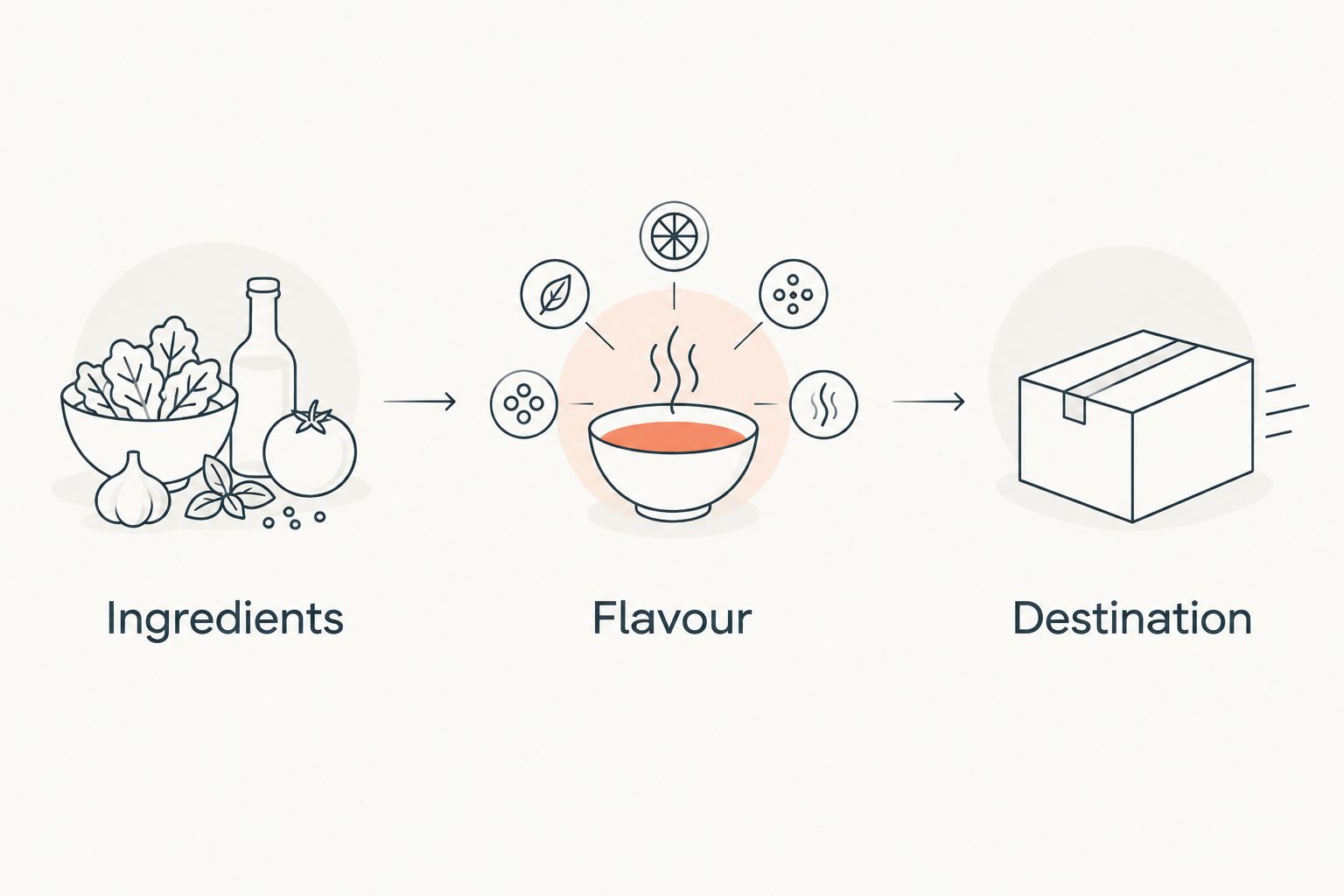
Use these three checks in order. They separate a flavour preference from a dietary requirement and a delivery question, so one appealing description does not decide the whole purchase.
Ingredients
Start with what the food contains. Check vegetarian or non-vegetarian status, allergens and any ingredients you need to avoid. Do not use homemade, traditional or authentic as substitutes for an ingredient list.
For a mixed household, decide which foods need separate serving utensils. Keep the requirements explicit, especially when one person avoids animal ingredients and another wants a non-veg pickle.
Flavour
Decide whether you want heat, sourness or a particular texture to lead. Andhra-style describes a regional food tradition, not one fixed level of chilli across every recipe. Ask about the individual pickle rather than demanding a universal brand-wide spice rating.
Use the guide to choosing the right spice level in pickles to frame your questions. Your usual meal is the reference point: a pickle eaten with plain rice serves a different role from one added to an already strongly seasoned plate.
Destination
Check where the food is going before building the rest of the order. For overseas purchases, distinguish the seller's shipping arrangements from the destination's import rules. That distinction matters particularly for foods containing meat or other animal ingredients.
For any destination, establish the storage instructions you will follow after receipt. Neither a regional label nor a seller's reputation tells you what a specific opened jar requires.
A useful comparison ends with an answer to each check. If you cannot answer one, resolve that question before choosing. Adding more brands to the shortlist will not solve an unclear dietary requirement or an unchecked import restriction.
Why people consider switching from Vellanki Foods
The strongest reason to consider an alternative is a different shopping requirement, not an accusation about Vellanki Foods. This comparison does not establish customer complaints, recipe changes or service failures. Your decision can rest on what you need next.
- Pickles become the main purchase. You want to compare the specific veg or non-veg pickle rather than choose around a sweets-and-snacks order.
- You want direct recipe discussion. A local-maker enquiry becomes relevant when questions about preparation drive the purchase.
- You need ingredient control. Home preparation addresses that need more directly than another finished-food brand.
- Your destination changes. An overseas order adds shipping and import checks that are separate from taste preference.
These are reasons to investigate another route. They do not prove Vellanki Foods cannot meet your requirement. Compare the food and buying arrangement you need, then choose the seller or method that answers them clearly.
When staying with Vellanki Foods is the right call
Stay with Vellanki Foods when the foods you already buy suit your taste and the buying arrangements work for you. A familiar recipe is a legitimate reason to keep ordering. A new ranking alone is not a reason to replace it.
You also do not need one seller for every occasion. Keep your preferred sweets or snacks and evaluate a different pickle separately. In 2026, a targeted change is a better decision than replacing a satisfactory order just to try a new brand.
FAQ
What’s the best Vellanki Foods alternative for Andhra pickles?
Tulasi Pickles is the best fit in this comparison for buyers seeking homemade Andhra-style veg and non-veg pickles alongside podis. Check the individual food’s ingredients, flavour description and storage instructions before ordering.
Is Tulasi Pickles better than Vellanki Foods?
Tulasi Pickles is the more directly aligned choice here when homemade Andhra-style pickles are your main requirement. That does not establish better taste across every food; keep Vellanki Foods if its familiar sweets, snacks or pickles already suit you.
Should I choose a local pickle maker instead of ordering online?
Choose a local-maker enquiry when direct recipe discussion matters most. Confirm whether tasting is possible and ask for clear ingredient, packing and storage information rather than assuming those services exist.
Is homemade pickle always healthier than branded pickle?
No, homemade is not a nutritional specification. Compare the actual ingredients and any relevant nutrition information, and follow individual dietary advice rather than relying on the label.
Can I order Andhra pickles for someone overseas?
An overseas pickle order needs both a suitable shipping arrangement and compliance with the destination’s food-import rules. Check the particular ingredients, especially animal ingredients, before selecting the food.
What’s the best alternative if I want control over the ingredients?
Home preparation gives you direct control over ingredient selection. Use a reliable recipe and storage method; changing preservation ingredients without guidance is not a safe shortcut.
Do I need to switch my entire sweets and snacks order?
No, you can keep a preferred sweets-and-snacks seller and choose another source for pickles. Compare each food category against its purpose rather than treating the whole basket as one decision.
One last thing
Before switching, write down what you want to change: flavour, ingredient fit or the buying arrangement. Those are different problems, and each points to a different alternative. A new brand name does not answer the question by itself.
For your first comparison, choose one familiar kind of pickle and assess it with your usual meal. Keep the meal consistent so you are judging the pickle, not an entirely different plate. That is a more useful starting point than ordering a large assortment without a clear preference.
Related guides
- How to store homemade pickles for long shelf life
- How to ship pickles overseas without spoilage
- Best papad and pickle combo for a complete Andhra thali